Illex Deep Chubby: the third storey of the Chubby family
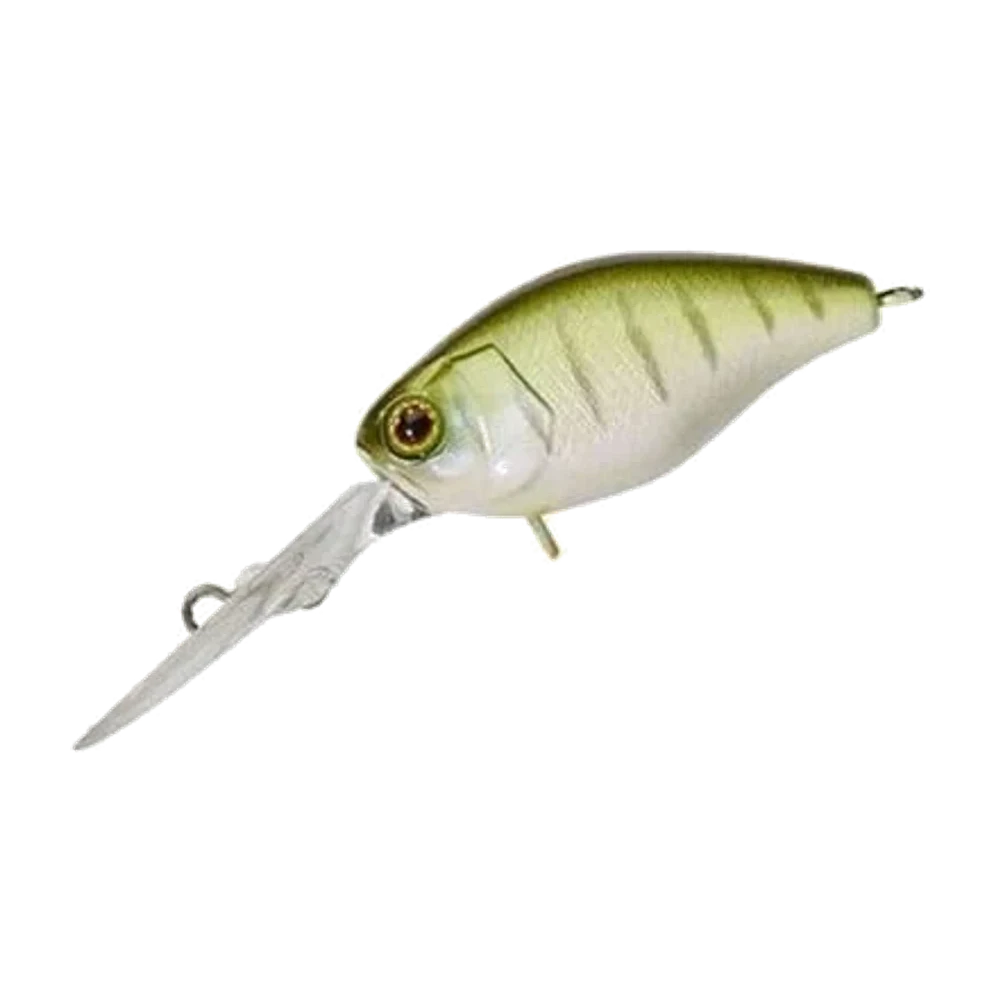
This lure shines under specific conditions. CarnaFish tells you in 10 seconds if today is one of them.
A tiny crankbait that runs down to two and a half metres is an anomaly. Small cranks under 4 cm are almost all margin lures: they fish the first metre, full stop. As soon as you need to go deeper, you move to a bigger body, and you change silhouette at the same time as depth.
That is where the problem lies. In September, on a canal or a gravel pit, perch often settle between two and three metres on hard bottom, and they are eating three-centimetre fry. You need the depth without changing prey size.
The Deep Chubby resolves exactly that contradiction: the same small stocky body as its elders, a markedly longer lip. It is the third storey of a family whose other two are already benchmarks, and it only makes full sense once you understand what the other two do not do.
The three storeys, with no possible confusion
This is the question everyone asks in front of the rack. Here is the real breakdown.
| Model | Water layer | Typical ground |
|---|---|---|
| Chubby 38 | 0.3 to 0.8 m | Margins, shallow rock, bouncing off structure |
| Diving Chubby 38 | around 1.5 m | Gentle slopes, mid-height weed, standard canal |
| Deep Chubby | 2 to 2.5 m | Hard bottoms, drop-offs, gravel pits, autumn plateaux |
The way you use them follows directly: you are not choosing a lure, you are choosing a storey. On the same spot, you go from the Chubby to the Diving then to the Deep until you find the layer where the perch are sitting. Since the silhouette and the vibration stay identical, you isolate a single variable — depth — instead of changing everything at once. That is rare, and it is valuable when you are searching.
What a long lip does on a short body
The Deep Chubby's lip is out of proportion with the body. It is not just a diving tool.
- It stabilises the action. A small stocky crank tends to blow out of its axis as soon as you speed up. The long lip keeps it straight and allows a brisker retrieve without it losing its action.
- It acts as a bumper. It hits the bottom before the trebles, it pivots the lure upwards and it strongly reduces snagging on gravel and cobbles.
- It transmits the bottom. This is the important point: through the rod you feel the difference between gravel, sand and silt. That feedback is often worth more than a sounder on a small spot.
The body, for its part, keeps the family's tight, fast vibration, with internal rattles producing a high-pitched click. On perch, that high frequency is a more reliable trigger than a deep signal.
The retrieve: keep contact without ploughing
- Cast long. On a 5 g lure, casting distance directly conditions the depth you reach. Fine fluorocarbon is a necessity here, not a refinement.
- Reel fast for the first five turns to drive the lure downwards.
- Switch to a slow, steady speed, rod tip low, almost in the water.
- As soon as the lip touches bottom, slow down a notch. You want intermittent contact — a knock every two or three seconds — not permanent scraping.
- On a clear knock, pause for a second. The lure rises a few centimetres and settles. Perch very often take at that moment.
On the water: if your lip is scraping continuously, you are not fishing any more, you are ploughing. A perch reacts to an isolated knock and the cloud of sediment that follows, not to a lure dragging permanently through the silt. Step back, slow down, or go back up to the Diving Chubby.
The tackle does half the work
A 5 g lure that has to reach 2.5 metres forgives nothing on the rod-and-line combination.
Line. Fluorocarbon of 0.14 to 0.18 mm straight through, or fine braid with a 1 m fluoro leader. Going up to 0.25 mm costs you 50 cm of depth and restricts the vibration: it is the most frequent mistake on this lure.
Rod. An L of 2 m to 2.10 m, with a tip that agrees to bend. On fine trebles and head-shaking perch, a stiff rod drops fish. You also want to feel the bottom, so an action that is not soft through the butt.
Snap. A small fine snap is tolerated and saves you real time when you move up and down the family's three storeys during a single session.
Not sure what to tie on?
Photograph your spot: CarnaFish reads the scene, cross-checks the conditions and gives you the zone, the lure and the retrieve. Free on iOS and Android.
Where it takes the lead, and where it is surplus
Its windows:
- Gravel pits and deep canals, on hard bottoms between 2 and 3 m.
- Autumn, when perch leave the margins and group up on the plateaux.
- Sharp drop-offs at the foot of an artificial bank, where the lure follows the slope.
- Small prey: when perch are eating fry and refusing anything over 5 cm.
Its limits:
- Under 1.5 m of depth: it is unusable, it scrapes permanently. Take the storey above.
- Soft silt cluttered with branches: the long lip buries into it and picks up everything.
- Strong wind: 5 g does not fly far into the wind, and you lose the distance and therefore the depth.
- Fast searching over large areas: you have to cast long and retrieve slowly, so you cover little ground.
Deep Chubby or Diving Chubby
This is the real question, and the answer is subtler than a simple gap in depth.
The Diving Chubby 38 is more versatile: around 1.5 m, it covers the majority of perch spots on canals and ponds, it casts better and it snags less. It is the one you tie on by default.
The Deep Chubby does not replace it, it extends the range a metre downwards. You bring it out when you have established that the fish are not in the first metre and a half: on a deep gravel pit, in autumn, or on a drop-off. And because its lip touches bottom well before the trebles, it also becomes the tool that tells you what you are fishing over — information the Diving Chubby, which stays in mid-water, never gives you.
Our guide to lure fishing for perch details how to sweep the water layers in the right order. And if you are unsure which storey to attack when you arrive at a gravel pit, CarnaFish analyses a photo of the spot and answers.
Key takeaways
- Same body as the other Chubbies, a much longer lip: 2 to 2.5 m, against 1.5 m and 0.8 m for the other two.
- Three models, three storeys: you change depth without changing silhouette.
- The lip acts as a probe and a bumper: it tells you what bottom you are fishing and protects the trebles.
- Intermittent contact with the bottom, not continuous scraping. One knock every two or three seconds.
- Fluorocarbon of 0.14-0.18 mm is essential: thick line costs it 50 cm of depth.
FAQ
How deep does the Deep Chubby reach?
Between 2 and 2.5 m with fine fluorocarbon and a full cast. Thicker line or a short cast reduce that figure noticeably, sometimes by more than half a metre.
What is the difference with the Diving Chubby 38?
The body is identical, only the lip changes. The Diving fishes around 1.5 m and stays more versatile; the Deep extends the range about a metre downwards, for hard bottoms and drop-offs.
And compared with the standard Chubby 38?
The Chubby 38 is a margin lure working between 0.3 and 0.8 m, bouncing off shallow structure. The Deep aims at an entirely different layer: it has no interest in under a metre and a half of water.
Does it need to touch the bottom?
Yes, but intermittently. A knock every two or three seconds triggers perch; permanent scraping scares them off and fills your trebles with debris. Slow down as soon as the contact becomes continuous.
What line should I use?
Fluorocarbon of 0.14 to 0.18 mm, straight through or as a leader behind fine braid. Beyond 0.20 mm you lose both depth and vibration crispness.
What season is it most effective in?
Autumn mainly, when perch leave the margins to group up on plateaux and drop-offs between 2 and 3 m. It stays useful in high summer on clear gravel pits where the fish go down for the cooler water.
The full perch lure guideSeason-by-season strategy: which family of lure, when, and why.Go from theory to fish
CarnaFish reads your spot from a photo and gives you the game plan: zone, lure, retrieve. Free on iOS and Android.