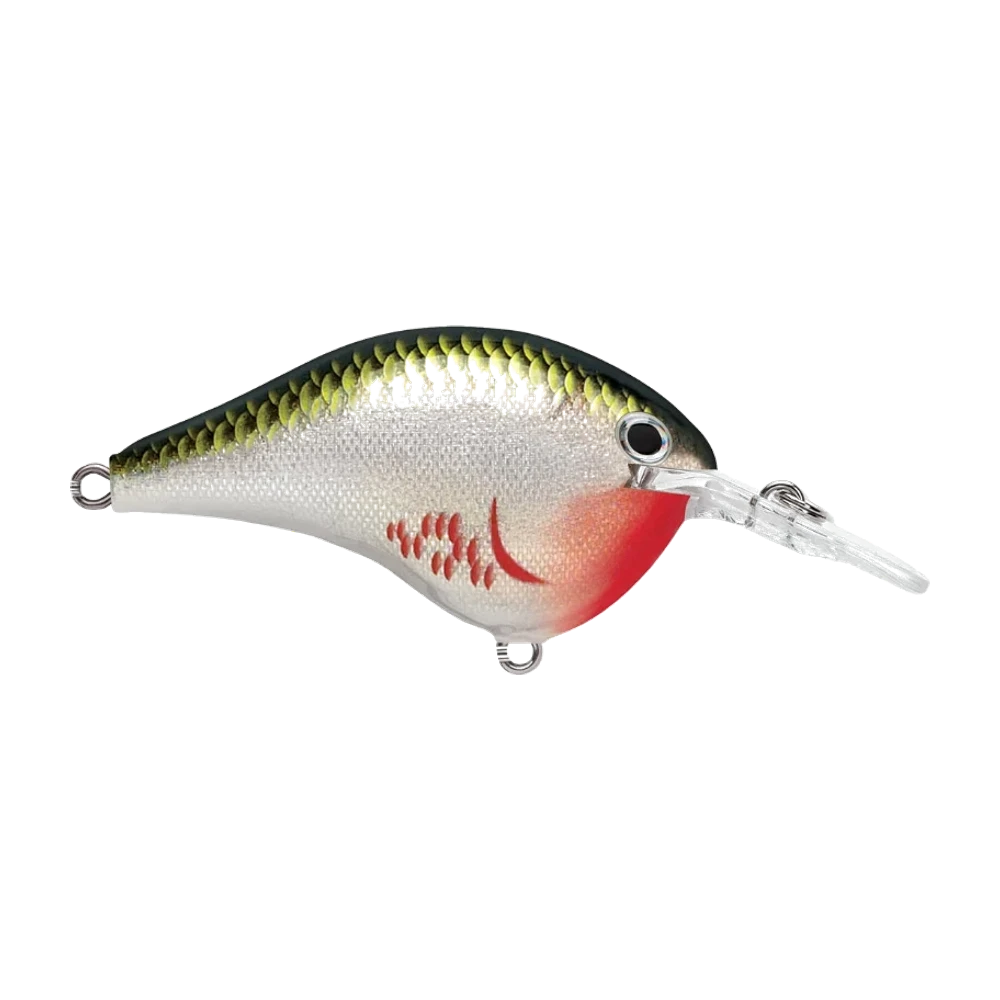
Rapala DT6: the crankbait that reaches its depth in three turns
Rather not fish it blind? Photograph your spot — CarnaFish cross-checks the conditions and points you the right way.
The classic problem with a diving crankbait is wasted distance. You cast thirty metres, and for the first ten metres of the retrieve the lure is still going down: it swims above the fish, above the bottom, above the zone you care about. The useful work only starts halfway back, and it ends as soon as the lure climbs up the bank.
Rapala's DT range is built around that precise annoyance. "DT" stands for Dives To: the lure is calibrated to reach a stated depth and hold it, as fast as possible after the cast. So the DT6 aims for about two metres, and it gets there in three or four turns of the handle instead of ten.
In practice, you retrieve far more useful metres per cast. Over a day spent grinding a drop-off or a gravel flat, the difference is not cosmetic: it is the number of times your lure genuinely passes in front of a fish.
Balsa and a wide lip: a pairing that does the work
Two features explain the DT6's behaviour.
The body is balsa. It is a very light wood, so very buoyant. Combined with internal ballast, that gives you a lure which dives hard under the pull of the lip but rises sharply the moment you stop reeling. A plastic crankbait, closer to neutral, floats up limply or not at all. The DT6 lifts off.
The lip is wide and angled. It is what forces the fast descent and produces the wide roll. It also works as a bumper: when the lure hits a rock, the lip takes it, not the trebles.
The two together create the behaviour you want: you hit bottom, you stop, the lure lifts clear, you start again. That is the basic mechanic of hard-bottom crankbait fishing, and it works all the better when the rise is sharp.
Another consequence of balsa: every lure has a slightly different personality. Wood is not a perfectly uniform material. If you own two in the same colour, test them and keep the one that swims most honestly at the rod tip.
The retrieve: force the contact, then interrupt it
The DT6 is not a lure you wind back in a straight line. It is built to hit things.
- Cast beyond the target zone, bearing in mind that the descent is quick: there is no need for a long run-up.
- Three or four firm turns to take it down to its depth.
- Retrieve steadily until the first contact — a rock, a stump, the gravel bottom.
- On contact, stop dead. Half a second is enough. The lure lifts, changes attitude, and that is often where the bite comes from.
- Start again immediately and look for the next contact.
That "swim - knock - stop - swim" rhythm is the heart of crankbait fishing. A lure that never touches anything catches far less than one that hits regularly.
On the water: if you never snag in an area, you are fishing too high. Losing a lure now and then is the entry price of this technique — pick a zone where you accept that risk rather than a clean pass above the fish.
A useful variant in cold water or on sluggish fish: slow right down and stretch the pause after contact to a full second. The balsa's slow rise then becomes the trigger.
Tuning the depth without changing model
You can shift the DT6's running depth by several tens of centimetres without touching the lure, simply by playing with three parameters.
| Parameter | Effect on depth |
|---|---|
| 0.20 mm fluorocarbon instead of 0.30 mm | runs noticeably deeper, thinner and sinking line |
| 0.30 mm floating mono | lifts the lure by 20 to 30 cm |
| Rod held high, tip to the sky | raises the path, useful over an obstacle |
| Rod held low, tip in the water | gains another few tens of centimetres |
| Very long cast | more line in the water, so maximum depth held better |
In practice, the most effective combination for reaching bottom is a long cast, thin fluorocarbon and a low rod. And if you want to pass just above a weed bed, you reverse all of it.
On the tackle side, a slightly parabolic rod changes a lot. Crankbaits are fished on trebles, and a blank that is too stiff tears the lure out of the fish's mouth on the runs. A semi-parabolic medium-power action absorbs and loses far fewer fish.
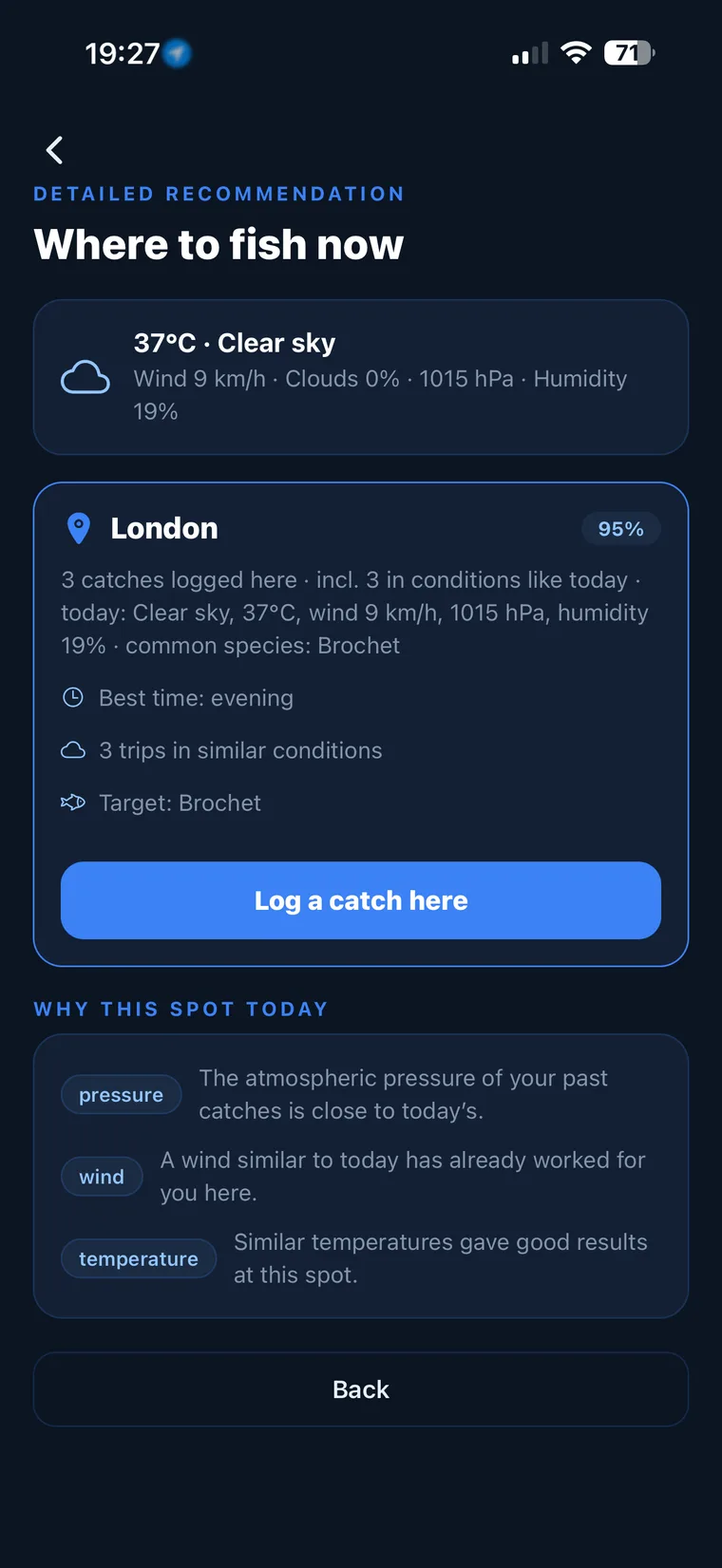
Not sure what to tie on?
Photograph your spot: CarnaFish reads the scene, cross-checks the conditions and gives you the zone, the lure and the retrieve. Free on iOS and Android.
Where it excels, and where it is useless
The DT6 is a hard-bottom lure for active searching.
- Gravel flats and drop-offs between 1.5 and 2.5 m, typically early and late in the season.
- Rocky margins where crayfish are the dominant prey: the wide roll and the brown tones fit perfectly.
- Riprap, groynes and dams on stillwaters, where you can run along them keeping contact.
- Perch on shallow spots, where its small size goes down very well while a bigger crankbait intimidates.
Conversely, it is unsuitable in three cases. In dense weed, the lip collects everything and you spend your time picking off strands. In really deep water, beyond three metres, it will never get down: you need to move to a Strike King 5XD or a 6XD. And on a completely apathetic fish in midwinter, a fast crankbait is often too much.
DT6 or squarebill: two ways of touching the bottom
The commonest confusion sets the DT6 against a squarebill such as the KVD. Both hit obstacles, but not the same ones.
The squarebill has a square lip designed to bounce off wood: stumps, branches, pilings. It works high, between 0.5 and 1.2 m, and its deflector kicks it violently away from the obstacle.
The DT6 works rock and gravel, a metre deeper, with a more rolling swim and a livelier rise. On a rocky bluff, it wins. On a sunken tree at a metre, the squarebill wins.
A Rapala Shad Rap fills yet another slot: a slimmer silhouette, a tighter swim, better in clear cold water when the DT6 looks too busy.
Our beginner's guide to bass fishing covers when a crankbait beats soft plastics. And if you are torn between grinding the bottom and fishing higher when you reach the bank, CarnaFish analyses a photo of the spot and answers.
Key takeaways
- The DT6 reaches its two metres in three or four turns: more useful metres per cast.
- Balsa gives a lively rise on the stop, and that is the main trigger after a contact.
- Look for the knock: a crankbait that touches nothing catches little.
- Thin line and a low rod to gain depth, mono and a high rod for the opposite.
- Hard bottom yes, dense weed no, and beyond 2.5 m no either.
FAQ
How deep does the Rapala DT6 really run?
Around 1.8 to 2 m on a straight retrieve with standard fluorocarbon and a decent cast. Thinner line and a low rod gain you a few tens of centimetres; floating mono lifts it by as much.
What is the difference between the DT6 and the DT10?
The number is the target depth in feet: about 2 m for the DT6, about 3 m for the DT10. The DT10 is bulkier and asks for a firmer retrieve. Choose according to the bottom depth you want to grind.
Does the DT6 work for perch?
Yes, very well. Its small size stays credible for good perch, especially along stony margins. In a craw colour, over hard bottom between 1.5 and 2 m, it is an excellent searching lure.
Do I need a particular rod for crankbaits?
A semi-parabolic action in medium power. A blank that is too stiff loses fish hooked on trebles, because it does not absorb the head-shakes during the fight.
How do I limit snags?
Fish hard bottoms and avoid weed. When the lure jams, give slack straight away: the buoyancy of the balsa often floats it up and frees it on its own.
Should I stop the retrieve after a knock?
Yes, it is the central move. Half a second of stop after contact lifts the lure and produces a large share of the bites, especially on inactive fish.
The full bass lure guideSeason-by-season strategy: which family of lure, when, and why.Go from theory to fish
CarnaFish reads your spot from a photo and gives you the game plan: zone, lure, retrieve. Free on iOS and Android.