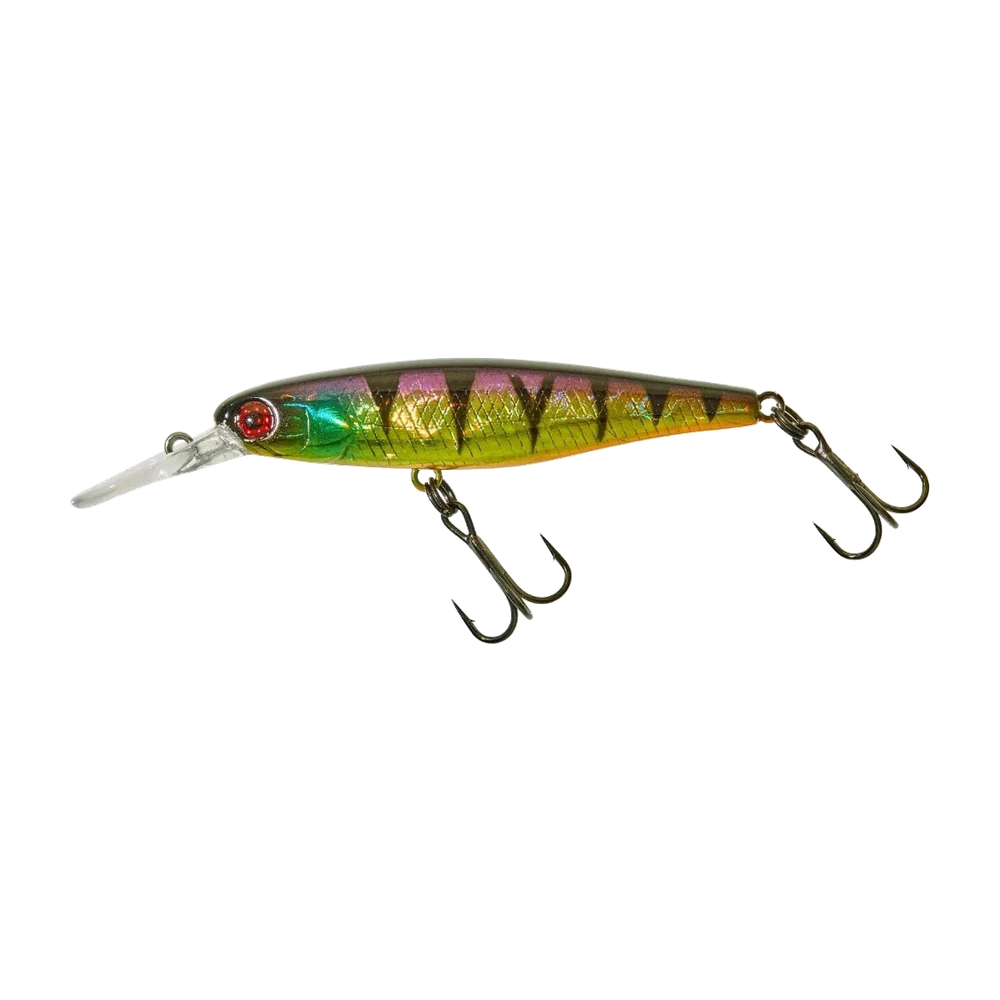
Illex Squirrel 61: the little jerkbait that unlocks difficult perch
Not sure this lure fits YOUR spot today? CarnaFish tells you in 10 seconds, from a photo.
Perch have an irritating habit: they follow the lure to the angler's feet, inspect it, then turn away. That is the sign of an interested but unconvinced fish — and it is exactly the situation the Squirrel 61 is built to unlock. Its suspending density lets it stay perfectly still between two movements, at precisely the depth the fish is holding, long enough to turn an inspection into an attack.
What "suspending" means in practice
A floating lure rises the moment you stop; a sinking one drops. The Squirrel is balanced to do neither: it stays put, suspended.
For a hesitating perch that difference is decisive. A lure that rises leaves its comfort zone and forces it to move upward. A lure that sinks escapes it. A motionless lure stays in its field of vision without fleeing — behaviour no healthy prey would show, and which the predator eventually reads as weakness.
The retrieve: twitch, then wait
The technique comes down to two movements.
- Two or three short twitches of the rod tip, wrist only, tip pointed down. The lure darts tightly, left then right.
- A pause, one to five seconds depending on how active the fish are. Most takes happen during that pause.
The length of the pause is the only setting that really matters:
- Active fish, warm water: one second is enough, sometimes less.
- Passive fish, cold water, heavy angling pressure: go up to three, four, five seconds. It feels long, it is uncomfortable, and it is often what makes the difference.
Field rule: when a suspending lure produces nothing, the first thing to lengthen is not your casting distance, it is the pause.
Rigging either restrains or frees the lure
A suspending jerkbait is balanced at the factory to fine tolerances. Everything you add in front alters that balance.
- Fluorocarbon of 0.16 to 0.22 mm is the right compromise: discreet in clear water, thin enough not to weigh the nose down.
- A fine snap rather than a direct knot: it preserves freedom of movement. But choose a light one — a heavy snap pulls the nose down and destroys the suspending balance.
- The stock hooks are fine wire and calibrated. Replacing them with heavier models adds weight under the belly and turns a suspending lure into a slow sinker.
Where to use it
The Squirrel works between 0.8 and 1.2 m, which places it exactly in the zone where perch hunt along the margins.
- Along jetties and rock revetments, running it as close to the structure as possible.
- On shallow weed edges, where perch push fry.
- On a located shoal of perch: that is where it excels, because you can work the same spot at length without the lure leaving the zone.
It has no value for fast searching over large areas, nor beyond 1.5 m: it is a lure for working a spot, not for finding one.
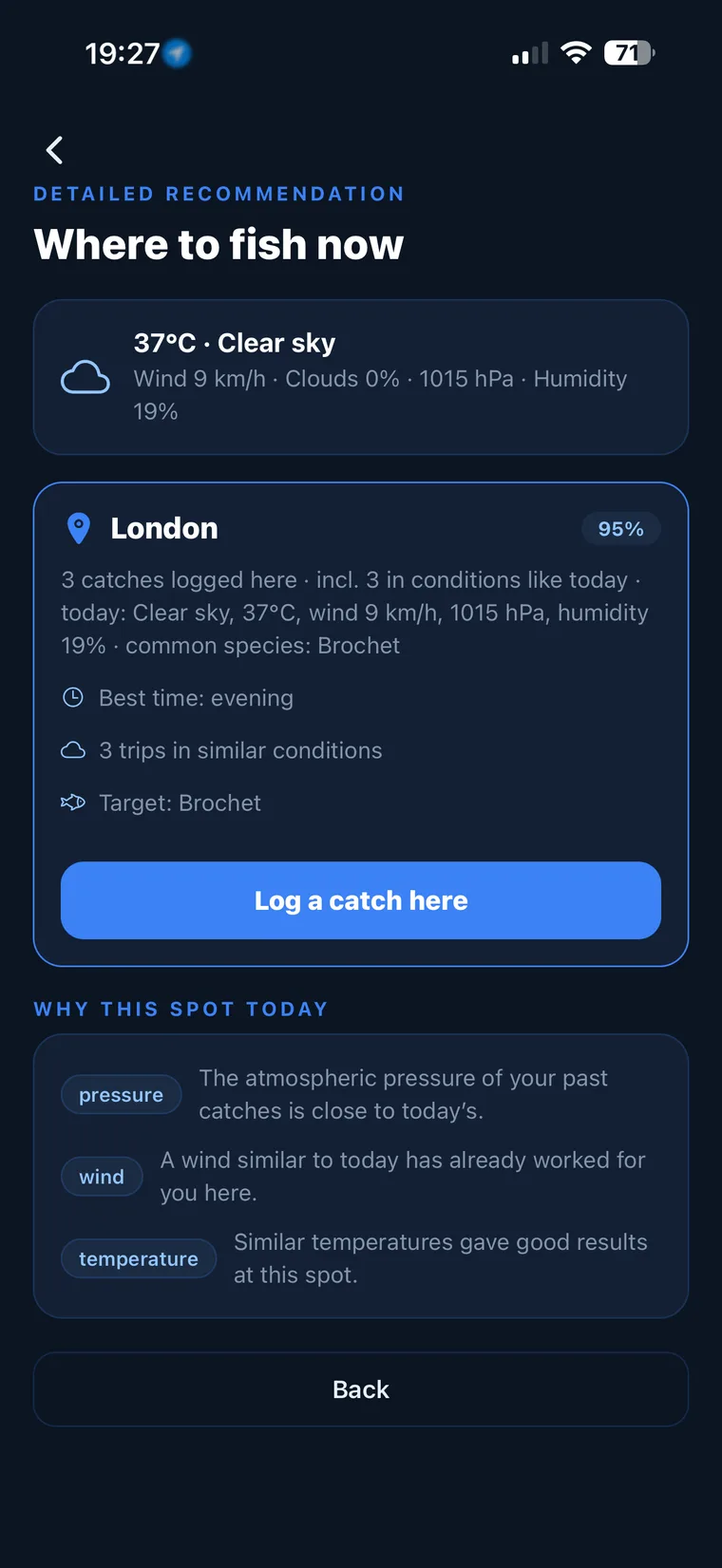
Not sure what to tie on?
Photograph your spot: CarnaFish reads the scene, cross-checks the conditions and gives you the zone, the lure and the retrieve. Free on iOS and Android.
The size, and when to go smaller still
Six centimetres is already small, but it is still bigger than a young-of-the-year fry in late summer. If perch keep refusing, the reflex is not to change colour but to go down a size — or to slow down further.
Colours
- Clear water, full sun: natural minnow or roach tones, with discreet silver flanks.
- Overcast: a little more contrast, a darker back.
- Slightly stained water: stronger tones, but stay in the natural register — in clear water a garish finish scares educated perch away.
Squirrel or a soft lure
On a difficult perch the contest is often between this kind of jerkbait and a small, finely rigged soft lure. The jerkbait keeps the advantage when the fish is active but wary: it stays in the zone, it flashes, it provokes. A soft lure takes over when the fish is completely passive and glued to the bottom, where you need an almost motionless presentation and an even smaller profile.
To go further on this species, our perch lure fishing guide covers the spots and the seasons. And if you want to know whether the margin in front of you suits a patient approach, CarnaFish analyses a photo and suggests one.
Key points
- Suspending means motionless on the stop: that is what breaks a perch that is inspecting.
- Two or three twitches, then a pause — and the pause is the main setting.
- Fine fluorocarbon and a light snap: heavy terminal tackle destroys the suspending balance.
- A lure for working a known spot, not for fast searching.
- If nothing bites: lengthen the pause before changing colour.
FAQ
How long should the pause be?
From one second on active fish to four or five seconds in cold water or on pressured fish. If the wait feels uncomfortable, you are probably in the right range.
Why does my Squirrel sink instead of suspending?
Almost always the rigging: a snap that is too heavy, hooks replaced with larger models, or fluorocarbon that is too thick. Go back to the stock setup with fine line.
What depth does it work at?
Between 0.8 and 1.2 m. Beyond that you need a different lure: no retrieve will take it significantly deeper.
Does the Squirrel 61 catch anything other than perch?
Yes, occasionally small pike and river trout, but its fine hooks and delicate balance make it a lure for modest-sized fish above all.
What should I do if perch follow without attacking?
Lengthen the pause first. If that is not enough, drop a lure size rather than changing colour — profile matters more than shade to an educated perch.
Snap or direct knot?
A fine snap works well and makes changes easier, provided it stays light. A direct knot also works but slightly restricts the amplitude of the darts.
The full perch lure guideSeason-by-season strategy: which family of lure, when, and why.Go from theory to fish
CarnaFish reads your spot from a photo and gives you the game plan: zone, lure, retrieve. Free on iOS and Android.