ZipBaits Rigge 56: the tiny minnow that unlocks difficult perch
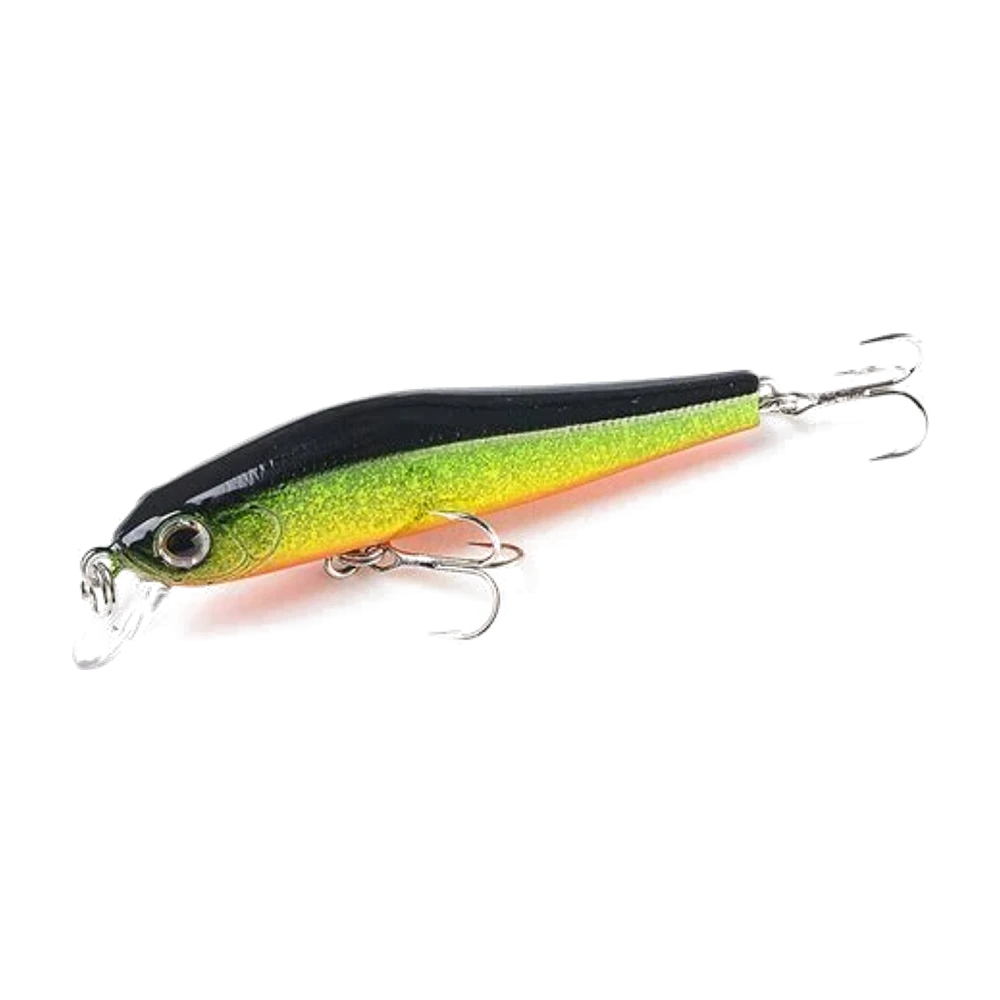
This lure shines under specific conditions. CarnaFish tells you in 10 seconds if today is one of them.
For perch, the majority reflex is a soft plastic: a shad on a jig head, drop shot, ned rig. That works and it catches a lot of fish. But there are days when the perch follow the soft plastic without taking it, circle it, and leave.
The Rigge 56 exists for exactly that. It is a tiny suspending minnow whose signal has nothing in common with a soft plastic's, and that change of nature often unlocks fish you have seen but not caught.
A tight roll, not a wide action
Most small minnows swim by undulating: the body moves sideways, the tail follows. The Rigge does something else. It rolls on its long axis with very low amplitude and a high frequency.
In practice that produces:
- A fast shimmer rather than visible travel. The flanks bounce light back in micro-pulses.
- A high-frequency vibration that a perch picks up at close range through its lateral line, without the deep signal of a shad.
- An almost straight path, which lets you run it precisely along an obstacle.
It is a fine signal, suited to clear water and to fish that have already refused something more demonstrative.
The retrieve: short twitching
The movement is close to a jerkbait's, but on a reduced scale.
- Cast and retrieve two turns to bring the lure to its depth.
- Three to five very short twitches, rod tip low, minimal wrist movement — just a few centimetres.
- Pause of one to two seconds. The lure stays in its layer.
- Repeat, or slot in a phase of slow straight retrieve to change the signal.
On the water: with a 4 g lure, the classic mistake is pulling too hard. If the lure jumps out of the water or spins out, halve the travel of your movement. The Rigge answers tiny impulses.
On feeding perch, a simple straight retrieve is often enough. On perch sitting tight and wary, it is the twitch-and-pause sequence that makes the difference.
The tackle determines everything
A 4.4 g lure is not fished with a standard outfit.
- UL or L rod, 1.80 to 2.10 m, progressive action. A rod with too much power does not load on the cast and tears the lure out on the bite.
- Fluorocarbon in 0.12 to 0.16 mm, or fine braid with a fluoro leader. Line that is too thick completely restricts the tight roll.
- Reel in size 1000 to 2000. Anything bigger and the imbalance makes twitching tiring and imprecise.
That is where most attempts go wrong: mounted on a zander outfit, this lure does none of what it is capable of.
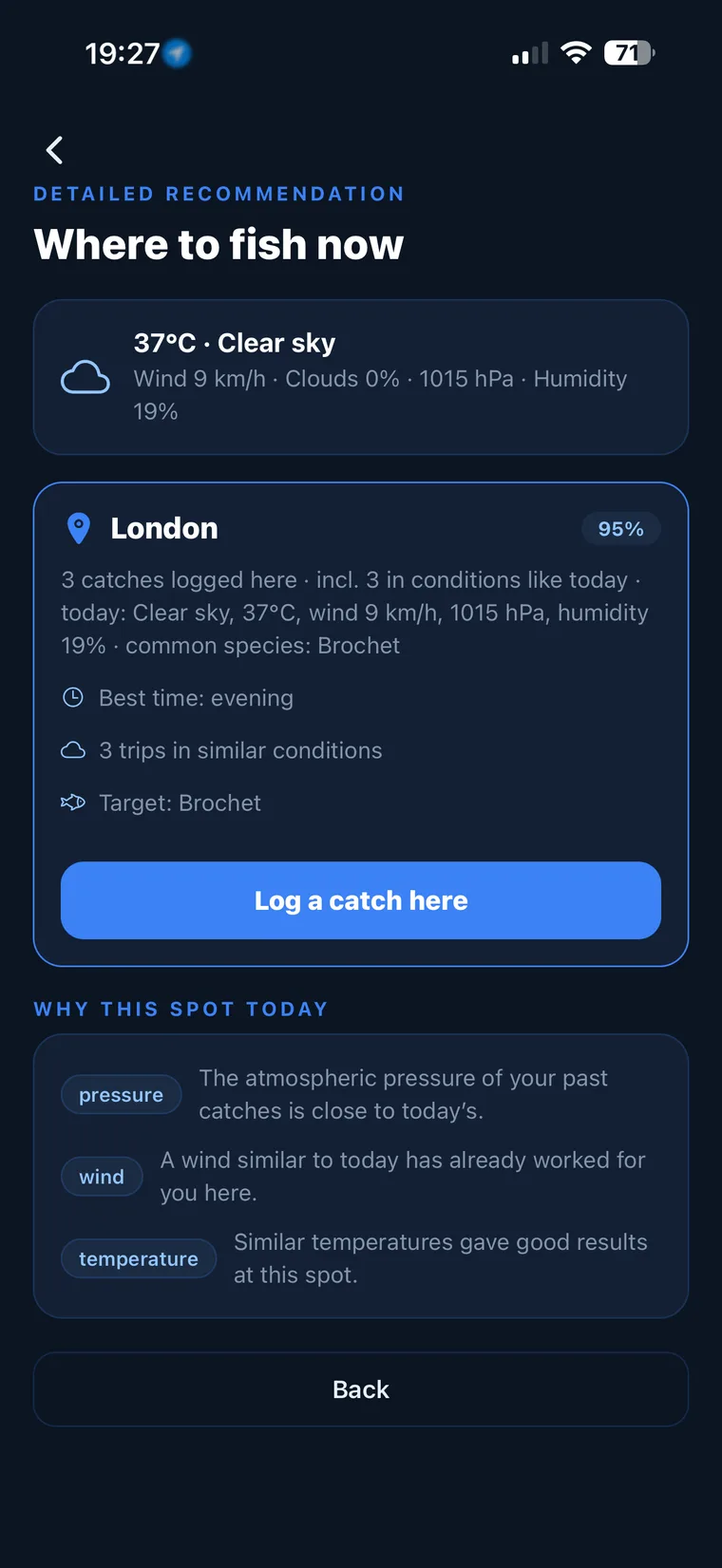
Not sure what to tie on?
Photograph your spot: CarnaFish reads the scene, cross-checks the conditions and gives you the zone, the lure and the retrieve. Free on iOS and Android.
Where it takes the advantage
- Clear, shallow water, along margins, pontoons and rip-rap.
- Perch you can see that refuse soft plastics: the change of signal is often immediate.
- Trout rivers, where the same profile works on a controlled drift.
- Fish feeding on the surface on fry, when you need to imitate a 5 cm prey item.
It is the wrong choice as soon as you need to fish deep, cast far or deal with wind: its weight simply will not allow it.
Rigge 56 or Rigge 70
The Rigge 70 takes the same principle to 7 cm and around 5 g: it casts better, runs slightly deeper and brings zander and big perch into play. The 56 remains the size for difficult fish and very clear water.
Compared with a small crankbait such as the Diving Chubby 38, the Rigge offers a far more discreet signal: the crankbait vibrates hard and searches, the Rigge targets a fish you have already located.
Our guide to lure fishing for perch places the minnow among the other approaches. And if you have no idea what to tie on in front of visible but inactive perch, CarnaFish analyses a photo of the spot and suggests a line of attack.
Key takeaways
- A tight, high-frequency roll: a shimmer, not a wide swimming action.
- Very short twitches — a few centimetres — then a one to two second pause.
- A UL or L rod and 0.12-0.16 mm line are compulsory, or the lure does not work.
- Its main job is changing the signal when the soft plastic is being refused.
- Wrong for wind, distance and depth.
FAQ
What rod should you use with the Rigge 56?
A UL or L rod of 1.80 to 2.10 m with a progressive action. A more powerful outfit does not load on the cast with 4.4 g and causes fish to come off, especially perch with their fragile mouths.
How should you work it?
Three to five very short wrist twitches, then a pause of one to two seconds. The travel must stay minimal: if the lure jumps or spins out, you are pulling too hard.
What depth does it run at?
Between 0.5 and 1 m. It is a margin and shallow-water lure, designed for shallow, clear spots.
When should you prefer it to a soft plastic?
When the perch follow the soft plastic without taking it. The minnow offers a signal of a different nature — a shimmer and a high-frequency vibration instead of the beat of a tail — and that change often unlocks fish you have seen but not caught.
What line should you use?
Fluorocarbon of 0.12 to 0.16 mm, or fine braid with a fluoro leader. Heavier than that and the line restricts the tight roll that makes the lure worth using.
What is the difference with the Rigge 70?
The 70 is 7 cm for around 5 g: it casts better, runs a little deeper and brings zander and big perch into play. The 56 stays superior on difficult fish and in very clear water.
The full perch lure guideSeason-by-season strategy: which family of lure, when, and why.Go from theory to fish
CarnaFish reads your spot from a photo and gives you the game plan: zone, lure, retrieve. Free on iOS and Android.