Jackson Qu-On Verita: the jerkbait that makes a following perch commit
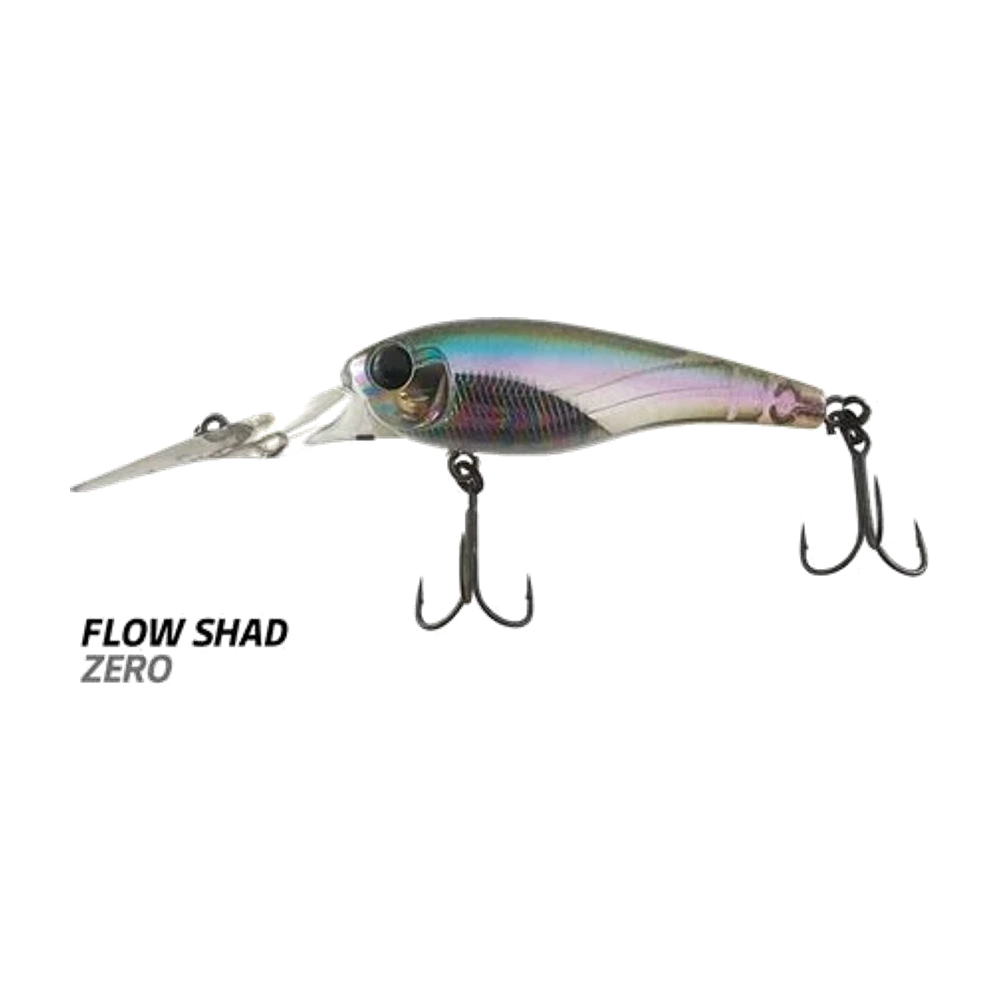
Not sure this lure fits YOUR spot today? CarnaFish tells you in 10 seconds, from a photo.
Anyone who fishes for perch in clear water knows the scene: a squad of three or four fish glued to the lure over the last five metres, stopping dead at the bank, turning, heading back off. Nothing. Ten casts later, the same thing. You can see the fish, you know where they are, and they will not take.
The problem is almost never the colour. It is that the perch has had time to inspect. A steady swim gives it three seconds of observation, and three seconds is all a perch needs to decide this is not a minnow.
The Qu-On Verita attacks the problem through movement. Every twitch kicks the lure out of line over a short but very sharp distance, then leaves it completely still. The fish stops following: it loses the lure, finds it again, and attacks before it has had time to think.
A short dart, not a wide hook
Plenty of jerkbaits are built to slide a long way to the side. That is spectacular, but on perch it is often counterproductive: the lure moves away from the fish and breaks the follow.
The Verita produces a tight sideways dart, in the order of twenty to thirty centimetres, and comes back into line almost instantly. Three effects:
- The lure stays inside the fish's strike zone. A perch following forty centimetres back is still within reach after the twitch, whereas a wide hook leaves it behind.
- The flank shows twice in half a second. Two short, closely spaced flashes look far more like a fry breaking away than one long continuous glint does.
- The stop is immediate and clean. No residual drift: the lure stops where the twitch put it.
That last point is the real trigger. On perch, the bite comes within the second after the stop, not during the movement. A lure that keeps gliding after the jerk misses that window.
The retrieve: two jerks, one pause, and count
- Cast and let the lure settle for a second after it hits the water.
- Three or four turns of the handle to bring it to its running depth, around a metre.
- Two short twitches, wrist only, rod tip pointed at the water. The distance is counted in centimetres, not metres.
- Stop, actually counting the seconds. This is the one variable you will change all day.
- Take up the slack during the stop without moving the lure, so you are in contact if the bite comes.
- Repeat all the way to the bank, and above all: work the last three metres. Followers often commit at your feet.
| Water temperature | Pause length | Number of twitches |
|---|---|---|
| Above 18 °C | 0.5 to 1 s | 3 to 4 |
| 12 to 18 °C | 2 to 3 s | 2 |
| 8 to 12 °C | 4 to 6 s | 1 to 2 |
| Below 8 °C | 8 s and more | 1 |
On the water: when a perch follows without taking, change neither lure nor colour — change the path. Run the lure past an obstacle (a post, a stump, a slab edge) and time your stop for exactly the moment it disappears behind it. The perch loses visual contact for a fraction of a second and strikes as soon as it finds the lure again. The same stop out in open clear water produces nothing.
Contact and tackle
A jerkbait this size needs a setup that transmits, not a powerful one.
The rod. A semi-parabolic action rated 5-20 g with a lively tip lets you give sharp twitches without ripping the lure. Too stiff a rod turns a short jerk into a violent one and knocks the Verita out of line.
The line. Fluorocarbon of 0.20 to 0.25 mm straight through, or fine braid with a metre of fluorocarbon leader. Straight fluorocarbon simplifies the retrieve and cushions the pull-offs that are common on perch hooked at close range.
The snap. A small fine snap passes without hurting the action and saves you time. Avoid thick ones, which close the angle of the lip and make the lure dive deeper than intended.
The hooks. Stay with wire diameters equivalent to the stock ones. On a finely balanced jerkbait, a heavier treble sinks the lure during the stop and removes the still phase — which is precisely what you came for.
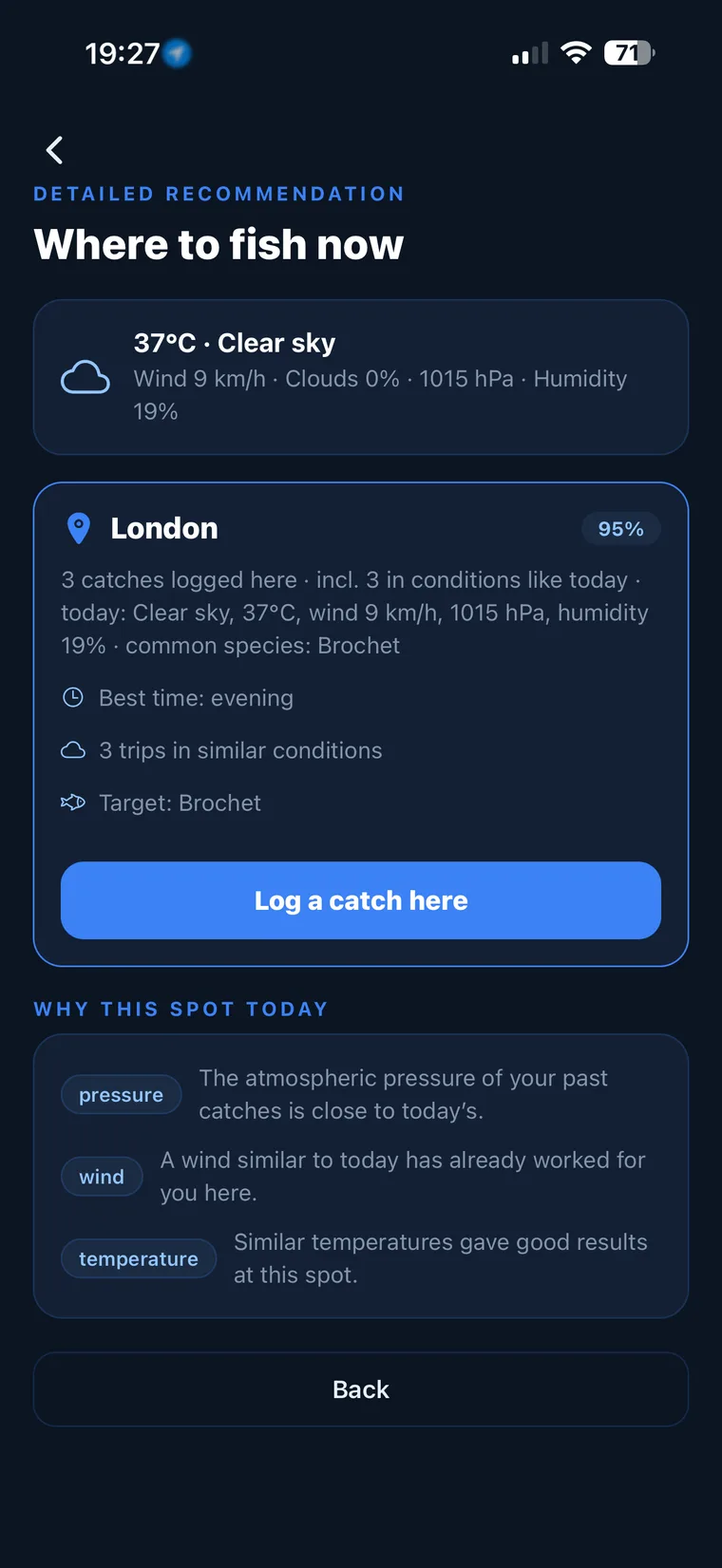
Not sure what to tie on?
Photograph your spot: CarnaFish reads the scene, cross-checks the conditions and gives you the zone, the lure and the retrieve. Free on iOS and Android.
Where it takes the lead, and where it is beside the point
Its windows:
- Clear rivers and canals in autumn and winter, when perch group up on drop-offs and rock armour.
- Gravel pit margins with slabs, boulders and hard ledges, where a pause tight to an obstacle is decisive.
- Bass in cold water in late autumn, on shallow clear spots, when the fish refuse anything fast.
- Heavily fished water, where a short-twitch retrieve stands out from the straight-swimming lures they have already seen a hundred times.
Where you should switch to something else:
- Stained or coloured water. The Verita plays on flash and on sight; with no visibility, a high-vibration lure covers far better.
- Fast searching over large areas. The jerk-and-pause rhythm forces a slow retrieve; you do not cover ground.
- Deeper layers. Beyond a metre and a half, you are fishing above the fish.
- Dense weed beds, where two exposed trebles quickly become a problem.
Verita or a longer jerkbait
The Lucky Craft Pointer 100 is the benchmark of the category, but it is aimed first at adult bass and pike: longer, heavier, a wider dart. On river perch, that size often draws follows without closing the deal. The Verita takes the same pause-based logic into a size that matches what perch actually eat.
Against an Illex Squad Minnow 95 SP, the difference is in amplitude: the Squad Minnow opens up more and searches better; the Verita stays tight and works a spot you have already identified. If you are looking for fish, start with the first; if you know where they are and they refuse, switch to the second.
Our guide to lure fishing for perch explains how to run those two phases in the same session. And if you are unsure which layer to target along an unfamiliar margin, CarnaFish analyses a photo of the spot and answers.
Key takeaways
- A short, sharp sideways dart and a clean stop: the lure stays in the fish's strike zone.
- The bite comes within the second after the stop, never during the movement.
- Pause length is set by temperature, from under a second to more than eight.
- Time the stop to coincide with an obstacle that hides the lure: it is the most reliable trigger there is.
- With no visibility, or over a large area to search, this is the wrong lure.
FAQ
Why do perch follow the lure without attacking it?
Because a steady swim gives them time to inspect. A short jerk followed by a hard stop removes that observation phase: the fish loses sight of the lure and attacks on finding it again rather than judging it.
How long should the pause be?
From half a second in warm water to more than eight seconds below 8 °C. When in doubt, lengthen it: in cold water, too short a pause costs you far more than too long a one.
What rod should I use with this jerkbait?
A semi-parabolic action rated 5-20 g with a lively tip. Too stiff a rod turns the short twitch into a violent move, knocks the lure out of line and multiplies pull-offs on perch hooked at close range.
How deep does it run?
Around 0.8 to 1.3 m depending on speed and line. Thick fluorocarbon takes it slightly deeper, holding the rod high keeps it higher in the water column.
Does it work on bass?
Yes, especially in late autumn and winter on shallow clear spots. Its fairly compact size suits medium-sized bass better than big ones, which usually respond better to a longer jerkbait.
Should I change the stock trebles?
Only if they are blunt, and always for an equivalent wire diameter. A heavier treble sinks the lure during the stop and destroys the stillness that is the whole point of the model.
The full perch lure guideSeason-by-season strategy: which family of lure, when, and why.Go from theory to fish
CarnaFish reads your spot from a photo and gives you the game plan: zone, lure, retrieve. Free on iOS and Android.