Illex Tiny Fry 50: the micro minnow for perch that refuse everything
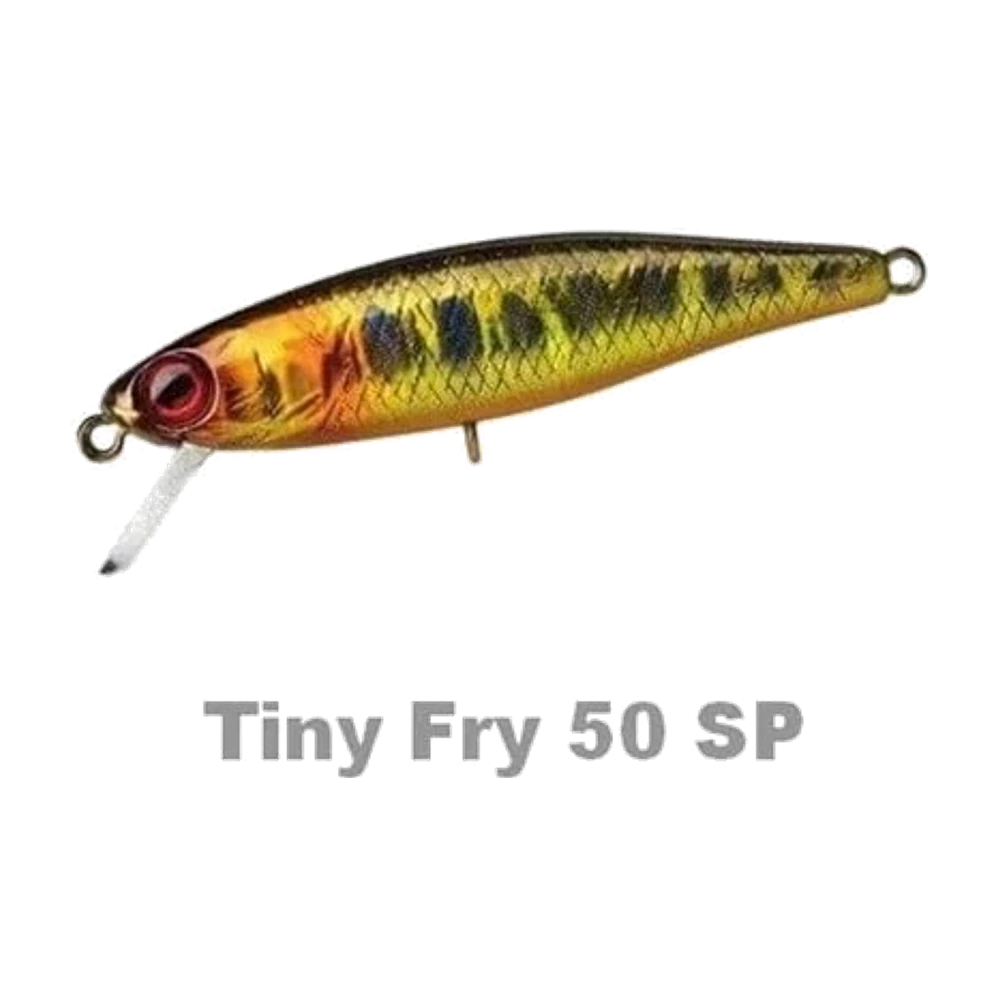
This lure shines under specific conditions. CarnaFish tells you in 10 seconds if today is one of them.
In late summer and autumn the margins fill up with fry. Perch feed on them constantly, and yet sessions often get harder: you can see the surface activity, you cast into it, and nothing answers.
The reason is almost always the same. Your 8 or 10 cm lure is three times bigger than what the perch are eating. The Tiny Fry closes that gap.
Imitating a fry, not a fish
Five centimetres, two and a half grams, a slim translucent body: the Tiny Fry does not imitate an adult baitfish, it imitates a lone fry separated from its school.
That is an important distinction. When a perch attacks a ball of fry, it rarely targets the centre — it takes the individuals drifting away from it. A lure reproducing exactly that profile and that behaviour slots into a feeding pattern already under way.
Its roll is tight and fast, with no marked sideways travel: the signal is weak but realistic, like a fry wriggling without going anywhere.
The retrieve: miniature twitching
The scale of the movement is what matters most.
- Cast into the feeding frenzy, or just alongside it.
- Two or three very short twitches, a few centimetres, wrist only.
- A one-second pause.
- Repeat, or switch to a slow straight retrieve for a few metres.
On the water: with 2.5 g on the end of the line, a normal stroke throws the lure clean out of the water. Divide your twitching amplitude by three compared to a standard jerkbait. The rod tip should barely move.
An effective alternative on apathetic perch: a very slow straight retrieve, with no twitch at all. The roll alone is sometimes enough.
The tackle decides everything
This is where most attempts fail.
- A UL rod, 1.80 to 2.10 m, progressive action. A standard perch outfit will not load with 2.5 g.
- 0.10 to 0.14 mm fluorocarbon. Heavier and the line completely restrains the tight roll.
- A size 1000 to 2000 reel. A bigger reel unbalances the outfit and makes fine twitching impossible.
Mounted on a zander outfit, this lure does none of the things it is good at — and that is why so many anglers find it disappointing.
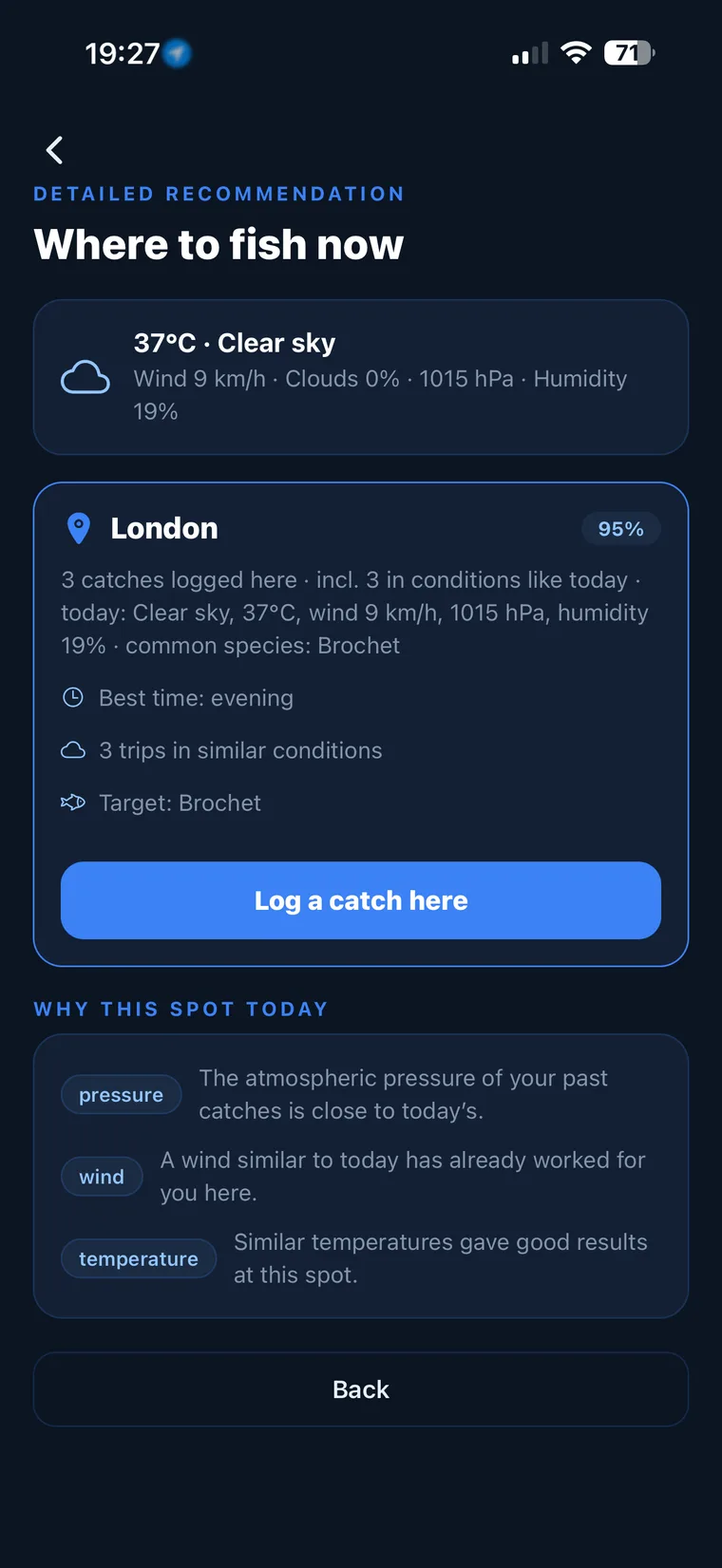
Not sure what to tie on?
Photograph your spot: CarnaFish reads the scene, cross-checks the conditions and gives you the zone, the lure and the retrieve. Free on iOS and Android.
Where and when
- Late summer and autumn, during fry-feeding activity along the margins.
- Clear, shallow water: jetties, rip-rap, gravel beaches.
- Small harbours and docks, where fry concentrate.
- Trout rivers, where the same profile works on the calmer lies.
It is unsuited the moment you need to cast far, fish deep, or deal with wind — its weight rules that out.
Tiny Fry or a small soft plastic
A micro shad on a light jig head covers a neighbouring role, but it sinks and fishes on the bottom. The Tiny Fry stays high in the water column, exactly where fry get hunted.
That is the difference that counts: when perch are feeding at the surface, a lure that sinks passes below the activity and is never seen.
Against a ZipBaits Rigge 56 the gap is narrow: the Rigge offers a slightly stronger roll and better casting behaviour; the Tiny Fry a slimmer, more translucent profile, often better in very clear water.
Our guide to lure fishing for perch covers the feeding windows. And if you can see surface activity but cannot convert it, CarnaFish analyses a photo of the spot and suggests a line of attack.
Key takeaways
- It imitates a lone fry, not an adult baitfish — the right size while perch are feeding on fry.
- Twitches of only a few centimetres: divide your usual stroke by three.
- A UL rod and 0.10-0.14 mm fluorocarbon are compulsory, otherwise the lure does not work.
- It stays high in the water column, where the surface activity happens.
- Unusable in wind, at distance or at depth.
FAQ
Why such a small lure?
Because when perch are feeding on fry, they target prey of 3 to 5 cm. An 8 or 10 cm lure is three times too big and gets ignored, even in the middle of active feeding.
What retrieve should you use?
Two or three very short twitches of a few centimetres, wrist only, followed by a one-second pause. With 2.5 g, a normal stroke throws the lure out of the water: divide your usual amplitude by three.
What tackle do you need?
A UL rod of 1.80 to 2.10 m with a progressive action, 0.10 to 0.14 mm fluorocarbon and a size 1000 to 2000 reel. On a standard outfit, the lure does not load the rod on the cast and does not work.
When should you use it?
In late summer and autumn while perch are feeding on fry, in clear shallow water: jetties, rip-rap, small harbours. That is the period when the size gap between lure and prey costs you most.
Why choose a hardbait over a micro shad?
Because it stays high in the water column. A shad on a jig head sinks and fishes on the bottom, which takes it below the activity when perch are feeding at the surface.
Does it work for trout?
Yes, very well on calm river lies and small clear streams. Its weight does not, however, allow it to hold in a fast current seam.
The full perch lure guideSeason-by-season strategy: which family of lure, when, and why.Go from theory to fish
CarnaFish reads your spot from a photo and gives you the game plan: zone, lure, retrieve. Free on iOS and Android.