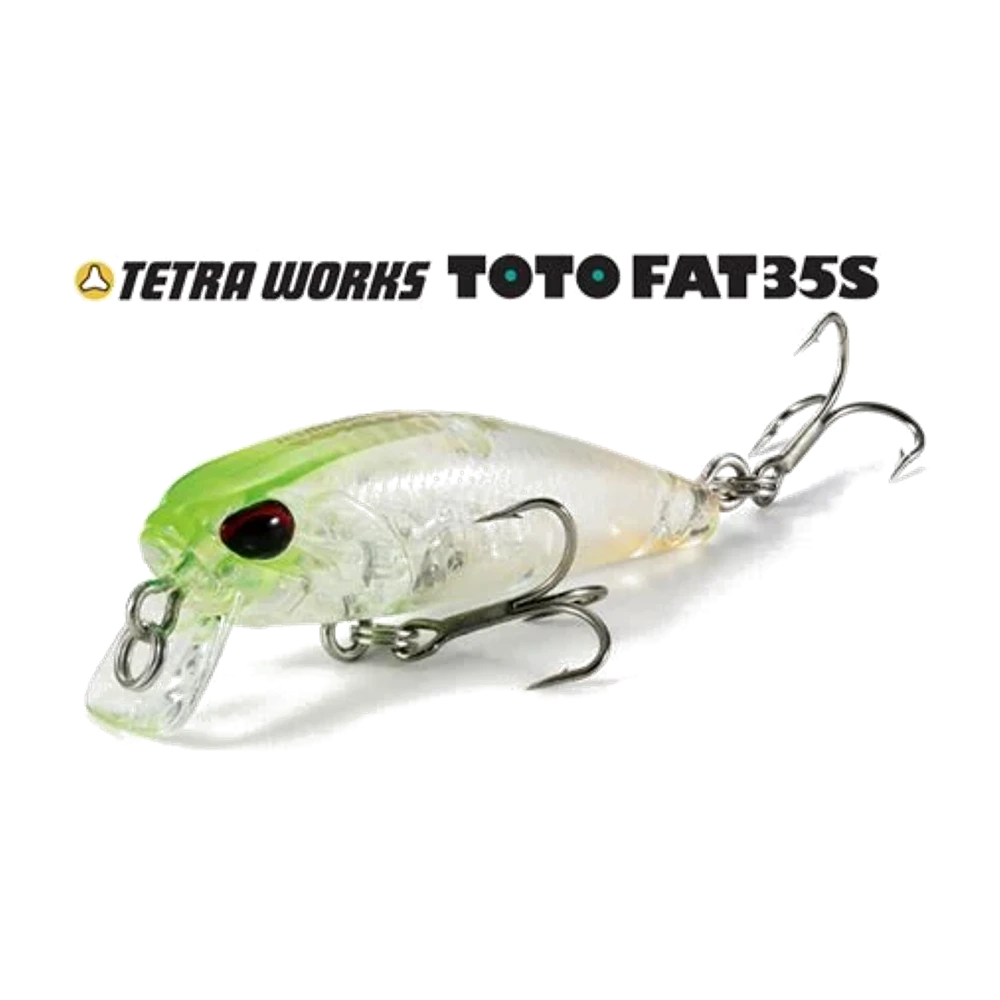
DUO Tetra Works Toto: three grams that cast far and count down
One lure, endless conditions. CarnaFish reads your spot from a photo so you are not just guessing.
Ultralight fishing has one recurring frustration: you know the fish are fifteen metres out, against the bridge footing or on the edge of the sandbar, and your three-gram lures cannot get there. You end up fishing at eight metres by default, because that is where they land. And when you finally do reach the zone with something heavier, it is too big for the fish that are feeding.
The second problem is vertical. Most micro minnows float or suspend, so they are stuck in the top fifty centimetres. On the day the perch are sitting at two and a half metres over a flat, they are useless.
The Toto answers both at once, because it sinks. The same mass that lets it fly a long way off a UL rod also lets it go down, and go down in a controlled way. With one lure, you open up the entire water column.
Why a sinking lure changes the logic in ultralight
On a floating or suspending lure, running depth is a fixed figure imposed by the lip. You put up with it. On a sinking lure, depth becomes a setting you choose yourself, cast after cast.
The mechanism is simple:
- You count. After the splashdown, count the seconds before you start reeling. Each second corresponds to a roughly constant amount of drop.
- You memorise. When a bite comes, remember the count. You have just found the day's layer, and you can reproduce it on every cast.
- You sweep. With no bites, raise the count two seconds at a time until you touch bottom, which also tells you the depth of the spot.
For this size, reckon on about one second per twenty-five to forty centimetres depending on the version and your line diameter. It is not a universal constant: establish your own by counting down to bottom contact once on a spot whose depth you know, and you have it for the season.
The other benefit is ballistic. The Toto uses a rearward weight transfer on the cast, which stabilises the lure in flight. With a UL rod and fine braid, you gain a third more distance over a floating micro minnow of the same size.
The retrieve: straight first, twitches second
Unlike many micro minnows, it does not need twitching to come alive. Its rolling action already reads on a continuous retrieve, which makes it a lure a beginner can use.
- Cast and count according to the layer you are targeting.
- Start the retrieve slow and even. Look for the minimum speed at which you feel the vibration in the rod tip.
- Add a one to two second stop every eight to ten turns. The lure starts sinking again, and the perch very often decides on that restart.
- Finish more slowly over the last few metres, lifting the rod slightly.
The useful variant on a locked-up fish is different and worth trying: two short rod pulls, then give line completely and let the lure glide back down, almost flat. That sideways descent, very different from the vertical drop of a soft plastic, produces a lot of bites from perch that follow without committing.
On the water: with a sinking micro lure, you almost never feel a bite during the descent. Watch the line lying on the water — if it suddenly stops sinking or moves off to the side, that is a bite, and it is already ending. Set with a simple stiffening of the wrist, never a big sweep: on 0.12 mm line, a wide hookset breaks more than it hooks.
The setup, which matters as much as the lure
In ultralight, a bad setup cancels out everything the lure has to offer.
| Item | Recommended choice | Why |
|---|---|---|
| Main line | 0.04 to 0.06 mm braid, or 0.14 mm mono | Braid gives distance and detection |
| Leader | 0.10 to 0.16 mm fluorocarbon, 50 cm to 1 m | Discretion and abrasion resistance on rock |
| Connection | Direct knot, or a light micro snap | A standard snap weighs down the lure's nose |
| Rod | UL, 1.8 to 2.1 m, 1 to 7 g rating | The tip has to load with 3 g |
The detail most often overlooked: snap size. On a three-gram lure, a two-gram snap is two thirds of the weight added at the front. It changes the attitude, kills the roll and wipes out the horizontal descent. If you want to change lures quickly, use a fine micro snap, or accept that you will be retying.
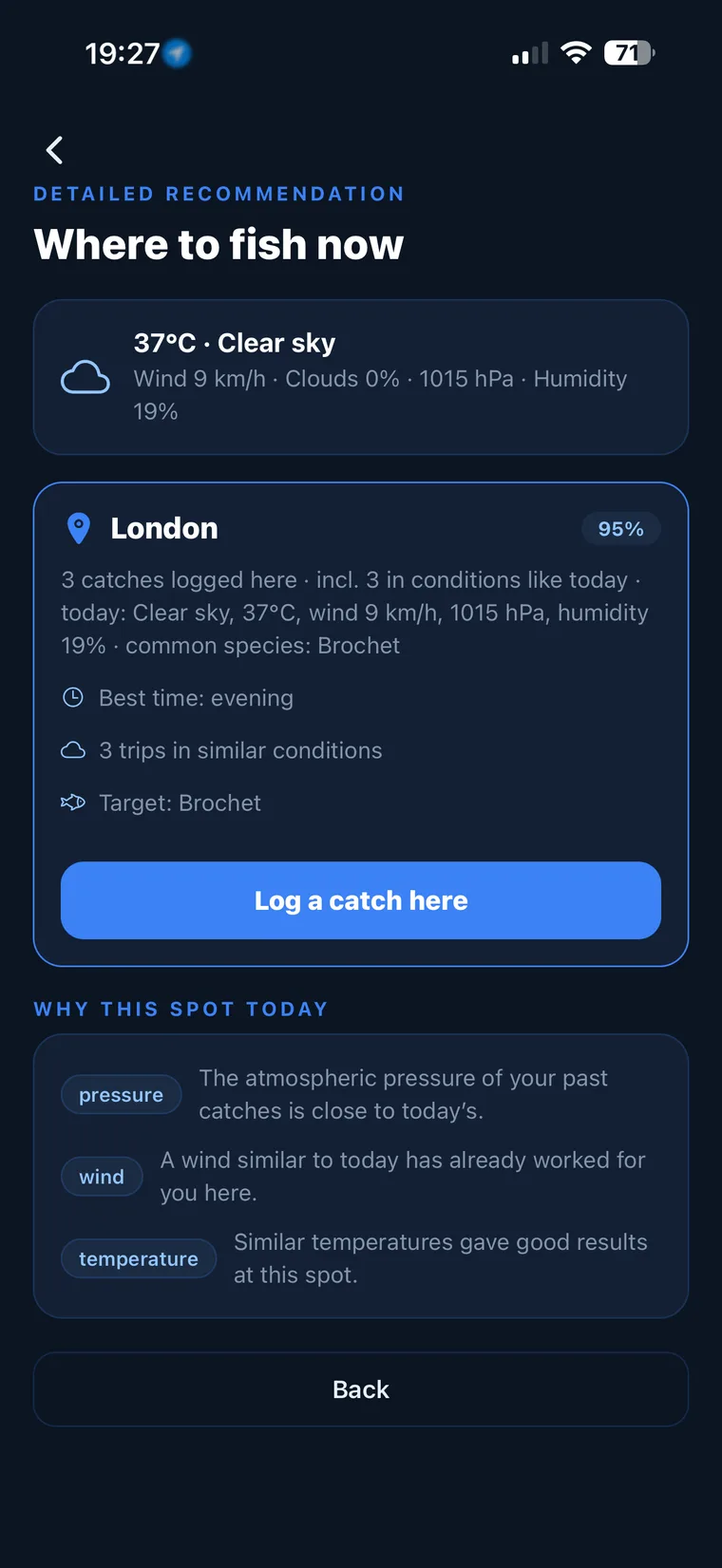
Not sure what to tie on?
Photograph your spot: CarnaFish reads the scene, cross-checks the conditions and gives you the zone, the lure and the retrieve. Free on iOS and Android.
Its home ground, and where it has no business
It makes sense:
- On gravel pit margins and perch flats, between one and three metres, where a floating lure stays too high.
- In rivers for trout, casting upstream with a retrieve just faster than the current.
- Around harbours and quays, where you need to reach a distant structure with a discreet lure.
- In moderate wind, where its concentrated mass keeps a decent trajectory while a floating lure flutters away.
It is the wrong choice in three cases. Along heavily weeded margins, a sinking lure drops into the vegetation the moment you pause. In very strong current, its mass is not enough to hold. And on fish pinned under the surface and rising, a floating or suspending model stays easier to hold in the top twenty centimetres.
Toto, Tiny Fry or Rigge: three micro minnows, three uses
These three often end up in the same box, and yet they do not replace one another.
The Illex Tiny Fry 50 is a suspending lure that plays on stillness: you twitch it delicately, you stop, and it hangs in the top thirty to eighty centimetres. It is the lure for perch hunting fry near the surface that refuse anything moving continuously. It demands precise rod work and it does not go down.
The ZipBaits Rigge 56 relies on the refinement of its action on a straight retrieve, with a beautifully worked roll at low speed, but it too is confined to the upper layer.
The Toto does not try to beat them at their own game. It opens up the ground they do not cover: casting distance and depth. On the day the perch are just under the surface, take the Tiny Fry. On the day they are at two and a half metres, twenty metres from the bank, neither of the other two gets there. Our guide to perch fishing with lures explains how to identify the active layer before choosing. And if you are unsure what depth to target when you arrive at a margin, CarnaFish analyses a photo of the spot and answers.
Key takeaways
- A sinking lure: depth becomes a setting you dial in by counting, not a constraint imposed by the lip.
- Reckon on about one second per 25 to 40 cm, and memorise the count on the first bite.
- The action reads on a slow straight retrieve: it does not need twitching to work.
- The decisive variant on a locked-up fish: two pulls, then give line and let it glide flat.
- A snap that is too heavy ruins the attitude of a 3 g lure. Micro snap or direct knot.
FAQ
Does the Tetra Works Toto really sink?
Yes, it is a sinking micro minnow. That is precisely what lets it cast a long way off a UL rod and reach layers that floating or suspending micro minnows cannot get to.
How do you know what depth it is running at?
By counting. After the splashdown, count the seconds before you start. About one second per 25 to 40 cm depending on version and line. Establish your own figure by counting down to bottom contact on a spot whose depth you know.
Does it need to be twitched?
Not necessarily. Its rolling action works on a slow straight retrieve. Add short pulls followed by slack line only when fish follow without committing: the resulting flat descent often triggers them.
How does it differ from the Illex Tiny Fry 50?
The Tiny Fry suspends and stays in the top 30 to 80 centimetres, worked with delicate twitching. The Toto sinks, casts much further and lets you fish down to two or three metres. The two complement each other rather than replacing each other.
What line for a 3 g lure?
Braid of 0.04 to 0.06 mm with a 0.10 to 0.16 mm fluorocarbon leader, or 0.14 mm mono if you prefer to keep it simple. The fluorocarbon leader is mainly there to resist abrasion on rock.
Can you fish it for trout in rivers?
Yes, casting upstream with a retrieve slightly faster than the current to keep contact. Its mass lets it hold in moderate flow, but it gets pushed out of a fast seam.
The full perch lure guideSeason-by-season strategy: which family of lure, when, and why.Go from theory to fish
CarnaFish reads your spot from a photo and gives you the game plan: zone, lure, retrieve. Free on iOS and Android.