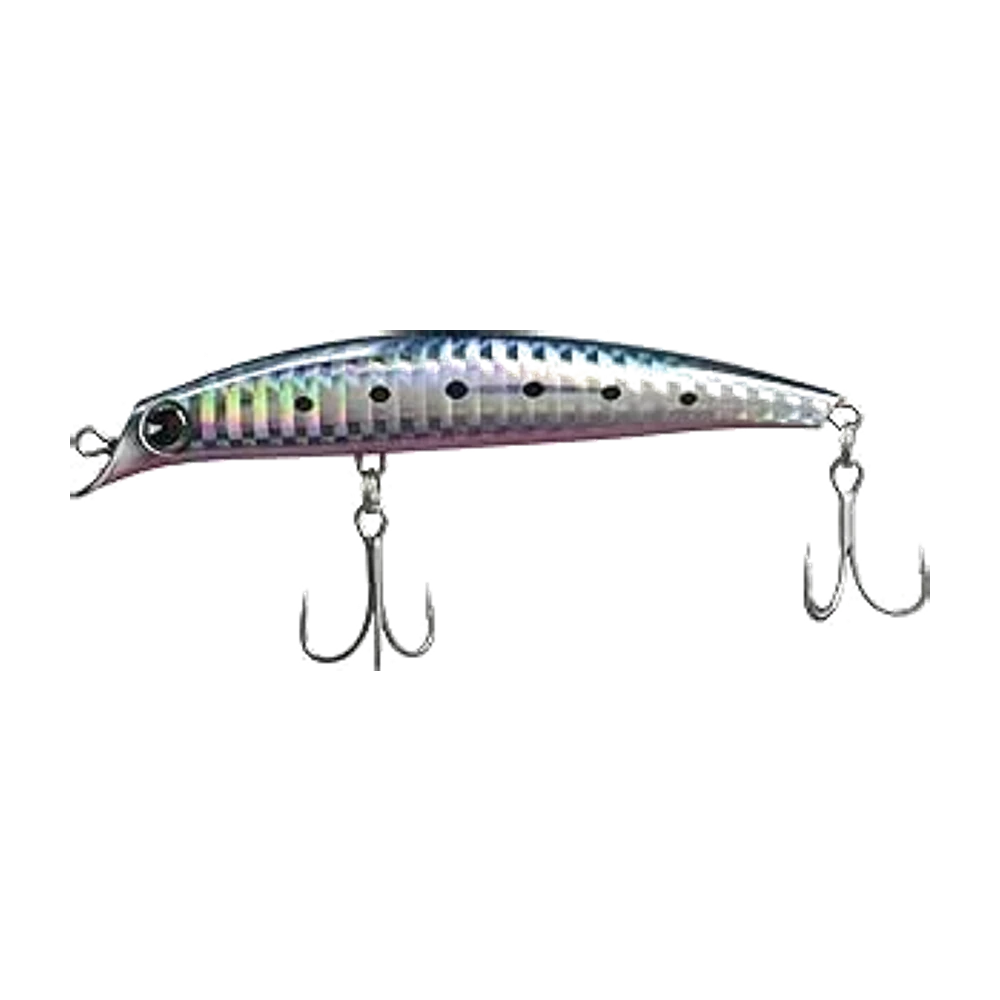
Ima Sasuke: the minnow that holds in current without blowing out
Rather not fish it blind? Photograph your spot — CarnaFish cross-checks the conditions and points you the right way.
Fishing for sea bass in a lane of moving water throws up a problem nobody meets in freshwater: the lure spins out. A standard minnow presented into a strong tidal current starts rotating on itself, rises to the surface and becomes unusable.
The Sasuke was designed around that exact problem. It keeps a stable action in currents where most minnows blow out, which has made it a benchmark for sea bass in estuaries and tide races.
Holding in current, concretely
Three design elements contribute.
A weight transfer system moves a ball to the rear on the cast, then brings it forward on the retrieve. The lure casts a long way while regaining a stable, nose-forward balance that stops it spinning out.
A short, wide lip that bites into the water without creating excessive resistance. It keeps the lure in its layer without pulling it deeper when the current speeds up.
A tight roll rather than a wide wobble. Less amplitude means less purchase on the current, so less risk of blowing out.
The practical result: you can present the lure into the current, across it, or let it drift, and it never stops working.
The controlled drift
This is the go-to technique with this lure, and it runs counter to a standard retrieve.
- Cast across or slightly upstream of the current.
- Let the current carry the lure, taking up only the slack you need to keep in contact.
- Do not actively retrieve. The lure works off the speed of the water, not yours.
- Follow the drift with the rod to control the path and take the lure along structure.
On the water: in current, a sea bass sits behind an obstacle, head into the flow, and waits for food to come to it. A lure swimming up against the current is an absurdity in its eyes. A lure drifting naturally in the flow is a meal.
The best spots are current breaks: rocky points, bridge piers, channel entrances, the edges of sandbanks.
Reading the tide
The Sasuke gives its maximum during the phases of established current, not at slack water.
- Two hours either side of high water: sea bass move up to feed in little water, and surface and subsurface models dominate.
- Mid ebb tide: the current is at its strongest, prey are swept along, and this is often the best window.
- At slack water: the current dies and the lure loses its engine. Switch to an active retrieve or change approach.
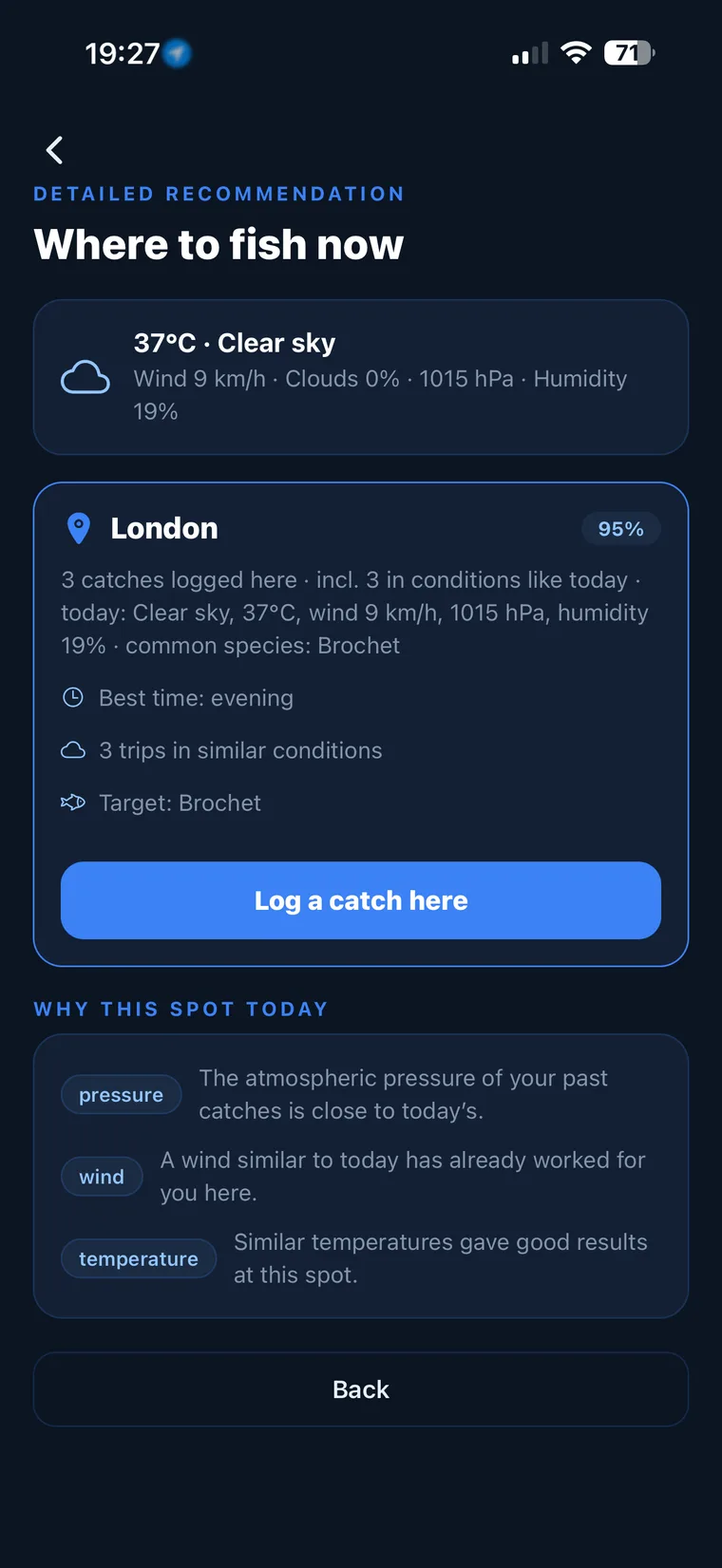
Not sure what to tie on?
Photograph your spot: CarnaFish reads the scene, cross-checks the conditions and gives you the zone, the lure and the retrieve. Free on iOS and Android.
Choosing the model
| Model | Use |
|---|---|
| 75 mm / 8 g | Harbours, small spots, modest sea bass |
| 95 mm / 12 g | All-round margin and estuary work |
| 120 mm / 17 g | Distance, strong current, good sea bass |
| 140 mm / 26 g | Big windy spots, large fish |
The 120 mm is the most used size on French coasts: it casts far, holds the current and matches the size of the dominant prey on most spots.
Rigging
Braid is all but compulsory for distance and for contact at long range. A fluorocarbon leader of 0.30 to 0.40 mm, a metre long, protects against abrasion on rock and stays discreet in clear water.
The stock hooks are decent but suffer in salt. A check after every session and regular replacement with heavy stainless trebles of equivalent weight avoid nasty surprises on a big fish.
Our guide to lure fishing for sea bass covers reading spots and tidal phases. And if you do not know how to approach a current spot, CarnaFish analyses a photo and suggests an approach.
Key takeaways
- Weight transfer and a tight roll: it holds current where standard minnows blow out.
- Fish it on a controlled drift — let the current work, take up only the slack.
- Sea bass sit facing the flow: a lure drifting naturally is believable, a lure swimming up against it is not.
- Mid ebb tide is often the best window; at slack water, change approach.
- The 120 mm covers most French spots.
FAQ
Why does the Sasuke hold current better?
Thanks to a weight transfer system that stabilises its nose-forward balance on the retrieve, a short wide lip, and a tight roll that offers little purchase on the flow. Those three things stop it spinning out where a standard minnow blows out.
What is a controlled drift?
It is a technique where you cast across the current and let the water carry the lure, taking up only the slack you need to keep contact. The lure works off the speed of the current, not the retrieve.
What is the best phase of the tide?
Mid ebb tide, when the current is most established and prey are being swept along. The two hours either side of high water are productive too, along the margins. At slack water the lure loses its engine.
Which model should you choose?
The 120 mm at 17 g covers most French spots. The 95 mm suits calmer margins and estuaries, the 140 mm big windy spots and large fish.
Do you need a fluorocarbon leader?
Yes, a metre of 0.30 to 0.40 mm. It protects against abrasion on rock and shell, and stays discreet in clear water. Braid alone breaks too easily against structure.
Should you change the hooks?
Check them after every session: salt water attacks them quickly. Replace them with heavy stainless trebles of equivalent weight so you do not alter the lure's balance.
The full sea bass lure guideSeason-by-season strategy: which family of lure, when, and why.Go from theory to fish
CarnaFish reads your spot from a photo and gives you the game plan: zone, lure, retrieve. Free on iOS and Android.