Ima Hound Glide: fishing bass on a tight drift instead of retrieving
Rather not fish it blind? Photograph your spot — CarnaFish cross-checks the conditions and points you the right way.
On a beach or in an estuary channel, the wind is almost always across and the tidal current sets the rhythm. In those conditions, two things kill a session: not reaching the zone where the bass are feeding, and winding the lure back too fast because you think you have to work it.
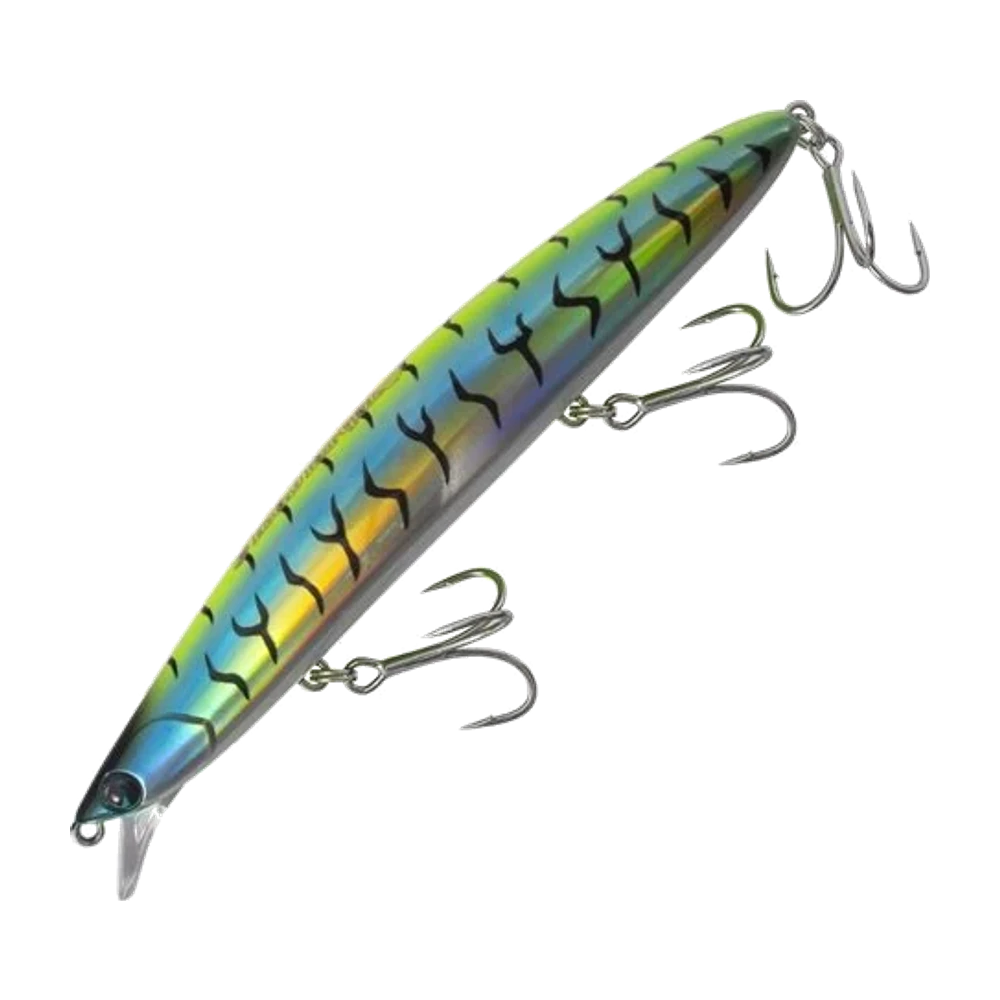
The technique that solves both is called the tight drift, and it demands a specific lure: dense enough to go a long way in a crosswind, wide enough in the swim to work on its own in the current, and stable enough not to blow out of the water in the wave. The Hound Glide is built around exactly that brief. This is not a lure you twitch, it is a lure you let fish.
A minnow built for wind and wave
Three things point it towards the coast rather than fresh water.
- A weight-transfer system. On the cast, a moving weight slides back in the body and stabilises the lure in flight: it goes out like an arrow instead of tumbling. On landing, the weight returns forward and the swim starts immediately.
- A wide rolling swim. The body tips from one flank to the other with real amplitude, producing a broad, slow flash that is visible at a distance in churned water. It is the opposite of the tight swim of a river lure.
- Forgiving buoyancy. The lure rises when you stop, which lets you get over rocks and sandbars without snagging, and start fishing again after a pause.
The swimming band stays high, between thirty and eighty centimetres. On most bass spots reachable from the shore — beaches, rocky points, channel mouths — that is precisely the layer feeding fish hold in.
The tight drift, step by step
- Cast across the current, or across the wind, at forty-five degrees downstream. Never straight in front of you.
- Stop the line and lift the rod to about sixty degrees as soon as the lure touches down.
- Let the current load the line. The lure starts swimming on its own, driven by the water pressure on the line. You retrieve nothing.
- Follow the drift, giving line if the lure starts to leave the seam, or winding slowly if it slows too much.
- Finish with five to ten slow turns as the lure comes round at the end of its swing, in line with you. Plenty of bites come at that precise moment, when the lure stops drifting and straightens up.
On the water: line tension is your only control over depth and speed. Tight line and the lure rides up and swims fast; slack line and it drops and slows down. Learn to play on thirty centimetres of slack rather than on reel speed — you control the swim far more finely, and you keep the lure in the current seam twice as long.
Choosing your stage of tide
Bass do not fish the same way at every point in the cycle, and that matters more than colour choice.
| Stage | Bass behaviour | What to do |
|---|---|---|
| Early flood | Fish coming in with the water, scattered | Search wide, long drifts |
| Two hours before high water | Fish feeding along the margins | Fish very close in, short casts |
| Slack water | Activity dropping off | Slow down further, work the drop-offs |
| Early ebb | The best window on many spots | Tight drift in the emptying channel |
| Low water | Fish concentrated in the gutters | Target holes and residual currents |
On a beach, add one simple observation: look for areas where the wave breaks irregularly. A breaker that stops signals a gutter, and a gutter on a flooding tide signals a spot.
Rigging and upkeep: what costs you dear
- 0.12 to 0.15 mm braid, no more. A bigger diameter catches the wind, limits distance and makes the line belly uncontrollably.
- A 0.30 to 0.40 mm fluorocarbon leader over one to one and a half metres. Bass are not especially line shy, but rocks and shellfish cut bare braid in a single fish.
- A round snap rather than a knot straight to the ring: you change lures in ten seconds between two sets of waves, and the rolling swim stays free.
- Hooks checked after every session. Salt water attacks fast; a rust-pitted treble breaks on the first good fish.
- A freshwater rinse, lure and reel, every time. That is the difference between tackle that lasts three years and tackle that lasts a season.
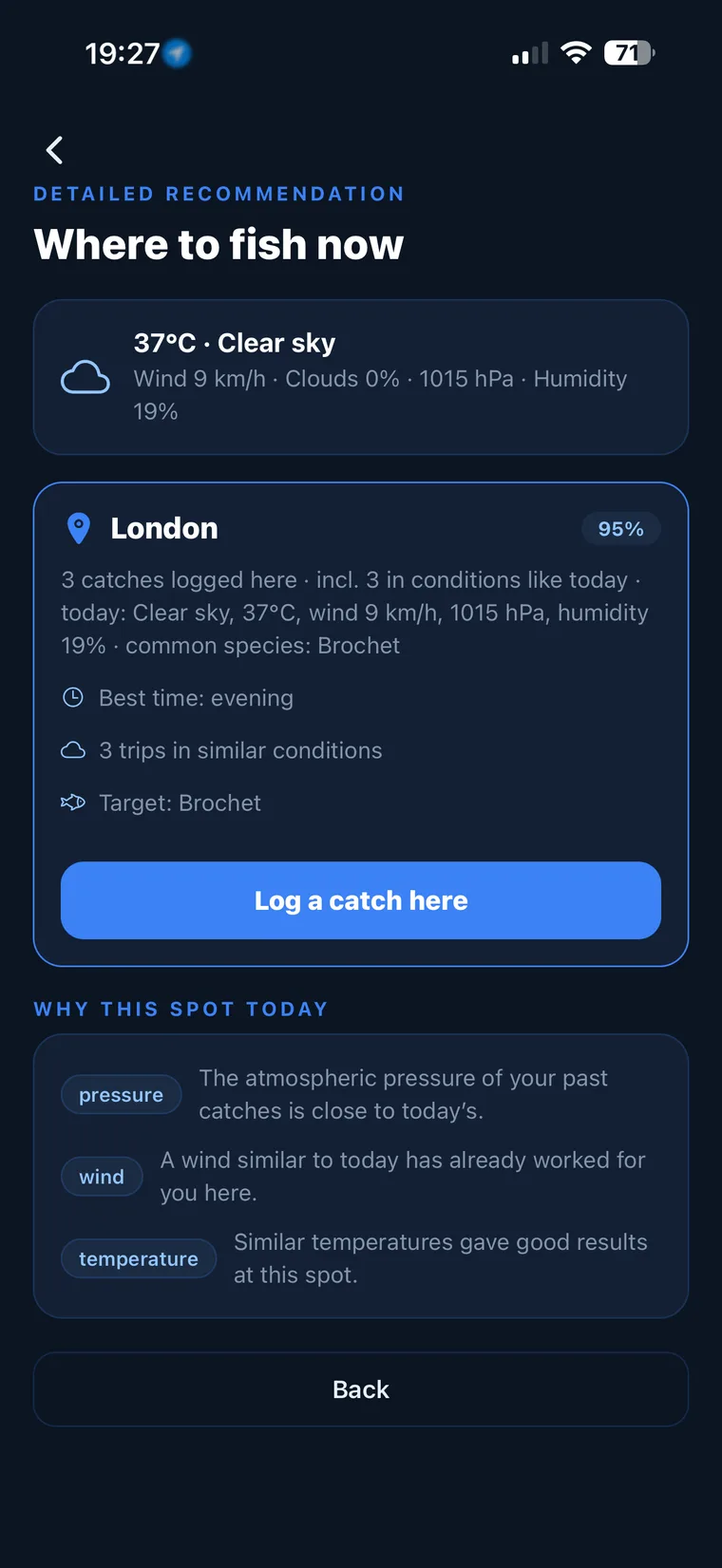
Not sure what to tie on?
Photograph your spot: CarnaFish reads the scene, cross-checks the conditions and gives you the zone, the lure and the retrieve. Free on iOS and Android.
Where it excels, where it is unsuited
Its windows:
- Gently sloping beaches with moderate waves, from spring to autumn.
- Estuaries and channels on the early ebb, when the current concentrates the baitfish.
- Rocky points with a pronounced lateral current.
- Night and dawn fishing, where the wide, slow swim beats faster lures.
Its limits:
- A completely flat sea and very clear water in broad daylight. The signal is too emphatic; a slimmer lure or a soft plastic will be better.
- Deep water. It stays in the top metre: beyond three metres with no fish showing at the surface, you are fishing an empty column.
- Bottoms of rocks breaking the surface at low water. Despite the buoyancy, two trebles eventually find the stone.
- Fresh water. Nothing forbids it, but it is oversized for most river and lake uses.
Hound Glide, Sasuke or Komomo
The Ima Sasuke is the logical companion: a slimmer profile, a more discreet swim, it becomes the better choice as soon as the water is clear and calm and the fish refuses a wide signal. The Hound Glide takes over in the opposite case, when the sea is up and the swim has to be perceptible in the disorder.
The Ima Komomo occupies a third patch of ground: very shallow, cut out for areas where the water is only a few tens of centimetres deep and you absolutely have to stay above the bottom. Over a sandbar or a beach at low water, it goes through where the Hound Glide touches.
Against a Tackle House Feed Shallow, the difference is mostly in the rhythm each will accept: the Feed Shallow takes a faster retrieve and stays stable, the Hound Glide gives its best at very low speed, on the drift.
In other words, these four lures are chosen first on the state of the sea and the depth of water, not on colour. Our guide to lure fishing for sea bass covers how to chain those choices across a full tide. And if you are unsure which lure to tie on facing a beach you are seeing for the first time, CarnaFish analyses a photo of the spot and answers.
Key takeaways
- It fishes on a tight drift: you cast across and let the current make the lure swim.
- Line tension controls both depth and speed, far more finely than the reel does.
- The weight transfer delivers distance in a crosswind without the lure tumbling in flight.
- The early ebb in a channel is its best window on most spots.
- Unsuited to a flat, clear sea in broad daylight, and to water over three metres with no visible feeding.
FAQ
How do you fish sea bass on a tight drift?
You cast at forty-five degrees across the current, lift the rod and let the water pressure on the line make the lure swim, without retrieving. You finish with a few slow turns as the lure straightens up in line with you.
How deep does the Hound Glide swim?
Between 0.3 and 0.8 m. Tight line and rod high, you stay in the top thirty centimetres; more slack and rod low, you reach the bottom of that band.
What set-up for shore fishing for bass?
Braid of 0.12 to 0.15 mm for distance and wind resistance, a fluorocarbon leader of 0.30 to 0.40 mm over one to one and a half metres against abrasion, and a round snap to change lures quickly.
Which is the best stage of tide?
The early ebb in a channel or an estuary mouth, when the current concentrates the baitfish. The two hours before high water are also very productive along the margins.
Should you work the lure or just retrieve?
Neither, most of the time. In current, the line alone is enough to make the lure swim. Save the occasional twitch for moments when the sea is flat and there is no current to do the work for you.
How do you look after it after a session in the sea?
A freshwater rinse of the lure, the hooks and the reel, drying before storage, and a systematic check of the points. A treble eaten into by corrosion breaks on the first decent fish.
The full sea bass lure guideSeason-by-season strategy: which family of lure, when, and why.Go from theory to fish
CarnaFish reads your spot from a photo and gives you the game plan: zone, lure, retrieve. Free on iOS and Android.