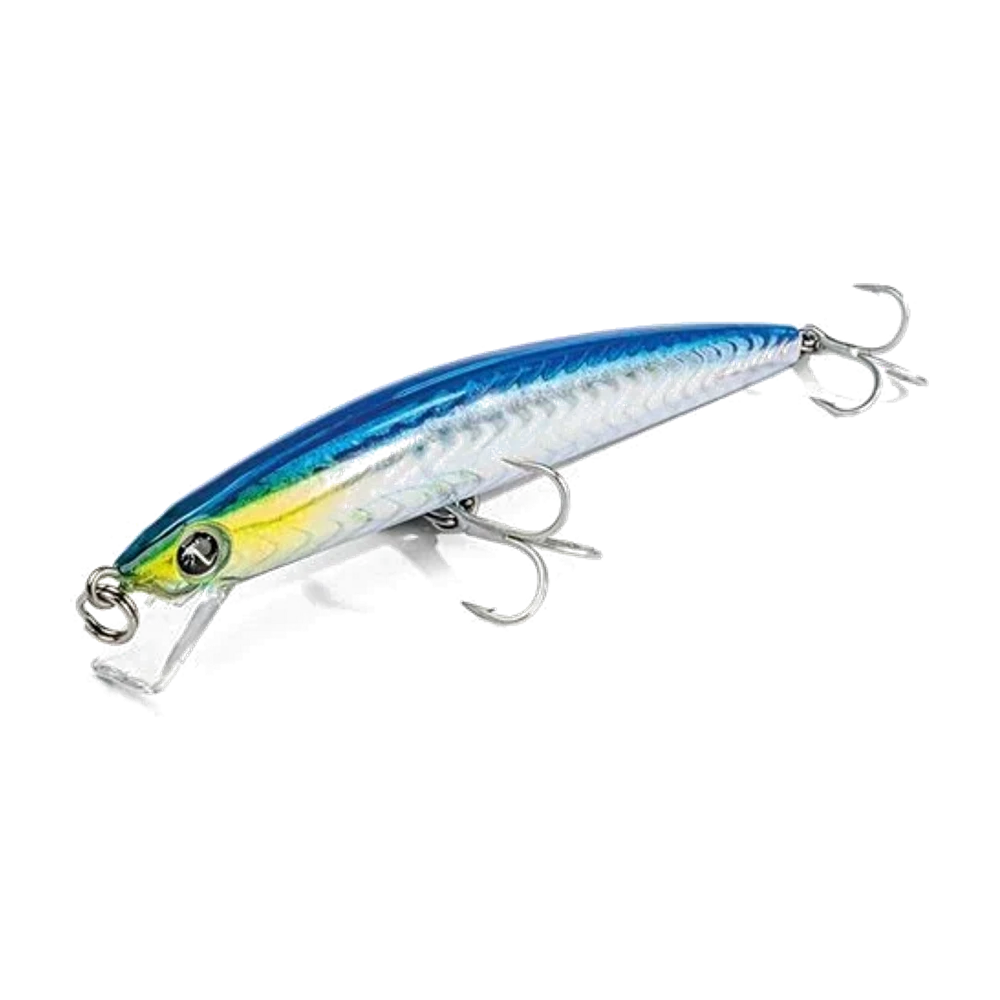
SeaSpin Mommotti: the sinking minnow that holds in the swell
The right lure in the wrong spot still catches nothing. CarnaFish spots the zone that works, from a single photo.
There is one situation most saltwater lures handle badly: rocky coast into the wind, with a metre of swell breaking over the ledges. The bass are there, feeding in the white water fifteen or twenty metres out. But a standard floating minnow cast into that wind lands at ten metres, gets rolled by the first wave, comes out of the water and spins its way back to the surface.
The Mommotti is built for that exact context. Its density lets it cut through wind, and its very tight swim lets it stay in broken water without breaking out. It is an exposed-coast lure, not a calm-estuary lure.
Put another way, it does not replace drift minnows. It fills the slot where those become unusable.
Sinking, but not to go deep
First idea to correct: a sinking saltwater minnow is not automatically a deep-water lure. On the Mommotti, the density buys you three things before anything else.
- Distance. The body is compact and heavy for its size, the flight path is flat, and the wind does not catch it at the end of the cast. Into a crosswind, that is often ten to fifteen metres gained over a floater of the same length.
- Grip in the water. In a breaking wave, a light lure gets thrown towards the surface. A dense lure stays engaged and keeps swimming while the wave passes over it.
- Control of the layer. You choose your depth with the sink count and the retrieve speed, not with a lip. Over rocky ledges where the bottom changes by a metre every few steps, that is finer than a fixed running depth.
The trade-off is that this lure sinks when you stop. Over rock at thirty centimetres, one pause a second too long and you are snagged. It is not a lure for pauses.
The retrieve: straight, and nothing else
This is probably the easiest lure to work in the whole saltwater range, and that is deliberate.
- Cast into the surf zone, beyond it if you can, aiming at the edge of the white water rather than its centre.
- Count it down: zero seconds over a ledge just under the surface, two to four seconds over a hole or a channel.
- Retrieve straight and continuously, rod at forty-five degrees, no twitching. You should feel a steady, fine vibration through the braid.
- Match the speed to the wave, not to your mood. When a swell rolls up behind the lure, speed up half a turn to keep contact. Once it has passed, go back to your original rhythm.
- Never stop dead over rock. If you need to slow down, drop the rod tip rather than stopping the handle.
- Fish it right to the rock at your feet. On the coast, a surprising number of bites come in the last three metres, as the lure runs along the drop at the edge.
On the water: on a rough coast, do not fish the white — fish its edge. Bass sit in the clear water just outside the wash, where they can see without being thrown about. Casting into the middle of the foam costs you contact with the lure and takes your retrieve out of the useful zone.
There is only one case where a variation helps: when the sea calms down and fish refuse the straight retrieve. Then give it two slow thirty-centimetre pulls every five or six turns of the handle, never letting the lure sink for more than a second.
Choosing the size by sea state
Size is picked on the state of the sea and the wind, not on the size of the bass.
| Conditions | Suggested size | Speed |
|---|---|---|
| Flat calm, no wind, clear water | 8 cm | Medium, steady |
| Small swell, crosswind | 9 to 11 cm | Brisk |
| Rough sea, headwind | 11 to 14 cm | Fast, constant contact |
| Fish feeding on small bait | 8 to 9 cm | Fast |
The principle: the more energy there is in the water, the more you go up in size and weight. A small model in a rough sea gets thrown around and you lose contact; a big model on a glassy day spooks fish over a shallow ledge.
The setup, piece by piece
The braid. 0.12 to 0.15 mm is plenty and gives you distance. Over sharp rock, do not go finer: you will lose lures at the first rub.
The leader. 0.30 to 0.40 mm fluorocarbon, one to one and a half metres. Over ledges covered in mussels and barnacles, take the top of that range: it is not the bass that breaks you, it is the rock.
The snap. Here, unlike with fine freshwater lures, it is recommended. Pick a heavy-duty model and change it as soon as it starts to open slightly. A fish lost on a tired snap in the surf is a lost lure too.
The trebles. Rinsed in fresh water after every session, replaced at the first spots of rust. In this kind of fishing, a compromised treble gives way at exactly the moment the fish runs into a wave.
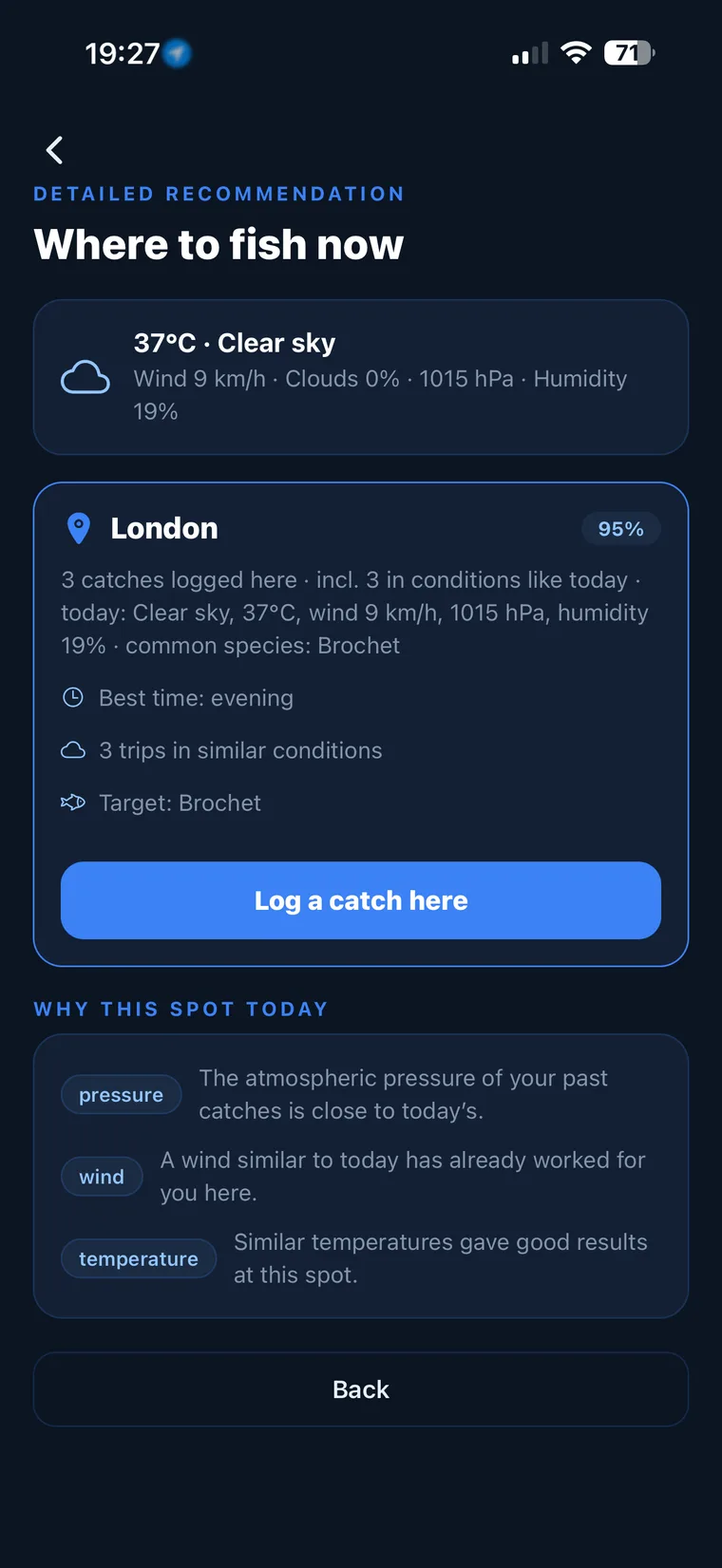
Not sure what to tie on?
Photograph your spot: CarnaFish reads the scene, cross-checks the conditions and gives you the zone, the lure and the retrieve. Free on iOS and Android.
Where it is not the right call
- Calm estuary and smooth tidal flow. The Mommotti works there, but it is over-specified for the job: a drift lure does it better and more delicately.
- Very shallow sand with no waves. Its density becomes a handicap: you either plough the bottom or have to crank too fast.
- Slow night fishing. You have to hold a certain speed to keep it engaged, which sits badly with the very slow retrieves you often want after dark.
Mommotti or a drift minnow: two opposite approaches
The Ima Sasuke is the archetypal current lure: you let the tidal seam carry it, retrieve slowly, and its main quality is not blowing out of the water in a strong flow. The Daiwa Morethan Switch Hitter plays the same ground with a sand eel profile and a very controlled drift. Both are built for water that moves, but stays smooth.
The Mommotti works in water moving in every direction: swell, wash, backwash. It is not chasing a drift, it is chasing grip and distance. When the sea gets up to the point where your estuary minnows become uncontrollable, that is the moment to change boxes.
Conversely, the Shimano Exsence Silent Assassin shares the distance argument but on a different buoyancy and a wider swim: keep that one for beaches and sandy ground, and save the Mommotti for rock. If you are unsure which size to clip on in front of a coast you do not know, CarnaFish reads a photo of the spot and answers.
Our guide to lure fishing for bass covers how to read a tidal coefficient and a wind direction before choosing where to stand.
Key takeaways
- An exposed-coast lure: density to cut the wind, a tight swim to hold in the wash.
- Continuous straight retrieve, no pauses. Any pause over rock costs you a lure.
- Fish the edge of the white water, not its centre.
- Size chosen on the state of the sea, not on the size of the bass.
- 0.30-0.40 mm leader and a heavy-duty snap: it is the rock that breaks you, not the fish.
FAQ
Does the Mommotti sink fast?
Fast enough that you have to count it down as soon as you are fishing over rock. Over a ledge just under the surface, start retrieving straight after impact; over a hole or a channel, two to four seconds is enough to reach the useful layer.
Should you work it with twitches?
No, its swim is built for a continuous straight retrieve. Pulls only become useful once the sea calms and fish refuse the straight version: two slow pulls every five or six turns, without letting the lure sink.
What size should you start with?
A 9 to 11 cm model covers most sessions on rocky coast. It casts far enough in a crosswind and stays usable when the sea drops off, unlike the bigger sizes.
What leader should you use?
Fluorocarbon of 0.30 to 0.40 mm over one to one and a half metres. Over ledges covered in mussels and barnacles, take the top of the range: abrasion on rock is the main cause of break-offs, well ahead of the fish.
Is it suitable for estuary fishing?
It works, but it is out of its element. In smooth water with steady current, a drift minnow presents the lure more finely and can be fished slower. Save the Mommotti for exposed coast and windy days.
Can you fish it at night?
Yes, but you have to keep enough speed to maintain its swim, which limits the point compared with lures designed for very slow retrieves. If you do use it after dark, favour solid colours, white or dark, over reflective finishes.
The full sea bass lure guideSeason-by-season strategy: which family of lure, when, and why.Go from theory to fish
CarnaFish reads your spot from a photo and gives you the game plan: zone, lure, retrieve. Free on iOS and Android.