Keitech Little Spider: the finesse spider jig for pressured water
The right lure in the wrong spot still catches nothing. CarnaFish spots the zone that works, from a single photo.
Late November, the water has dropped to ten degrees, the lake has been fished all summer and nothing that moves fast gets followed any more. This is the season you put the chatterbaits away and go down a gear: a small crayfish imitation set on a rock and shaken on the spot for ten seconds. The Little Spider was drawn for exactly that kind of fishing, and Keitech makes no secret of it.
A compound that changes how the bait sits at rest
The most interesting thing about this bait is not its shape, it is its material. Keitech states a PVC rubber compound that brings both elasticity and buoyancy to the bait, with a double payoff: more life in the water, and more fish per bait before the plastic tears.
Do not misread that buoyancy. The Little Spider is fished on a jighead, so the whole rig obviously sinks. What the material changes is the bait's posture once it is down. The arms and skirt ribbons do not collapse lifelessly onto the bottom — they stay slightly raised and keep moving in the faintest current. On a presentation where the bait spends 80 % of its time motionless, that is precisely what makes the difference.
The elasticity side is about durability. A conventional plastisol finesse creature splits around the jighead collar after two or three fish; a stretchier compound absorbs that deformation far better. On a bait sold five or eight to a pack depending on size, that matters.
Three sizes, three jobs
Keitech lists three, and the pack count changes with them:
- 2 in (5.1 cm), 8 per pack: the most discreet format, the one that turns the Little Spider into a perch bait on a 2 or 3 g head. Also an excellent small-jig trailer.
- 3 in (7.6 cm), 8 per pack: the middle size, the most versatile for slow bottom work on bass.
- 3.5 in (8.9 cm), 5 per pack: the bulkiest, for stained water or when you want to filter out small fish. The five-per-pack count tells you plainly it uses more material.
No weight is published, which makes sense: the weight that counts here is the jighead's, not the soft body's.
Set the bait down, then do not move it. Most anglers work it too fast because nothing seems to be happening. On a spider jig, stillness is the action: shake the rod without moving the bait forward and let the ribbons work for a good ten seconds before you gain a metre.
The recommended rigs
Weedguard jighead
Keitech explicitly names its own Fine Guard and Mono Guard heads, that is, jigheads fitted with a snag guard. The choice fits the intended use: you fish rock, laydowns and cluttered bottom, the places crayfish live, and a bare head hangs up constantly there.
Football head
The third rig the brand names is its Super Football head. A football head is the reference for dragging a crayfish imitation over hard bottom: the dumbbell shape stops it rolling onto its side and makes it stumble from rock to rock, lifting the bait in small jolts. A jig like the Keitech Crankin' Football Jig applies the same logic with a silicone skirt.
What about as a trailer?
Nothing stops you running the Little Spider behind a brush-guard jig, especially in 2 in, where it replaces a craw trailer and adds a very mobile soft skirt. It works, but it is not the use the manufacturer puts forward.

Not sure what to tie on?
Photograph your spot: CarnaFish reads the scene, cross-checks the conditions and gives you the zone, the lure and the retrieve. Free on iOS and Android.
The seasonal window the maker states
Keitech places the ideal moment for this bait after the crawdad spawn, which it situates from late fall into early winter. Treat that as a manufacturer's indication: the exact crayfish calendar varies by species and by water. What to take from it is the intent — a bait built for the cold months, when crayfish become the dominant prey because baitfish have pulled away from the margins.
The other stated context is heavily pressured water, where a finesse approach becomes compulsory. The two often overlap: late season, a lake that has seen everything, fish glued to the bottom. If you are fishing quiet water in midsummer, something broader like the Keitech Hyper Spider or a big-clawed craw will get more bites.
The classic mistake
Going too heavy on the head to "feel" the bottom. On a bait whose whole point is appendage mobility at rest, excess lead pins the skirt flat and cancels the benefit of that buoyant compound. If you cannot feel bottom with a light head, the culprit is usually line diameter or drift, not lead weight.
Second mistake: trying to fish it as a search bait. The Little Spider does not cover water. It is fished spot by spot, on a zone you have already identified — and that is not a flaw, it is the whole point.
Colours by water clarity
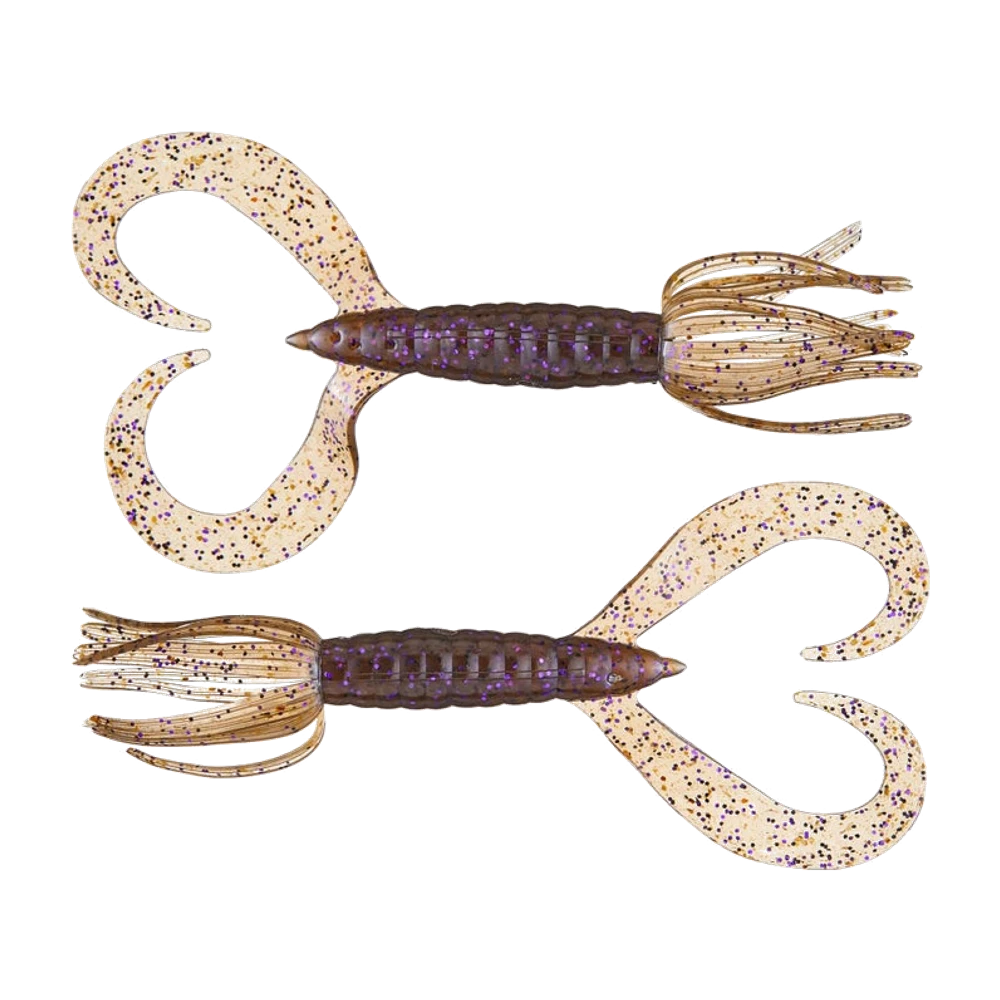
- Clear water: the Green Pumpkin with purple flake from the photo, a believable crayfish tone over rock, with just enough sparkle to register.
- Stained water: Green Pumpkin with orange claws, because orange is what crayfish pincers turn at certain stages and it stays readable in milky water.
- Dark water, silt bottom or deep work: Black Blue, a hard silhouette that no longer depends on light.
Knowing a spider jig is the right tool still does not tell you which rock to set it on. That is where CarnaFish comes in: one photo of the spot, and the AI suggests the zone to fish and the presentation that matches the day. To place this style of fishing in the year, our season-by-season predator fishing guide explains when crayfish overtake baitfish.
What to remember
- Three catalogue sizes: 2 in eight to a pack, 3 in eight to a pack, 3.5 in five to a pack. No weight is stated, since everything depends on the jighead.
- The PVC compound brings elasticity and buoyancy: the appendages stay mobile when the bait is at rest, and the plastic lasts longer.
- Weedguard heads or a football head is what the maker recommends, consistent with fishing cluttered bottom.
- A spot bait, not a search bait: fish it slowly, on water you have already read, and it shines on heavily pressured lakes.
FAQ
Which Little Spider size should I pick?
The 3 in is the core size for bass. Drop to 2 in on very clear water, on wary fish or when you are after perch; move up to 3.5 in in stained water or to filter out small bites.
Does the Little Spider float?
Keitech describes its PVC compound as adding buoyancy to the bait, but it is fished on a jighead, so the rig sinks. What that buoyancy changes is the posture of the arms and skirt once the bait is down: they stay mobile instead of flattening out.
Which jighead should I use?
Keitech points to its own weedguard heads and its football head. The logic holds with any brand: a snag guard for fishing rock and timber, a football shape for dragging hard bottom without rolling over.
What season is this bait best in?
The manufacturer positions it after the crawdad spawn, which it places from late fall into early winter. Read that as a cold-water window rather than a precise date, since crayfish cycles vary with species and water.
Is it any good for perch?
In 2 in, yes, on a light head worked very slowly over rocky bottom. The 3 in and 3.5 in sizes stay sized for bass.
How does it differ from the Hyper Spider?
The Keitech Hyper Spider is the modern redesign of the Little Spider: conical-segment skirt, Delta Head, wider claws and more signal overall. The Little Spider stays the plainer of the two, the one you keep for days when any excess spooks the fish.
The full bass lure guideSeason-by-season strategy: which family of lure, when, and why.Go from theory to fish
CarnaFish reads your spot from a photo and gives you the game plan: zone, lure, retrieve. Free on iOS and Android.