Luhr-Jensen Hot Shot: the diver that fishes without moving forward
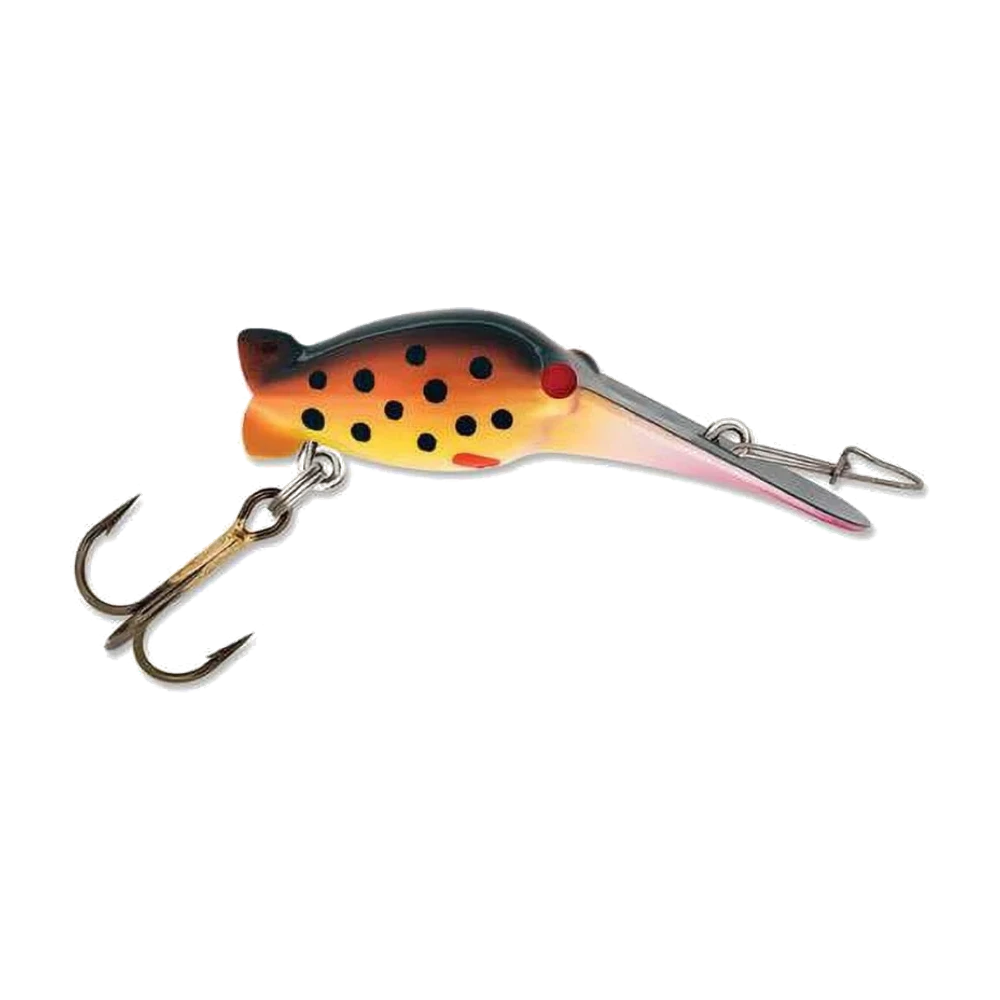
The right lure in the wrong spot still catches nothing. CarnaFish spots the zone that works, from a single photo.
There is one situation almost no lure handles: a trout sitting behind a big boulder, in strong current, that will not move thirty centimetres to attack. You can cast at it twenty times and your lure crosses its window of vision in a second and a half. It watches, it does not move.
The Hot Shot answers that in a way casting lures cannot reproduce: it swims without going anywhere. Its lip is sized so that the river's current alone is enough to make it work with the rod held still. The lure takes up position in front of the fish, stays there for ten, twenty, forty seconds, and it is that insistence — not speed — that eventually triggers a take.
It is a lure that came out of back-trolling from a drift boat, and it starts being interesting the moment you stop retrieving it like an ordinary crankbait.
A diver that plants itself rather than digs
The wide lip and the angle of the chunky body mean the Hot Shot planes by itself: the harder you pull, the deeper it goes and the harder it vibrates. That is the opposite of the common idea that a diving lure reaches a fixed depth regardless of speed.
Three practical consequences:
- Current alone is enough. A one metre per second seam working on a stationary lure is the equivalent of a slow retrieve. The lure works fully without you turning the handle at all.
- Depth is set by line length as much as by speed. The more line you feed into the current, the deeper it goes and the further from you it settles.
- The vibration is strong and fast. It is a marked roll, very audible through the line, which you feel constantly in the rod. The day you stop feeling it, it has picked up a weed: reel in immediately.
Fishing the Hot Shot on station in the current
Here is the basic sequence from the bank, on steady current and one to two metres of water.
- Position yourself upstream of the lie or across from it, never downstream. The lure has to come down to the fish, not up to it.
- Cast short, five to ten metres, and let the current take the lure.
- Feed line in fifty centimetre bursts, letting the lure settle each time. It works its way down the river step by step.
- Stop the line when it reaches the lie. The lure stays put, swimming against the current, rod fixed and line tight.
- Hold for twenty to thirty seconds. Actually count it. It feels long — that is the point.
- Take a metre of line back, then give it again. That small forward move often draws the strike straight away.
On the water: when the lure is on station, move it twenty centimetres sideways rather than forward. Half a step along the bank is enough. A trout that has refused ten passes down the same line will often take the first time the lure changes lane without changing depth.
Size and depth
The Hot Shot range is numbered, and the numbering is counter-intuitive: a higher number does not mean a bigger lure. Always go by the length printed on the packet, never by the number alone.
| Length | Working depth | Typical use |
|---|---|---|
| 3.5 to 4.5 cm | 0.8 to 1.5 m | Small rivers, average trout, clear water |
| 5 to 6 cm | 1.5 to 3 m | Medium to wide rivers, strong current |
| 6.5 to 7 cm | 2.5 to 4 m | Big rivers, high water, lake trolling |
Line matters as much as size. A fine 0.20 mm will easily gain you fifty centimetres of depth over a 0.30 mm, at the same speed and line length.
Where it rules and where it is useless
Its window is structured current: trout rivers with boulders, weirs, pool heads below riffles, and big rivers fished on the drift from a boat. It is also very good on a slow lake troll, in the small sizes, when trout are in the top three metres.
It is a poor choice in three cases. Dead water, where you have to retrieve it to make it swim and it loses its only real advantage. Very cluttered lies, because its wide lip and two trebles collect everything going. And fast searching: this is a lure that lingers on one lie while another angler covers ten.
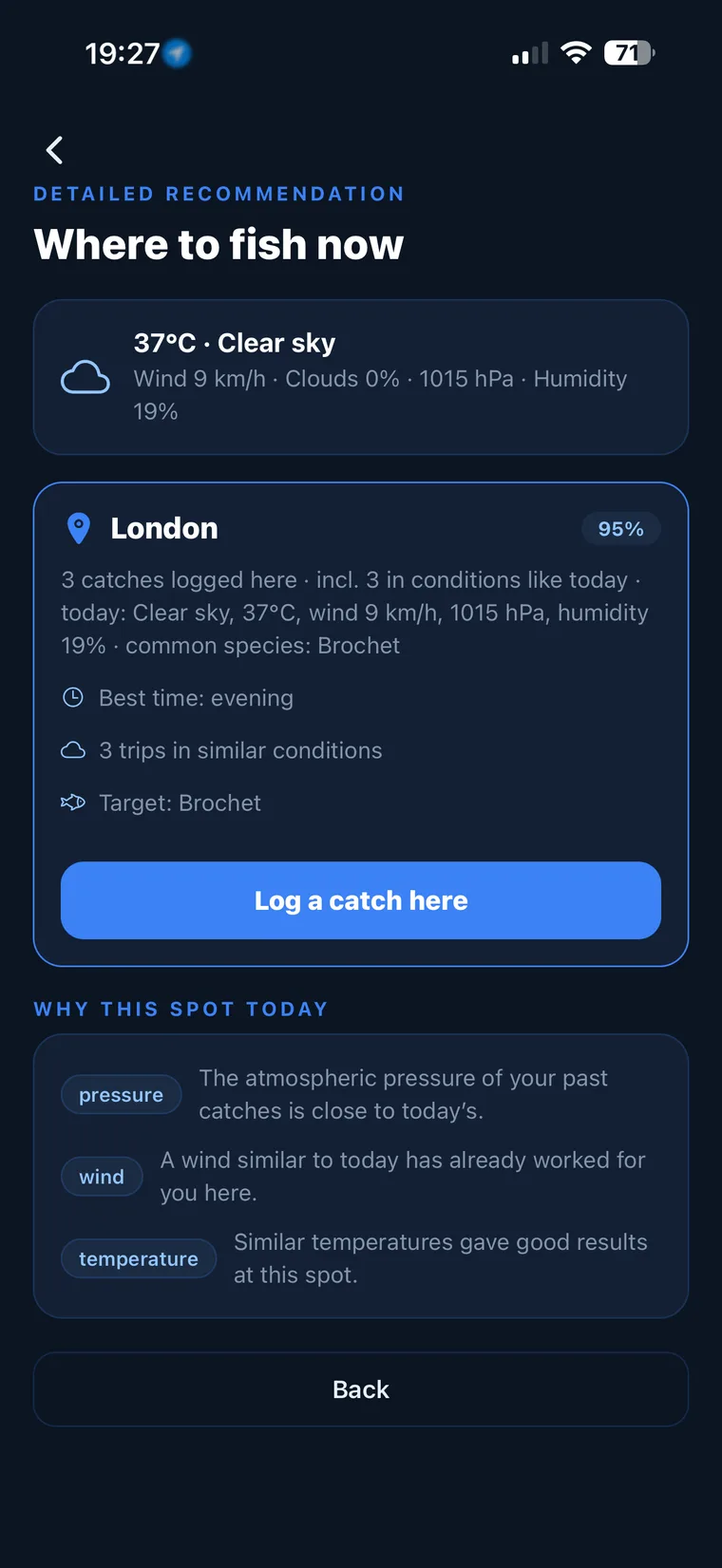
Not sure what to tie on?
Photograph your spot: CarnaFish reads the scene, cross-checks the conditions and gives you the zone, the lure and the retrieve. Free on iOS and Android.
Tuning and rigging
The snap is essential. Tying direct to the nose ring kills the lure's freedom to roll and costs it part of its vibration. Use a round or teardrop snap, never one with a sharp angle.
Tuning the tow ring. If the lure consistently pulls to the right instead of running straight, bend the tow ring very slightly to the left, in tiny increments. A quarter of a millimetre is enough to recentre the action.
The trebles. The stock ones are strong. On a small trout river, dropping the rear treble one size improves your hook-hold without upsetting the balance.
Hot Shot or a sinking minnow
A Rapala CountDown attacks the problem from the other end: it sinks at rest, you pick your depth by counting, and you fish it on the retrieve. That is searching — you cover a lot of water and move from lie to lie.
The Hot Shot does not search, it lays siege. On a located trout that refuses to move, insisting at a constant depth makes an enormous difference. Conversely, if you do not know where the fish is, the CountDown will find it faster.
The same logic applies against a heavy spoon like the Krocodile, which covers depth on a free fall where the Hot Shot holds it under pull. Our guide to river trout fishing covers how to read the lies that justify this slow approach. And if you are unsure which lie to besiege when you reach the water, CarnaFish analyses a photo of the spot and answers.
Key takeaways
- The lip is sized so that current alone makes the lure swim, with the rod held still.
- The harder you pull or the stronger the current, the deeper it goes: depth is not fixed.
- Fish it on station for twenty to thirty seconds in front of a located fish, not on the retrieve.
- A twenty centimetre sideways shift triggers more takes than speeding up.
- Useless in dead water and for fast searching, deadly on a fish holding in current.
FAQ
Does the Hot Shot really swim without being retrieved?
Yes, as soon as there is current. Its lip and chunky body turn simple water pressure into a roll. In moderate current, a lure held still on a tight line works exactly as if it were being retrieved slowly.
How deep does it go?
Between 1 and 4 m depending on size, but above all depending on the pull: the harder you pull or the stronger the current, the deeper it dives. Fine line and a long length out easily add fifty centimetres compared with a heavy setup.
How long should I hold it on station?
Twenty to thirty seconds per position, which feels very long the first time. If nothing happens, shift the lure twenty centimetres sideways rather than giving up on the lie: the bite often comes on the first change of lane.
Can I tie it direct to the line?
Not advisable. A direct knot restrains the roll and costs part of the vibration. A round or teardrop snap with no sharp angle restores the original action and lets you change size without cutting back.
What do I do if it runs off to one side?
Bend the tow ring very slightly the opposite way to the drift, in tiny adjustments, then test it on sight near the bank. A quarter of a millimetre out is enough to send a diver sideways, and enough to correct it too.
Is it any use in a lake?
In the small sizes and on a slow troll, yes, as long as the trout are in the top three metres. Fishing dead water from the bank, though, it offers nothing over a standard diver, since its whole advantage rests on the presence of current.
The full trout lure guideSeason-by-season strategy: which family of lure, when, and why.Go from theory to fish
CarnaFish reads your spot from a photo and gives you the game plan: zone, lure, retrieve. Free on iOS and Android.