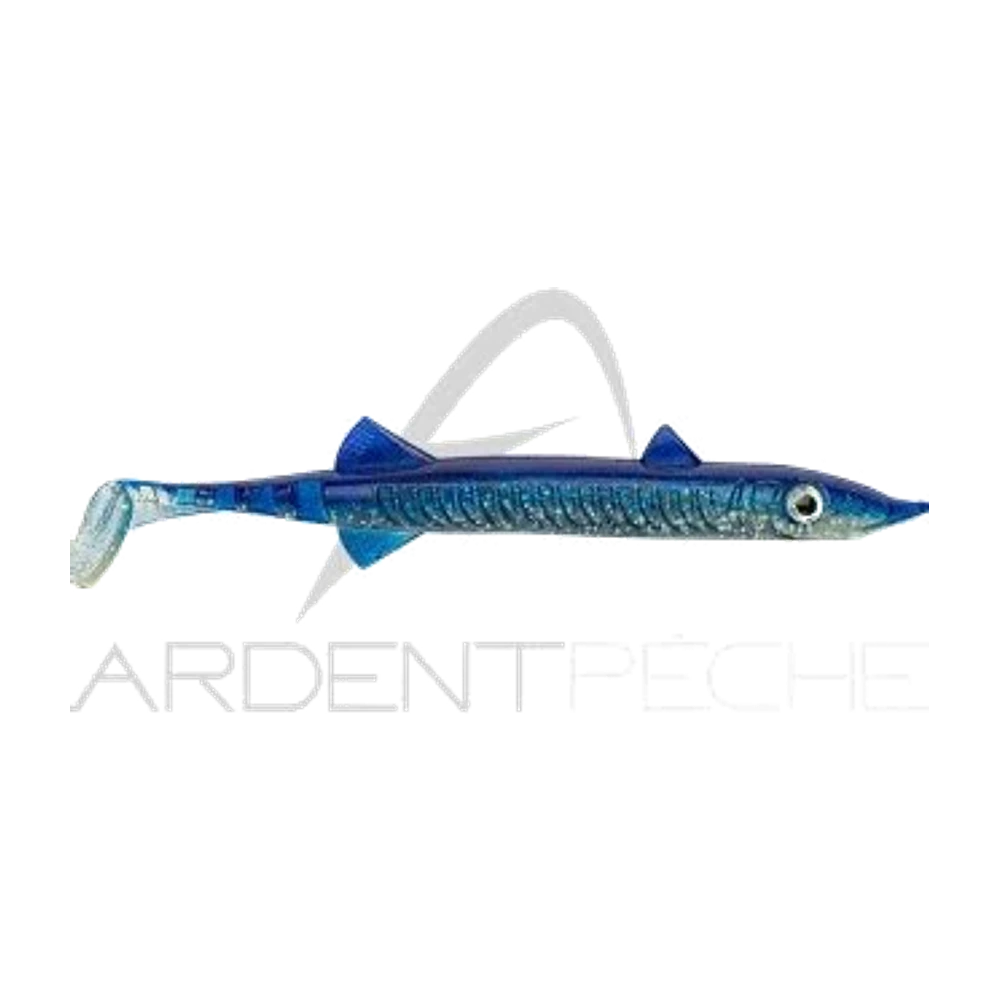
Delalande Zick Zack: the finesse lure that works when you stop moving
Not sure this lure fits YOUR spot today? CarnaFish tells you in 10 seconds, from a photo.
There is a moment, usually between December and March, when everything you know how to do stops working. The perch are packed into three square metres, the sounder shows them, and they do not move a centimetre. You run a shad past them, nothing. You slow down, nothing. You slow down again, still nothing.
The problem is not speed, it is travel. A fish in cold water will eat what stays in front of it, not what crosses its field of view. And to stay in front of it while still looking alive, you need a lure that produces visible movement without going anywhere.
The Zick Zack is built for that. Its ribbed body reacts to the slightest tremble transmitted down the line, without the lure changing position.
Why a ribbed body changes everything when still
A smooth soft plastic needs a flow of water to come alive: as long as you do not move it, it is inert. A segmented body works differently.
- Each rib acts as a flexible joint. A tiny vibration on the line travels along the body and makes the rear section undulate while the head has not moved.
- The edges catch the light from several angles at once, producing a broken glitter very different from the uniform sheen of a smooth body.
- The hollows between ribs hold micro-bubbles as the lure goes in, releasing them slowly over the first seconds of the drop.
In practice, that means you can work a spot for thirty seconds without ever moving the lure more than ten centimetres, while giving it constant movement. That is exactly what settled fish call for.
The retrieve: move the line, not the lure
The movement is the opposite of what you learn on a straight retrieve. It is no longer the rod moving the lure, it is the rod making the line vibrate.
- Drop to the bottom and take up just enough line to put a slight tension in the slack. Not firm tension — a soft but straight line.
- Make the rod tip tremble over two to three centimetres of travel, for five seconds. The lure must not move forward.
- Stop completely for five seconds. Line still under slight tension.
- Take up ten centimetres of line only, then start the sequence again.
- You will take about a minute to cover a metre. That is the right pace. Go faster and you are fishing something other than what you think you are fishing.
On a drop shot, the logic is identical but the weight stays on the bottom and the lure works above it, at the height set by your dropper length — twenty centimetres for fish pinned to the bottom, fifty to eighty for fish sitting up off it.
On the water: winter bites in this kind of fishing are almost never a sharp knock. They are a sense of the lure becoming heavy, or slack line tightening by a centimetre for no reason. Set the hook on anything that is not normal, including when you are fairly sure it is a twig. You hit nothing nine times, and you catch on the tenth.
Weight and rig by depth
| Depth | Weight | Suggested rig |
|---|---|---|
| Under 2 m | 1.5 to 2.5 g | Finesse jig head or Ned |
| 2 to 4 m | 3 to 4 g | Drop shot, 20-40 cm dropper |
| 4 to 6 m | 5 to 6 g | Drop shot with a short dropper, or jig head |
| Current | +1 to 2 g on the table above | Tight drop shot, permanent contact |
The principle is always the same: the lightest weight that still lets you feel the bottom. In this fishing, every extra gram is paid for in bites you never register, because the weight of the lead masks the sensation of a fish sucking gently.
For tackle, a finesse rod rated 3-14 g with a sensitive tip, 0.08 to 0.10 mm braid and a 0.16-0.20 mm fluorocarbon leader. The fluorocarbon matters here: you are fishing slowly, in often clear water, and the fish has time to look at your line. Keep that leader long enough, a metre minimum, so the connecting knot stays out of the fish's field of view during the long motionless phases.
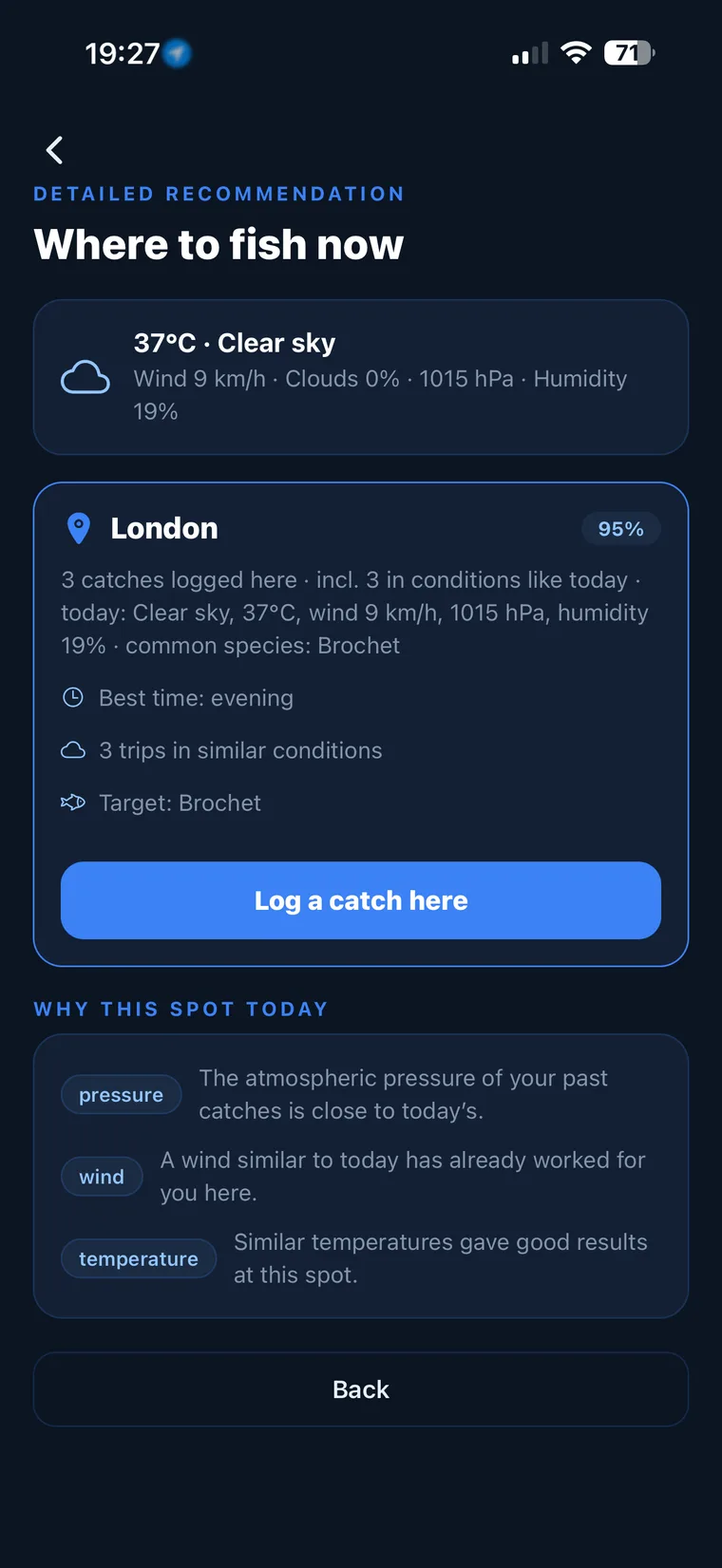
Not sure what to tie on?
Photograph your spot: CarnaFish reads the scene, cross-checks the conditions and gives you the zone, the lure and the retrieve. Free on iOS and Android.
The situations that suit it, and those where it is beside the point
It belongs in slow, localised fishing:
- Perch packed up in winter, over a hole, a hump or a structure you have found.
- Zander settled on a drop-off refusing anything that moves.
- Canals and slow rivers in cold water, along sheet piling and moored boats.
- Spots already fished earlier in the day: this lure often takes fish on a spot a standard shad left silent.
It is useless for searching, though. At a metre a minute, you will never find the fish with it — you exploit the fish once it has been found. It is also a poor fit for big active fish in summer, where more bulk and a more pronounced action will do better and faster.
Zick Zack or Sandra
The Delalande Sandra 12 is its functional opposite within the same brand: a curl tail that lives as soon as it moves, cut out for straight retrieves and lifts on active pike and zander. It covers water, it sends out a signal, it looks for the fish.
The Zick Zack does not look for the fish: it makes up the fish's mind. Its territory begins exactly where the Sandra's ends, when the water is cold, the fish pinned to the bottom, and travel has become a flaw. Rigged on a drop shot, it opens up an almost static approach few lures can sustain. On a shallow, clean spot, a Ned rig is a good alternative, easier to handle one-handed.
Our guide to lure fishing for perch explains how to locate the shoals before you bring out this kind of lure. And if you are torn between fishing slowly on the spot and searching when you reach the bank, CarnaFish analyses a photo of the spot and answers.
Key takeaways
- The ribbed body comes alive without the lure moving forward: this is the tool for settled fish.
- Make the line vibrate over two to three centimetres, not the lure. A metre covered per minute.
- The lightest weight possible: every extra gram masks bites.
- A winter bite is a weight appearing, not a sharp knock. Set the hook on the slightest doubt.
- A lure for exploiting fish, not finding them: locate with something else, catch with this.
FAQ
What weight should I use with the Delalande Zick Zack?
Between 1.5 and 2.5 g under 2 m, 3 to 4 g between 2 and 4 m, 5 to 6 g beyond. Always take the lightest weight with which you can still feel the bottom clearly, because too heavy a lead masks the subtle bites.
Should I fish it on a drop shot or a jig head?
The drop shot suits as soon as the fish is up off the bottom or you want to stay still for a long time. A finesse jig head is simpler in shallow water and allows a very slow drag along the margins.
Why does my lure not move when I work it?
Probably because your slack line is too loose and absorbs the vibration, or on the contrary too tight and moves the lure instead of making it tremble. Look for the middle ground: a straight line with no firm tension.
Is it any good for zander?
Yes, particularly on fish settled on a drop-off that refuse anything mobile. Stretch the pauses a little, up to eight or ten seconds, and watch the line rather than waiting for a sensation in your hand.
What line should I use?
0.08 to 0.10 mm braid for sensitivity, with about a metre of 0.16-0.20 mm fluorocarbon leader. In fishing this slow, and often in clear water, a discreet leader genuinely counts.
Can I use it to search a large water?
No, that goes against its nature. It covers about a metre per minute of proper working. Locate the fish first with a mobile lure, then come back over them with this one.
The full perch lure guideSeason-by-season strategy: which family of lure, when, and why.Go from theory to fish
CarnaFish reads your spot from a photo and gives you the game plan: zone, lure, retrieve. Free on iOS and Android.