MadCat Clonk Teaser: the lure designed for clonking
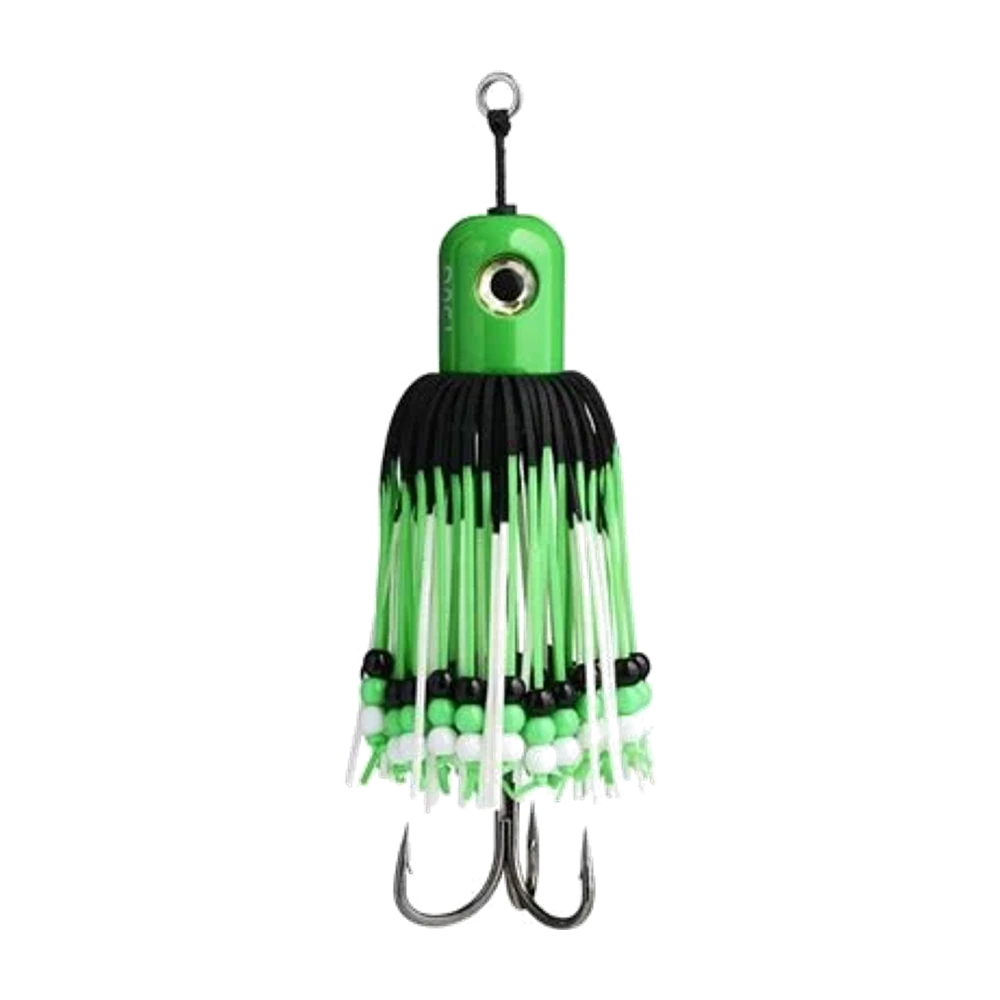
This lure shines under specific conditions. CarnaFish tells you in 10 seconds if today is one of them.
Clonking for catfish is like no other form of lure fishing. There is no casting and no retrieving. The boat drifts, the lure hangs under the hull at a fixed depth, and the angler strikes the surface with a wooden tool — the clonk — to produce a deep sound that draws catfish in.
The Clonk Teaser was designed specifically for this context, which imposes constraints ordinary lures do not meet.
What clonking demands of a lure
Three constraints, all of them different from casting.
It has to live at zero speed. The boat drifts at under a kilometre per hour. A shad that needs speed to work its tail just hangs there dead. The Clonk Teaser beats at the slightest change in tension or current.
It has to hold vertical. Hanging under the boat ten metres down, a badly balanced lure spins on itself, twists the line and becomes unusable. The profile and mass distribution prevent that.
It has to take punishment. A fifty kilo catfish destroys a standard soft plastic in one hit. The material is considerably denser and tougher than that of a zander shad.
The principle of the clonk
The clonk is a wooden or plastic tool, held in the hand, with which you strike the surface of the water in a precise movement — not a flat slap, but a stroke that traps a bubble of air and releases it abruptly.
The sound it produces is deep and carries a long way underwater. It draws catfish, which rise towards the source. The lure, hanging at the right depth, is then on their path.
On the water: three clonking strokes, then twenty to thirty seconds of silence. Striking continuously saturates the sound environment and eventually drives fish away. The silence between the bursts matters as much as the strokes themselves.
Setting the depth
This is the decisive parameter, and you set it with the sounder.
Catfish generally hold in mid-water, not on the bottom. Find their depth on the screen and present the lure one to two metres above — never below. A catfish rises to attack, it almost never goes down.
| Depth of water | Typical presentation depth |
|---|---|
| 8 to 12 m | 5 to 8 m |
| 12 to 18 m | 8 to 12 m |
| Over 18 m | 10 to 15 m |
The rig
It differs radically from a conventional rig.
- The weight — 80 to 250 g depending on depth and current — is fixed on a separate leader, either on a paternoster or in line.
- The leader is braid or fluorocarbon in a very heavy diameter, 1.00 mm minimum.
- The hook is a heavy single, 6/0 to 10/0, rigged through the body of the lure.
- The rod is short and very powerful, held in the hand at all times.
The bite is blunt and brutal: the catfish takes the lure and goes down. The hookset must be powerful and repeated two or three times.
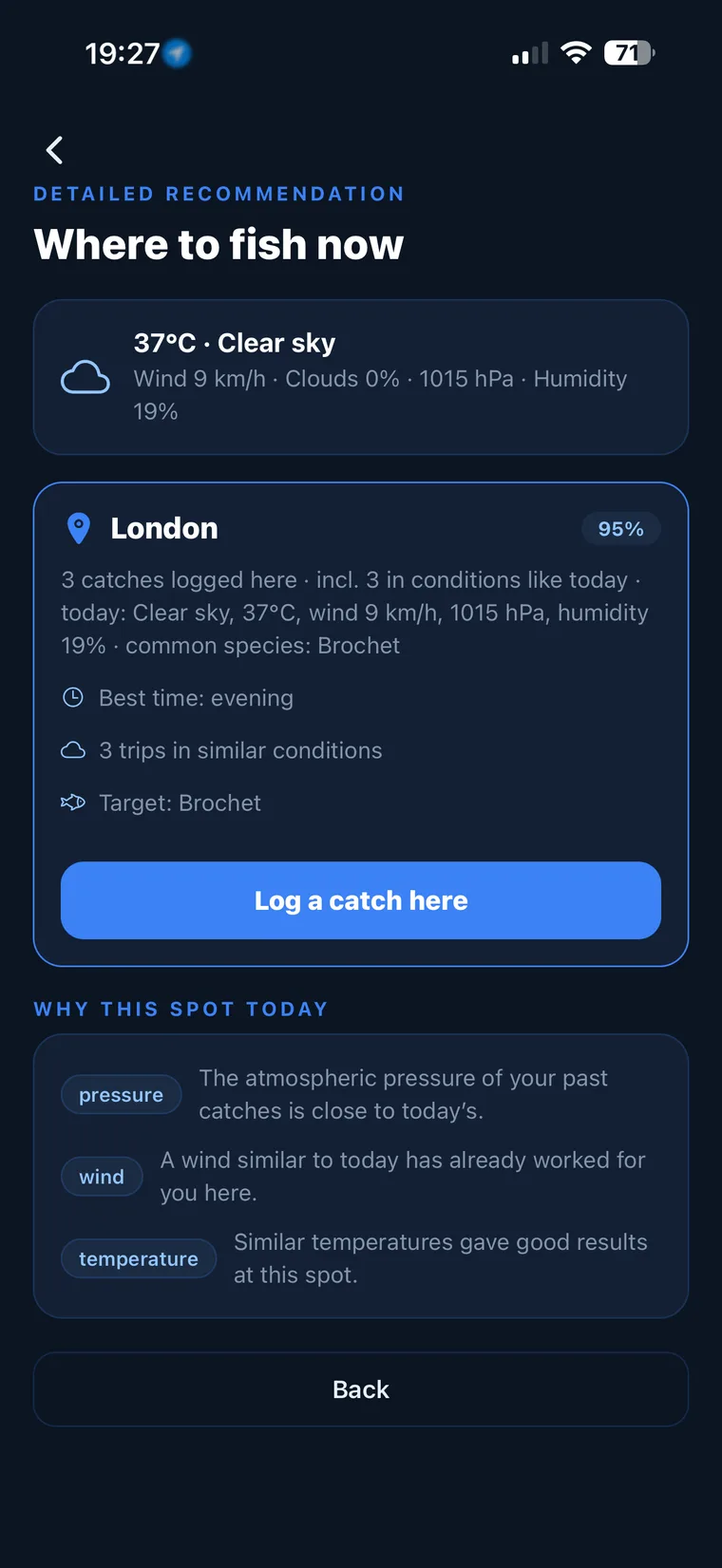
Not sure what to tie on?
Photograph your spot: CarnaFish reads the scene, cross-checks the conditions and gives you the zone, the lure and the retrieve. Free on iOS and Android.
The retrieve, minimal
Contrary to what you might imagine, there is almost nothing to do.
- Drop the lure to the depth you marked and lock off.
- Hold the rod in your hand, tip slightly loaded.
- Work the clonk with the other hand.
- Lift very slowly by 30 cm every thirty seconds, then lower again.
That micro-movement is enough to keep the tail beating. A wide action is counterproductive: it takes the lure out of the water layer you have chosen.
When and where
- Summer, from June to September, when the water is warm and catfish are active in mid-water.
- Big rivers and large impoundments: the Rhône, the Saône, the Seine, the Tarn, big gravel pits.
- Deep holes and pools, located on the sounder.
- The middle of the day, unlike many other fisheries — clonking works well in full sun.
Our guide to lure fishing for catfish covers the approaches season by season. And if you do not know how to tackle a hole you have found, CarnaFish analyses a photo and suggests a line of attack.
Key takeaways
- No casting and no retrieving: the lure hangs under a drifting boat and the clonk draws the fish.
- The lure has to live at zero speed and hold vertical without spinning.
- Present the lure one to two metres ABOVE the marks, never below.
- Three clonking strokes, then twenty to thirty seconds of silence.
- Minimal movement: 30 cm every thirty seconds is enough.
FAQ
What is clonking?
It is a boat technique for catfish where you strike the surface of the water with a wooden tool called a clonk. The deep sound it produces draws catfish in, while a lure hangs under the boat at a fixed depth as the craft drifts.
At what depth should I present the lure?
One to two metres above the marks you find on the sounder, never below. Catfish rise to attack but almost never drop down to prey sitting beneath them.
How often should I clonk?
Three strokes, then twenty to thirty seconds of silence. Striking continuously saturates the sound environment and eventually drives fish away: the silence between bursts is part of the technique.
Do I need to work the lure?
Very little. Lift it slowly by 30 cm every thirty seconds, then lower it again. That small change is enough to keep the tail beating. A wide action takes the lure out of your chosen water layer.
What rig should I use?
An 80 to 250 g weight on a separate leader, fluorocarbon or braid of 1.00 mm minimum, and a heavy single hook of 6/0 to 10/0 rigged through the body of the lure. The rod has to be short and very powerful.
What is the best time of year?
Summer, from June to September, when the water is warm and catfish are active in mid-water. Unlike many other fisheries, clonking works well in the middle of the day and in full sun.
The full catfish lure guideSeason-by-season strategy: which family of lure, when, and why.Go from theory to fish
CarnaFish reads your spot from a photo and gives you the game plan: zone, lure, retrieve. Free on iOS and Android.