Quantum Pro Clonk: choosing a clonk and learning the stroke
The right lure in the wrong spot still catches nothing. CarnaFish spots the zone that works, from a single photo.
Two anglers in the same boat, with the same lures, at the same depth. One catches catfish, the other does not. Nine times out of ten the variable is neither the colour nor the rig: it is the sound the clonk produces.
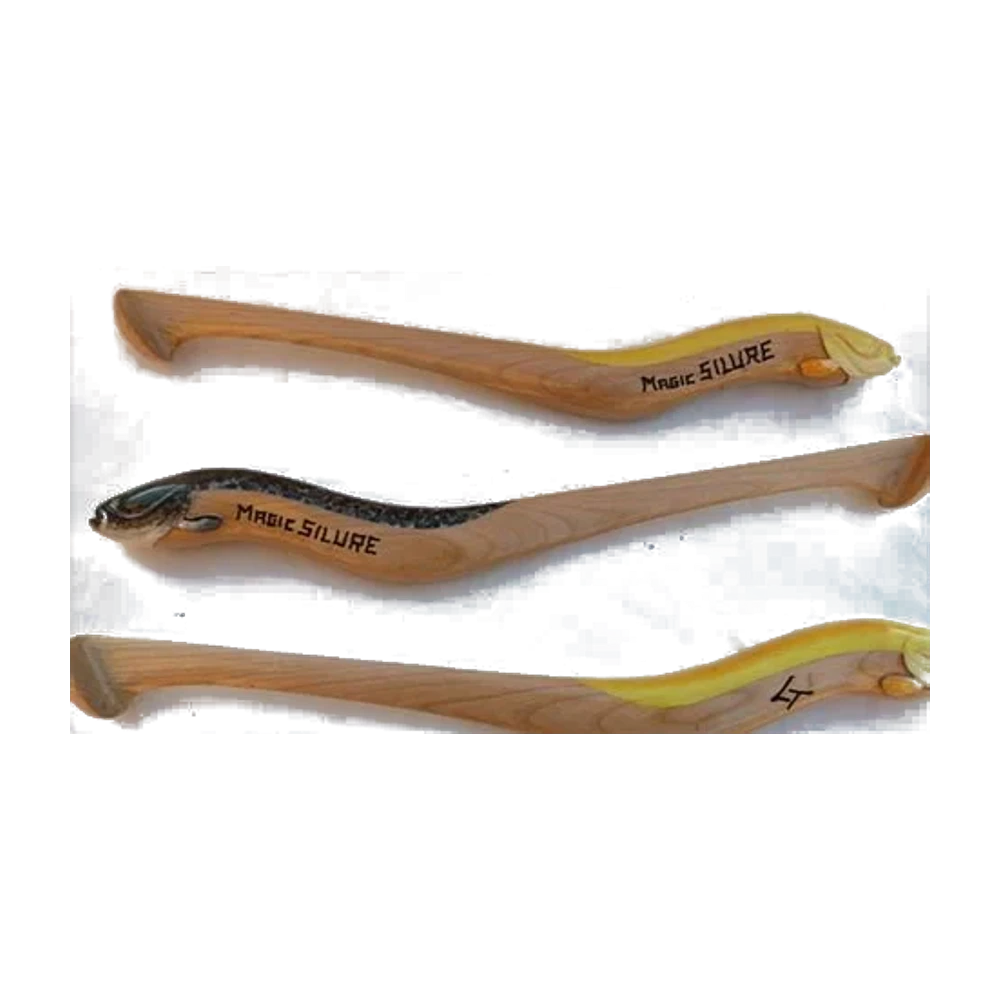
A clonk is not a lure, it is a tool. A piece of wood or composite ending in a hollow cup, struck against the surface with a precise stroke. Used well, it produces a deep, clean "plock" that carries several tens of metres underwater and brings catfish up. Used badly, it produces a flat slap that goes nowhere — or worse, that scatters the fish.
For the fishing technique itself — presentation depth, drift, rig, lure choice — everything is covered on the MadCat Clonk Teaser page. Here we only talk about the tool and the stroke.
What separates a good clonk from a bad one
Four parameters, and they all count.
The material. Solid wood — usually beech or a dense hardwood — gives a rounder sound with more body in the low end. It is also more sensitive to moisture and can split if stored badly dried. Composite or technical plastic, as on modern models, gives a drier, higher-pitched crack, does not move over time and is far more forgiving of a sloppy stroke. To learn, composite is easier: the sound is more repeatable.
The volume and shape of the cup. This is the crucial part. A wide, shallow cup traps a lot of air and puts out a deep, powerful sound, but it demands a clean stroke or it slaps. A smaller, deeper cup gives a higher sound, easier to produce, that carries less far. In deep water and big rivers you are after the low end; on a calm, shallow reservoir a tighter sound is often enough.
The length and curve of the handle. A long handle (30 cm and up) gives leverage and amplitude: more power, but less precision. A short handle is driven from the wrist and is easier to repeat over two hours of drifting. The curve sets the angle at which the cup meets the water — it is what makes the stroke "bite" properly.
The balance in the hand. A clonk that is too heavy tires the forearm after three hundred strokes, and fatigue degrades the stroke long before you notice. A tool of around 200 g, balanced towards the cup, can be repeated all day.
| Context | Cup | Handle |
|---|---|---|
| Big river, 12 to 20 m, current | Wide, shallow, deep sound | Long, 30 to 35 cm |
| Reservoir or lake, 8 to 15 m, calm | Medium | 25 to 30 cm |
| Learning, all waters | Small and deep, easy sound | Short, 25 cm |
The stroke: it is not a hit
The beginner's mistake is to hit the water. A clonk does not hit, it pinches a bubble of air and lets it go.
- Hold the handle firmly, arm half extended, cup above the water, hollow face down.
- Enter the water at an angle, not flat. The cup goes in edge first, at roughly 45 degrees — that angle is what traps the air under the cup instead of pushing it out to the sides.
- Follow through towards you in an arc, as if drawing a comma in the water. The cup only goes five to ten centimetres deep.
- Pull out sharply and vertically. It is the abrupt exit that releases the bubble and produces the sound. A soft withdrawal gives a dull, useless noise.
The whole movement comes from the forearm and the wrist, not the shoulder. If you have to force it, the entry angle is wrong.
How to tell it is right: a successful clonk produces a short, full sound with a clean resonance, in the same register as a champagne cork but lower. A failed clonk makes a bright, high "splash" with water thrown everywhere. If you soak the person next to you, the stroke went in flat.
On the water: practise for twenty minutes before the first drift, boat stationary, rod put down. The correct sound is learnt by ear in about a hundred strokes, and it is not learnt while fishing: the moment you start watching your line, your stroke degrades without you hearing it.
The cadence, as important as the sound
The natural reflex is to keep going. That is counterproductive: a saturated sound environment stops being a signal and becomes background noise, which catfish eventually move away from.
- Three to four strokes per burst, about a second apart.
- Twenty to thirty seconds of silence between bursts. It is during that silence that fish come up and that the bites arrive.
- Lengthen the silences when nothing responds. Going to forty seconds is more often the right correction than clonking more.
- Do not clonk during a fight, nor straight after landing a fish: let the area settle for two or three minutes.
The other practical point is coordination. You hold the rod in one hand and the clonk in the other, permanently. So the clonk has to be handled without looking, and that is why a short, balanced tool is often worth more than a more powerful but cumbersome one.
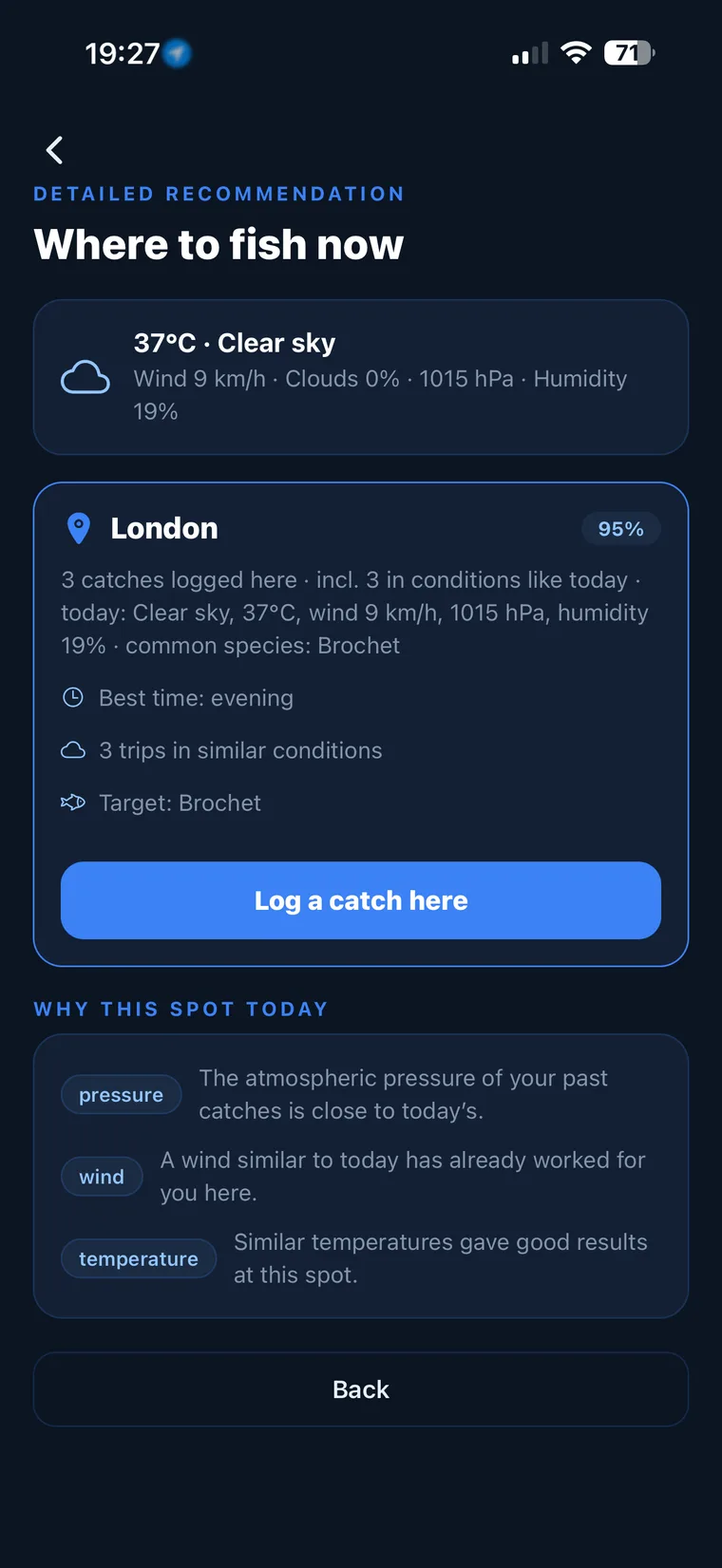
Not sure what to tie on?
Photograph your spot: CarnaFish reads the scene, cross-checks the conditions and gives you the zone, the lure and the retrieve. Free on iOS and Android.
Care and lifespan
A wooden clonk gets rinsed in fresh water, dried in open air, and stored flat. Never leave it drying in the sun on a gunwale: the wood moves and splits at the handle-to-cup joint, which is the weak point. A wood oil once or twice a season extends its life considerably.
A composite model asks for nothing beyond an occasional check that the cup has no micro-cracks: a hairline crack changes the sound before it becomes visible to the eye.
Clonking or a silent approach
The question is worth asking, because clonking is not always the right answer.
Clonking is there to bring up catfish scattered in open water in a big body of water, in summer, when they are active and high. That is its window, and nothing does it better.
As soon as the fish are sitting on the bottom, glued to a snag, or in cold water, the sound call will not lift them. At that point a silent approach is more productive: trolling deep with a MadCat CatDiver to sweep the plateaus, or presenting slowly on the bottom from the bank with a MadCat Tube Teaser.
Our guide to catfish fishing with lures sets out the calendar for these three approaches. And if you are torn between clonking a hole or trolling it, CarnaFish analyses a photo of the spot and answers.
Key takeaways
- A clonk is not a lure but a tool: it is the stroke, not the model, that makes the sound.
- The cup decides everything: wide and shallow for the low end, small and deep for ease.
- Angled entry at 45°, an arc towards you, a sharp vertical exit. You pinch the air, you do not hit it.
- Three to four strokes, then twenty to thirty seconds of silence. The silence is part of the technique.
- Practise with the boat stationary: the stroke degrades as soon as you start watching your line.
FAQ
Wood or plastic for a clonk?
Hardwood gives a rounder, deeper sound, but it needs care and can split. Composite produces a drier crack, perfectly stable over time, and is far more forgiving of a flawed stroke: it is the best choice for learning.
How do I make the right stroke with a clonk?
Enter the water at an angle of roughly 45 degrees, hollow face down, follow through in an arc towards you over five to ten centimetres, then pull out sharply and vertically. It is the abrupt exit that releases the bubble of air and creates the sound.
How many clonk strokes should I give?
Three to four strokes a second apart, then twenty to thirty seconds of silence. Clonking continuously saturates the sound environment and ends up pushing the fish away instead of drawing them in.
How do I know if my clonk sounds right?
A good clonk produces a short, full, deep sound with a clean resonance and very little water thrown. If you hear a high splash and water sprays everywhere, the cup went in flat: correct the entry angle.
What handle length should I choose?
A handle of 25 to 30 cm is driven from the wrist and is easy to repeat over a long drift. Beyond 30 cm you gain power and depth of sound but lose precision and tire faster.
Does clonking work all year round?
No. It gives its best in summer, when the water is warm and catfish are active in open water. In cold water, or on fish glued to the bottom, the sound signal will not bring them up and a trolled or static approach will be more effective.
The full catfish lure guideSeason-by-season strategy: which family of lure, when, and why.Go from theory to fish
CarnaFish reads your spot from a photo and gives you the game plan: zone, lure, retrieve. Free on iOS and Android.