Major Craft Jigpara Micro: drop the weight, raise the bite count
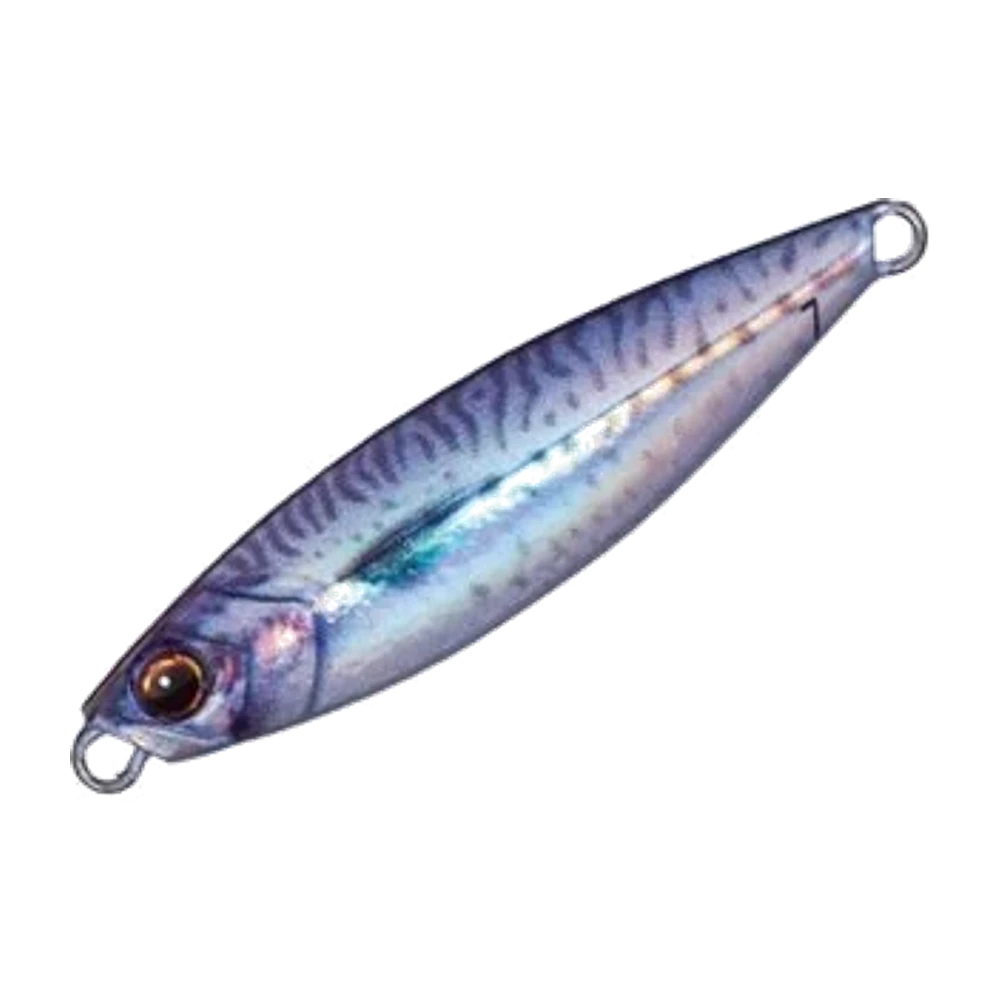
This lure shines under specific conditions. CarnaFish tells you in 10 seconds if today is one of them.
A harbour at the end of the day, flat water, not a bird in sight. You send a 40 g jig sixty metres out, and for two hours absolutely nothing happens. Yet when you lean over the quay wall, you can see fish: small shoals turning against the hulls, shapes slipping under the buoys.
Those fish are real, there are plenty of them, and they are out of reach with standard shore jigging tackle. Not because they refuse metal, but because a 40 g jig cast a long way crosses their zone in two seconds, and your 3-metre rod lets you neither feel it nor work it right below your feet.
The Jigpara Micro fixes that mismatch by simple division. Same principle as the standard Jigpara, but divided by five in weight and by two in length. What looks like a catalogue detail actually changes the entire way you fish.
What the micro format really changes
Going from 40 g to 7 g is not doing the same thing on a smaller scale. Three things shift.
- The fall rate collapses. A 5 g micro jig sinks slowly, fluttering the whole way down. The fall phase, which used to last two seconds, now lasts eight. That is eight seconds of seduction instead of two.
- The fishing zone moves in close. You stop searching the horizon and start scratching the three metres along the quay, the corners of the basin, the feet of the buoys. Places nobody casts to, because everyone is looking out to sea.
- The prey size you imitate changes category. A micro jig imitates a fry or a shrimp, not an adult sandeel. It opens up small and medium fish that were completely ignoring your 40 g jig.
The downside is obvious: you no longer cast far, and any settled wind takes you out of the game.
The tackle decides everything
This is the point most anglers skip, and it explains most of the disappointment. A micro jig on a shore jigging rod simply does not work. You cannot feel it, you cannot work it, and you miss every bite.
A coherent setup takes four lines:
- Rod of 1.9 to 2.3 m, rated 0.5 to 10 g or 3 to 15 g, with a sensitive but not sloppy tip.
- Reel in size 1000 to 2000, light, with a smooth, properly set drag.
- Braid in 0.04 to 0.08 mm. That is the real lever on casting distance in this style of fishing.
- Fluorocarbon of 0.16 to 0.22 mm, one to one and a half metres of it.
With that setup, a 7 g jig flies thirty or forty metres and you feel every touch of the bottom.
On the water: a micro jig bite is seen before it is felt. During the fall, keep the braid tight enough to be visible and watch the line, not the water. A line that stops half a second earlier than expected is a bite. If you wait to feel something in your hand, the fish has already spat it out.
Picking the weight to suit the spot
| Spot | Weight | Depth |
|---|---|---|
| Along a quay wall, straight down | 3 to 5 g | 1 to 4 m |
| Corner of a basin, calm water | 5 to 7 g | 3 to 6 m |
| Harbour mouth, slight current | 7 to 10 g | 5 to 10 m |
| Outer breakwater, chop or current | 10 to 15 g | 8 to 12 m |
The basic rule: take the lightest weight that still lets you keep contact. Every gram you remove lengthens the fall, and the fall is the heart of this fishing.
The retrieve: short strokes, plenty of pauses
The motion has nothing to do with classic jigging. You work from the wrist, moving the lure a few tens of centimetres at a time.
- Cast short, ten to thirty metres, or simply drop it straight down alongside a structure.
- Follow the fall with the line tight. Count the seconds. A fall that stops early is a bite.
- On the bottom, two short sharp taps of the rod tip, ten to twenty centimetres, taking up the slack.
- Let it drop back for three to five seconds, line tight. This is the key phase.
- Run three cycles, then wind up two turns of the handle to explore a higher layer of water.
- Set the hook by reeling, without a big sweep. A fine assist hook sets itself on simple tension.
One useful variant when nothing is happening: a slow, continuous straight retrieve at mid-depth, with no animation at all. On fish that follow without committing, that radical change of register often triggers the take.
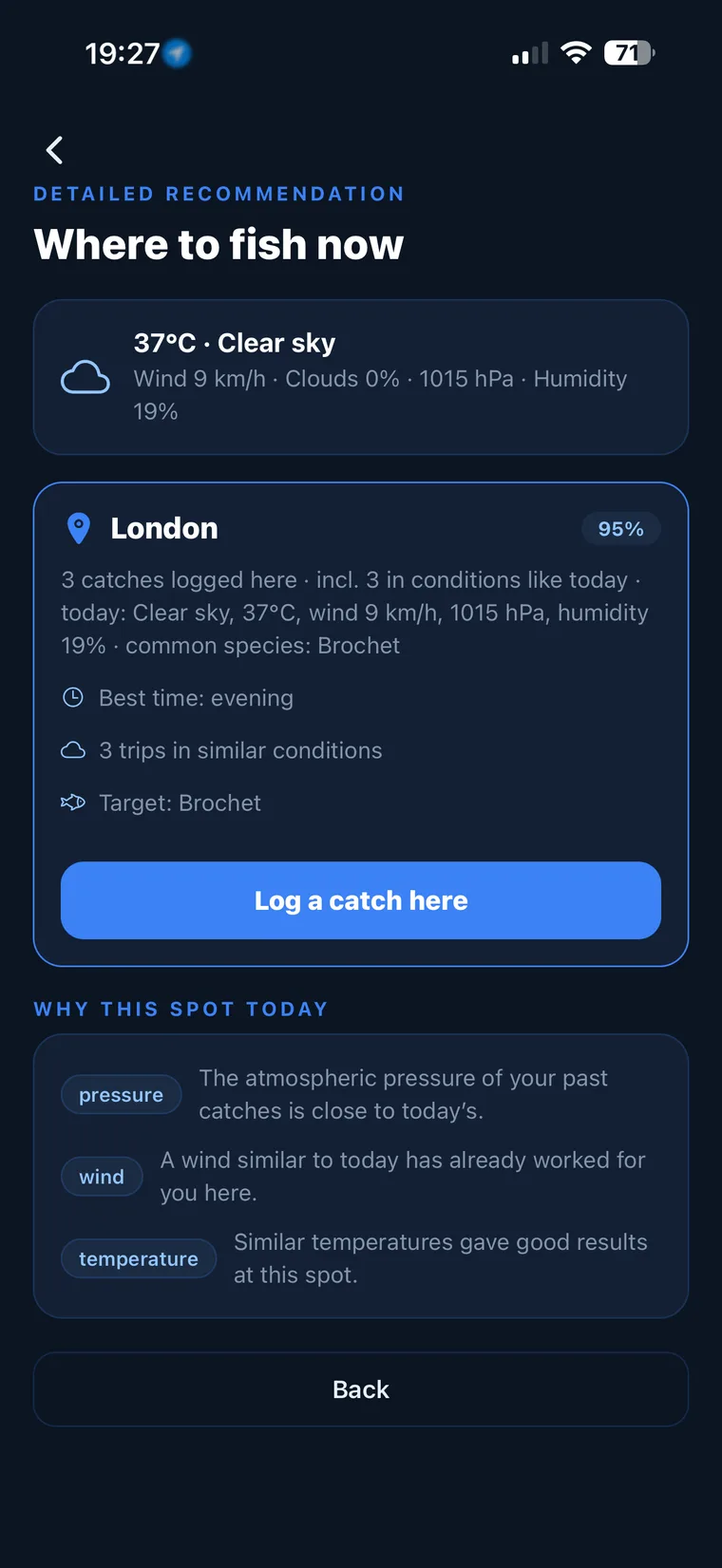
Not sure what to tie on?
Photograph your spot: CarnaFish reads the scene, cross-checks the conditions and gives you the zone, the lure and the retrieve. Free on iOS and Android.
Where it excels, and its limits
The Jigpara Micro is built for calm, sheltered water: harbours, basins, marinas, coves, the inside of breakwaters, estuaries. It also excels at night under the quay lights, where small fish gather. From a boat, it becomes a weapon for scratching rocky heads straight down.
It falls apart completely as soon as there is settled wind or swell: too light to cast, too light to hold a water layer. It is also the wrong tool if you are specifically after big fish: the light setup will not hold a good sea bass that runs into the rocks, and a fine assist hook opens up.
Micro or standard Jigpara
The choice is not made on the fish you are after, but on distance and conditions.
The standard Jigpara is still the tool whenever you need to reach a distant zone, punch through wind, or fish deeper than ten metres. Its faster fall covers more ground per hour and it lets you stay on versatile tackle.
The Micro takes over when the interesting zone is three metres from your feet, the water is calm, and the fish present are small. They are complementary tools, not rivals: plenty of harbour anglers carry both in the same box and switch according to the state of the tide.
If you want to play the speed card on active fish rather than the slow fall, look at the Hayabusa Jack Eye. Our guide to sea bass fishing with lures sets out the time windows that pay off in harbour water.
And if you cannot decide between a micro jig and a standard jig when you reach the spot, CarnaFish analyses a photo of the spot and answers.
Key takeaways
- The micro format stretches the fall from two seconds to eight: that is where the fishing happens.
- Without light tackle (0.5-10 g rod, 0.04-0.08 mm braid), the rig is pointless.
- Always take the lightest weight that keeps contact: every gram less adds seduction.
- Wrist-driven retrieve, ten to twenty centimetre strokes, three to five second pauses.
- Unusable in settled wind or swell, and undergunned for big fish.
FAQ
How does it differ from the standard Jigpara?
The fluttering fall works on the same principle, but the Micro weighs 3 to 15 g against 15 to 60 g. It sinks far more slowly, is fished at short range and imitates a fry rather than an adult sandeel.
What tackle does a micro jig need?
A 1.9 to 2.3 m rod rated 0.5-10 g, a 1000 or 2000 reel, braid of 0.04 to 0.08 mm and a fluorocarbon leader of 0.16 to 0.22 mm. On shore jigging gear, this fishing does not work.
What weight should I choose in a harbour?
3 to 5 g straight down along a quay wall, 5 to 7 g in the corner of a basin, 7 to 10 g at the harbour mouth with a little current. The rule is to take the lightest weight that keeps contact.
How do I detect a bite on the drop?
By watching the braid rather than the water. If the line stops sinking earlier than usual, or moves off sideways, that is a bite. Set the hook by reeling fast, with no big rod sweep.
Does the micro jig work at night?
Yes, and in harbour water it is often its best window. Under the quay lights small fish gather, and a glow or silver colour worked slowly under the light is very productive.
Can it be used in strong wind?
No, that is its main limitation. Beyond a light breeze, a lure under 15 g no longer casts and no longer holds its depth. At that point you have to go back to a standard weight.
The full sea bass lure guideSeason-by-season strategy: which family of lure, when, and why.Go from theory to fish
CarnaFish reads your spot from a photo and gives you the game plan: zone, lure, retrieve. Free on iOS and Android.