Major Craft Jigpara: the shore jig where the bite comes on the drop
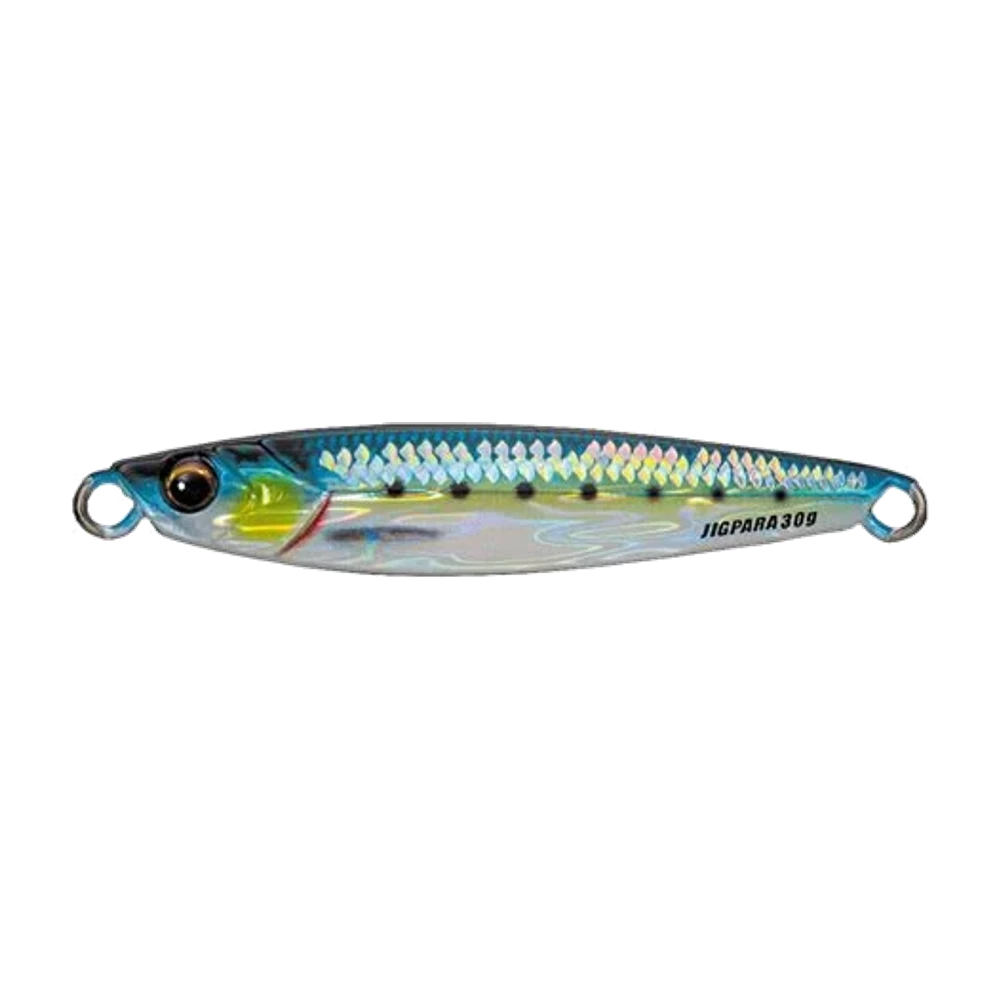
The right lure in the wrong spot still catches nothing. CarnaFish spots the zone that works, from a single photo.
On a breakwater, half the anglers treat their jig as a retrieve lure: they cast, let it drop to the bottom on a slack line, then wind it back fast. As a result they miss a large share of the bites without even realising, because with a flat jig the fish very often hits during the fall, at the precise moment the line is not tight.
The Jigpara is designed to exploit that phase. Its body is flat and slightly asymmetric: instead of dropping like a bullet it tips onto its flank and flutters down with irregular flashes. That is a signal sea bass and mackerel read as a wounded baitfish coming off the shoal.
So the real subject of this page is not how to retrieve it. It is how not to miss what happens while it goes down.
Why a flat jig does not fall straight
A cylindrical lead jig falls fast and vertically. That is what you want from a boat, over 60 m of water, when you need to reach the zone without wasting time.
From the shore you do not have that problem: you rarely fish beyond 10 or 15 m of water, and the fall is your best ally. The Jigpara's profile answers that shore logic:
- A flat section and an offset mass distribution: the jig lies flat as soon as it is no longer being pulled and slides sideways instead of sinking straight down.
- A slower drop, so a longer presentation time in the layer where the fish is active.
- Alternating flashes at each tip, far more visible than a straight-line fall.
That relative slowness is a choice. It becomes a fault as soon as the current is strong or the depth goes beyond twenty metres or so: then you have to go up in weight or move to a denser jig.
Weight is chosen on the current, not the distance
This is the commonest mistake in shore fishing: taking the heaviest one to cast far. A jig that is too heavy falls straight and loses exactly what makes it interesting.
| Conditions | Weight | What you are after |
|---|---|---|
| Beach, little current, 2 to 5 m | 15 to 20 g | Slow fall, horizontal searching |
| Breakwater or rocky point, moderate current | 25 to 30 g | Distance / usable drop compromise |
| Strong current, exposed jetty, 8 to 15 m | 40 g | Keeping contact despite the drift |
| Marked headwind or big swell | 50 to 60 g | Cutting through the wind, reaching the bottom |
The right marker: you have to be able to count the fall. If your jig hits bottom in two seconds, it is too heavy. If it takes more than fifteen seconds and the line sweeps off sideways, it is too light.
The retrieve: three sequences to alternate
Do not lock yourself into one rhythm. Over a single session, sea bass often change their preference within an hour.
- Cast and follow the fall on a semi-tight line, rod at 45°. You are not reeling, but you are not letting the line collapse either: you accompany it. That is the position that will let you feel the bite.
- On bottom contact — or at the counted depth you are targeting — give two or three wide upward sweeps of the rod, taking up line between each.
- Let it drop back over three to five seconds, still semi-tight.
- Repeat, working progressively up the water column, until the jig reaches the surface.
Two variants to keep in reserve:
- The fast straight retrieve, with no pauses at all, when you see fish feeding on the surface or the mackerel are in. Continuous, sustained winding: the jig runs straight and flashes.
- The "one pitch": one sweep of the rod, one turn of the handle, at a steady slow cadence. That is the sequence that works best on lethargic sea bass at the end of the tide.
On the water: on the drop, the bite almost never comes as a knock. You see it — the braid suddenly stops going down, or sweeps sideways. Watch your line, not your rod tip, and strike the moment the fall stops earlier than it should.
The rig changes more than the colour does
The front assist hook is the key. A jig that gets hit on the drop needs its hook at the top, where the fish comes to take the prey coming off the shoal. A short assist cord, 2 to 3 cm, with a heavy gauge single, is the standard. Any longer and it tangles round the body on every sweep.
The rear treble is optional. It raises the hook-up rate on mackerel, which often attack from the tail, but it multiplies snags over rock. On rocky ground, take it off.
The leader: fluorocarbon of 0.30 to 0.40 mm over 1 to 1.5 m, joined to the braid with a slim knot or a swivel and snap. A snap is worth having here: you change weight often as the tide moves.
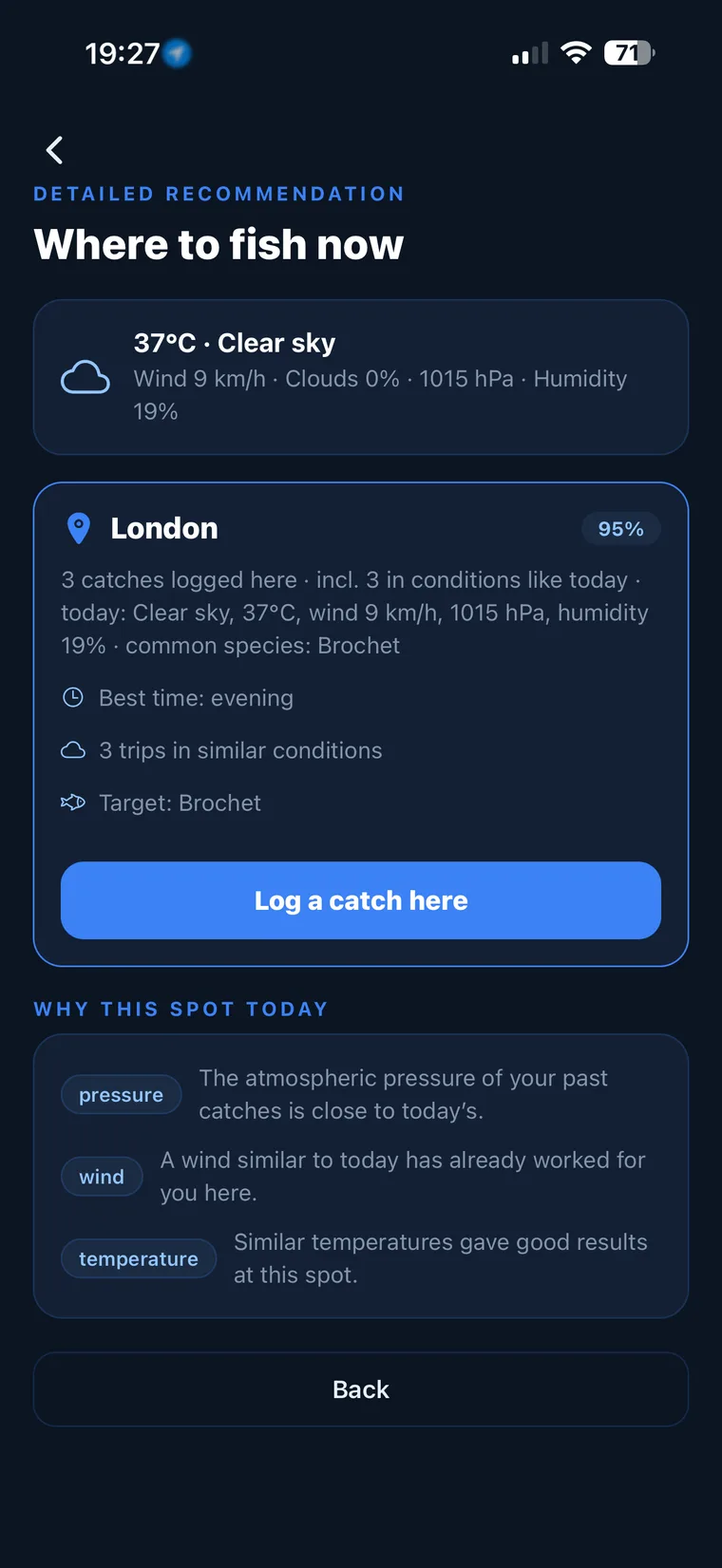
Not sure what to tie on?
Photograph your spot: CarnaFish reads the scene, cross-checks the conditions and gives you the zone, the lure and the retrieve. Free on iOS and Android.
Tides, hours and spots that pay
Shore jigging is a fishery of windows. The lure can do nothing about bad timing.
- The two hours either side of the turn of the tide hold most of the activity, especially at the start of the flood.
- Rocky points and the ends of breakwaters, where the current creates a seam and a patch of slack behind it: sea bass sit in the calm and wait for whatever comes past in the fast water.
- The first and last hours of daylight, particularly in clear water.
- Visible feeding activity: mackerel and bass breaking the surface. There, do not wait — cast in front of the action, not into it, and retrieve fast.
Situations where you need to switch to something else: very rough water with heavy surge close in, where the jig gets rolled through the pebbles; and spots choked with kelp, where a soft plastic on a jig head will go through far better.
Jigpara or a saltwater soft plastic
A Fiiish Crazy Sand Eel plays on imitating a sand eel and on a soft action held on a slow straight retrieve. It is more "edible", more forgiving in how you bring it back, and often better when bass are locked onto a shoal of sand eels.
The Jigpara answers a different need: distance and searching speed. At equal weight it flies further than a rigged soft plastic, it drops faster, and it lets you sweep the whole water column in a single retrieve. It is the lure to reach for when you do not yet know where the fish is.
For fish coming up to the surface, a Jackson Athlete SW takes over by staying in the top metre. Our guide to lure fishing for sea bass covers how to string these three families together over one tide. And if you are unsure which weight to tie on when you get to a breakwater, CarnaFish analyses a photo of the spot and answers.
Key takeaways
- Flat, asymmetric body: it flutters down on its flank, and that is often where the bite comes.
- Follow the fall on a semi-tight line and watch the braid: the bite is seen before it is felt.
- Weight is chosen on the current, not on casting distance. You have to be able to count the fall.
- Short assist hook at the front; take the rear treble off over rock.
- A fast searching lure: for fish locked on sand eels, a soft plastic often does better.
FAQ
What weight of Jigpara should I use from the shore?
Between 15 and 30 g on a shallow spot with little current, 40 g as soon as the current picks up or you are fishing 10 m and more. The right marker is being able to count the fall: too fast and you lose the drop phase; too slow and sweeping sideways, and you have no contact left.
Assist hook or treble?
The front assist hook is essential, because the fish attacks the descending prey from above. The rear treble is a useful addition for mackerel, but it snags a lot over rock: take it off in the stones.
How do I detect a bite on the drop?
By keeping the line semi-tight and watching the braid. If it stops going down early or moves sideways, that is a bite. Strike immediately, without waiting to feel anything in the rod.
Does it take sea bass or only mackerel?
Both. Mackerel respond mostly to the fast straight retrieve; sea bass take more readily on the fall phases and on a slower sweep-and-turn cadence.
Which part of the tide should I favour?
The two hours either side of the turn, with a preference for the start of the flood. Combine that with the first and last hours of daylight to stack the odds.
Can it be used in fresh water?
It is possible on deep impoundments, fished vertically or on the cast, but that is not its ground. It was designed for casting from the shore in the sea, and that is where its fall phase gives its best.
The full sea bass lure guideSeason-by-season strategy: which family of lure, when, and why.Go from theory to fish
CarnaFish reads your spot from a photo and gives you the game plan: zone, lure, retrieve. Free on iOS and Android.