Maria Blues Code: reaching the frenzy that stays out of range
Rather not fish it blind? Photograph your spot — CarnaFish cross-checks the conditions and points you the right way.
The scene comes round every summer, on every jetty on the coast: the birds drop at 90 m, the water boils, and nobody on the breakwater can put anything into it. Stickbaits land at 55 m, minnows at 60, and the headwind eats the rest. Ten minutes later the frenzy moves on and it is over.
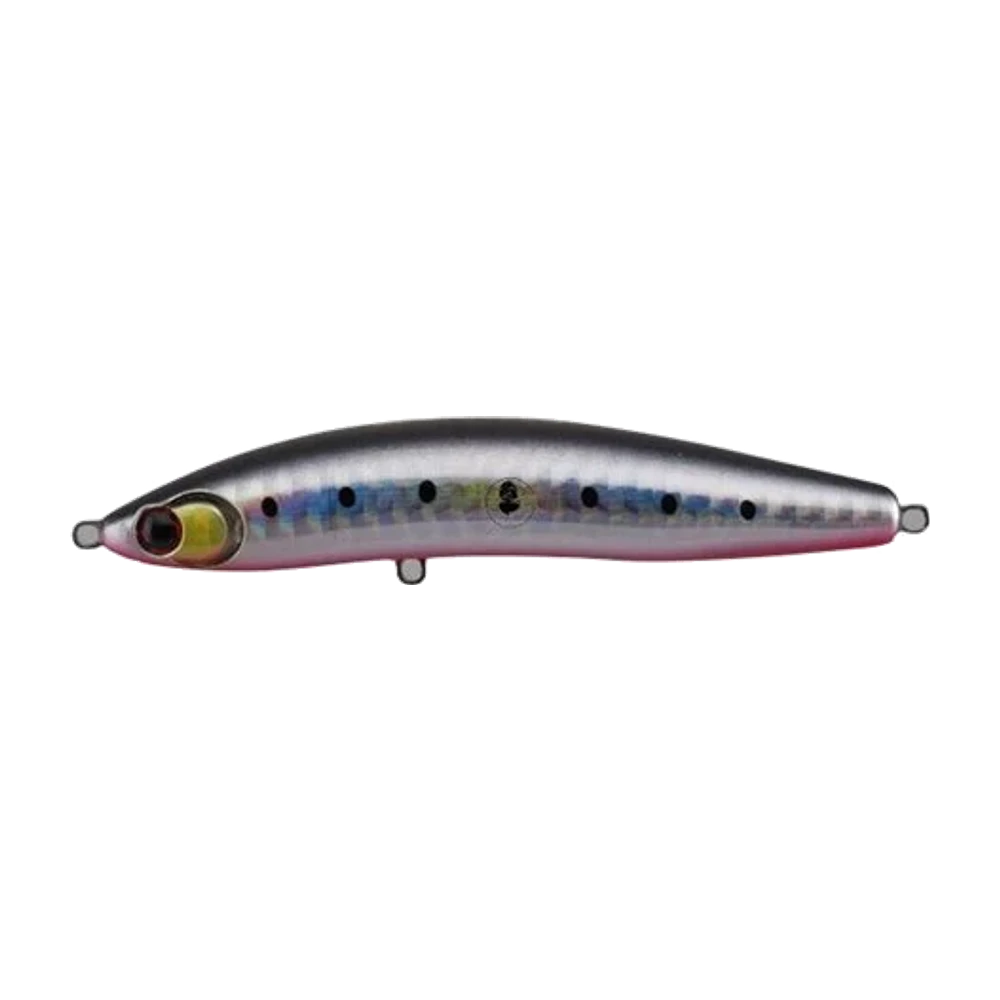
That distance gap is the entire reason a casting jig like the Blues Code exists. It is not a subtle lure and it will never replace a minnow on a holding bass. But it is the only tool that puts 50 g of metal into a feeding frenzy at 90 m in a crosswind, and when the situation arises, nothing else does the job.
What its shape really changes
A casting jig is not just an elongated lump of lead. Its mass distribution decides its behaviour, and the Blues Code is cut for one precise use: cast far and come back fast.
- Centre of gravity set towards the rear, which stabilises the lure in flight. It leaves straight, without tumbling, and that is the difference between 70 and 90 m.
- A compact profile and asymmetric section, giving a very brief but very frequent flash on a fast retrieve — exactly the signal of a fleeing sandeel or sprat.
- A short slaloming fall, not a slow spiral. It goes down fast, which is an advantage when you are fishing in 8 to 15 m of water with current.
In other words: it is a lure of speed and distance. Anything that calls for finesse is outside its remit.
Match the weight to the current, not the depth
The commonest mistake is choosing jig weight by depth. Off a breakwater, it is the tidal current that decides.
| Situation | Suggested weight |
|---|---|
| Slack water, little wind, 5-8 m of water | 20 to 30 g |
| Moderate ebb current, crosswind | 30 to 40 g |
| Full ebb through a channel, headwind | 40 to 60 g |
A jig that is too light in current does not sink: it bows in the water, swings broadside and stops transmitting anything. A jig that is too heavy at slack water drops too fast and passes under the layer where the fish are feeding. The right weight is the one that lets you count the fall and feel the bottom if you want to.
Two retrieves, two fish
The Blues Code is fished in two very different ways, and the choice depends on what you are after.
For mackerel and sea bass feeding at the surface:
- Cast beyond the frenzy, never into it — 40 g landing in the middle of a shoal scatters it.
- Let it sink for two or three seconds only.
- Retrieve fast and steady, almost flat out, rod tip low.
- Never stop: the bite comes to a lure that is fleeing.
For sea bass holding near the bottom, away from a frenzy:
- Cast and let it sink to contact, counting the seconds.
- Work it up in bursts of three to five fast turns broken by a second of controlled drop.
- Work the whole column that way, at least to mid-depth.
- Note the depth at which the bite comes, and repeat it on the next cast.
On the water: do not cast into the middle of the frenzy, cast 10 m beyond it and retrieve through. The big bass are almost never in the visible pack — they patrol below and around the edges picking up injured prey that drop out. The mackerel, on the other hand, are in the pack; if you take three in a row, move another ten metres along and drop two metres deeper.
Rigging: the assist hook is not a detail
On a casting jig, the hooks decide your drop-off rate.
- A single assist hook on the front ring, on 3 to 5 cm of short braid. That is what takes most of the bites, because the fish attacks the head of the jig on a fast retrieve.
- A rear treble, useful on mackerel and on soft takes, but to be removed if you are fishing over rock or practising strict catch and release.
- A forged snap, never a standard spring snap: a 60 cm bass turning in the current will open one.
As for the setup: a rod of 2.70 to 3.00 m able to handle 60 g on the cast, braid of 0.20 to 0.25 mm, and a metre of 0.40 to 0.50 mm fluorocarbon leader. This is physical fishing; you do not make 200 casts an hour with this gear.
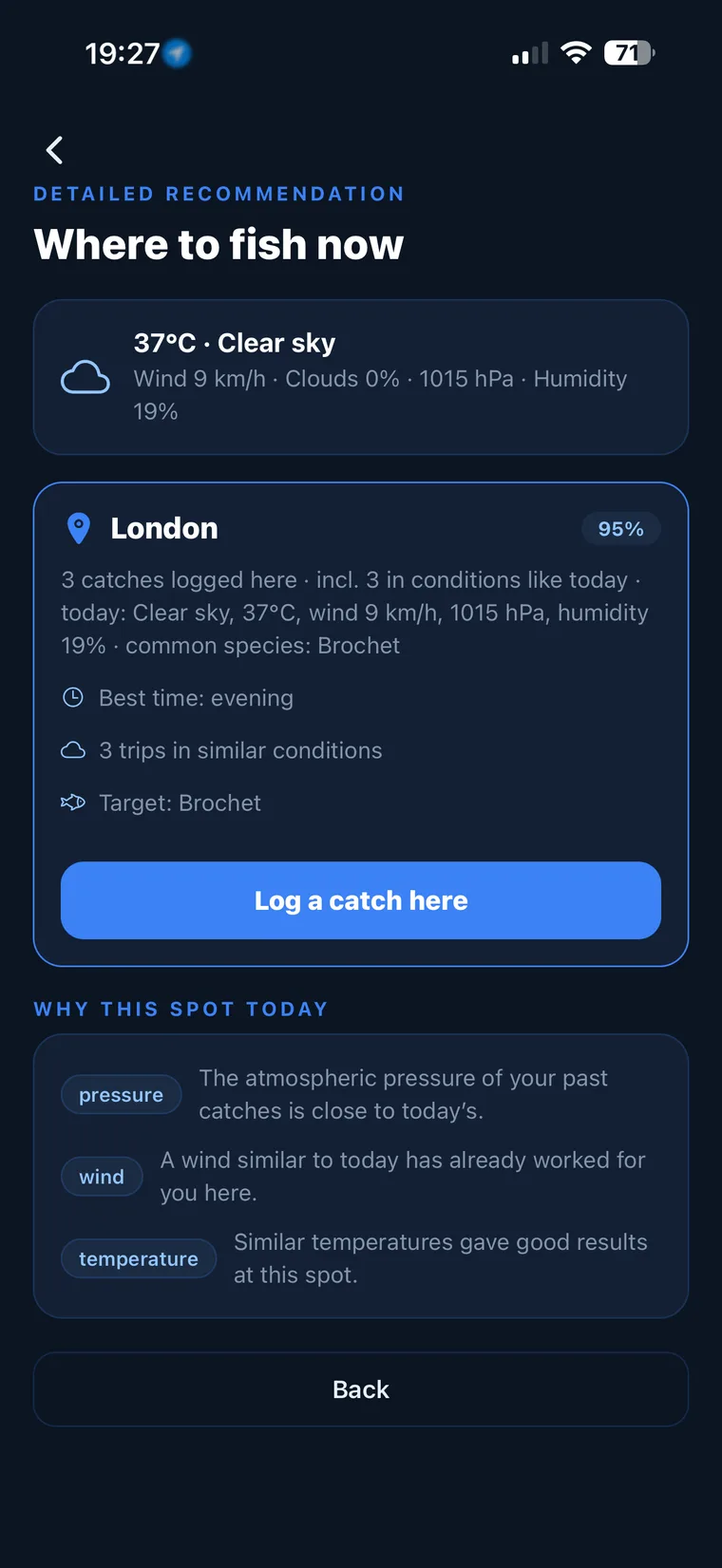
Not sure what to tie on?
Photograph your spot: CarnaFish reads the scene, cross-checks the conditions and gives you the zone, the lure and the retrieve. Free on iOS and Android.
Reading a feeding frenzy before you cast
Thirty seconds of observation are worth ten random casts. Three clues read from the breakwater:
- The direction the pack of birds is moving. A frenzy drifts with the current. Cast ahead of its track, not where it is now.
- The size of the splashes. Small, tight splashes mean mackerel on fry; broad, dull swirls mean bigger bass on bigger prey.
- How long it lasts. A frenzy that holds in the same place for more than two minutes is pinned on a structure — a shallow bank, a rocky head. Mark it: it will come back to the same point at the same state of the tide.
Blues Code or a slow jigging jig
The confusion is common. A jig like the Major Craft Jigpara is designed to glide down and be fished vertically or on a slow retrieve: its broad shape and central centre of gravity make it flutter. It is an excellent lure from a boat or on deep, calm spots.
The Blues Code sacrifices that glide for range and speed. It sinks faster and glides less, but it goes considerably further and holds its line on a fast retrieve. On a breakwater facing a distant frenzy, that difference decides everything; fished vertically down a ledge, it is the other way round.
For bass holding closer in and shallower, a soft plastic on a through-body jig head like the Fiiish Black Minnow is still more effective and far subtler. The jig is not a Swiss army knife, it is an answer to a distance problem. Our guide to sea bass fishing with lures places each family in its window. And if you are unsure what weight to tie on when you get to the breakwater, CarnaFish analyses a photo of the spot and answers.
Key takeaways
- A pure distance tool: it exists to reach a feeding frenzy other lures cannot.
- Weight is chosen on the strength of the current, not on depth.
- Two distinct retrieves: continuous fast winding for a frenzy, sawtooth for bass near the bottom.
- Front assist hook essential, forged snap, rear treble optional depending on the bottom.
- Wrong tool for slow, subtle or shallow fishing.
FAQ
What weight of Blues Code should I use from a breakwater?
Between 30 and 40 g for most ebb-tide situations with a crosswind. Drop to 20-30 g at calm slack water, go up to 50-60 g when the current is strong or the frenzy is genuinely far out.
Should I cast straight into the frenzy?
No. A heavy jig landing in the middle of a shoal scatters it. Cast ten metres beyond and retrieve through the frenzy, passing slightly underneath to intercept the big bass working the edges.
What hooks should I rig on this jig?
A single assist hook on short braid at the front ring, which takes most of the bites, and optionally a rear treble for mackerel's soft takes. Over rocky ground, remove the treble.
Is the Blues Code good for mackerel?
Yes, it is one of its natural targets in summer. Fast, continuous retrieve near the surface, with no pauses. If you start hitting mackerel after mackerel, move along and drop two metres to look for bass underneath.
Can it be fished vertically from a boat?
It is possible but it is not its ground: it sinks fast and glides little. A jig with a central mass distribution, designed to flutter on the drop, will suit vertical fishing far better.
What braid and leader should I use?
Braid of 0.20 to 0.25 mm and a metre of 0.40 to 0.50 mm fluorocarbon leader. The snap must be forged: a standard spring snap opens on a bass that turns in the current.
The full sea bass lure guideSeason-by-season strategy: which family of lure, when, and why.Go from theory to fish
CarnaFish reads your spot from a photo and gives you the game plan: zone, lure, retrieve. Free on iOS and Android.