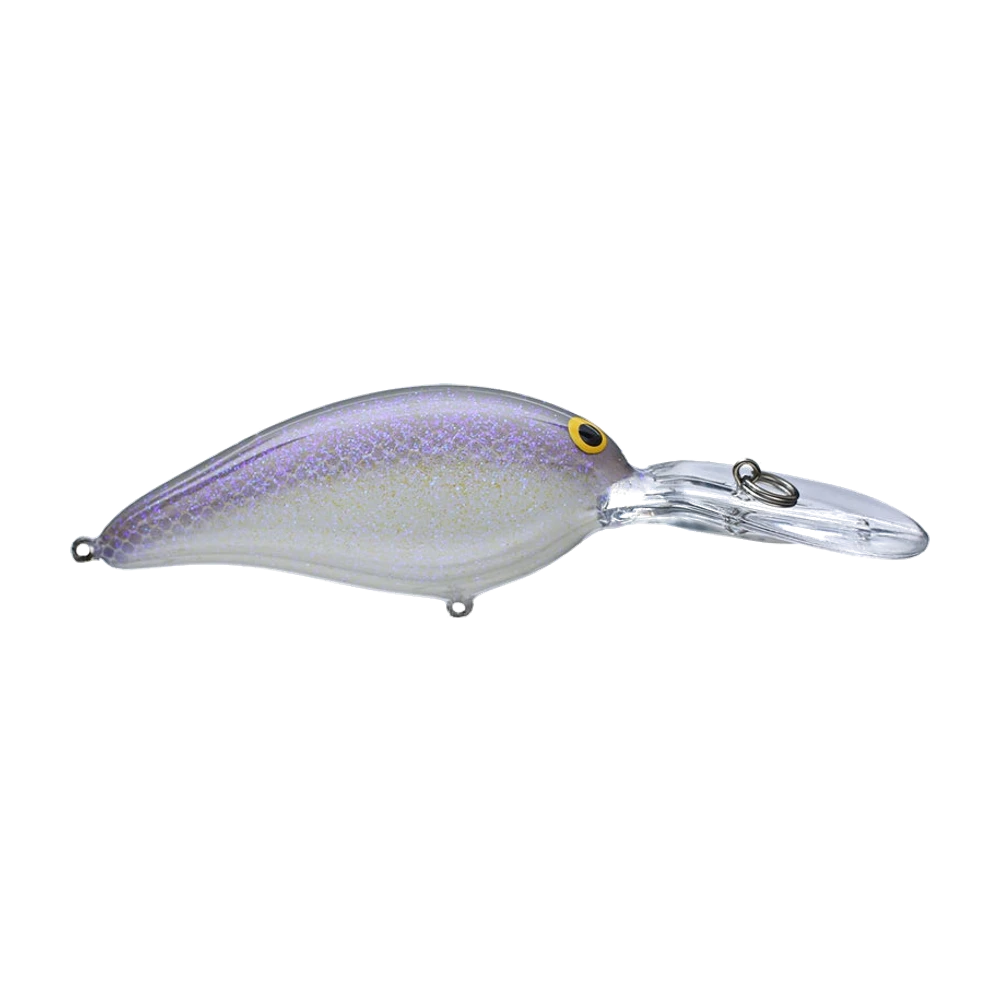
Norman Deep Little N: the crankbait built to bump bottom
The right lure in the wrong spot still catches nothing. CarnaFish spots the zone that works, from a single photo.
Some lures are built to stay well clear of the bottom, and then there's the Deep Little N, whose whole point is to go find it. This small crankbait has won American tournament titles for decades, for one simple reason: it dives fast, hits hard, and holds up to the treatment real deep-cranking demands — the kind where you're hunting for contact, not avoiding it.
A crankbait built to take a beating
At 6.3 cm and 3/8 oz, the Deep Little N looks unremarkable on paper. What matters is its wide, square bill, which dives fast within the first few cranks and, more importantly, is designed to deflect off bottom, rock and wood without cracking or throwing the lure off course. That detail is what separates an effective deep-diving crankbait from one that just swims deep without ever touching anything.
Rated depth versus actual depth
The Deep Little N is rated for 9-12 ft (2.7-3.6 m), but that depth depends directly on your line diameter. Thin braid or 10 lb fluorocarbon lets the lure dive to its full potential; thicker line creates more drag in the water and can cut the actual depth by a foot or more. If your lure isn't scraping bottom even though the chart says it should be deep enough, check your line diameter before blaming the lure.
The technique that changes everything: hunting for contact
Plenty of anglers fish a crankbait on a steady straight retrieve and never touch bottom — and give up half its effectiveness doing so. The real technique is picking a spot where the depth matches the lure's running range, so it bumps bottom, rock or stumps regularly during the retrieve. Every deflection nudges the lure slightly off its path, mimicking a disoriented baitfish — and that's exactly the moment a bass usually strikes.
Field rule: a deep crankbait that never touches anything over ten casts in a row is fishing the wrong spot, not the wrong lure.
Not sure what to tie on?
Photograph your spot: CarnaFish reads the scene, cross-checks the conditions and gives you the zone, the lure and the retrieve. Free on iOS and Android.
Retrieve speed by water temperature
- Cold water (under 12°C / 54°F): slow, steady retrieve, no jerks. A bass in cold water won't chase a bait moving away too fast.
- Moderate water (12-20°C / 54-68°F): medium speed — the most versatile setting, covering the widest range of situations.
- Warm water (over 20°C / 68°F): speed it up noticeably. An active bass in warm water often prefers prey that looks like it's fleeing fast, and the extra speed also increases how often you contact bottom.
Colour by season and water clarity
- Early spring, cold water: crawfish tones (red/orange/brown), mimicking crawfish — the main prey available at that time of year.
- Clear water, summer: natural shad, silver or grey/white, to stay subtle on a wary fish.
- Stained water: chartreuse/black or chartreuse/red, for a silhouette contrast visible from a distance even in reduced clarity.
Where the Deep Little N shows its limits
Over bottom cluttered with fine brush, the stock treble hooks snag fast — the price of a crankbait that actively hunts for contact. If the spot is too cluttered for that kind of swim, an Illex Squad Shad 65 rigged weedless will handle it far better. And past 4 m, the Deep Little N runs out of range — that's when you need a bulkier crankbait or a soft plastic on a weighted jighead.
Picking the right running depth means knowing the spot's actual depth first, which is exactly what CarnaFish simplifies by reading a photo of your spot and handing you a zone and a lure type to match — no more guessing whether your crankbait is working at the right level.
FAQ
How deep does the Norman Deep Little N actually run?
Between 2.7 and 3.6 m (9-12 ft) depending on line diameter. Thin braid or 10 lb fluorocarbon lets it reach its full depth range; thicker line noticeably cuts that depth.
Why isn't my crankbait ever touching bottom?
Usually because the spot is deeper than the lure's running range, or the line is too thick and slows the dive. Check the spot's actual depth before switching lures.
Do you really need to bump bottom with a crankbait?
Yes, that's the core of the technique with this style of lure. Contact with bottom or structure deflects its path and mimics a disoriented baitfish, which triggers most bass strikes.
What retrieve speed suits the Deep Little N?
Slow in cold water, medium in moderate water, fast in warm water. Speed also affects how often you contact bottom, so it shapes the overall effectiveness of the retrieve.
What colour works best coming out of winter?
A crawfish tone (red, orange, brown): it mimics crawfish, one of the few prey items available that early in the season, and remains a proven classic for bass coming out of winter.
Does the Deep Little N work well in heavy cover?
No, its exposed treble hooks snag quickly in dense brush. Use a weedless-rigged soft plastic for that kind of spot, and save the crankbait for clear bottom.
The full bass lure guideSeason-by-season strategy: which family of lure, when, and why.Go from theory to fish
CarnaFish reads your spot from a photo and gives you the game plan: zone, lure, retrieve. Free on iOS and Android.