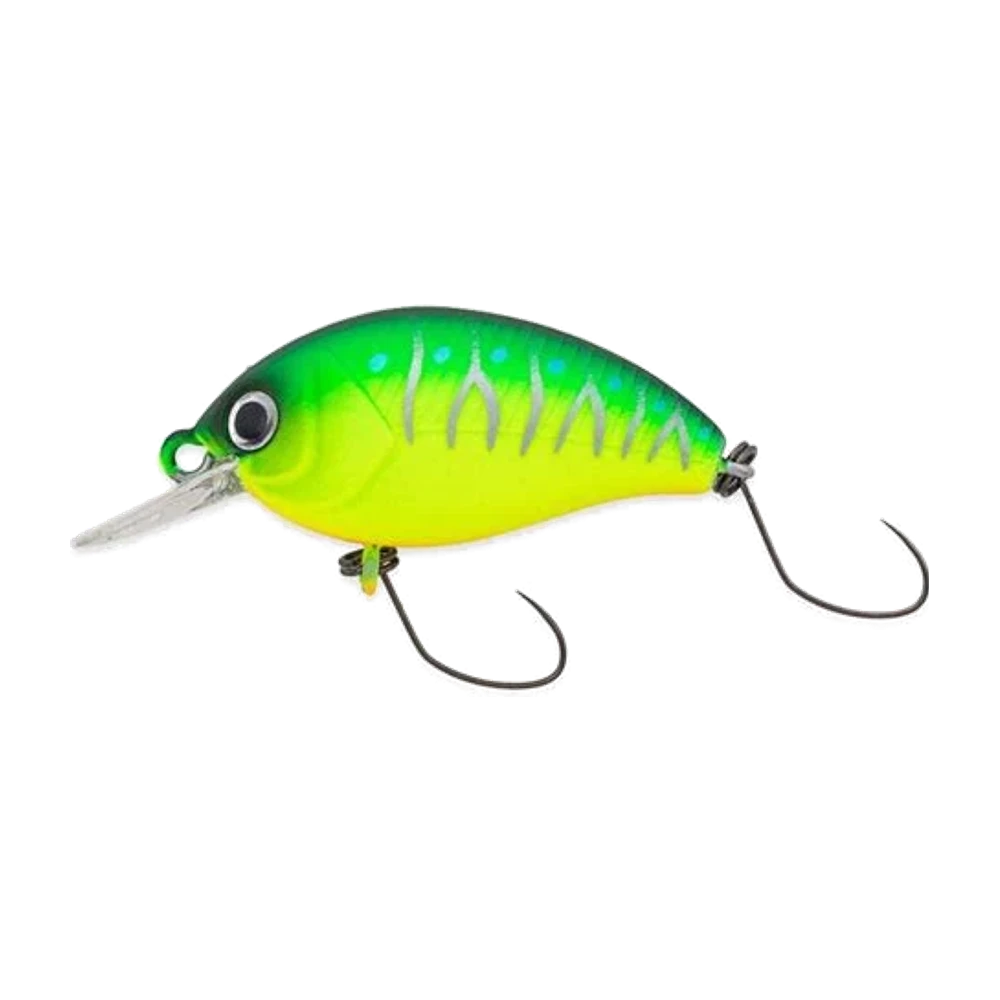
Nories Worming Crank: the crankbait you fish like a worm
The right lure in the wrong spot still catches nothing. CarnaFish spots the zone that works, from a single photo.
A crankbait, in normal use, is there to cover water fast: you cast, you wind, you do it again, and you rely on the sheer number of passes to find an aggressive fish. That works in spring on active fish. It is completely useless on a pond that gets fished every week, where the bass have seen the same movement go by a hundred times.
The Worming Crank starts from a different intention, and its name gives it away: it is built to be fished at the speed and along the paths of a soft plastic worm, which means slowly, in contact with the bottom and with cover, with stops. This is not a clever workaround, it is the lure's design brief.
The result is a compact crankbait that keeps swimming properly at a speed where most others go dead, and that rises vertically the moment you stop.
What lets it be slowed down that far
Slowing a crankbait down is easy. Keeping it swimming as you slow it is much less so. Three features make it possible here.
- A small body with a proportionally large lip. The lip grabs enough water to start the action within the first few centimetres of the retrieve, which allows a low speed.
- Strong buoyancy. On the stop, the lure clearly rises, nose up. That is not a flaw: the escape movement is what triggers, and it is also what frees it from cover.
- Marked roll despite the size. The stubby body rolls onto its flanks with every beat, producing a short, repeated flash that shows up well in slightly stained water.
On top of that comes a practical consequence of the compact shape: the lure pivots easily when the lip hits something. It sets off sideways, then rights itself. That kind of involuntary deflection is exactly what draws strikes.
The retrieve: fishing a crankbait like a Texas rig
- Cast past the target zone. It takes several metres for the lure to reach its depth.
- Get it down first, winding steadily until you feel the lip touch the bottom. From that point on you are no longer fishing open water.
- Retrieve slowly while keeping contact, letting the lip scrape and knock. You should feel every stone.
- On the first solid stop, do nothing at all. The lure rises and frees itself in almost every case. Pulling on it is the surest way to plant it for good.
- Hold a two-second pause after every hard contact, then start again with half a turn of the handle. That is the sequence that produces the most bites.
- On a precise spot, you can even work it on the spot: three turns, stop, let it rise thirty centimetres, back down. No classic crankbait tolerates that.
On the water: with this lure the bite almost always comes within a second of contact with an obstacle, not during the free-swimming phases. If your retrieve produces no knocks at all, you are fishing too high — lengthen your cast or drop the rod until the lip is working on the bottom, even if you snag occasionally.
Choosing the version by depth
The range is split by lip length, and that is the only variable that decides the depth reached.
| Lip | Working depth | Typical situation |
|---|---|---|
| Short | 1 to 1.5 m | Margins, weed beds, shallow cover |
| Medium | 1.5 to 2.5 m | The most versatile setting, flats and gentle drop-offs |
| Long | 2.5 to 3.5 m | Holes, steep banks, late autumn |
Three secondary settings shift those figures by twenty to fifty centimetres: cast length, rod position and line diameter. A 0.20 mm fluorocarbon takes the lure noticeably deeper than a 0.25 mm, and that is usually what you should adjust before changing model.
Avoid a snap on this lure: it weights the front, cuts the buoyancy and removes precisely the rise on the stop that makes it interesting.
Think about the rod too. A blank that is too stiff transmits the action badly and makes you strike too early on soft bites; a more progressive action follows the pull of the fish and avoids tearing the small trebles out. A light to medium casting rod with a tip that bends is the right compromise for this kind of compact lure fished slowly in bottom contact.
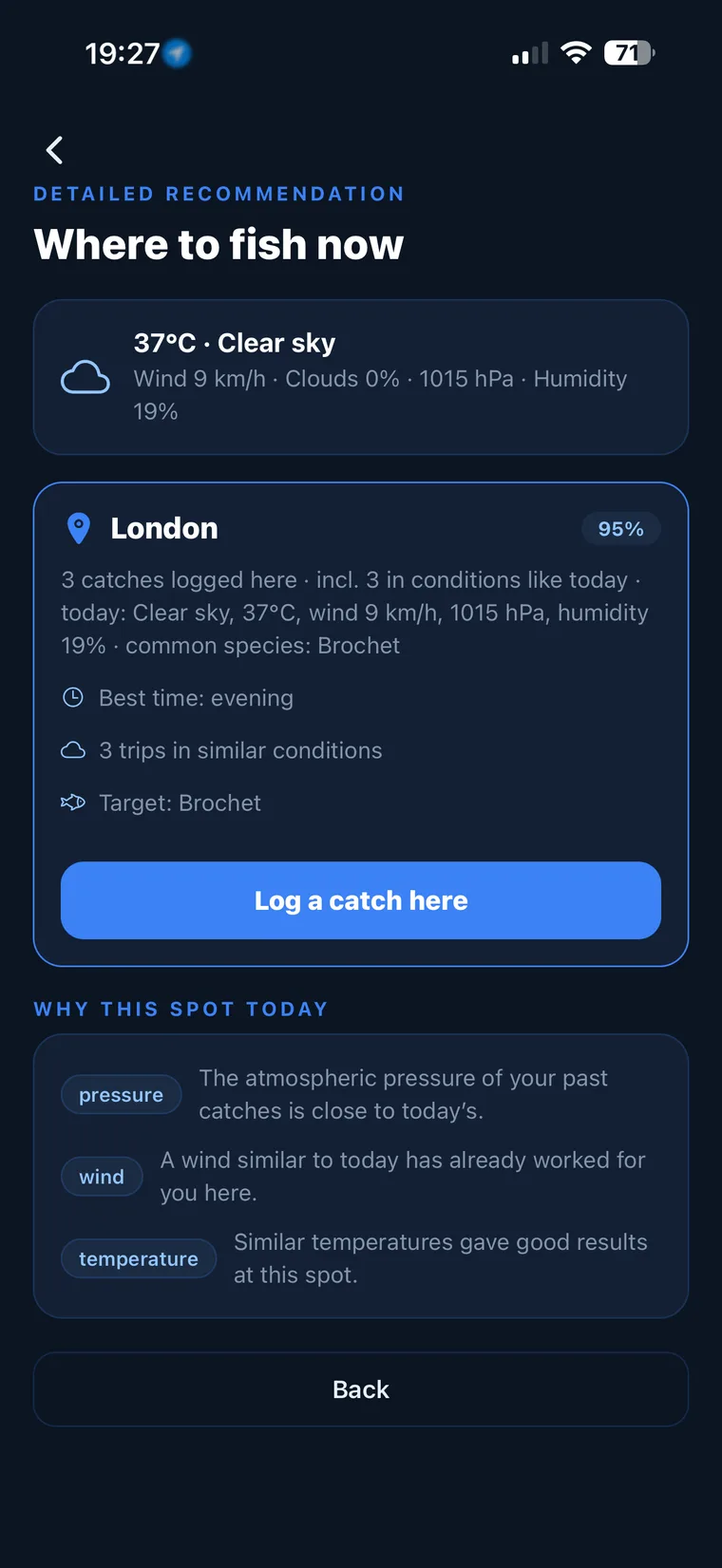
Not sure what to tie on?
Photograph your spot: CarnaFish reads the scene, cross-checks the conditions and gives you the zone, the lure and the retrieve. Free on iOS and Android.
Its water, and the water that does not suit it
It excels where you need precision rather than volume:
- Ponds and small heavily fished waters, where a classic crankbait no longer catches anything.
- Stony and gravel bottoms, where the lip can work in permanent contact.
- Sunken wood and branches, thanks to the buoyancy that frees it.
- Perch fishing, where its compact size is a clear advantage over a 7 cm crankbait.
- Cold water in late autumn, when the slow rhythm becomes compulsory.
It is poorly suited, on the other hand, to searching large areas quickly: it is too small to call from a distance and its contact-based use forces you to fish slowly. It is also of little use in very dirty water, where a bulkier, high-vibration lure will be picked up better, and over bottoms choked with stringy weed, where the lip and trebles collect everything.
Worming Crank or classic crankbait
A Rapala DT6 is built to swim at a constant depth over long distances, at medium speed, sweeping a flat. It is faster, more effective when searching, and it calls from further away. It is the right choice when you do not yet know where the fish are.
The Worming Crank does the opposite: it works a zone you have already identified, slowly, knocking into everything it meets. Against an Illex Chubby 38, smaller still and higher in the water column, it offers a wider action and access to depths the Chubby cannot reach. Against a Strike King KVD Squarebill, designed to deflect off cover at a sustained speed, it accepts a far slower rhythm.
Our beginner's guide to bass fishing explains how to alternate fast searching and slow working over the same day. And if you cannot decide between sweeping and fishing in contact when you reach the bank, CarnaFish analyses a photo of the spot and answers.
Key takeaways
- Designed to be fished at the speed of a soft plastic worm: slowly, in contact, with stops.
- Strong buoyancy: on the stop it rises and frees itself from cover. Never pull on a snag.
- The bite comes within a second of contact, not during free swimming.
- Choose the version by lip length, then fine-tune with line diameter and rod position.
- No snap: it removes the rise on the stop, which is the whole point of the lure.
FAQ
Why is this crankbait called "Worming"?
Because it is designed to be fished like a soft plastic worm: slowly, in contact with the bottom and with cover, with stops, instead of the steady fast wind of a classic crankbait.
How deep does it swim?
Between 1 and 3.5 m depending on the lip length of the version you pick. Cast length, rod position and fluorocarbon diameter shift that figure by a further twenty to fifty centimetres.
What should you do when it jams in cover?
Stop winding immediately and give it slack. Its buoyancy floats it up and frees it on its own in the vast majority of cases. Pulling on it only drives the trebles deeper into the wood.
Is it suitable for perch?
Yes, very much so. Its compact format around 5 cm matches the prey size a perch is after, where a 7 cm crankbait is often refused. Slow down a little further than you would for bass.
Can you use a snap?
Better not to. A snap weights the front and reduces the buoyancy, which removes the rise on the stop and the ability to free itself from cover — precisely the two features that make this lure worth having.
When should you prefer a bigger, faster crankbait?
When you are still looking for the fish over a large area, in stained water, or in spring on active fish. The Worming Crank comes out once the zone is identified, to work it in detail.
The full bass lure guideSeason-by-season strategy: which family of lure, when, and why.Go from theory to fish
CarnaFish reads your spot from a photo and gives you the game plan: zone, lure, retrieve. Free on iOS and Android.