Rapala DT16: reaching 5 metres and keeping contact
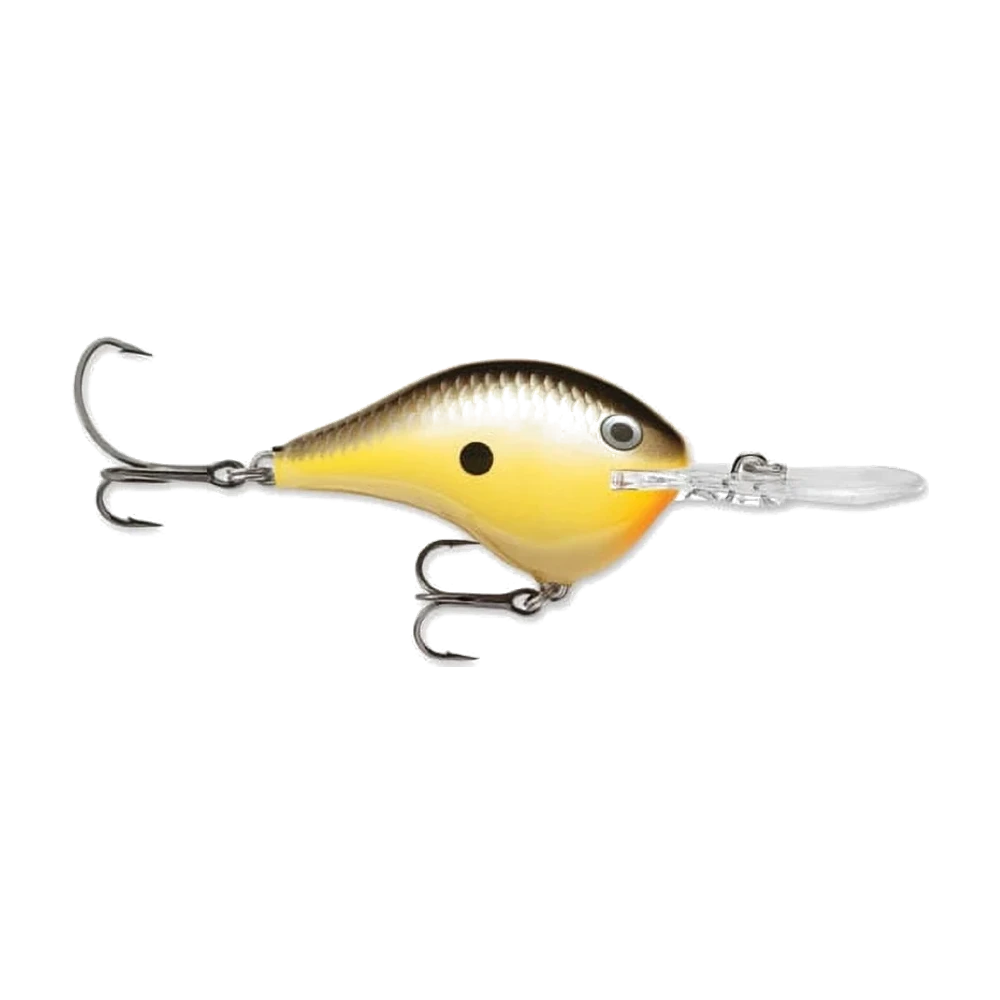
One lure, endless conditions. CarnaFish reads your spot from a photo so you are not just guessing.
Moving from a crankbait that works at three metres to one that works at five is not just going two metres deeper. It is a different kind of fishing.
At three metres you can fish any old way: any line, any rod, a medium cast, and the lure still reaches its depth. At five metres, every part of the setup becomes a limit. Line too thick and you lose a metre. Cast too short and the lure has no time to get down before it is already climbing back. Rod too stiff and you can no longer retrieve for an hour without wearing yourself out.
The DT16 works perfectly, but it forgives no compromise anywhere else in the setup. That is the essential difference with its smaller brothers.
What the extra depth really demands
Across the DT range the logic is constant: a balsa body, a calibrated lip, and a promise of a cruising depth reached quickly after the cast. The Rapala DT6 and the Rapala DT10 cover the easy layers, those of the margins and the first drop. The DT16 targets the next one down, and that jump has three consequences.
Line becomes the first adjustment. Every extra tenth of a millimetre of diameter brakes the lure in the water and costs it depth. Between a 0.25 mm fluorocarbon and a 0.35 mm, you easily lose 60 to 80 cm on this lure — which is exactly the margin separating bottom contact from fishing thin air.
Casting distance becomes a technical parameter. A deep crankbait does not drop vertically: it dives along a curve and only reaches its maximum depth over the middle third of the retrieve. A short cast means a useful window of just a few metres.
The pull doubles. A DT16 genuinely loads the rod. A short stiff rod turns an hour of fishing into a weights session, and above all it throws fish off on the hookset.
The retrieve: doing nothing, but doing it well
This is the counter-intuitive part of deep crankbaits. There is almost no action to impart.
- Cast as far as you possibly can. The cast is not a preliminary, it is half the work. Always aim beyond the zone you want to fish.
- Close the spool and start retrieving immediately, no pause. The DT dives during the first few metres.
- Wind steadily, at medium speed, rod tip pointed at the water and sometimes twenty centimetres into it to gain depth.
- Keep going when you touch bottom. That is the point. The lure should grind, knock and deflect.
- Pause for one to two seconds just after a firm contact with an obstacle. The balsa floats up, the lure lifts, and that is the most triggering sequence of the whole retrieve.
- Do not strike on a soft resistance: let the rod load and go with it.
On the water: on a deep crankbait, contact with the bottom is not an accident to avoid, it is the information you are after. If you make ten casts without ever touching, you are not fishing the right place or you are not casting far enough. A DT16 that has not knocked all day is a DT16 that has learned nothing about the spot.
The full setup, part by part
| Item | Choice | Why |
|---|---|---|
| Line | 0.25 to 0.28 mm fluorocarbon | Every extra tenth costs depth |
| Rod | 2.10 to 2.30 m, parabolic action | Cushions the pull and prevents lost fish |
| Reel | Slow ratio, 5.4:1 to 6.2:1 | A fast ratio makes you retrieve too quickly and tires you |
| Connection | Straight through or a small round snap | A wide snap changes the angle of pull |
| Hooks | Stock wire diameter | Heavy trebles drop the nose and kill the roll |
The point most often overlooked is the reel ratio. With a fast ratio you wind too quickly without thinking: the lure leaves its layer and climbs. A slow ratio physically forces you to the right speed.
Where it excels, and where it has no business
The DT16 is a lure for methodical searching over hard bottom.
- Reservoir flats and shallows between 3 and 5 m, with gravel or rock underneath.
- Sharp lake drop-offs, running the lure perpendicular to the slope to stay in contact.
- Zander sitting on hard ground in late spring and autumn, when they refuse soft plastics fished too slowly.
- Summer bass gone deep for cooler water, on isolated deep points.
On the other hand, it is unusable in branches and dense weed: its lip size and two trebles make it a snag magnet, and a DT16 lost at five metres does not come back. It is equally unsuited to shallow water — under two metres it ploughs the bottom without ever swimming properly. Finally, it has no place in slow winter fishing: this lure needs a sustained speed to hold its layer, and that speed does not suit an apathetic fish.
Not sure what to tie on?
Photograph your spot: CarnaFish reads the scene, cross-checks the conditions and gives you the zone, the lure and the retrieve. Free on iOS and Android.
DT16, DT10 or DT6: choose by layer, not by size
The three models have bodies of similar dimensions. What separates them is the lip and the layer they hold, not the profile shown to the fish. Choosing between them therefore means choosing a depth, never a prey size.
The DT6 is the lure for margins and shallow flats: you can cast it short, with any line, and it works. The DT10 covers the middle layer, that of the first drop and deep weed beds — still a forgiving lure. The DT16 changes category: it demands a long cast, thin line and a suitable rod, and it becomes genuinely unpleasant to use if any one of the three is missing.
The sound logic is to start from the bottom. Sound out or read the depth of the spot, pick the model whose layer matches, and keep the next one to hand to follow the fish when they change floor during the day. To go deeper still with a chunkier profile, a Strike King 10XD takes over, but it needs dedicated tackle.
Our beginner's guide to lure fishing for zander explains how to spot these drop-offs from the bank. And if you are unsure what depth to attack when you arrive at unfamiliar water, CarnaFish analyses a photo of the spot and answers.
Colours over hard bottom
On a lure that spends its time touching bottom, colour logic follows the substrate more than the prey.
- Gravel and rock bottom: craw, brown and orange tones. That is what lives there.
- Sandy flat holding baitfish: silver, blue or green back, reflective finish.
- Stained water or late in the day: chartreuse or a black back, to give usable contrast.
Key takeaways
- The extra depth is not free: thin line, long casts and a parabolic rod become compulsory.
- Every extra tenth of line diameter costs depth, up to 80 cm between 0.25 and 0.35 mm.
- Bottom contact is the objective, not the accident. A pause after a knock triggers.
- Use a slow reel ratio so you do not retrieve too fast without noticing.
- Avoid it in branches, under two metres of water, and in slow winter fishing.
FAQ
How deep does the DT16 really go?
Between 4 and 5 metres with a long cast and thin fluorocarbon. With heavy line or a short cast, count on 3.5 metres instead: the stated depth assumes a precise setup.
What is the difference with the DT10?
The body is similar; the lip and the layer are what change. The DT10 stays forgiving on line and casting distance, while the DT16 demands an optimised setup or you lose a metre of depth.
What line should I use with a DT16?
A 0.25 to 0.28 mm fluorocarbon. Finer and you lack abrasion resistance over rocky bottoms; heavier and you directly sacrifice the running depth that is the whole point of the lure.
Should I bump the bottom with this lure?
Yes. Bottom contact deflects the lure, sheds weed and triggers bites. Pause for one to two seconds after a firm knock: the balsa body rises, and that lift is what produces the take.
Can I fish it in winter?
Hardly. It needs a sustained speed to hold its depth, and that speed does not suit an apathetic fish in cold water. A soft plastic fished slowly on the bottom makes far more sense that time of year.
What rod for a deep crankbait?
A 2.10 to 2.30 m rod with a parabolic action, paired with a slow-ratio reel. The length increases casting distance, and the soft action absorbs the constant pull and limits fish coming off at the hookset.
The full zander lure guideSeason-by-season strategy: which family of lure, when, and why.Go from theory to fish
CarnaFish reads your spot from a photo and gives you the game plan: zone, lure, retrieve. Free on iOS and Android.