Panther Martin Classic: the spinner whose whole body spins
One lure, endless conditions. CarnaFish reads your spot from a photo so you are not just guessing.
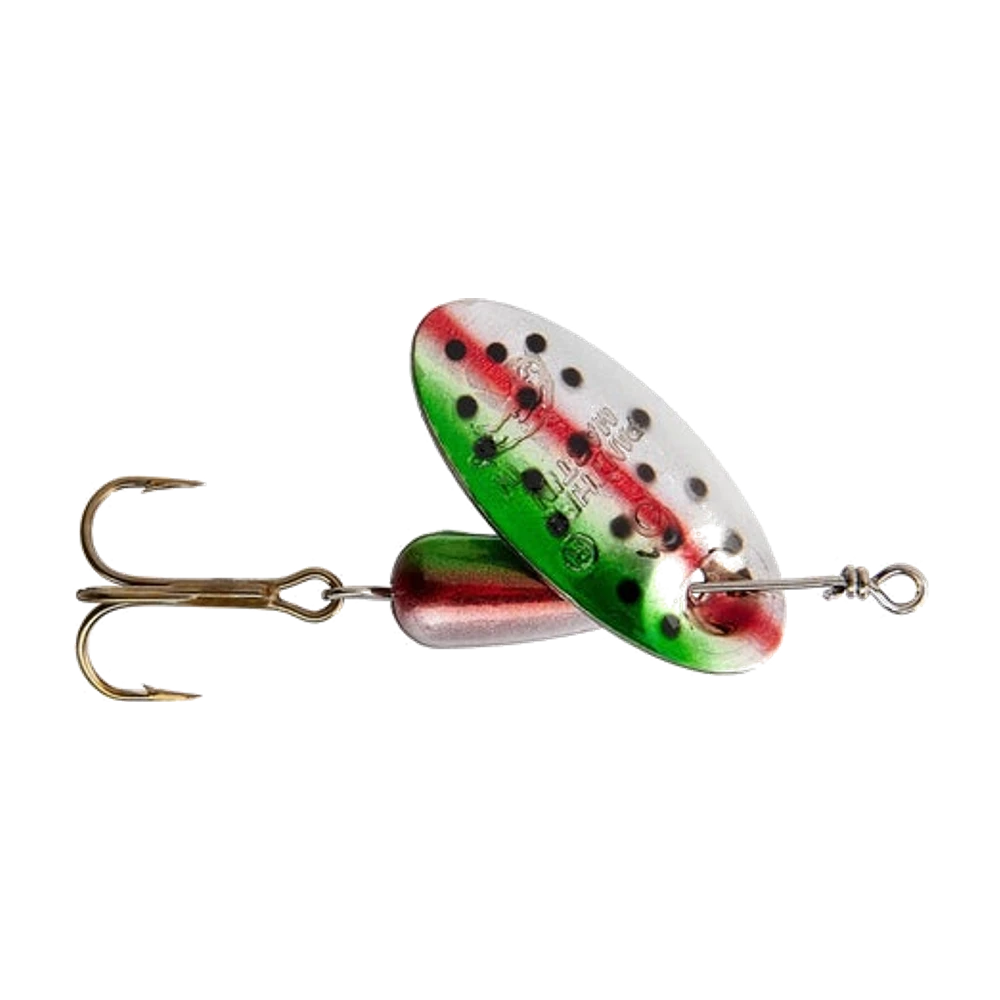
Most inline spinners work with a blade spinning around a fixed shaft. The Panther Martin Classic does it differently: the entire body of the lure rotates along with the blade, a design detail that genuinely changes how it vibrates and how it feels through the rod, especially in fast current.
The body that spins, not just the blade
On a standard inline spinner, only the light blade rotates, which can produce a vibration that's hard to feel in turbulent water. On the Panther Martin, the weighted body spins along with it, generating a noticeably stronger vibration that's transmitted almost instantly to the tip. In practice, you feel the lure working within the first few inches of the retrieve — a real advantage for knowing immediately whether your retrieve is right.
Sizes 1-6: matching current speed
- Sizes 1-2 (roughly 2-4 g): small streams and low-flow rivers, clear and low water.
- Sizes 3-4 (roughly 5-7 g): the most versatile size for most trout rivers.
- Sizes 5-6 (roughly 8-10 g): high water, strong current, or when you need more casting distance.
Field rule: if the blade doesn't start turning the instant it touches the water, you're undersized for the current — size up rather than forcing the retrieve.
Riffles and fast water: its home turf
It's precisely in fast, turbulent water — riffles, the tail of rapids, well-defined current seams — that the Panther Martin Classic sets itself apart from a standard spinner. Its strong vibration cuts through the background noise of the current and stays detectable even where a lighter spinner would get completely lost in the turbulence. Cast slightly upstream and let the current spin the body the moment it enters the water.
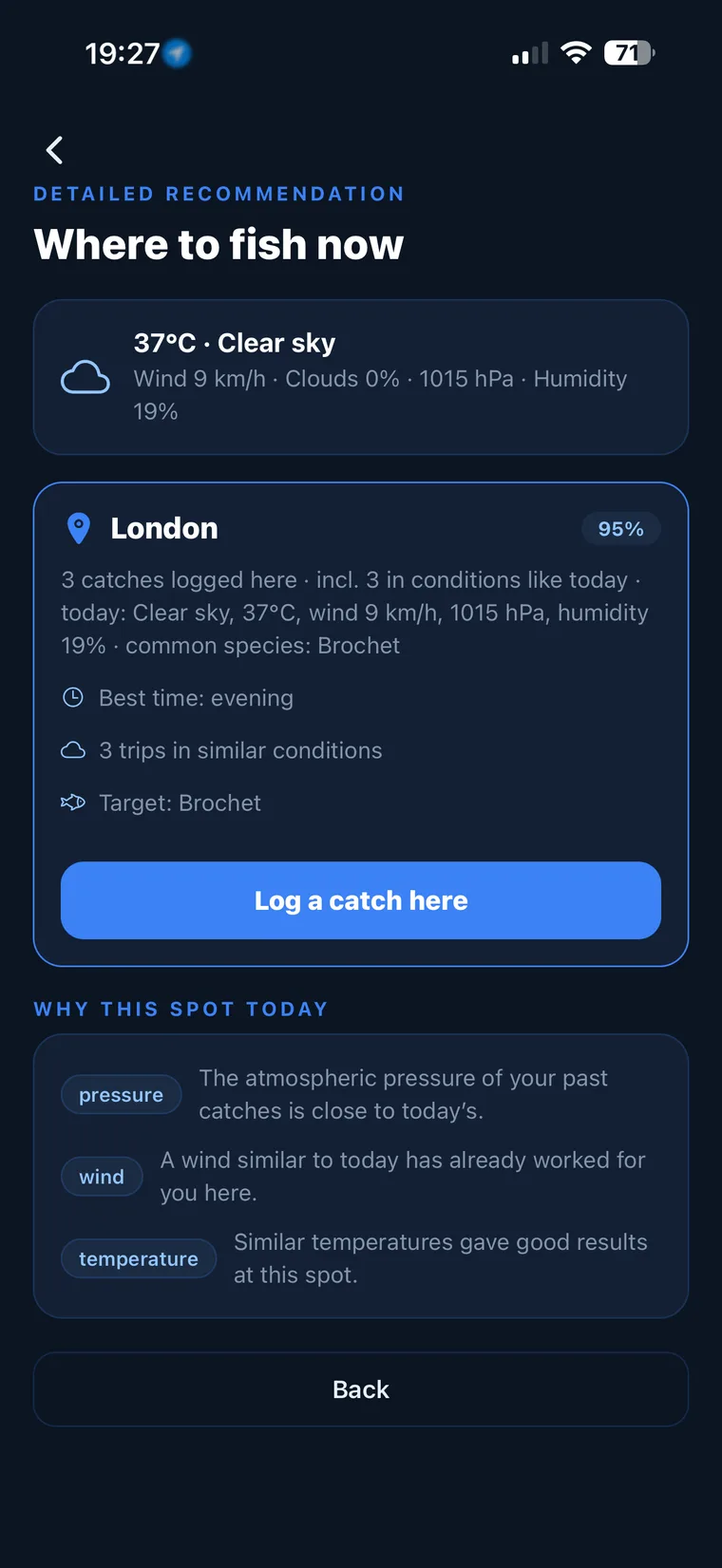
Not sure what to tie on?
Photograph your spot: CarnaFish reads the scene, cross-checks the conditions and gives you the zone, the lure and the retrieve. Free on iOS and Android.
Colours and flash
- Clear water: silver or natural finishes, to stay subtle despite the strong vibration.
- Overcast skies: copper, a solid compromise between flash and stealth.
- Stained water or low light: red/yellow, maximising contrast over realism.
A solid approach still matters
A hard-vibrating spinner never makes up for a bad approach. Stay low, work upstream, and fish nearby spots before casting far — the principles detailed in our guide to river trout fishing apply fully here, arguably even more so, since a strong vibration can also alert a fish to a noisy approach at close range.
Knowing when to reach for a powerful spinner instead of a subtler spoon depends heavily on the day's current and turbidity — exactly what CarnaFish reads from a photo of your spot to point you in the right direction before your first cast.
To vary the flash without changing lure style, the Mepps Black Fury offers a more classic vibration and a dressing that extends the lure's wake — a good complement depending on the day's mood.
Key takeaways
- The whole body spins with the blade: a stronger, faster-to-feel vibration than a standard spinner.
- Sizes 3-4 as a versatile starting point; size up as current speed increases.
- Excels in fast water and riffles, where its vibration stays detectable despite background noise.
- Approach still matters most: a strong vibration doesn't excuse a heavy footstep near the bank.
FAQ
What size Panther Martin Classic should I start with?
Sizes 3-4 cover most medium-sized trout rivers. Drop to size 1-2 on a small, low-flow stream, and size up to 5-6 on a river running high or with strong current.
How is this spinner different from a standard inline spinner?
The entire body rotates along with the blade, not just the blade alone as on most spinners. This produces a stronger vibration that's felt in the rod tip much faster, a real advantage in fast water.
Where does this spinner work best?
Riffles, the tail of rapids, and areas with strong current, where its powerful vibration stays detectable despite the background noise of fast water. In calm, clear water, a subtler spoon may work better.
Do I need a swivel with this spinner?
Yes, a quality ball-bearing swivel significantly reduces line twist, a common issue with any inline spinner fished for extended periods.
What retrieve speed should I use?
The blade should spin within the first few inches of the retrieve, even at a slow pace. If it doesn't start immediately, speed up slightly or check that the size matches the current.
What colour should I choose for the conditions?
Silver in clear water, copper under overcast skies, red and yellow in stained water or low light. The general rule: the murkier the water, the more contrast should take priority over realism.
The full trout lure guideSeason-by-season strategy: which family of lure, when, and why.Go from theory to fish
CarnaFish reads your spot from a photo and gives you the game plan: zone, lure, retrieve. Free on iOS and Android.