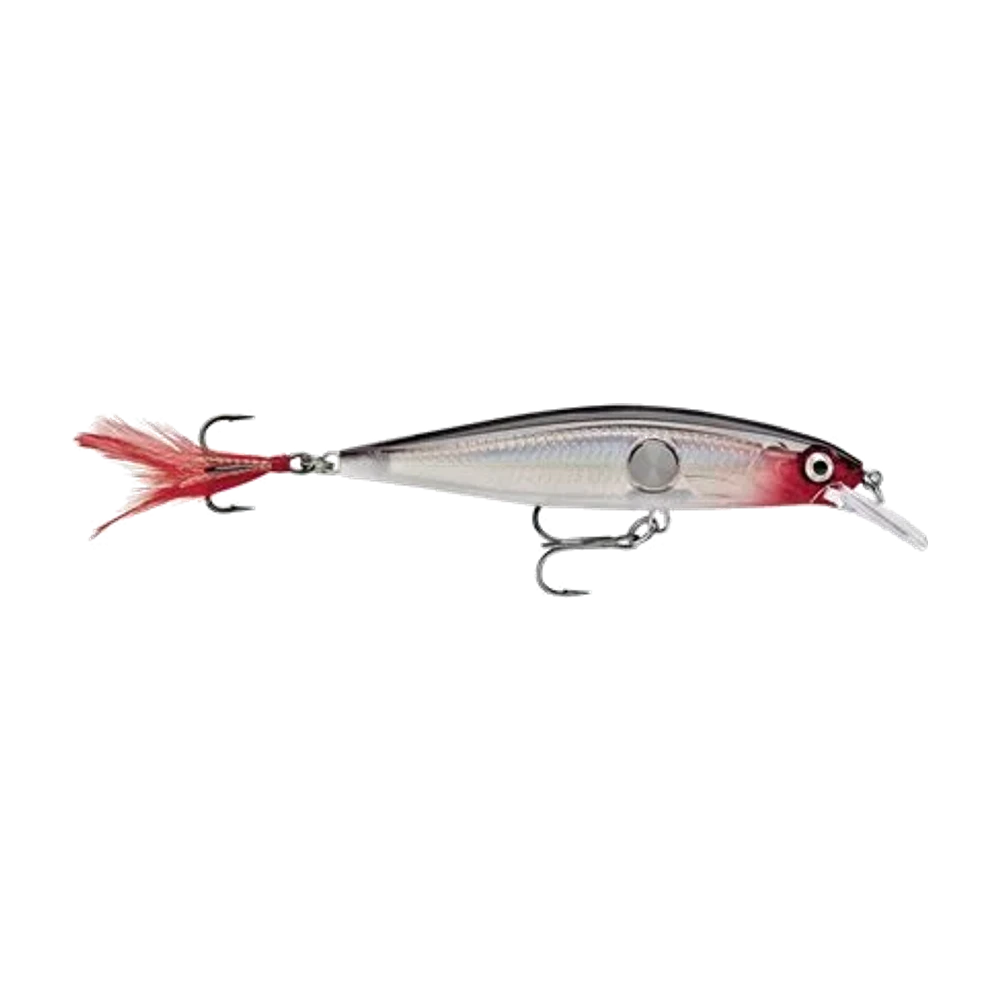
Rapala Clackin Minnow: the jerkbait heard before it is seen
Not sure this lure fits YOUR spot today? CarnaFish tells you in 10 seconds, from a photo.
A classic jerkbait is a visual lure. It works on flash, on the zigzag path and on sitting still at the stop, and it assumes the fish sees it coming. The day the water colours up after rain, the wind raises a brown chop across a whole arm, or you simply have to search two hundred metres of margin with no idea where the pike are, that lure goes mute: it cannot call.
The Clackin Minnow adds exactly the missing piece. A heavy ball housed in the body produces a deep, well-spaced knock on every jerk, a sound far lower and far more isolated than the buzz of a jerkbait full of micro rattles. The lure announces itself several metres before the fish can make it out.
Rapala already applied this idea to a lipless, with the Clackin Rap. On a jerkbait the same system produces an entirely different result, and that is the whole point of this page.
The same sound, a completely different mechanism
On a lipless, the ball rattles continuously. The lure vibrates non-stop through the retrieve, so it knocks non-stop: a dense signal, calling along the whole length of the cast. Effective, but uniform.
On a jerkbait, the ball only moves on changes of direction. In practice:
- The sound is intermittent. Two or three knocks per burst of jerks, then complete silence through the pause.
- It is localised in time. The fish hears a short noise, turns towards its source, and finds a motionless lure at that exact spot. It is a call-then-present mechanism, not a continuous call.
- It stays compatible with the pause. That is the thing a lipless cannot do: on a lipless, stopping the retrieve sinks the lure and switches the signal off. Here the pause is part of the sequence.
In other words, the Clackin Minnow is not a stretched lipless. It is a jerkbait given the ability to bring in a fish that had not seen it.
The retrieve: sound off, then go quiet
- Cast and wind two or three turns to bring the lure to its running depth, around 1.2 to 1.8 m.
- Give two wide jerks, rod low, pulling from the arm rather than the wrist. A wide jerk makes the ball sound properly; a soft jerk does not move it.
- Hold a pause of 2 to 4 seconds depending on temperature. The lure stays in its band or rises very slowly.
- Run a third sequence, then alternate: sometimes three jerks then a long silence, sometimes just one.
- Over the last third of the cast, switch to a slow straight retrieve. Plenty of pike follow the lure from the start and attack when the rhythm settles.
| Water | Rhythm | Pause length |
|---|---|---|
| Above 15 °C | 3 fast jerks | 1 to 2 s |
| 8 to 15 °C | 2 wide jerks | 3 to 4 s |
| Below 8 °C | 1 jerk + slow straight retrieve | 5 s and up |
On the water: in stained water, do not shorten the pauses on the grounds that the fish cannot see. It is the other way round: the knock tells the pike where to look, but it then needs several seconds to locate a target it can barely make out. A lure that sets off again too soon escapes it just as it arrives.
When the sound works for you, and when it works against you
Noise is not free. It increases the calling distance, but it also increases the risk of spooking a wary fish.
Where it pays:
- Stained or dirty water after a flood, after rain, or on naturally coloured water.
- Big water to search, when you are covering ground without precise information.
- Chop and wind, where the fish's vision is degraded anyway.
- Cold late-autumn water, on pike that barely move and have to be actively sought out.
- Deeper margin zones where fish are sitting under dead weed and will not come up to look.
Where it hurts:
- Very clear, calm water, on fish that have already been fished for: a silent jerkbait such as a Rapala Husky Jerk often goes down better.
- Small waters, where the signal saturates the whole area quickly.
- Followers that refuse at the bank. If a pike escorts the lure then peels off every time, cutting the noise works better than changing colour.
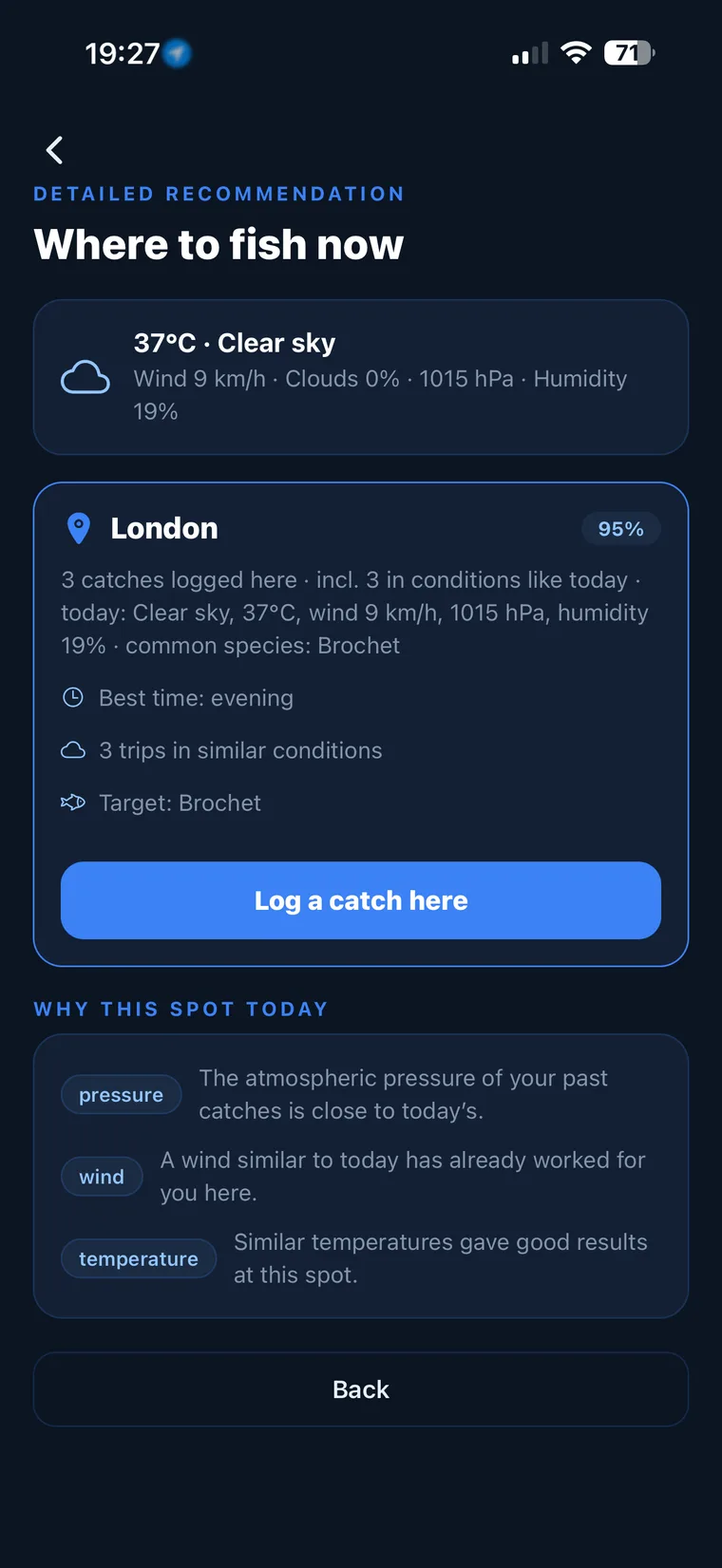
Not sure what to tie on?
Photograph your spot: CarnaFish reads the scene, cross-checks the conditions and gives you the zone, the lure and the retrieve. Free on iOS and Android.
Hooks and terminal tackle for pike
The Clackin Minnow is fished exclusively on an abrasion-resistant leader: fluorocarbon of 0.35 to 0.40 mm as a minimum, or coated supple wire where pike density is high. A badly hooked pike gets the line between its teeth in a second.
A clip is recommended and has no effect on the action: the lure is heavy enough to tolerate a little weight up front. Take a medium fast-link model and you will change lures without retying every time.
On hooks, stay with the original wire gauge. Heavier trebles sink the lure during the pause, which breaks the call-then-present mechanism. If you want fewer snags in the weed, swap the belly treble for one size down rather than changing everything.
Clackin Minnow or Clackin Rap
Same rattle system, two uses that do not overlap.
The Clackin Rap is a lipless: it sinks, it is fished on the yo-yo or on a fast straight retrieve, it goes down to explore 2 to 5 m and it sounds without interruption. It is the tool for fast searching at depth, particularly when you are hunting fish scattered across a plateau.
The Clackin Minnow stays in the top metre and a half, works in sequences and knows how to stop. It is a lure for margins, weed edges and current seams, and above all a conversion lure: it calls, then it offers the fish a motionless target. On pike sitting along the margin in stained water it is clearly ahead; as soon as you need three metres of depth or fast coverage, the lipless goes back in front.
Our guide to choosing a pike lure places both families within a full season. And if you are unsure what noise level suits the water colour in front of you, CarnaFish analyses a photo of the spot and answers.
Key takeaways
- A heavy ball produces a deep knock that only sounds on changes of direction.
- The signal calls from a distance, the pause that follows turns the call into a take.
- Rhythm: two wide jerks, 2 to 4 seconds of pause, slow straight retrieve at the end of the cast.
- A lure for stained water, wind and searching; avoid it in clear water on educated fish.
- 0.35-0.40 mm fluorocarbon leader minimum or supple wire, hooks in the original wire gauge.
FAQ
What is the ball in the Clackin Minnow for?
It produces a deep, well-spaced knock that carries further than the fish can see, especially in stained water. It is there to bring in a pike that has not spotted the lure, before the pause gives it time to locate it.
What is the difference with the Clackin Rap?
The Clackin Rap is a sinking lipless that sounds continuously and runs down to 2-5 m: it is for searching fast and deep. The Clackin Minnow stays around 1.2-1.8 m, sounds in bursts and allows pauses, which makes it a margin lure.
How deep does it run?
Between roughly 1.2 and 1.8 m depending on size and the line used. Thick fluorocarbon holds it slightly higher, fine line lets it drop a little further.
Do I need a wire leader?
Fluorocarbon of 0.35 to 0.40 mm is enough in most cases, but on a water with a high density of pike, coated supple wire prevents break-offs. It is a safety choice for the fish as much as for your lure.
Does it work in clear water?
Less well. On gin-clear, calm water the noise can spook fish that have already been fished for. In that case a silent jerkbait of the same size will produce more bites.
Can it be fished on a plain straight retrieve?
Yes, and it is a good answer in cold water: a slow, steady retrieve makes the body work without sounding the ball continuously, which suits pike that are barely active.
The full pike lure guideSeason-by-season strategy: which family of lure, when, and why.Go from theory to fish
CarnaFish reads your spot from a photo and gives you the game plan: zone, lure, retrieve. Free on iOS and Android.