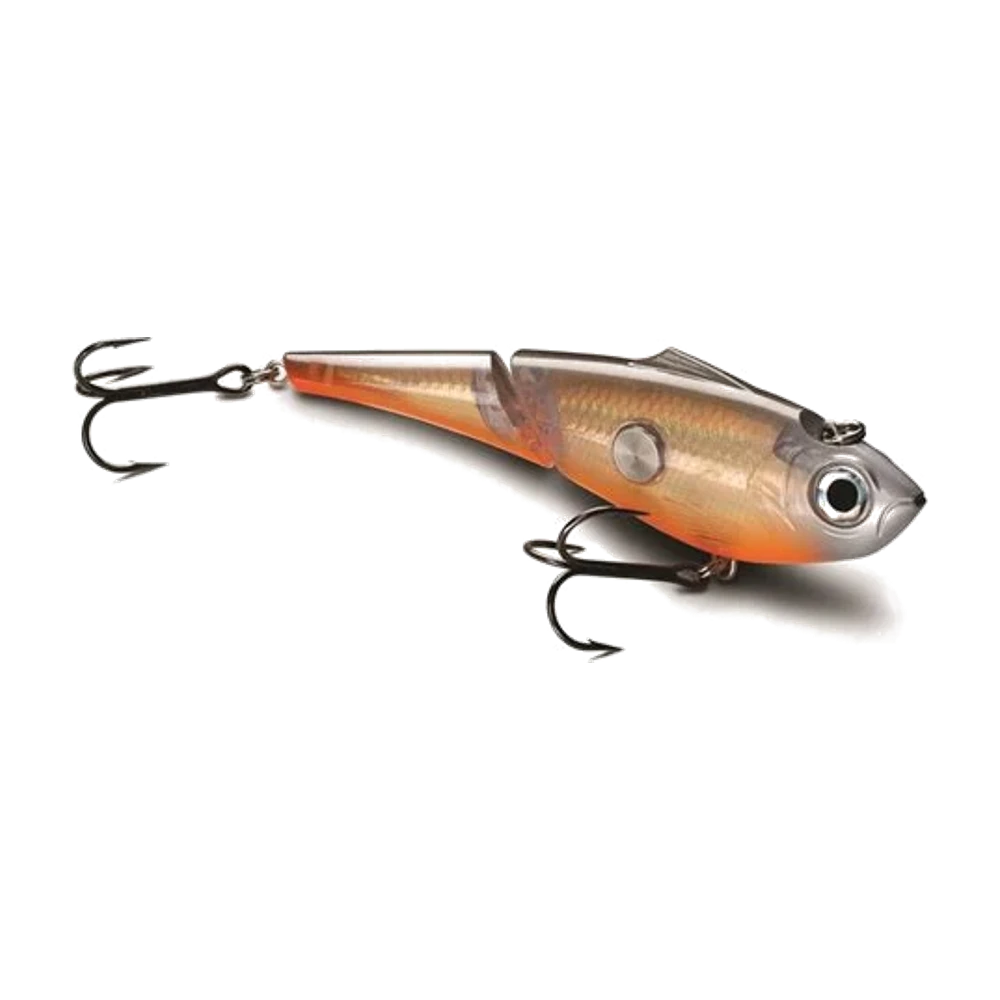
Rapala Clackin Rap: one single rattle, a sound that carries further
One lure, endless conditions. CarnaFish reads your spot from a photo so you are not just guessing.
In stained water, a fish does not choose your lure with its eyes. It locates it first with its lateral line, which picks up vibration, then with its inner ear, which picks up sound. Vision only comes into play over the last metre, sometimes less.
That is why lipless crankbaits dominate dirty water: no lip, a flat body that vibrates hard, and internal balls that make noise. But not all lipless lures produce the same sound. Most contain a handful of small metal or glass balls generating a high, diffuse crackle.
The Clackin Rap goes the other way: one single large ball, housed in a single chamber. The result is a deep, isolated "clack", repeated in time with the vibration. A low-frequency sound travels through dirty water better and carries further than a high crackle. That is the whole point of the lure.
The deep sound is not just catalogue copy
Two things change concretely when you move from a multi-rattle lipless to a single-ball one.
The reach of the signal. Low frequencies attenuate more slowly in water. On a brown lake after a flood, a Clackin Rap announces itself several metres further out than a classic lipless. For a searching approach where you are trying to bring the fish to you, that is decisive.
The character of the noise. A continuous crackle sounds like a shoal of fry. An isolated, heavy knock sounds more like a single object moving on its own. On heavily fished waters where everyone is putting out the same crackle, the change of register is sometimes enough to turn a day around.
The body stays a standard lipless in its geometry: flat flank, narrow back, tow eye set high. It is that attachment position which gets the lure vibrating within the first few centimetres of the retrieve, with no dead time.
The retrieve: two schools depending on the species
The same lure is fished very differently depending on whether you are after pike or zander.
The straight retrieve, for pike and for searching
- Cast long and let it sink for only two or three seconds, to avoid snagging.
- Retrieve steadily, at a brisk pace, feeling the vibration constantly in the rod.
- Break the rhythm every ten seconds: a half-second stop, or two very fast turns.
- Slow down at the end of the run along the bank, the zone where many followers make their minds up.
If you stop feeling the vibration, you are either too slow or the lure has picked something up. Check it.
The yo-yo, for zander
This is where the lure is at its most interesting. Zander hold low, often settled on the bottom, and react to a lure that falls.
- Cast and let it sink to the bottom, line half tight, counting the seconds.
- One wide lift of the rod, from the 9 to the 11 o'clock position. The lure lifts off vibrating hard.
- Follow the descent with the rod tip, without letting the line go completely slack. The lure drops flat, gliding.
- Take up the slack, wait until you feel bottom contact, and start again.
Almost every zander bite arrives during the descent or right on the touchdown. They usually register as a simple feeling of weight, or as line moving off to one side, not as a thump.
On the water: on the yo-yo, count the sink time on every cycle. The day the lure takes two seconds less than usual to touch down, either a fish has intercepted it or there is a drop-off. Both are worth working over.
Settings by water layer and season
| Situation | Weight / size | Rhythm |
|---|---|---|
| Zander settled, 4 to 6 m of water | heaviest model | wide yo-yo, descent followed with the tip |
| Active pike on a 2 m flat | standard model | fast straight retrieve, short stops |
| Cold water, late winter | standard | very slow yo-yo, 2 to 3 s pauses on the bottom |
| Warm water, feeding fish | standard | brisk retrieve, almost aggressive |
Two notes on terminal tackle. For pike, a supple wire or titanium leader is essential: a lipless is often engulfed whole, and fluorocarbon does not survive it. For zander, stay with 0.30 mm fluorocarbon straight through to keep the feel of contact.
The stock trebles are fine and sharp, which is perfect for zander with their bony mouths. On a big pike, though, they bend: for that fish, step up one grade in hook strength and accept that the lure sinks slightly faster.
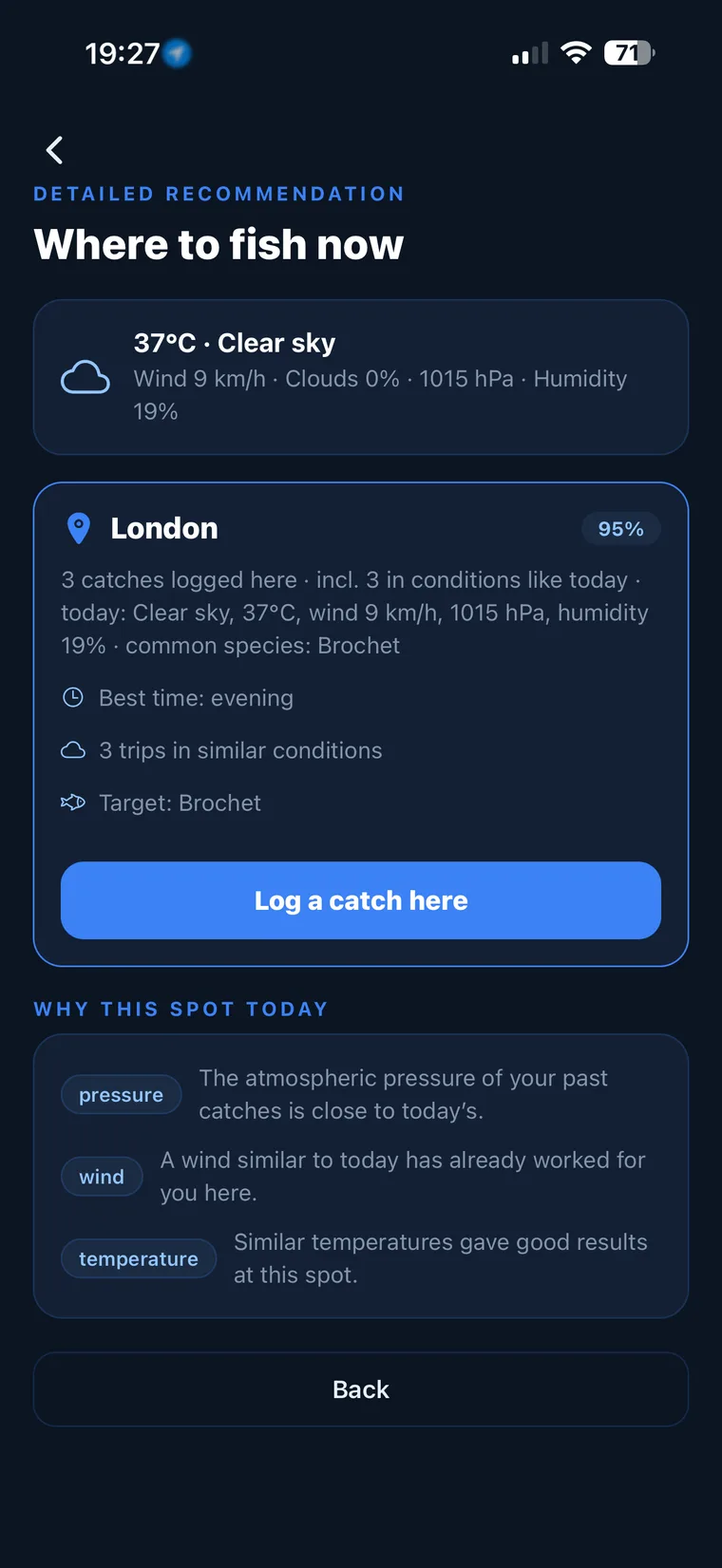
Not sure what to tie on?
Photograph your spot: CarnaFish reads the scene, cross-checks the conditions and gives you the zone, the lure and the retrieve. Free on iOS and Android.
Where it loses its edge
The Clackin Rap is not a universal lure.
- In weed it is a disaster: two bare trebles and no protection at all.
- In very clear, cold water, on passive fish, the signal is often too aggressive. A soft shad on a jig head or a drop shot go down better.
- In fast-flowing rivers, it tends to run off line and spin on itself on a fast retrieve.
Clackin Rap or Rippin Rap: choosing your sound register
Rapala offers two neighbouring lipless lures and the choice is not cosmetic.
The Rippin Rap has a slimmer silhouette, a very tight vibration and multiple rattles with a higher-pitched sound. It sinks fast and suits deep yo-yo work for zander in clear water particularly well.
The Clackin Rap is chunkier, with a slightly wider vibration and that isolated deep knock. It takes the lead as soon as the water colours up or you are trying to bring a fish in from a distance.
Against a Cotton Cordell Super Spot, which is more traditional and cheaper, the difference comes down mainly to the refinement of the vibration and the quality of the stock hooks.
Our beginner's guide to zander fishing with lures sets out the time windows where the lipless beats soft plastics. And if you are torn between a straight retrieve and the yo-yo when you reach the bank, CarnaFish analyses a photo of the spot and answers.
Key takeaways
- One single large ball: a deep, isolated sound that carries further than a high crackle.
- In stained water it is a calling lure, not a finishing lure.
- Pike: brisk straight retrieve with breaks of rhythm. Zander: yo-yo, bites on the drop.
- Wire leader mandatory for pike, fluorocarbon straight through for zander.
- Unusable in weed, questionable in clear cold water.
FAQ
What is the difference between the Clackin Rap and the Rippin Rap?
The Rippin Rap is slimmer, vibrates more tightly and produces a high-pitched sound from multiple rattles. The Clackin Rap is chunkier and puts out an isolated deep knock, which carries better in dirty water.
How do I fish the Clackin Rap for zander?
On the yo-yo: let it sink to the bottom, give one wide lift of the rod, then follow the descent with the tip without letting the line go slack. Almost every bite arrives during that descent.
Do I need a wire leader?
Yes, as soon as pike are present. A lipless is frequently swallowed whole and fluorocarbon, even in heavy diameters, does not survive the teeth. For zander-only sessions, fluorocarbon straight through is enough.
What depth should I use it at?
Any depth — it is a sinking lure with no lip, so you pick your water layer with the sink time. It is particularly relevant between 3 and 6 m on the yo-yo, and over 1 to 2 m flats on a straight retrieve.
Does it work in clear water?
Less well than in stained water. On wary fish in clear, cold water the sound signal becomes a handicap. A discreet soft plastic is then often more rewarding.
Can it be fished in weed?
No. The two bare trebles pick up everything. On a weedy zone, go for a Texas-rigged soft plastic or a chatterbait, which are far more forgiving.
The full zander lure guideSeason-by-season strategy: which family of lure, when, and why.Go from theory to fish
CarnaFish reads your spot from a photo and gives you the game plan: zone, lure, retrieve. Free on iOS and Android.