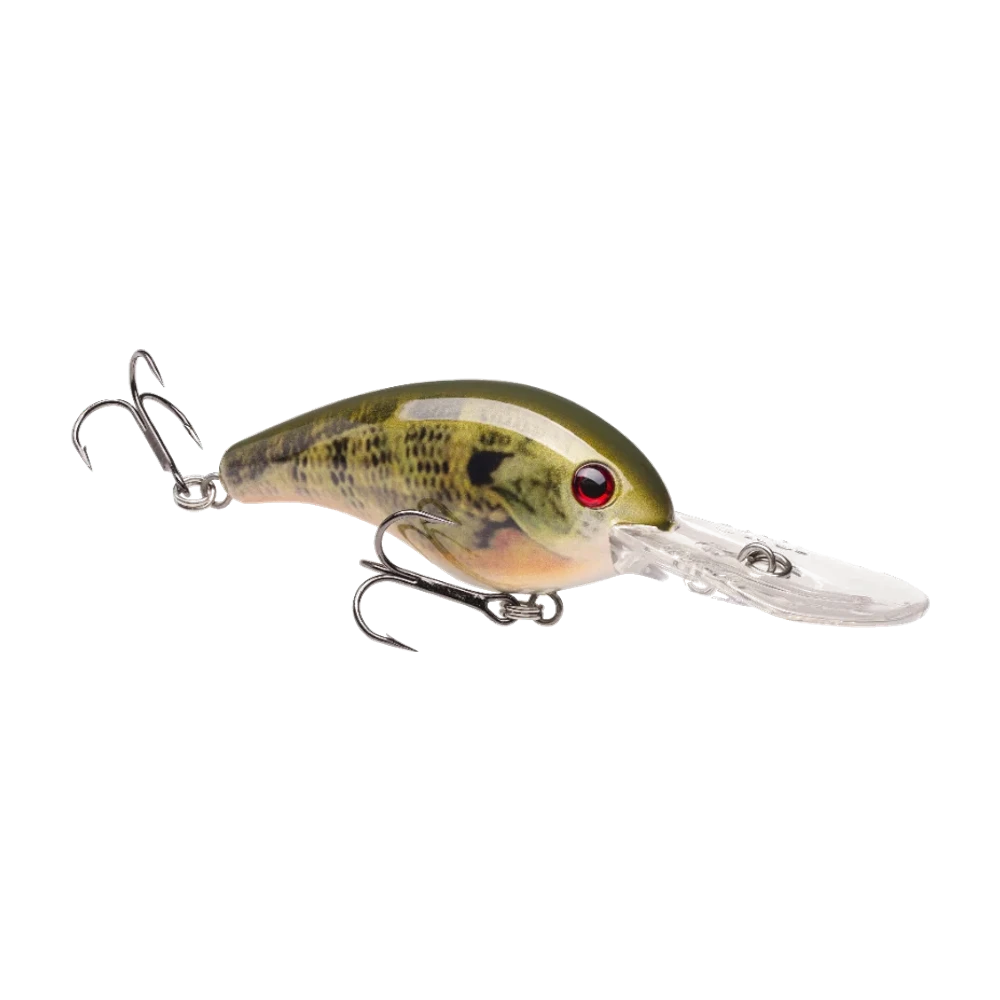
Strike King 10XD: the crankbait that reaches 7 metres with no added weight
Not sure this lure fits YOUR spot today? CarnaFish tells you in 10 seconds, from a photo.
Past five metres, lure fishing almost always swings over to soft plastics: jig head, drop shot, vertical. That works, but it is slow, and above all everyone does the same thing. The fish in those zones see shads go past all year and nothing else.
The 10XD offers an alternative very few people use: a crankbait that reaches seven metres with no added weight at all, and produces down there a signal those fish have never encountered.
What that depth costs you
Let us be clear: this is the most physical lure in the whole repertoire.
The lip is enormous. It is what creates the dive, and it is what generates considerable resistance on the retrieve. An hour with a 10XD is more tiring than a day of soft plastics.
The lure weighs 56 g. Casting it demands a suitable rod and a wide, committed stroke. This is not a lure you hang off an all-round setup.
Every cast takes time. Cast long, let it get down, retrieve slowly over the whole length: reckon on two to three times more time per cast than with a standard crankbait.
In exchange, you are fishing a layer almost nobody touches with this kind of signal.
Actually reaching 7 metres
Three conditions, all of them necessary.
A very long cast. The crankbait reaches its maximum depth halfway through its run. A twenty-metre cast never gives it time to get down — you will be fishing at four metres while believing you are at seven.
Thin line. Fluorocarbon in 0.25 mm lets it run markedly deeper than 0.40 mm, which brakes it purely by its resistance in the water. This is the single most effective adjustment.
Rod tip in the water. Point the rod down, tip submerged 20 to 30 cm through the retrieve. You easily gain 50 cm of depth compared with a rod held high.
On the water: on a crankbait this size, bottom contact does not feel like a sharp knock but like a progressive loading followed by a jolt. If you never feel anything through the whole retrieve, the bottom is too deep — move onto shallower ground instead of persisting.
The retrieve
- Cast as far as you can.
- Reel steadily through the first few turns to drive the lure down.
- Tip submerged, slow constant retrieve.
- Change nothing on contact. Let the lure deflect and right itself.
- Optional: a one to two second pause after a solid knock, during which the lure rises slightly.
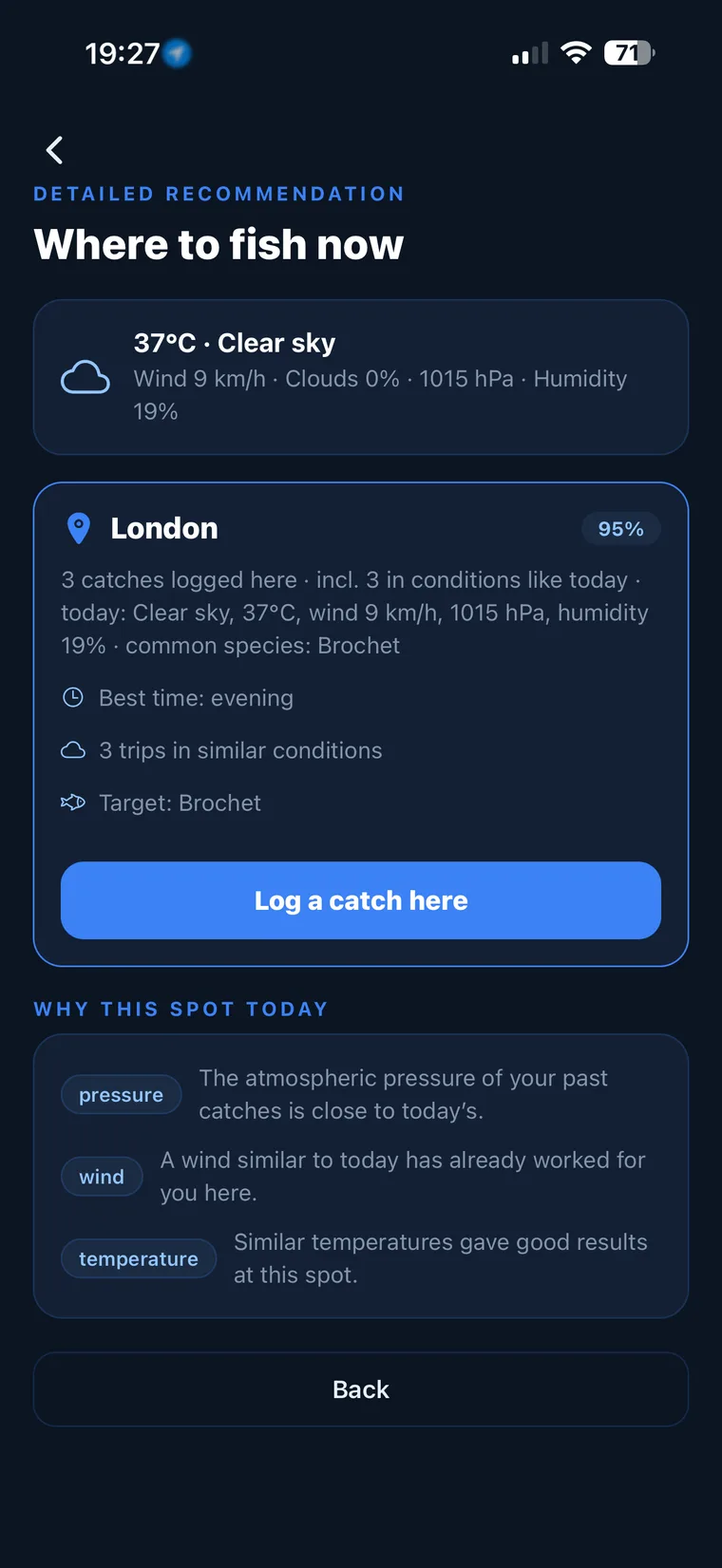
Not sure what to tie on?
Photograph your spot: CarnaFish reads the scene, cross-checks the conditions and gives you the zone, the lure and the retrieve. Free on iOS and Android.
Where to use it
- Large reservoirs and dammed lakes, on the drop-offs and the deep points.
- Deep gravel pits, along the slopes.
- Summer and autumn, when the fish are holding low.
- Lake zander, on flats between 5 and 7 m — still a rare approach in France and very productive.
It is obviously pointless over anything shallower than five metres: the lure would plough the bottom without ever working properly. In that situation a 5XD or a 6XD are the right calls.
Tackle, and it is specific
- A long cranking rod, 2.20 to 2.40 m, parabolic and powerful. The length helps the cast and absorbs the resistance.
- A low-ratio casting reel, 5.1:1 or 5.4:1. A high ratio makes the retrieve exhausting and too fast.
- Fluorocarbon 0.25 to 0.30 mm. Thinner than you would think necessary for a 56 g lure — that is the price of depth.
A rod that is too short or too stiff makes this lure painful to use and sheds fish that hit it on the move.
Our guide to lure fishing for zander covers how to read deep structure. And if you are not sure whether a spot justifies this kind of approach, CarnaFish analyses a photo and answers.
Key takeaways
- Seven metres with no added weight, at the cost of real resistance and real fatigue.
- Very long cast, thin 0.25 mm line, submerged tip: the three conditions for reaching the stated depth.
- Contact reads as a progressive loading, not a sharp knock.
- Pointless over less than five metres of water — take a 5XD or a 6XD.
- A 2.20 to 2.40 m rod and a low-ratio reel are not optional.
FAQ
Does the 10XD really reach 7 metres?
Yes, on three conditions together: a very long cast, thin fluorocarbon of 0.25 to 0.30 mm, and the rod tip submerged through the retrieve. With a short cast or thick line you will top out around four metres.
Why is this lure so tiring?
Its very large lip creates the dive but also considerable resistance on the retrieve, and the lure weighs 56 g. An hour with a 10XD is harder work than a whole day of soft plastics.
What rod does it need?
A long cranking rod of 2.20 to 2.40 m, parabolic and powerful: the length helps the cast and absorbs the resistance. A short or stiff rod makes the lure painful to use and sheds fish.
What depth of bottom suits it?
From five metres, ideally between six and seven. Shallower than that the lure ploughs the bottom without working properly: a 5XD or a 6XD are then the right choices.
How do I recognise bottom contact?
By a progressive loading followed by a jolt, not by the sharp knock of a standard crankbait. If you feel nothing at all through the whole retrieve, the bottom is too deep for the lure.
Does it work on zander?
Yes, and it is still an uncommon approach in France. Over lake flats and drop-offs between 5 and 7 m it offers a signal that zander, used to soft plastics, almost never encounter.
The full zander lure guideSeason-by-season strategy: which family of lure, when, and why.Go from theory to fish
CarnaFish reads your spot from a photo and gives you the game plan: zone, lure, retrieve. Free on iOS and Android.