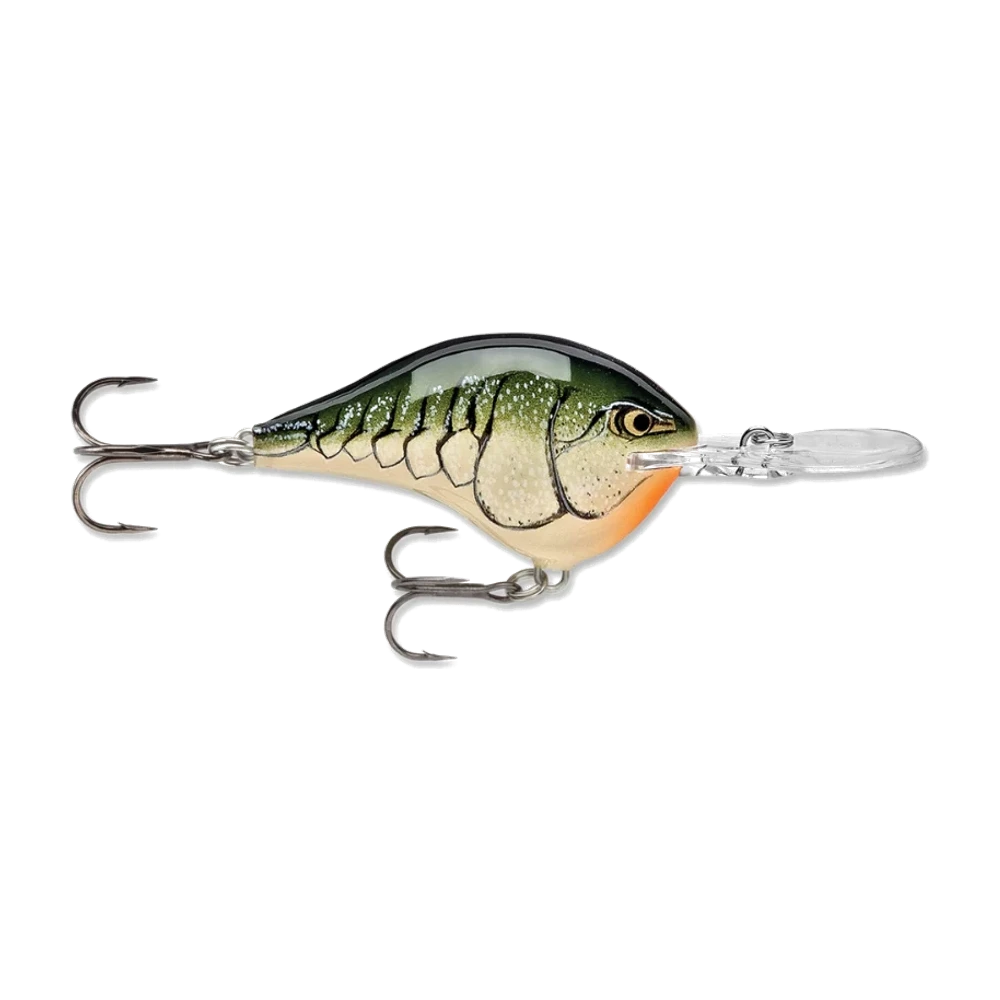
Rapala DT10: the crankbait that reaches its depth in three turns of the handle
One lure, endless conditions. CarnaFish reads your spot from a photo so you are not just guessing.
You are working a flat at 3 metres. Your crankbait spends half the cast getting down, works properly for ten metres, then starts climbing again because you are nearing the bank. On a thirty-metre cast, you fished at the right depth for a third of the way. The rest is dead water.
That is exactly the problem the DT range — for "Dives To" — sets out to solve. The DT10 reaches its running depth within a few turns of the handle, then holds it over almost the whole cast. In practice, you double or triple the time your lure spends in the layer where the fish are.
And because the body is balsa, it keeps a responsiveness that injection-moulded plastic crankbaits do not have: the moment you stop reeling, it rises sharply. That rise is not a flaw, it is the main part of the retrieve.
Why a constant depth changes the way you fish
A classic crankbait draws a curve: descent, a short plateau, then a climb. The DT10 draws a plateau. That difference has three direct consequences.
First, you can choose your spot before you cast. On a drop-off running from 2 to 4 metres, you know your lure will be in contact with the bottom over the whole shallow section and clear of it lower down. You fish a depth, not an approximate trajectory.
Second, bottom contact becomes predictable. You no longer put up with it: you go looking for it. On a bottom at 2.50 m, the DT10 will knock regularly, and every contact produces a deflection that triggers bites.
Third, you lose fewer lures. A crankbait that sinks gradually snags when you are not expecting it. This one takes its depth straight away: you know within the first few metres whether you are too deep.
Line, the most underestimated variable
The stated depth assumes thin line. A 0.35 mm fluorocarbon creates enough drag to cost you 40 to 60 cm of running depth. On a 3-metre spot, that is the difference between touching bottom and passing over it.
| Line | Depth reached | Use |
|---|---|---|
| 0.22-0.25 mm fluorocarbon | close to maximum | clear water, open spot |
| 0.28-0.30 mm fluorocarbon | 20 to 30 cm less | versatile compromise |
| 0.35 mm fluorocarbon and up | clearly held back | cluttered zones only |
| Braid plus a short leader | maximum, but less cushioning | deep water, big fish |
Casting distance matters too. A short cast does not give the lure time to reach the full plateau; under twenty metres, count on 2.30 to 2.60 m of useful running depth.
On the water: when you snag too often, do not change lure — go up two tenths of a millimetre in fluorocarbon. You lift the path by 20 to 30 cm without losing any of the vibration, whereas a shallower-running model would force you to change retrieve speed entirely.
The retrieve: wind, knock, stop
The DT10 is fished with the handle. The rod stays low, pointed at the lure, and the reel does all the work.
- Cast well past the spot, ten metres further than necessary. The descent phase must be used up before you arrive over the zone.
- Wind steadily for three or four turns to bring the lure down to depth. You feel the resistance settle into the rod tip.
- Look for the bottom. As soon as you feel a first contact, you are at the right depth. Carry on at the same rhythm and let the lure knock.
- Stop dead after each firm contact, for about a second. The lure rises, slides off line, and that is often when the bite comes.
- Start again immediately. Never let it float up for more than two seconds or you will leave the layer.
On apathetic fish, replace the one-second stop with a two or three second stop and a very slow restart. On active fish, drop the stops and speed up: the broad roll is enough on its own to force a decision.
Balsa versus plastic: what it really changes
A balsa body gives greater buoyancy for the same volume. Three concrete effects.
- The rise on the stop is fast and clean, not soft. The lure shifts firmly off its path, which creates a genuine change of rhythm.
- The deflection after contact is livelier: the lure bounces off the obstacle instead of sticking to it, which limits snags on wood and rock.
- The vibration starts earlier, at a retrieve speed where a dense crankbait still needs to be pushed.
The trade-off is that balsa is more vulnerable to impacts and to wind on the cast. Do not fire it into riprap at full power.
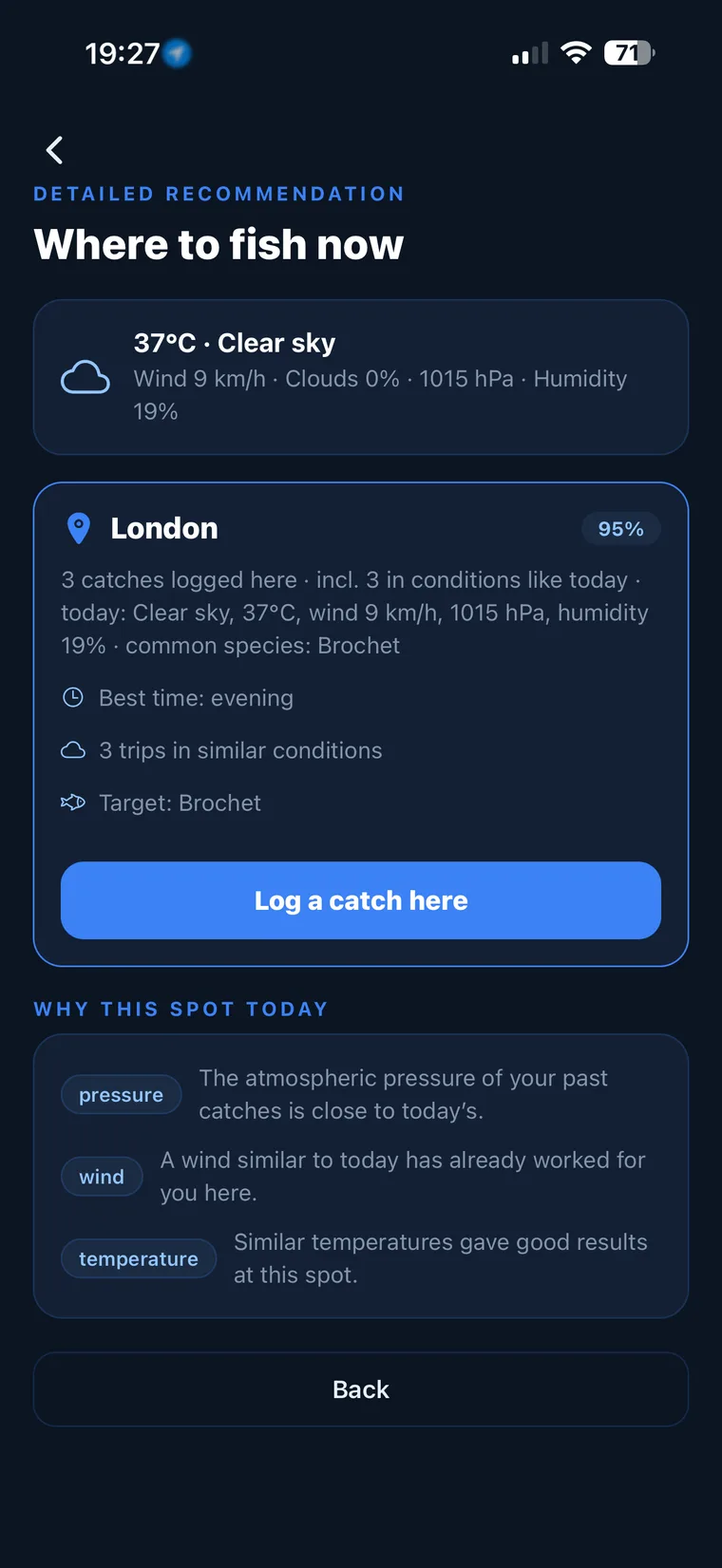
Not sure what to tie on?
Photograph your spot: CarnaFish reads the scene, cross-checks the conditions and gives you the zone, the lure and the retrieve. Free on iOS and Android.
Where it works, where it is useless
It excels on flats and drop-offs between 2 and 3.50 m, on hard bottoms — rock, gravel, stumps — where contact generates signal, and in stained to moderately clear water where the vibration carries further than the silhouette.
It is unsuitable in three cases: over dense weed, where the lip collects everything; in less than 1.50 m of water, where it ploughs without ever lifting clear; and on fish pinned to the bottom in midwinter, which will not rise to intercept a fast lure. In that last case, a shad on a slow straight retrieve does far better.
DT10, squarebill or a deeper crankbait
The Strike King KVD Squarebill works in the first metre and lives on contact with obstacles: it is a lure for margins, deadwood and concrete. It is no use at all on a flat at 3 metres.
At the other end, the Strike King 6XD goes much deeper, but it demands a long rod and real effort on the retrieve, and it becomes unusable on shallow spots. The Strike King 5XD is the direct competitor: similar depth, but a plastic body, so a slower rise and a slightly tighter vibration.
The DT10 owns the middle band, the one holding most bass in summer and most zander on the flats in autumn. Our beginner's guide to bass fishing covers how to read the drop-offs where this kind of crankbait takes the lead. And if you are unsure what depth to attack when you reach the bank, CarnaFish analyses a photo of the spot and answers.
Key takeaways
- Depth reached in three or four turns of the handle, then held over the whole cast.
- Line diameter shifts the running depth by 20 to 60 cm: that is your depth control.
- Balsa gives a fast rise on the stop — use it as a trigger.
- Hunt for contact with hard bottom; it produces more bites than colour does.
- Useless in dense weed, under 1.50 m of water, or on fish glued to the bottom in winter.
FAQ
How deep does the Rapala DT10 really go?
Around 3 metres on a straight retrieve with thin fluorocarbon and a long cast. With 0.35 mm line or on a short cast, count on 2.30 to 2.60 m. Line and distance are the two variables that matter.
Should I work it with the rod or the reel?
With the reel, rod low and pointed at the lure. Rod-driven action disorganises the swim of a deep-diving crankbait; the only useful stops come from stopping the reel.
What line should I use with the Rapala DT10?
A 0.25 to 0.30 mm fluorocarbon tied straight through is the best compromise. Finer and you gain depth but lose abrasion resistance over rocky bottoms; heavier and you hold back the dive.
Does the DT10 catch zander?
Yes, especially on lake flats and drop-offs in autumn, when zander are hunting in open water rather than hugging the bottom. In winter, a soft shad on a slow straight retrieve stays more consistent.
How do I avoid snagging this crankbait?
Look for hard bottom rather than dense wood, and let the lure bounce instead of forcing it through. If you snag often, move to heavier line to lift the path by a few tens of centimetres.
What is the difference with a plastic crankbait of the same depth?
Balsa floats more: a faster rise on the stop, a livelier deflection after contact, vibration that starts at lower speed. In exchange it is more fragile and more affected by wind on the cast.
The full bass lure guideSeason-by-season strategy: which family of lure, when, and why.Go from theory to fish
CarnaFish reads your spot from a photo and gives you the game plan: zone, lure, retrieve. Free on iOS and Android.