Rapala Magnum CountDown: the CountDown scaled up for the sea
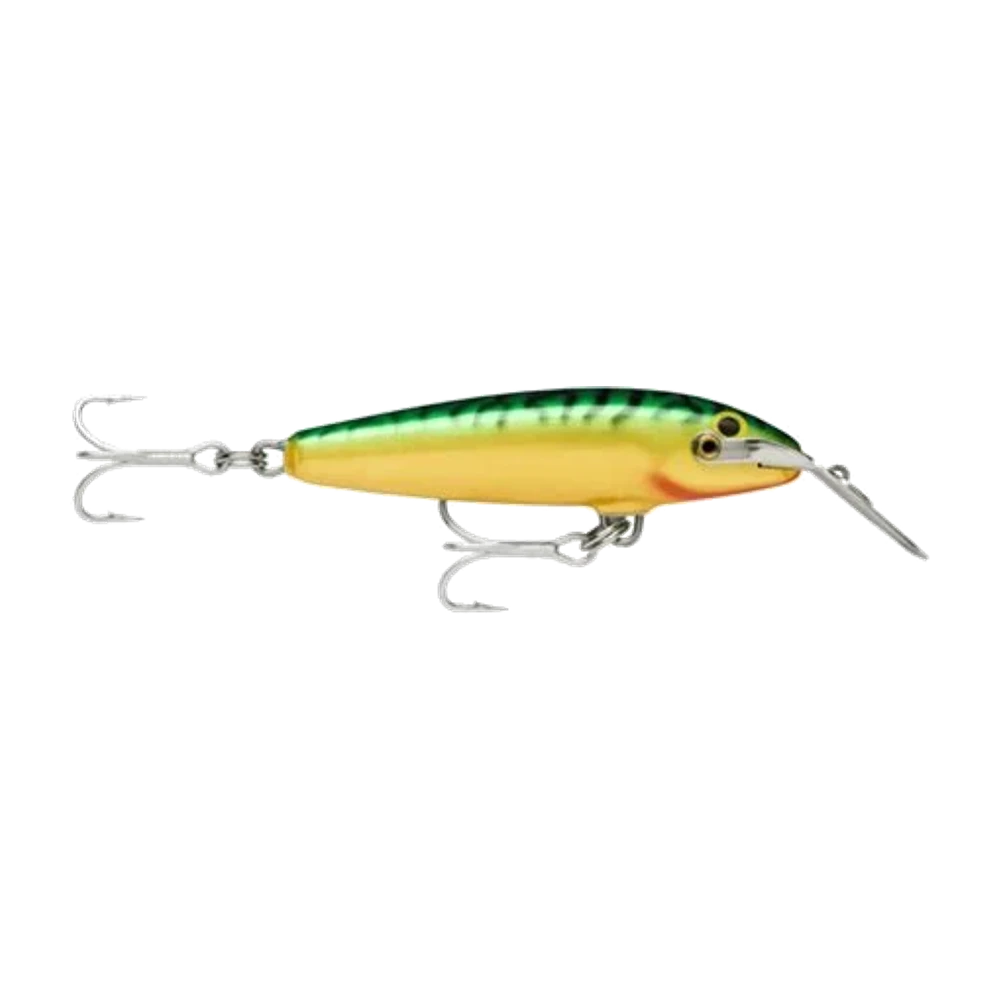
One lure, endless conditions. CarnaFish reads your spot from a photo so you are not just guessing.
Sea bass in the margins are caught in the first metre of water. Bass sitting on a drop-off, on an isolated rock at six metres or a rocky head off a point, are not. And that is exactly where most shore anglers have no tool: too far out for a light soft plastic, too deep for a minnow, too rocky for a fast weedless rig.
The Magnum CountDown covers that zone. It takes a known principle — a constant sink rate, so a depth you can work out by counting — and applies it to a size and a construction that stand up to the sea.
It is not the same lure as the freshwater CountDown. The name misleads: the philosophy is shared, the build and the use are not.
What really changes compared with the balsa CountDown
The classic Rapala CountDown is a small weighted balsa lure, designed for trout and freshwater predators. Its strength is subtlety: a tight, shimmying, discreet swim, in sizes from 3 to 9 cm.
The Magnum version changes four things, and each one has a consequence on the water.
- The body is no longer balsa but moulded, denser and tougher. Consequence: it takes teeth, rock and salt without soaking up water or splitting at the seams.
- The wire runs right through, from one ring to the other. Consequence: it is no longer the attachment that fails on a big fish, it is the line — which is the right order of things.
- The hardware is heavily reinforced. Consequence: you can tighten the drag, which is essential over a rock.
- The swim is wider and less shimmying. Consequence: the signal carries much further, which fits open water where fish are scattered.
In short: the balsa CountDown is a precision lure in a small volume, the Magnum is a coverage lure in a large one. If you expected the same subtlety from the Magnum as you get in a river, you will be disappointed; that is not what it is for.
Counting down, properly
Counting only has value if you do it with method. On the first cast on a spot, you are not fishing: you are measuring.
- Cast and close the bail without retrieving, braid tight but not pulling.
- Count until it touches bottom. Note the number. That is your reference depth at that distance.
- On the next cast, count two thirds of that number and start the retrieve. You pass just above the bottom.
- Retrieve slowly and straight, rod low, going with the lure. You should feel the roll continuously.
- Add a one to two second pause every five or six turns if the bottom is clean. The lure drops back, picks its swim up again on the restart: that is often when it goes.
- Recount every time you change casting angle. On a drop-off, two metres of lateral shift can be worth three metres of depth.
On the water: the count has to be redone on every tide coefficient and every hour of the tide, not once for the season. On a spot where you counted eight at low water, you will count twelve or thirteen at high water. The angler who keeps his number from the last session fishes systematically too high on a rising tide.
Choosing the size for what you are after
| Size | Context | Main use |
|---|---|---|
| 9 cm | Rocky point, from the shore, 2 to 4 m | Cast and retrieve from the coast |
| 11 cm | Drop-off, channel, 3 to 6 m | Long cast or slow trolling |
| 14 cm | Open water, offshore rock, 5 to 8 m | Trolling, big fish |
| 18 cm | Hunting isolated big fish | Trolling only |
From the shore you will mostly stay on the 9 and 11 cm: above that the weight becomes hard to cast on a standard spinning rod, and you need a setup that genuinely takes 60 g on the cast.
Slow trolling behind a boat, depth depends as much on how much line you let out as on the model: the more line you give, the deeper the lure goes, up to a plateau.
A setup that holds
The braid. 0.20 to 0.30 mm. You do not need more in raw strength, but you need diameter for abrasion and to take the load of casting a heavy lure.
The leader. 0.50 to 0.70 mm fluorocarbon over one metre to a metre and a half. This is not overkill: over a rock, a 60 cm fish will rub your leader across barnacles in three seconds.
The snap. Heavy-duty, compulsory, and checked every session. On this kind of lure, the snap is the most stressed part of the setup.
The rod. A setup rated for 10-40 g minimum on the 9 and 11 cm sizes. With too soft a rod you neither cast far nor set the hook at the end of forty metres of braid.
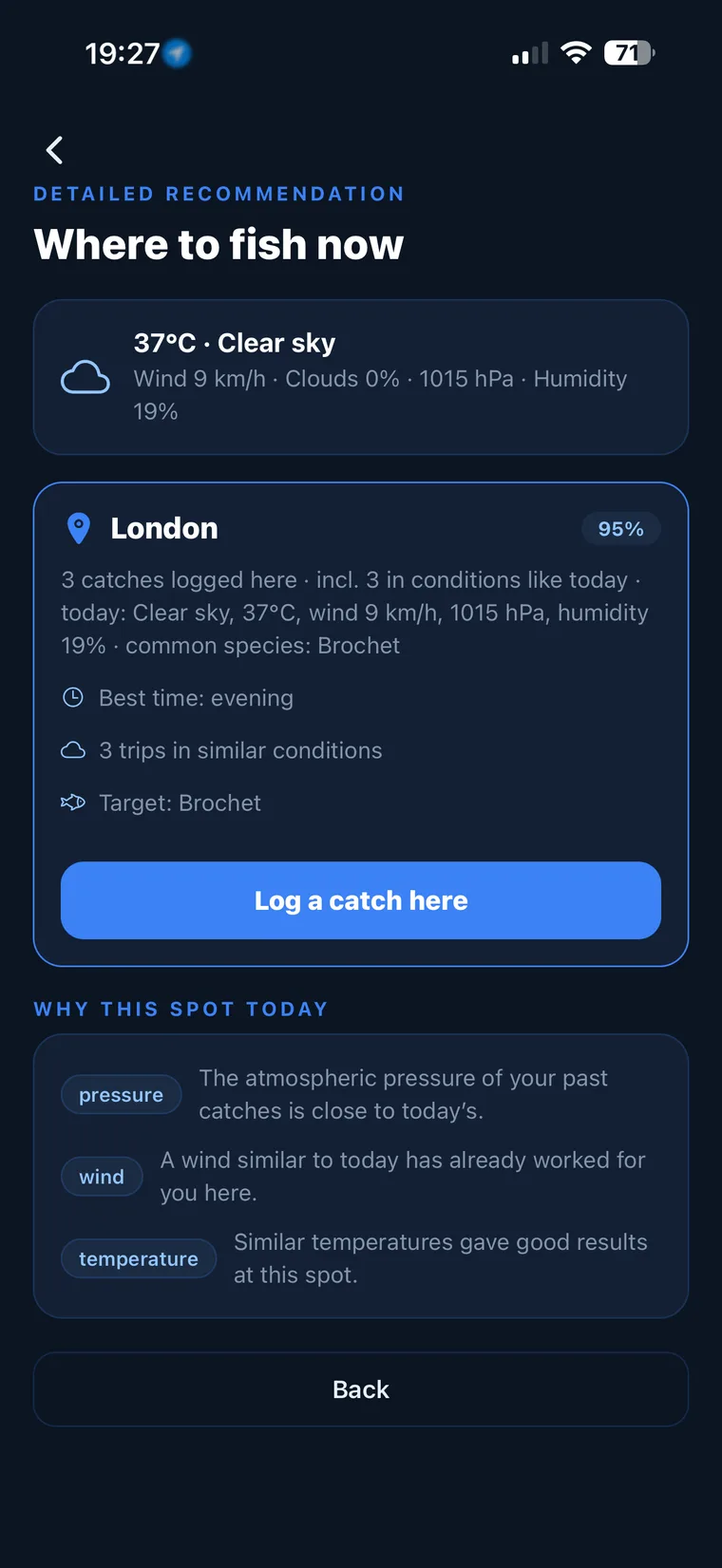
Not sure what to tie on?
Photograph your spot: CarnaFish reads the scene, cross-checks the conditions and gives you the zone, the lure and the retrieve. Free on iOS and Android.
Where it has no place
- In shallow margins. In less than two metres, you will spend your time unsnagging. A topwater lure or a shallow minnow does the whole job.
- On wary fish in clear, calm water. The volume and the wide swim then become a flaw.
- On active surface feeding. When bass are boiling on bait at the top, going down to six metres makes no sense: you are fishing under the fish.
- In subtle freshwater work. For trout or perch, stay on the classic CountDown, which is exactly its ground.
Magnum or a shore minnow: the question is not size
Shore minnows such as the Daiwa Shoreline Shiner Z-Vertice are built for distance at and just below the surface: they sweep a wide band of water in the first metre, which matches most shore sessions. The Magnum CountDown is not trying to compete with them — it fishes a layer they never reach.
The real alternative to this lure is therefore not another minnow, it is a soft plastic on a heavy jig head. Against that, the Magnum keeps two advantages: it swims on its own on a straight retrieve — no complex action to manage at thirty metres — and it holds a constant depth instead of sinking continuously. It loses on price, on getting through rock, and on subtlety.
If you already cover the surface with a SeaSpin Mommotti when the sea is up, the two lures complement each other naturally: one for the top layer in the surf, the other for the deep zone further out on the same spot. And if you do not know what depth to start at on a point you are discovering, CarnaFish analyses a photo of the spot and answers.
Our guide to lure fishing for sea bass explains how to link tide height and fishing layer before you even cast.
Key takeaways
- Moulded body, through-wire construction, reinforced hardware: this is a redesign, not an enlarged balsa CountDown.
- The first cast on a spot is there to measure the depth, not to fish.
- The count is recalculated every hour of the tide, never memorised from one session to the next.
- 9 and 11 cm for the shore, 14 and 18 cm reserved for trolling.
- Useless under two metres, over surface feeding, or in subtle freshwater fishing.
FAQ
What is the difference between the CountDown and the Magnum CountDown?
The classic CountDown is a small balsa lure of 3 to 9 cm with a tight swim, aimed at trout and freshwater predators. The Magnum keeps the counting principle but with a moulded body, through-wire construction and reinforced hardware, in sizes from 9 to 18 cm for the sea.
How deep does it go?
That depends on the count, not on a lip. Count the sink until it touches bottom on your first cast, then start the retrieve at two thirds of that number to pass just above. When trolling, depth increases with the length of line let out.
Can it be cast from the shore?
Yes, in 9 and 11 cm with a setup rated for 10-40 g minimum. Above that the weight becomes hard to launch with a standard spinning rod, and those sizes are mainly used for trolling.
What leader should I use?
A 0.50 to 0.70 mm fluorocarbon over one metre to a metre and a half, behind a 0.20 to 0.30 mm braid. The diameter is there for abrasion on rock and barnacles, not for raw strength.
Does it work on surface feeding fish?
No, that is a misuse. When bass are hunting at the surface, a lure dropping several metres passes under them. Keep it for drop-offs, channels and deep rock.
Do I have to redo the count every session?
Every session, and even every hour of the tide. On a spot where you count eight seconds at low water, you will often count twelve or thirteen at high water. Reusing an old number means fishing too high.
The full sea bass lure guideSeason-by-season strategy: which family of lure, when, and why.Go from theory to fish
CarnaFish reads your spot from a photo and gives you the game plan: zone, lure, retrieve. Free on iOS and Android.