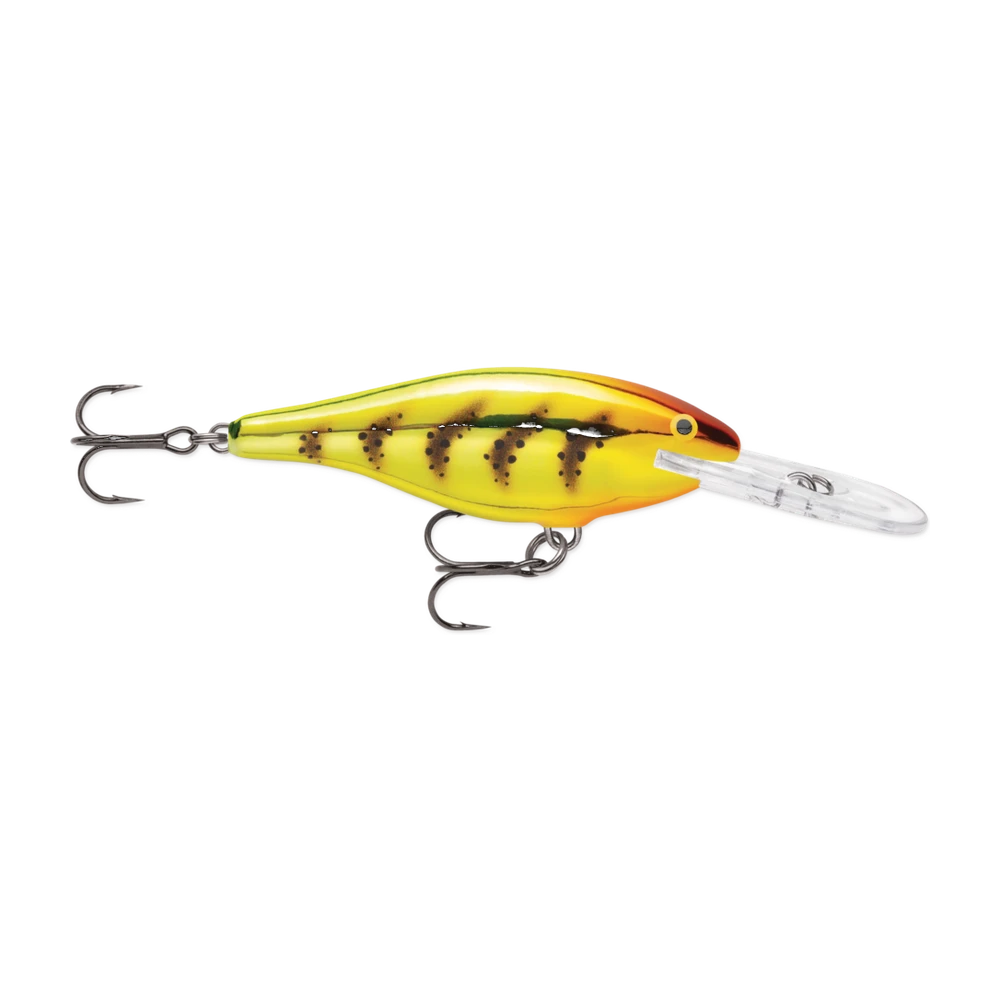
Rapala Shad Rap: the crankbait that never went out of style
The right lure in the wrong spot still catches nothing. CarnaFish spots the zone that works, from a single photo.
A lure that survives four decades without changing shape should tell you something. The Shad Rap launched in 1982 and it still fishes just as well today — not because Rapala stopped innovating, but because the shape was already right. Here's what's actually going on inside that unassuming balsa body.
The balsa detail that changes everything
Most modern crankbaits are injection-moulded plastic. The Shad Rap keeps a solid balsa core wrapped in a thin plastic shell for durability. The upshot: every single one floats and swims with a slightly different density from the next, which drove factories mad but gives the lure a lively, almost erratic action that pure plastic struggles to copy. It's also what gives it that fast rise on the pause — genuinely useful when you're working close to bottom and want to dodge snags without slowing down.
Picking the right size for the species
The Shad Rap comes in several sizes, numbered SR04 through SR09, and they don't all fish the same way:
- SR05 (5 cm / 2 in, 7 g / 3/16 oz): 1.2-2.7 m running depth. The perch-and-zander size for mid-depth water, one that always earns a spot in the box.
- SR07 (7 cm / 2.75 in, 11 g / 5/16 oz): 1.5-3.5 m. The most versatile size, good for zander and bass alike, and the one used as reference on this sheet.
- SR09 (9 cm / 3.5 in, 16 g / 9/16 oz): 2.4-4.5 m. Reserved for big zander or deep water, worth throwing only once you already know there's fish holding deep.
Start with an SR05 or SR07 on a new spot: the SR09 draws fewer bites but bigger fish, and it only pays off once you're confident about what's actually down there.
An action that forgives speed mistakes
Unlike a modern square-bill that needs speed to hammer bottom properly, the Shad Rap swims from the slowest crawl — and that's exactly where it's most dangerous on zander, a fish that won't chase down a bait in a hurry. The body rolls on itself with a continuous tremble you can feel through the rod, one that never switches off as long as the lure is moving. That constant signal, more than raw speed, is what triggers the strike.
The knot that saves the swim
Plenty of anglers lose 30% of this lure's potential by tying it on badly. A knot cinched tight straight to the eye chokes the bill and kills the swing amplitude. Use a loop knot or a small quick-snap to leave the nose free to move — you'll feel the difference on the very first cast, with a wider, cleaner swim.
A Shad Rap tied on too tight swims like a bargain-bin crank. The knot often matters more than the color.
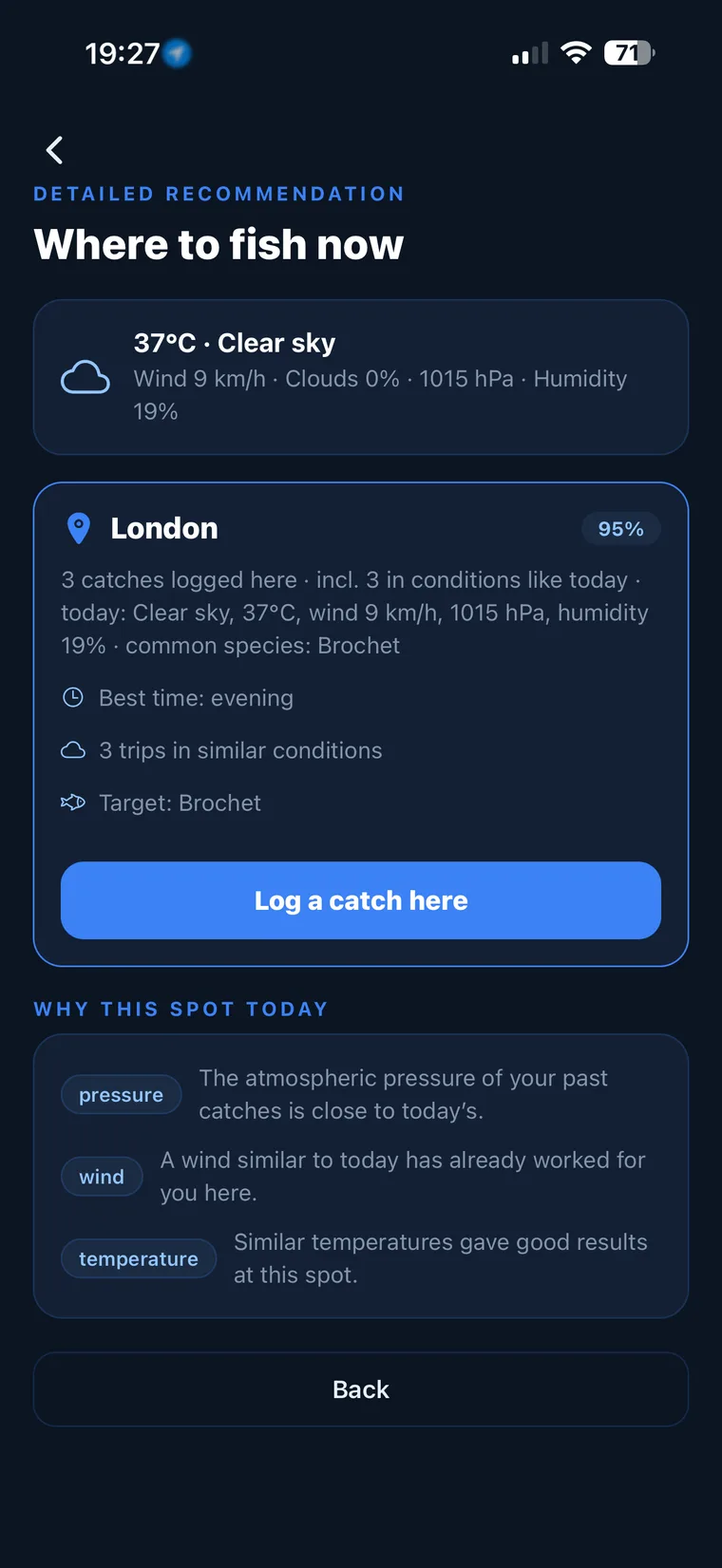
Not sure what to tie on?
Photograph your spot: CarnaFish reads the scene, cross-checks the conditions and gives you the zone, the lure and the retrieve. Free on iOS and Android.
Bottom contact: the technique that actually kills
The real secret isn't the straight retrieve, it's bottom contact. Crank it down until the bill ticks the substrate, then let it sit for a second before winding again — that short pause kicks up a puff of silt or sand, exactly like a baitfish rooting around on bottom. That precise pause, not the retrieve itself, is usually where the zander commits.
Colors by water clarity
- Clear water: Perch or Roach, natural tones that don't spook a wary fish.
- Slightly stained: Firetiger, a visibility/realism compromise that works almost everywhere.
- Murky water or after dark: Black, a silhouette that reads against ambient light rather than a color you actually see.
Where it beats a jerkbait
Against a suspending jerkbait, the Shad Rap has one clear edge: it does the work on its own on a straight retrieve, no rod work required. It's the run-and-gun angler's lure, the one you tie on while walking a canal to cover water fast, before circling back to work the spots that showed a sign more carefully.
Picking the right lure never replaces reading the spot, which is exactly what CarnaFish is built for: photograph the water and the AI hands you the zone, the depth and the lure family that fit today's conditions — so you know whether a crankbait like this one is even the right tool before the first cast. For the fuller picture on zander lure choice, our beginner's guide to lure fishing for zander covers the other families worth knowing.
The short version before you tie one on
- SR05 to scout a new spot or target perch and average zander; SR07 as the all-round default; SR09 only for big fish in deep water.
- The action kicks in from a dead-slow retrieve — no need to force speed to activate the lure.
- A loop knot or quick-snap is non-negotiable, or you'll choke the bill and lose swing amplitude.
- The best technique stays bottom contact followed by a short pause, not a steady retrieve all the way in.
FAQ
What size Shad Rap should I start with?
The SR07 is the best all-rounder: big enough to interest a serious zander or bass, small enough to stay versatile across most depths down to 3.5 m.
Is the Shad Rap a good zander lure?
Yes, it's one of its most proven historical uses. Steady bottom contact followed by a short pause mimics a baitfish rooting through the substrate — exactly what triggers a zander.
Why isn't my Shad Rap swimming correctly?
Check the knot first: a knot cinched tight to the eye chokes the bill. Switch to a loop knot or a quick-snap. If the problem persists, the bill may have taken a hit and warped slightly.
Can you catch bass on a Shad Rap?
Absolutely, especially in SR05 or SR07 worked along drop-offs and weed edges. Its action holding up even on a dead-slow retrieve makes it a solid choice on days when bass are sluggish.
What's the difference between the SR05, SR07 and SR09?
They target different depths and fish sizes: the SR05 runs to 2.7 m and covers most situations, the SR07 reaches 3.5 m, and the SR09 dives to 4.5 m but trades bite frequency for average fish size.
Do I need wire leader for the Shad Rap?
Only if you're also fishing a pike spot alongside zander or bass. On a pure zander or bass spot in clear water, fluorocarbon stays more discreet and does the job just fine.
The full zander lure guideSeason-by-season strategy: which family of lure, when, and why.Go from theory to fish
CarnaFish reads your spot from a photo and gives you the game plan: zone, lure, retrieve. Free on iOS and Android.