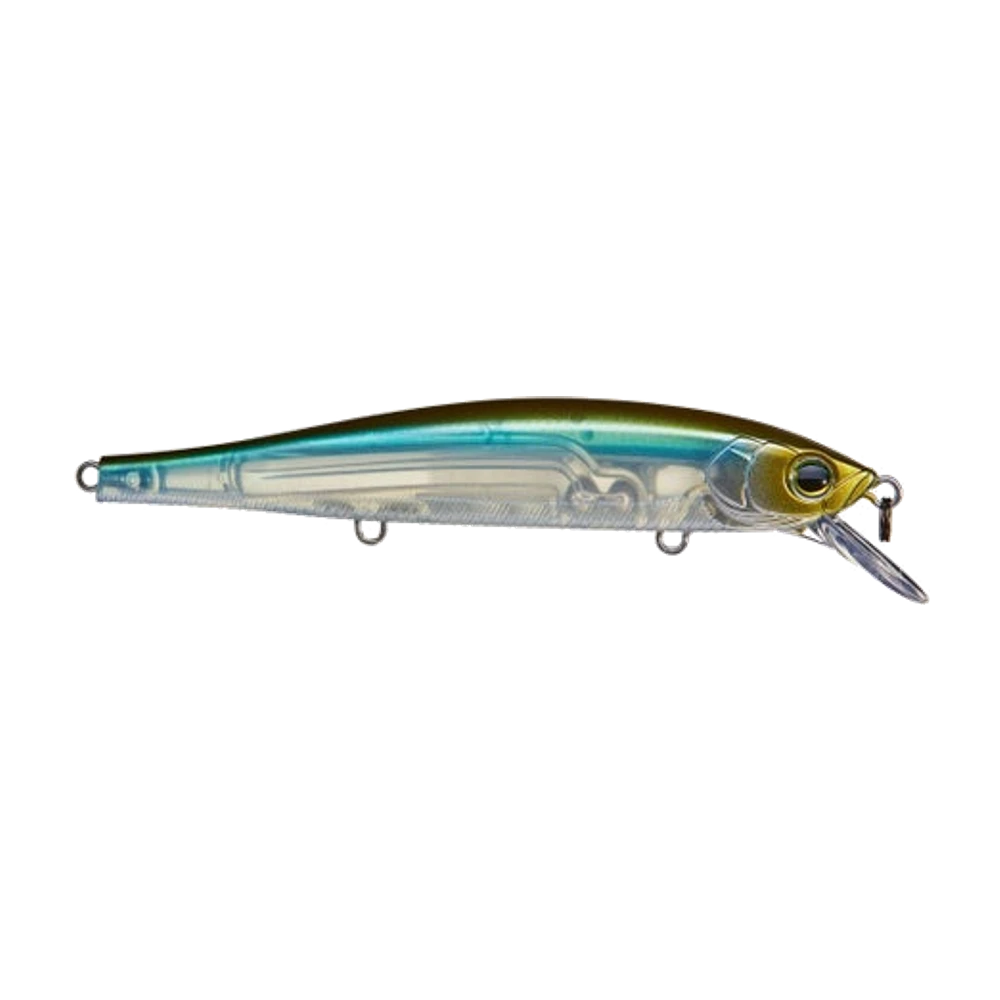
Yo-Zuri 3DB Jerkbait: the suspending jerkbait for wary predators
One lure, endless conditions. CarnaFish reads your spot from a photo so you are not just guessing.
There's a familiar problem in clear water, post-spawn, or after a cold front drops the temperature a few degrees: fish see everything, turn wary, and refuse to chase down anything moving fast. A shad ripped through at speed does nothing there. That's exactly the Yo-Zuri 3DB Jerkbait's home turf — a lure built to sit dead still in front of a fish's nose at exactly the right moment.
What Yo-Zuri's 3D tech actually does
The name comes from the internal tech: prisms that scatter light in every direction, unlike standard paint that only flashes at one angle. On the pause, even motionless, the body keeps throwing off flashes visible from a distance. Add the ribbed belly texture that pushes vibration into the water (Yo-Zuri's own "Wave Motion" ribbing), and you get a lure that stays detectable even once it stops moving — something a plain suspending bait doesn't always manage.
Two sizes, two jobs
- 90mm / 3.5in, about 13g (7/16 oz): the low-key size, ideal for wary bass in small water or a mid-size pike in a clear river.
- 110mm / 4.3in, 14g (1/2 oz): bulkier, casts further, and draws bigger pike. This is the size used as reference on this sheet.
A Deep version also exists for anglers who want to reach 2.4 m (8 ft); the standard model stays in the 1-1.5 m range, plenty for margins and shallow drop-offs.
The retrieve that makes all the difference
A jerkbait isn't fished like a crankbait: there's no retrieve speed, only rod rhythm. The base move: two or three sharp rod snaps (the classic twitch), then a pause. On the 3DB Jerkbait, that pause is the main weapon — the lure neither sinks nor rises, it just hangs there, often slightly off-axis, like a wounded baitfish that no longer has the strength to swim straight.
Three pause variants worth testing depending on how fish react:
- Short pause (1 second): for active fish already following.
- Long pause (3-5 seconds): usually the most effective in cold water or on a tough spot. That endless pause, right when you're tempted to start reeling again, is often exactly when the strike comes.
- Twitch-twitch-pause-twitch: to break the rhythm on a fish that followed a previous retrieve without committing.
Field rule: if counting out the pause doesn't feel a little uncomfortable, it isn't long enough yet.
Not sure what to tie on?
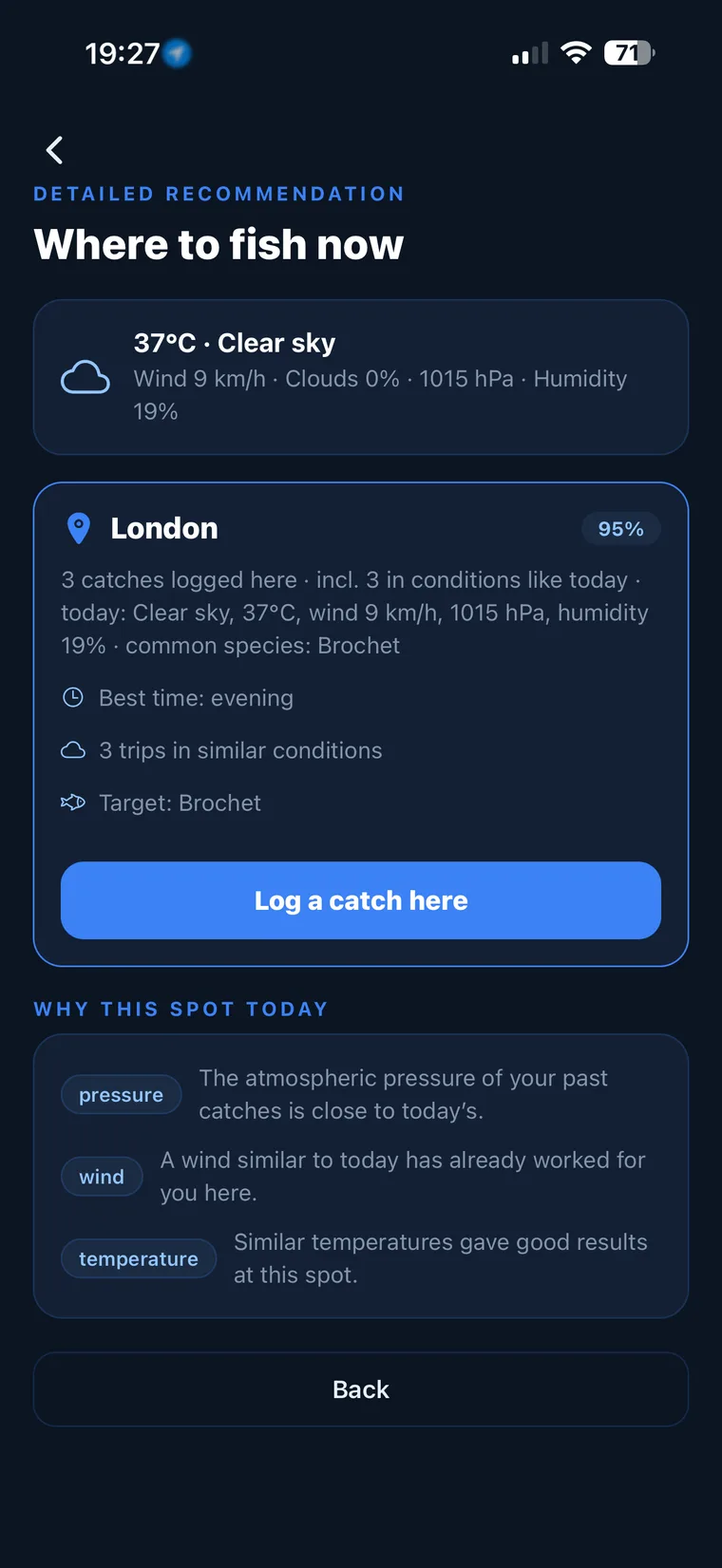
Photograph your spot: CarnaFish reads the scene, cross-checks the conditions and gives you the zone, the lure and the retrieve. Free on iOS and Android.
The rigging detail worth getting right
A suspending jerkbait is tuned at the factory to float at a very specific density. Stepping up to a leader that's too thick, or a knot cinched too tight, can be enough to sink or float the lure out of balance and kill the suspending effect. Go with a quick-snap instead of a direct knot, and stay reasonable on diameter: 25-30 lb fluorocarbon on a bass spot, or a thin, supple wire leader if pike are working the same water — a stiff, heavy wire leader ruins the suspending balance.
Versus a crankbait: two different philosophies
Against a crankbait like the Shad Rap, which does its own work on a straight retrieve, a jerkbait demands constant rod input and real-time reading of how the fish responds to each pause. It's more demanding, but it's also what gets a bite out of a fish that's already seen ten conventionally-worked lures that day. To push the concept further, the Rapala X-Rap Jerkbait 10 runs the same idea in a slicker, deeper-diving shape worth carrying alongside it for a bit more depth.
Guessing the right pause length in the right spot is the whole game, and that's exactly what CarnaFish is built to shortcut: photograph the water, and the app reads water clarity and conditions to suggest a zone and a retrieve style instead of an hour of blind trial and error. For the full seasonal picture, see our pike lure guide.
What to remember before you tie one on
- 90mm for a low-key presentation, 110mm to cast further and target bigger fish.
- The pause is the main retrieve, not the twitch — lengthen it in cold water, shorten it on active fish.
- Too heavy a knot or leader kills the suspending effect. A light quick-snap and a reasonable diameter fix that.
- This lure earns its keep in clear water on wary fish, not in murky water, where a vibration bait will outfish it.
FAQ
When should I use a suspending jerkbait instead of a shad?
As soon as the water is clear and fish are wary: post-spawn, bright sky, heavy fishing pressure. A suspending bait hangs in front of a fish far longer than a sinking shad, which wins the strike through patience rather than speed.
How long should the pause be on a jerkbait?
Between 1 and 5 seconds depending on fish activity: short on already-active fish, long (3-5 seconds or more) in cold water or on a tough spot. If the wait feels long to you, that's usually a good sign.
Is the 3DB Jerkbait good for pike?
Yes, especially the 110mm on shallow margins and drop-offs. In clear rivers or lakes, it's one of the more effective sizes on pike that have already seen plenty of lures go by.
Why does my suspending jerkbait sink instead of hanging still?
Almost always a rigging issue: a leader too thick, a knot tied too tight, or a heavy snap. Go back to a light quick-snap and a reasonable diameter to restore the factory-tuned suspending balance.
What size 3DB Jerkbait works best in small water?
The 90mm, more discreet and better suited to bass or mid-size pike in tighter water. The 110mm is the better call on bigger waters where you need to cast further.
Do I need a wire leader with this jerkbait?
Only if pike are present on the spot. Go with a thin, supple leader, since a stiff, heavy wire leader easily throws off the lure's suspending balance.
The full pike lure guideSeason-by-season strategy: which family of lure, when, and why.Go from theory to fish
CarnaFish reads your spot from a photo and gives you the game plan: zone, lure, retrieve. Free on iOS and Android.