Rebel Pop-R: the popper that changed topwater bass fishing
This lure shines under specific conditions. CarnaFish tells you in 10 seconds if today is one of them.
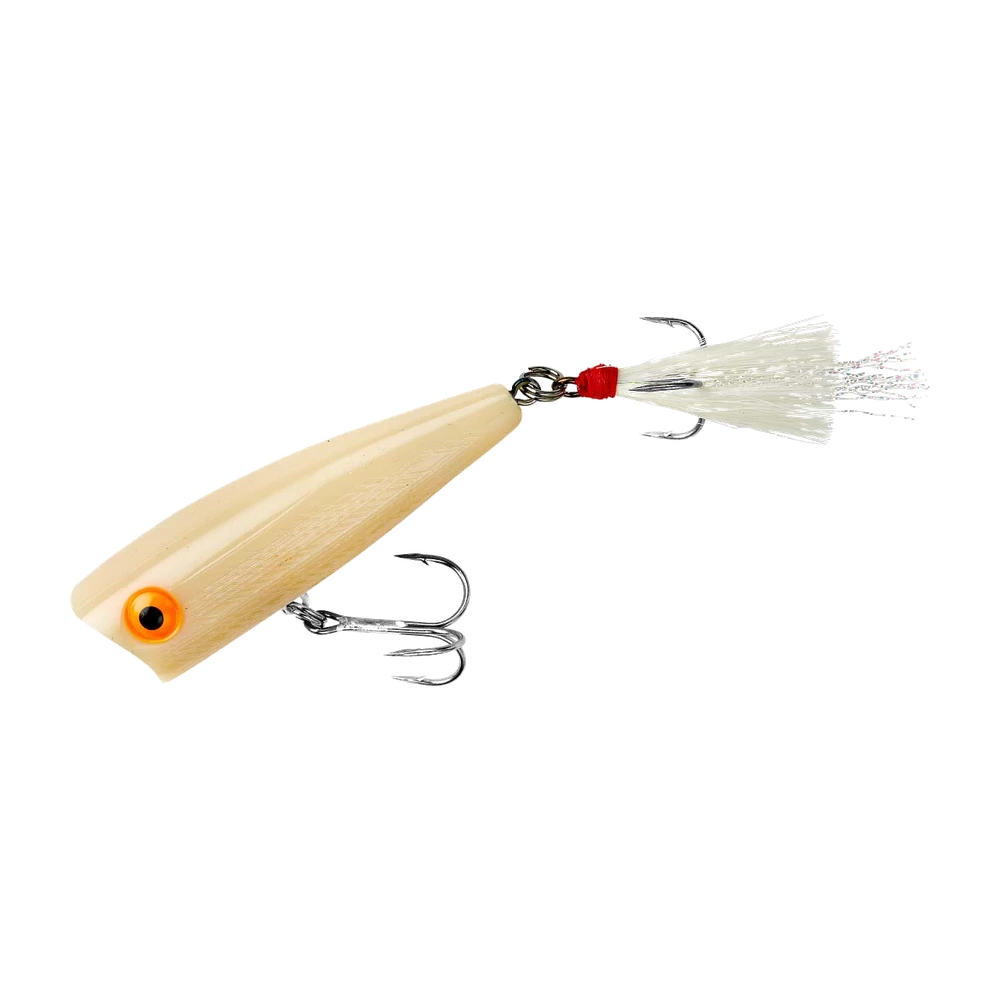
Few lures in bass fishing history have left as big a mark on professional tournaments as the Rebel Pop-R. Popularised in the 1990s by American pros who threw it in deciding finals, it remains one of the most copied — and rarely matched — poppers on the market.
A concave face that became a benchmark
The Pop-R's principle sits in the shape of its head: a concave face that, on every sharp rod jerk, throws water forward with a distinctive sucking sound — the "pop" that gives the lure its name. That sound, paired with the visible splash on the surface, mimics the chaotic energy of a prey fish in distress — a signal bass respond to particularly well during active feeding.
The P60, at 6.3 cm and about 7 g, remains the benchmark size for bass and perch. Larger versions (P65, P70/P71) exist for bigger fish or a noisier presentation, but they're outside this guide's scope.
The retrieve: the popper's real challenge
Unlike a soft plastic or a crankbait, the Pop-R has no swim of its own — the angler's retrieve creates the entire illusion. The base technique relies on short, sharp rod-tip jerks followed by variable pauses:
- Slow walk-the-dog: two short jerks that zigzag the lure, followed by a two-to-three-second pause.
- Single pop: one isolated jerk producing a single pop, then a longer pause — effective on a fish following without committing.
- Rapid-fire pops: three to four quick jerks to simulate a panicked prey item, reserved for fish already actively feeding on the surface.
Never set the hook off the sound of the pop. Bass often strike from below before ever hitting the lure at the surface — wait to feel the fish's weight in the rod before setting, or you'll pull the lure right out of its mouth.
When to reach for the Pop-R
A popper is a precise-conditions tool, not a lure to throw regardless of the day:
- Calm water, early morning or late in the day: the best conditions, when a flat surface keeps the splash visible and the sound carrying far.
- Summer and early autumn: when bass and perch actively feed on the surface, especially over weed beds and near floating cover.
- Low-wind spots: choppy water cancels out much of the lure's visual and acoustic effect.
In choppy water or under a bright midday sun, a topwater-worked Zoom Super Fluke or a deeper presentation will often produce better results.
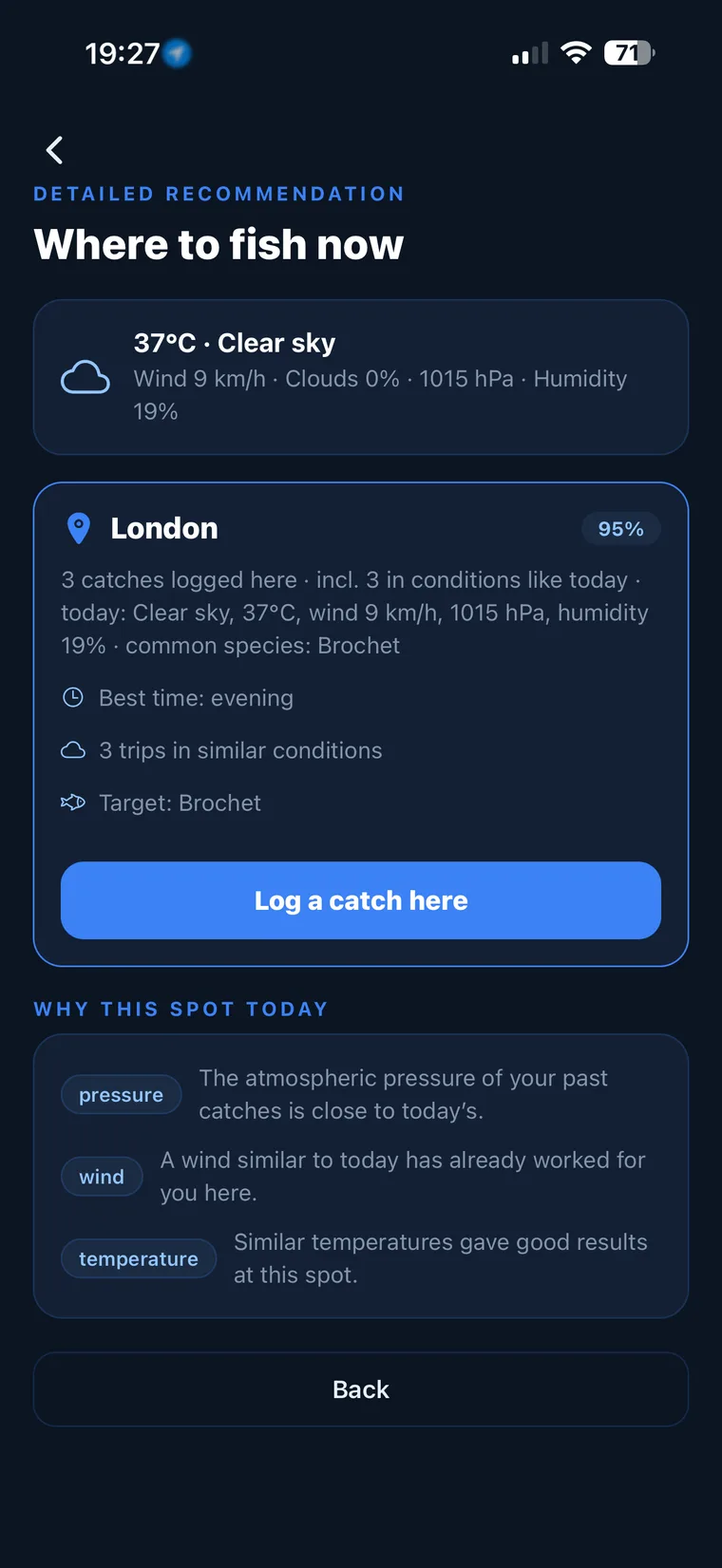
Not sure what to tie on?
Photograph your spot: CarnaFish reads the scene, cross-checks the conditions and gives you the zone, the lure and the retrieve. Free on iOS and Android.
Colour by conditions
- Calm water, unpressured fish: natural tones mimicking shad or frog, for a subtle approach despite the popper's noise.
- Slightly choppy water or low light: white or pale colours, more visible in silhouette against the sky.
- Highly active fish: colour matters less than retrieve rhythm — don't hesitate to speed up the pace of the pops.
The popper against perch
Less known for this species than for bass, the Pop-R nonetheless works very well on perch in summer, especially over shoals feeding on fry at first light. The retrieve needs to be more subtle than for bass: isolated, well-spaced pops are plenty, since an overly aggressive burst tends to spook perch, naturally more cautious than a bass in full feeding mode.
Knowing when a popper becomes the right call — rather than a lure that fishes deeper — depends heavily on the day's conditions and the surface activity you observe at the spot. That's exactly what CarnaFish helps spot: one photo of the spot and the AI reads the surface-activity cues to point you to the right lure family. To go further on bass beyond poppers, our beginner's guide to bass fishing covers the essentials.
What the pros take from it
- The P60 (6.3 cm, ~7 g) remains the benchmark size for bass and perch.
- The retrieve does everything: sharp rod-tip jerks, variable pauses, never set the hook off the sound.
- Best conditions: calm water, early morning or evening, summer and early autumn.
- On perch, a more subtle, spaced-out retrieve works better than the bass approach.
FAQ
How do you properly work a Rebel Pop-R?
With short, sharp jerks of the rod tip, never the reel handle, followed by one-to-three-second pauses. The sucking sound and splash happen on the jerk, not during the pause.
Why do I keep missing strikes on the Pop-R?
Almost always because the hookset is triggered by the sound of the strike rather than the feel of the fish's weight. Bass often hit from below before reaching the lure — wait to feel tension before setting the hook.
What conditions favour popper fishing?
Calm water, low light (early morning, late day) and little wind. These conditions let the sound and splash carry far and stay clearly visible.
Does the Pop-R work for perch?
Yes, particularly in summer when perch shoals feed on the surface. The retrieve should stay more subtle than for bass, with isolated pops rather than an aggressive burst.
What Pop-R size should a beginner start with?
The P60 (6.3 cm) is the most versatile size, suited to both bass and perch. The larger sizes (P65, P70) suit bigger bass or a noisier presentation better.
Does a popper work in choppy water?
Not as well — chop masks much of the sound and splash that make the lure effective. In those conditions, a subsurface lure like a Zoom Super Fluke is often more productive.
The full bass lure guideSeason-by-season strategy: which family of lure, when, and why.Go from theory to fish
CarnaFish reads your spot from a photo and gives you the game plan: zone, lure, retrieve. Free on iOS and Android.