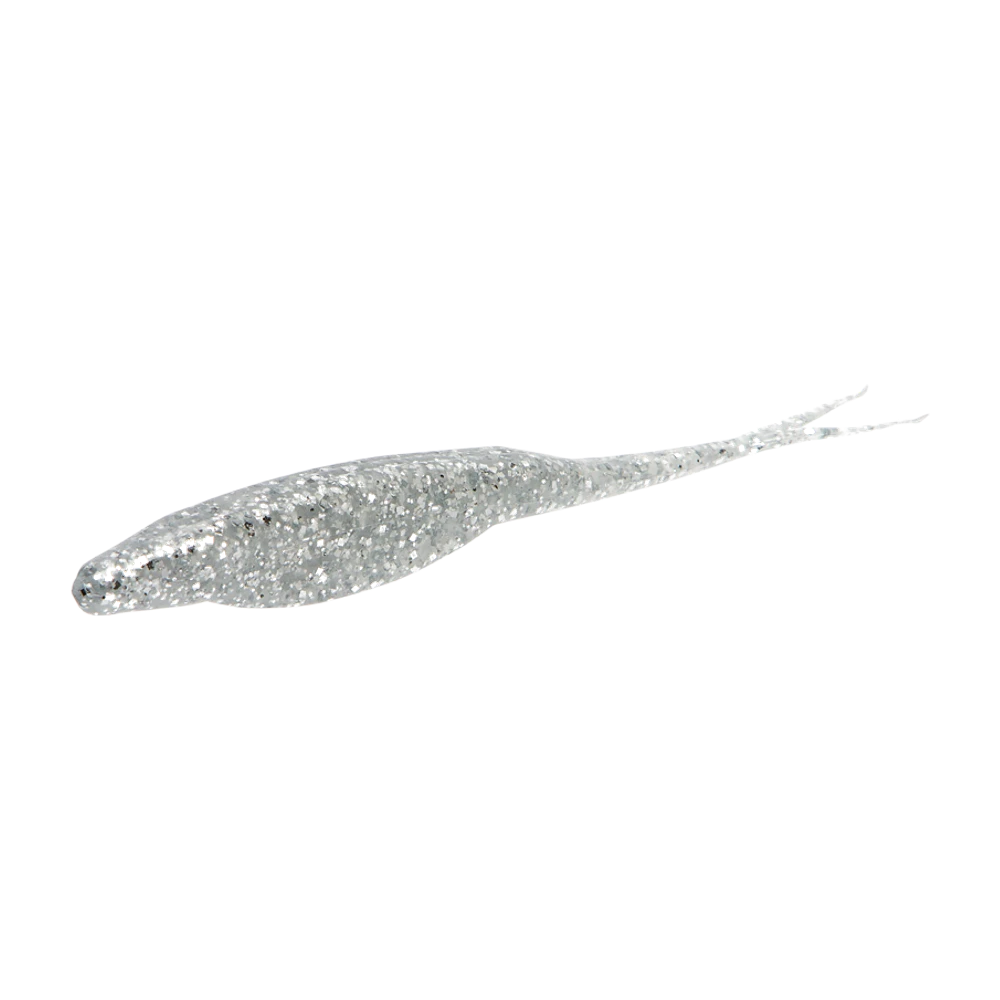
Zoom Super Fluke: the soft stickbait that mimics a dying baitfish on top
One lure, endless conditions. CarnaFish reads your spot from a photo so you are not just guessing.
Most topwater baits demand dedicated tackle, a fussy retrieve, and fall apart the moment they meet heavy weed. The Zoom Super Fluke sidesteps all of that in a fairly dumb way: a flat piece of soft plastic with no lip, no blade, nothing mechanical — and yet one of the most unpredictable topwater actions on the market.
Why a slab of plastic swims this well
There's no hidden mechanism in the Super Fluke. Its forked tail and flat body create uneven drag through the water: every twitch sends it darting one way, then the other, never quite repeating the same path. That's exactly how a dying baitfish tries to flee in a zigzag — and that apparent chaos is what triggers reaction strikes from bass holding under structure.
Unlike a classic stickbait such as the Yamamoto Senko, which does most of its work on a vertical fall, the Super Fluke is built to be worked horizontally, on or just under the surface. The two baits complement each other more than they compete: one covers the top, the other works the water column.
The rig that changes everything
A weightless rig gets the most out of the Fluke's action. Texas-rig it on a 3/0-4/0 hook, nose to tail, point tucked back into the plastic to stay weedless: the bait keeps neutral buoyancy and can be worked gently without ever diving too hard.
- Pure weightless: the Fluke stays on or just under the surface. Great over floating mats or sparse lily pads where a sinking bait would hang up.
- Light jighead (3-5 g): brings it down to 1-1.5 m and works it more like a shad, with a stronger kick on the retrieve.
One rule pays off with this bait every time: never pull too hard. The Fluke doesn't need speed to move — it needs short, sharp snaps and slack line between each one.
The retrieve: walk the dog, soft-plastic style
The go-to retrieve borrows from walking-bait technique, just softer and quieter. Rod tip low, short sharp wrist snaps, slack line between each pull so the bait darts one way then the other. Three or four snaps followed by a two-to-three-second pause is usually enough to draw a strike — and it's often on that dead pause, bait sitting still on top, that the bass commits.
Common mistake: pausing too briefly
A lot of anglers chain snaps together without letting the bait breathe. But it's exactly that stillness that gives the fish time to lock on and charge. If you're not getting bites on a long pause, stretch it out further before switching baits.
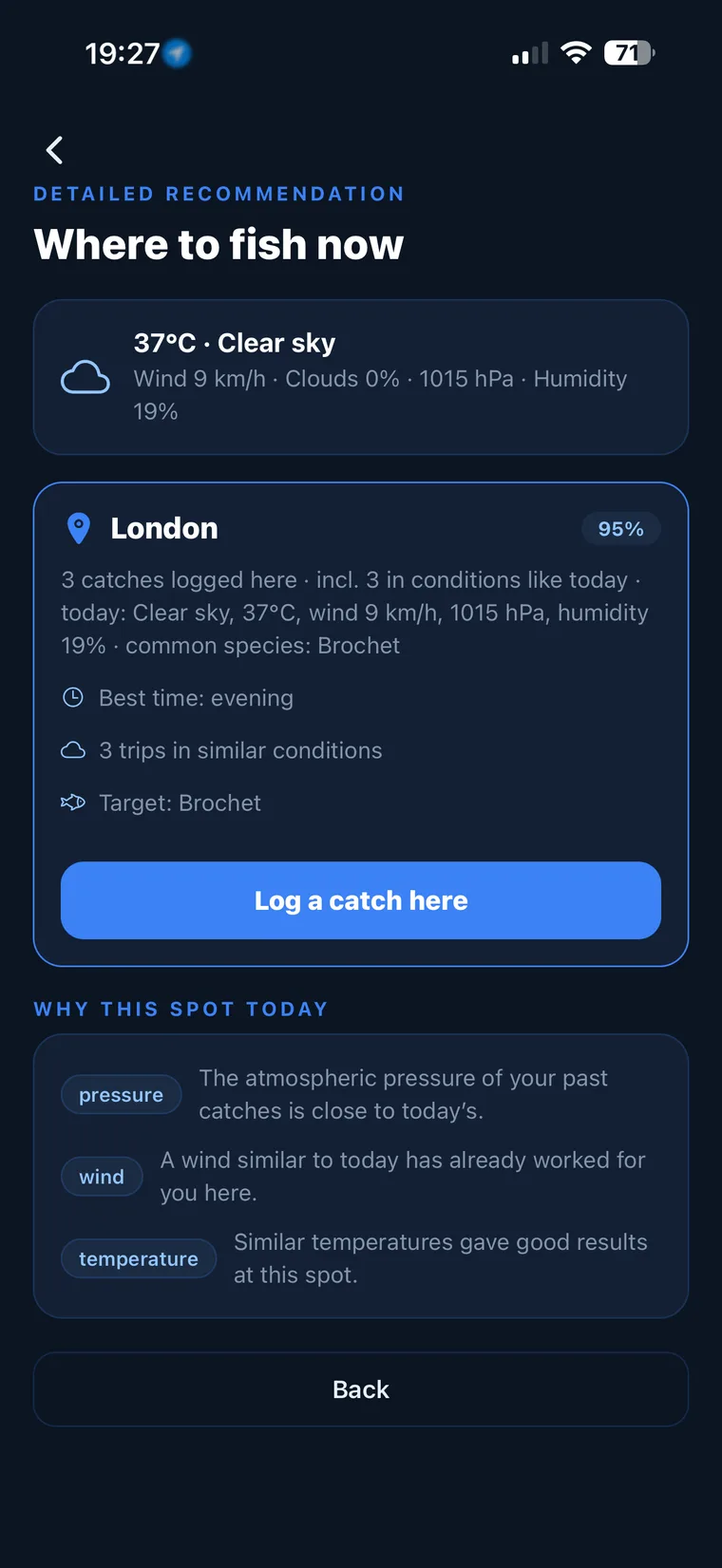
Not sure what to tie on?
Photograph your spot: CarnaFish reads the scene, cross-checks the conditions and gives you the zone, the lure and the retrieve. Free on iOS and Android.
Colour by light
- Clear water, bright sun: pearl white, subtle and natural, a good silhouette from below.
- Overcast or slightly stained water: Sexy Shad, a solid balance of flash and realism.
- Murky water or low light: Junebug or black — a dark silhouette reads better against the sky than a pale one.
Where it earns its keep
The Super Fluke shines on spots where a bass can see the bait pass overhead without cover in the way: sparse lily pads, weed edges, the surface of a shallow flat. In genuinely dense cover — flooded brush, thick mats — a hollow-body, fully weedless bait like the Molix Sneaky Frog handles it better.
Picking the right bait matters less than knowing where to cast it in the first place. That's the whole point of reading a spot before tying anything on — and it's exactly what CarnaFish does: you photograph the water, the app analyses it and hands you a zone and a retrieve to try before you even make your first cast. For the basics of the species, our beginner's guide to bass fishing covers tackle and spot selection.
What the Fluke does better than most
- Erratic surface zigzag with zero moving parts, just the shape of the plastic.
- Near-indestructible weightless rig in light cover.
- Versatile: pure topwater or lightly weighted to run just under the surface.
- Cheap enough to lose a few in a session without a second thought.
FAQ
Does the Zoom Super Fluke work without a jighead?
Yes, that's actually its main use. Rigged weightless on a Texas hook, it stays on or just under the surface and keeps its full erratic action. A jighead is only needed to run it deeper.
What hook size for the Super Fluke?
A 3/0 to 4/0 Texas hook depending on wire gauge and target mouth size. Too small and it won't hold on the hookset; too large and it weighs down the nose and kills the horizontal action.
Can you fish the Fluke in murky water?
Yes, by leaning on contrast rather than realism: a dark colour like Junebug or black shows up better against the sky than a pale tone, even in stained water.
Why won't my Fluke zigzag properly?
Usually the retrieve is too soft or too even. It needs sharp snaps and a clean release of slack line between each one so the bait darts hard from side to side.
What's the difference between the Super Fluke and a Senko?
The Fluke works horizontally on top, actively worked in a zigzag. The Senko works mostly vertically, on the fall, with very little rod action. They complement each other depending on the depth you're targeting.
Is the Super Fluke good for heavy cover?
Somewhat. Texas-rigged weightless, it handles sparse weed fine, but in genuinely dense vegetation a hollow-body frog like the Molix Sneaky Frog is the safer call.
The full bass lure guideSeason-by-season strategy: which family of lure, when, and why.Go from theory to fish
CarnaFish reads your spot from a photo and gives you the game plan: zone, lure, retrieve. Free on iOS and Android.