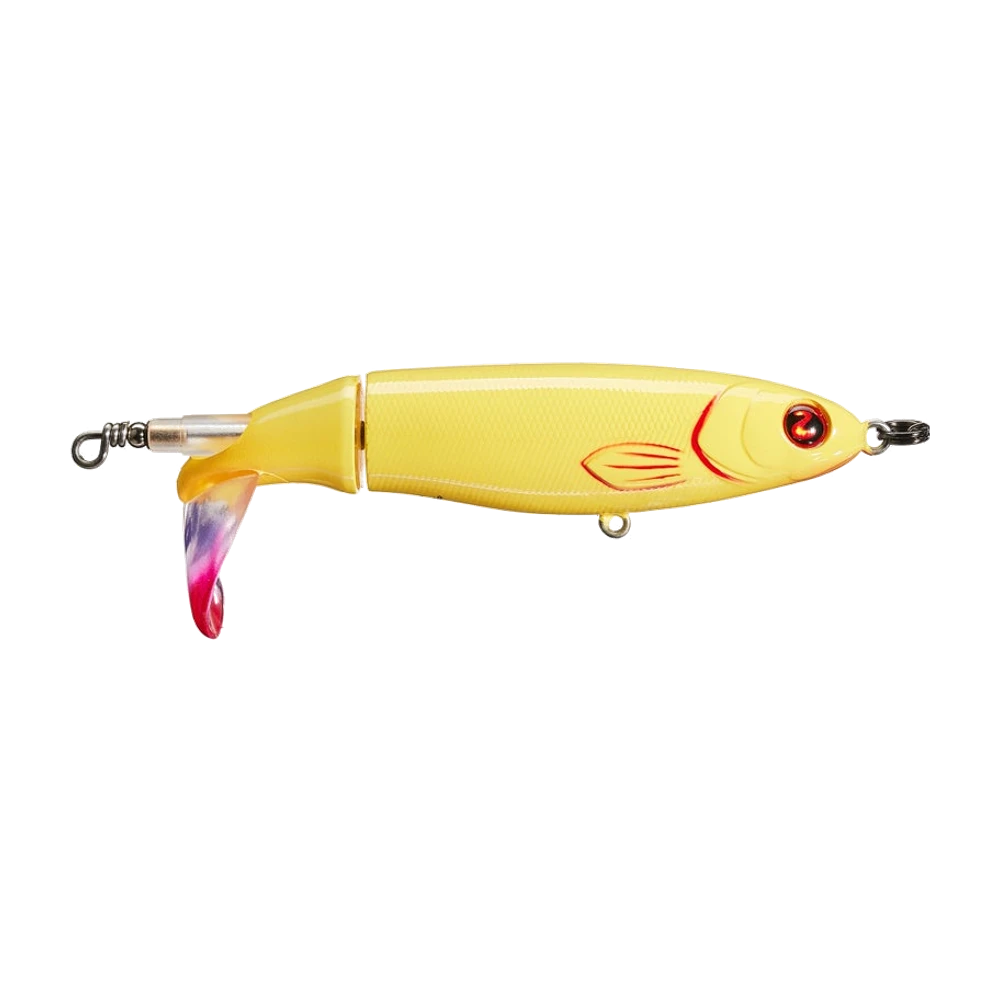
Whopper Plopper 130: the propeller topwater that works on three species
One lure, endless conditions. CarnaFish reads your spot from a photo so you are not just guessing.
Few lures manage to convince a pike angler, a bass tournament competitor and a night-fishing catfish hunter all at once. The Whopper Plopper 130 pulls it off because it doesn't rely on a realistic silhouette but on a simple, universal signal: the sound of a propeller thrashing the water, picked up by the lateral line of pretty much any predator, regardless of species.
The principle: a signal more than a lure
The propeller mounted at the rear of the Whopper Plopper spins continuously during the retrieve, producing a distinctive "plop-plop-plop" paired with a light wake. Unlike a popper worked in bursts, the Whopper Plopper fishes on a constant straight retrieve: the noise and surface vibration do all the attracting, not a precise visual match. That logic explains why it works across species with such different hunting behaviours.
For pike: margins and early morning
Pike react to this lure mostly during quiet hours — early morning or late in the day — along vegetation margins, close to weed beds or reed lines. A slow, steady retrieve is enough: pike often follow the lure for several metres before striking, usually with one sharp hit from below. Never set the hook on the sound of the strike — wait to feel the weight in the rod.
For bass: isolated structure
On bass, the Whopper Plopper does its best work around a single piece of structure in open water — a stump, a dock, a submerged tree — rather than on a long, continuous search retrieve. A definite pause right after clearing the structure, propeller still spinning in place for a few seconds before resuming, often triggers a strike from a bass holding in the shade.
For catfish: darkness and noise that carries
With catfish, the noise itself is what makes the difference: this species hunts largely by hearing and vibration detection rather than sight, especially after dark. A slow retrieve over long distances, in open water above a deep hole, gives the propeller's noise time to carry and pull in a catfish holding well away from the lure. It's one of the few topwater lures that's genuinely effective on this species.
Field rule that holds across all three species: never set the hook on the sound of a surface strike. Fish often miss their first hit on a topwater lure — always wait to feel the weight before setting.
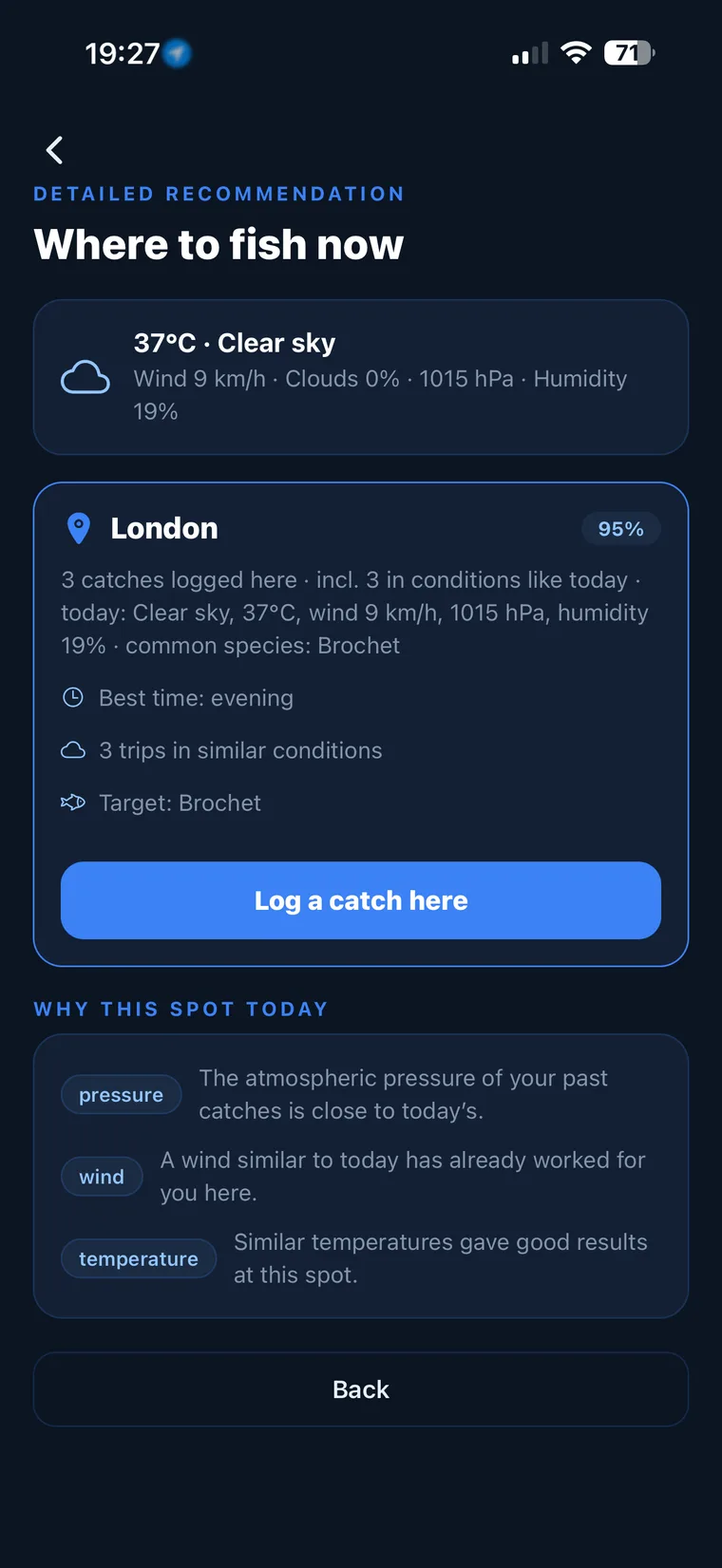
Not sure what to tie on?
Photograph your spot: CarnaFish reads the scene, cross-checks the conditions and gives you the zone, the lure and the retrieve. Free on iOS and Android.
Speed: the one setting that really matters
The Whopper Plopper doesn't need jerks or complex pauses: a steady retrieve speed is the parameter that drives its whole effectiveness. Too slow, and the propeller doesn't thrash hard enough to make the right noise. Too fast, and the lure starts skating and loses its natural sway. The right speed is whatever keeps a steady, audible "plop" without the body breaking loose from its swim.
Colour: day versus night
During the day in clear water, a natural baitfish tone still works well, with silhouette mattering a bit more. At night, favour a dark colour — black or deep purple — that cuts a sharp outline against the ambient sky light; exact colour matters less than silhouette contrast once it's dark.
What it doesn't replace
Over heavy lily pads or dense vegetation, the rear propeller snags fast: a Molix Chatter Bait or a weedless-rigged soft craw will handle that kind of cover better. And if fish stubbornly refuse the surface, a Bomber Long A worked just under it is the logical fallback before giving up on topwater altogether.
Knowing when to reach for a topwater lure instead of another type depends on the day's conditions — exactly what CarnaFish simplifies by reading a photo of your spot and handing you a matching zone and technique. For a full season-by-season pike strategy, see the pike lure guide.
FAQ
Does the Whopper Plopper 130 really work for catfish?
Yes, and it's one of its best uses. Catfish hunt mainly by hearing and vibration detection, especially at night, and the propeller's noise carries far in open water above a deep hole.
What retrieve speed suits the Whopper Plopper?
A slow to medium, steady speed, just enough for the propeller to thrash the surface regularly without the body skating off course. It's the single setting that really governs how well it fishes.
When should you fish pike with the Whopper Plopper?
During quiet hours, early morning or late in the day, along vegetation margins. A slow, steady retrieve is enough, with pike often following the lure before hitting it from below.
Should you set the hook the moment a fish strikes on the surface?
No, never on the sound of the strike alone. Fish often miss their first hit on a topwater lure — always wait to feel the weight in the rod before setting the hook.
What colour should you use for night fishing?
A dark tone, black or deep purple, that cuts a clean silhouette against the ambient sky light. Exact colour matters less than silhouette contrast once it's dark.
Does the Whopper Plopper handle heavy cover well?
Not really — its rear propeller snags easily in lily pads or dense vegetation. Save it for open water or lightly covered margins.
The full pike lure guideSeason-by-season strategy: which family of lure, when, and why.Go from theory to fish
CarnaFish reads your spot from a photo and gives you the game plan: zone, lure, retrieve. Free on iOS and Android.