Berkley Choppo: the prop bait that pulls catfish up at night
Rather not fish it blind? Photograph your spot — CarnaFish cross-checks the conditions and points you the right way.
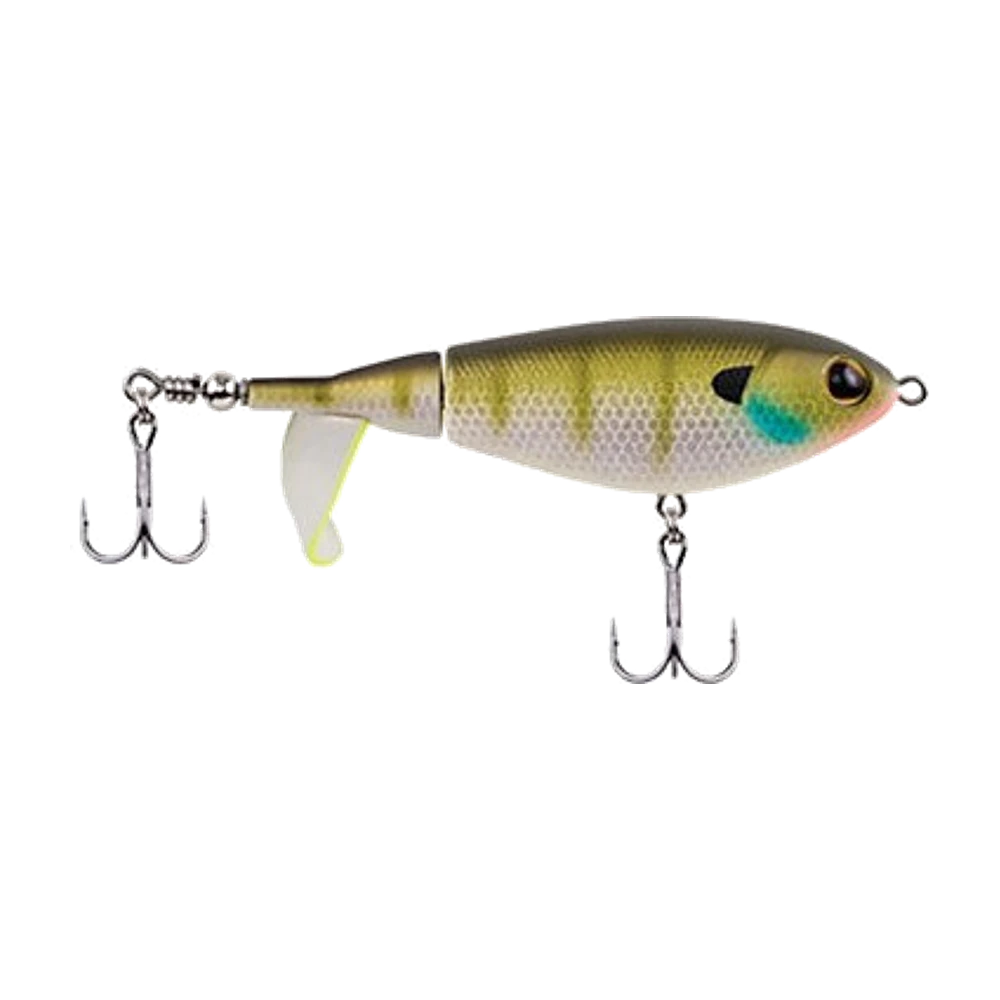
The Choppo was built for American largemouth bass, and it still is one — except in France, it's mostly night catfish anglers who've claimed it as their own. A loud lure that stays on the surface for the entire retrieve and triggers vertical, explosive strikes: hard to beat for a fish that hunts by ear as much as by sight once the sun's down.
Why a bass lure ends up in the catfish box
The Choppo gets its name from the two metal propellers mounted fore and aft. Unlike a stickbait you have to work by hand with the rod tip, the Choppo does the job on its own the moment you pull: the props churn the water, kick up a bubbling wake visible from a distance, and produce a "chug" sound that carries far across a still summer night. That's exactly what a catfish keys in on first, well before it ever sees the lure.
The other quality you notice with use is buoyancy. The Choppo sits still on the water during pauses without ever sinking, which gives the fish time to line up underneath before striking. That pause is what separates a lure you just retrieve from one that actually fishes.
The catfish setup: forget the bass gear
On paper the Choppo is a bass rod lure for 20-50 g casting weights. For catfish, that gear won't survive one outing. You need:
- A heavy rod, 2.40 to 2.70 m, able to absorb a brutal surface strike without breaking on the first head shake.
- Heavy braid, 40-60 lb class, on a casting reel or a large spinning reel depending on your setup.
- A very strong coated or fluorocarbon leader (roughly 80-110 lb): catfish don't have cutting teeth like pike, but their rough jaw wears through thin line fast, and their pulling power is nothing like a bass's.
- Stock trebles are often swapped for heavy-duty single hooks rigged in tandem — easier to unhook a fish over a metre long and gentler on its jaw.
Field rule: never set the hook on the splash. Wait until you feel the actual weight of the fish pulling, or you'll rip the lure out of its mouth right as it was about to take it properly.
How to work it
The classic mistake is retrieving the Choppo fast and continuously, like a spinnerbait. That's not its logic. The right rhythm:
- One sharp pull of the rod tip, hard enough to make the props spit water.
- A two-to-three-second pause, long enough for the rings on the water to close.
- Repeat, varying the pull length with fish activity — shorter and tighter together when fish are actively hunting, longer and more spaced on a quiet night.
On bass, the same principle applies in a faster version: shorter pulls, one-second pauses, usually along lily pad edges or a dock.
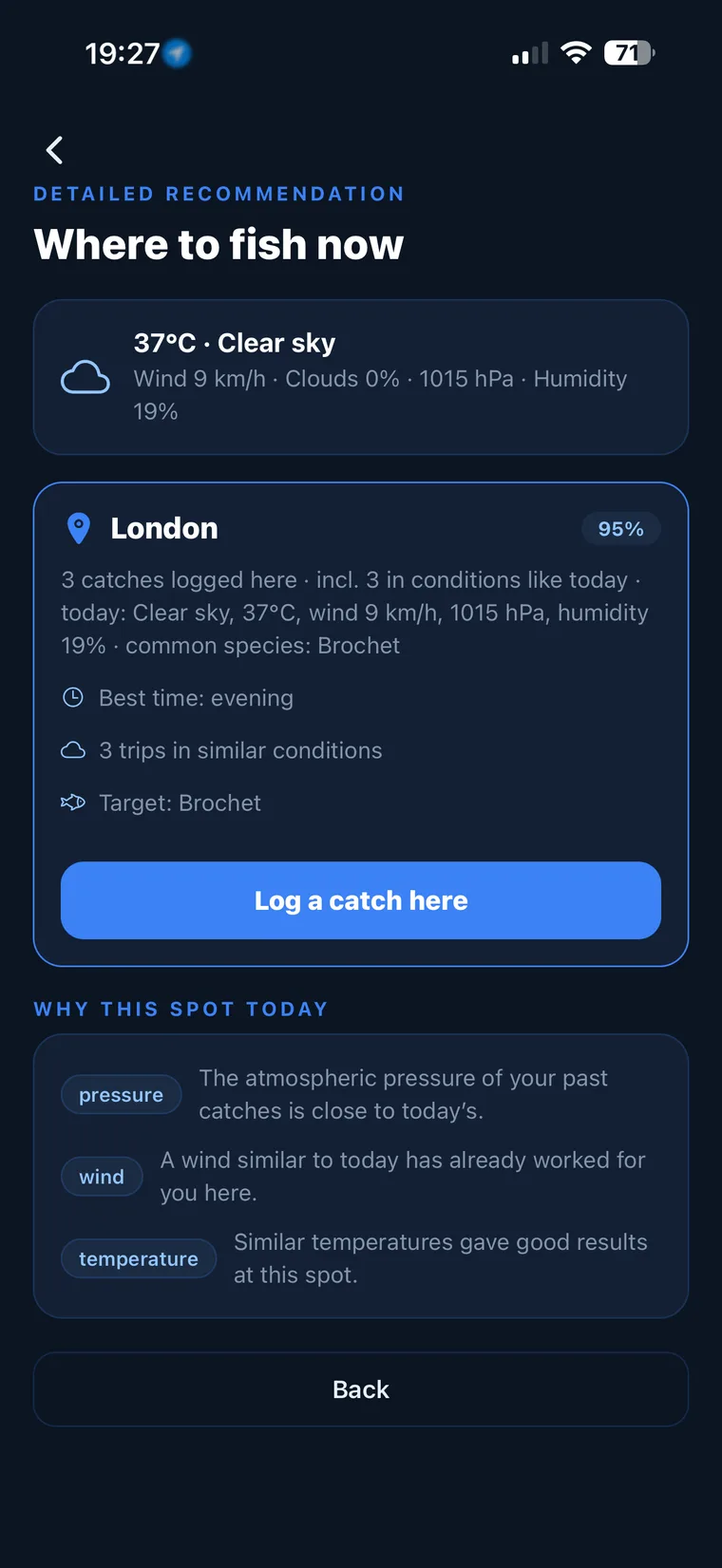
Not sure what to tie on?
Photograph your spot: CarnaFish reads the scene, cross-checks the conditions and gives you the zone, the lure and the retrieve. Free on iOS and Android.
When to throw the Choppo
This lure shows its best in two precise windows: the hours after sunset through full dark for catfish, and the 30-45 minutes around sunrise and sunset for bass. Flat, windless water carries the prop noise far further — that's when the Choppo outfishes any quieter topwater by a wide margin.
Colour matters less than you'd think
At night, a catfish picks up the Choppo on vibration and sound well before colour. A pale finish (Bone, white) mostly helps the angler track the wake across dark water — not a minor detail, since seeing the wake lets you anticipate the strike instead of setting too early. In daylight for bass, stick to more natural tones like Ayu, especially in clear water.
If your spot is too choked with cover (thick weed, brush), the Choppo gets hard to work without snagging — a slimmer Whopper Plopper or a Zara Spook worked walk-the-dog style will slide through obstacles far more easily.
Picking the right topwater at the right moment is exactly what CarnaFish is built to simplify: a photo of your spot, and the AI suggests a zone and a technique suited to the time and conditions, instead of guessing whether tonight's really a Choppo night.
For the full season-by-season catfish strategy, check our complete catfish lure guide.
FAQ
Is the Choppo really made for catfish?
Not originally — it's a bass lure. But its prop noise and buoyancy make it an excellent night topwater for catfish, provided you upgrade the rig (heavy single hooks, strong braid) to match the fish's power.
What gear do I need to fish the Choppo for catfish?
A heavy 2.40-2.70 m rod, 40-60 lb braid, and a strong fluorocarbon or coated leader around 80-110 lb. Standard bass gear won't hold up to catfish strikes and fights.
Do I need a wire leader for the Choppo?
No, catfish don't have cutting teeth. A leader with strong abrasion resistance (heavy fluorocarbon or coated line) is enough — what matters is pulling strength and resistance to the fish's rough jaw.
How do I work the Choppo without missing strikes?
One sharp rod-tip pull to make the props spit water, then a two-to-three-second pause before pulling again. Never set the hook on the splash — wait to feel the fish's weight in the rod.
What's the best time to fish the Choppo?
Right after sunset through full dark for catfish, and the thirty to forty-five minutes around sunrise and sunset for bass. Flat, windless water carries the prop sound much further.
What colour Choppo should I use at night?
A pale tone like Bone or white — less for the fish than for you: it lets you track the wake on dark water and anticipate the strike instead of setting too early.
What's a good alternative if my spot is too snaggy for the Choppo?
A slimmer topwater like the Whopper Plopper or a walk-the-dog stickbait slides through brush and weed far better than the Choppo's exposed props.
The full catfish lure guideSeason-by-season strategy: which family of lure, when, and why.Go from theory to fish
CarnaFish reads your spot from a photo and gives you the game plan: zone, lure, retrieve. Free on iOS and Android.