Illex Riser Bait: the fizz that replaces the big plop
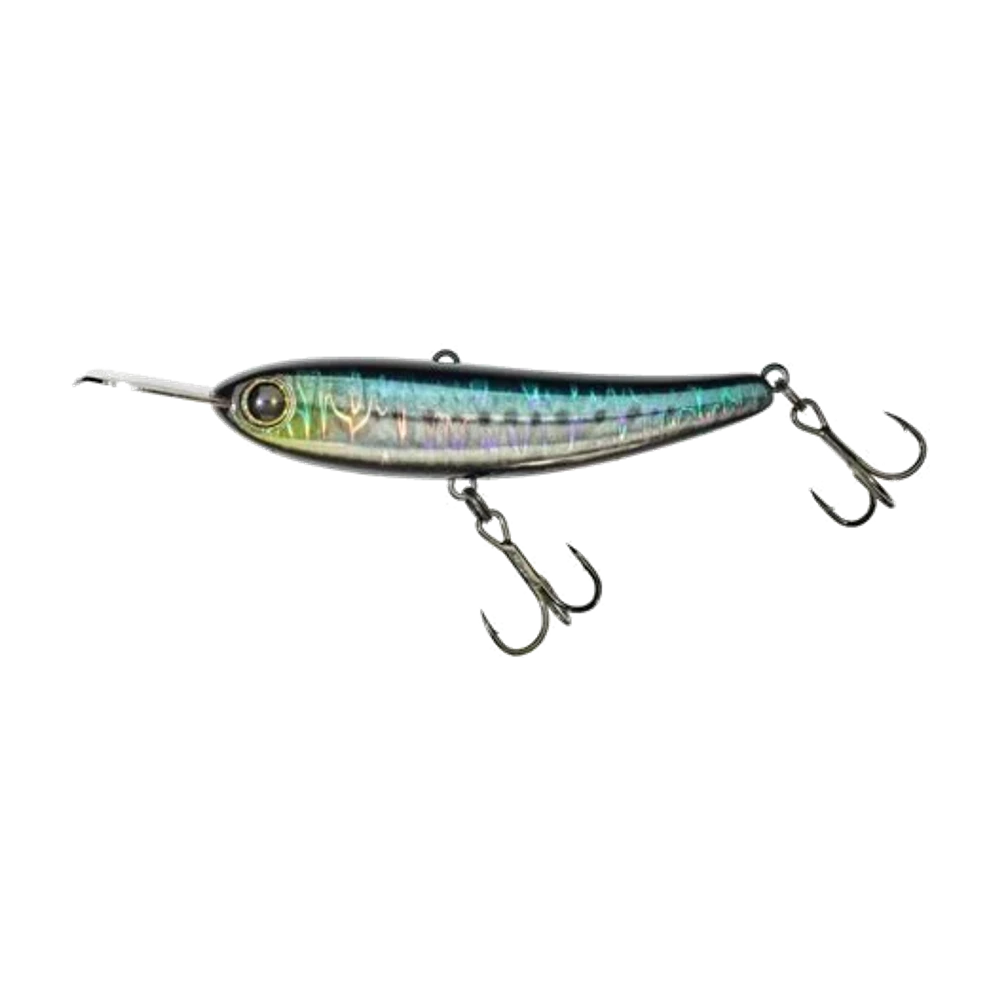
This lure shines under specific conditions. CarnaFish tells you in 10 seconds if today is one of them.
You are fishing a weed edge at first light. The plopper goes through, makes its outboard-motor noise, and the pike that was following stops two metres short. You watch it peel off. The trouble with a rotating-tail topwater is that it only knows how to do one thing: move forward making noise. You cannot slow it down, you cannot stop it — cut the retrieve and it switches off, and the fish loses the thread.
The Riser Bait offers another surface mechanism. A metal propeller behind the body, churning the water instead of slapping it. The sound is not a plop, it is a continuous fizz, and above all it does not stop dead when you do.
A propeller, not a slapping tail
The difference in principle shows on three levels.
The sound. A plastic rotating tail displaces a large volume of water on every turn and produces a run of deep, widely spaced slaps. A fine metal prop cuts the water and generates a tight trail of bubbles: a high-pitched, continuous, far less aggressive signal. On a pressured fish or very calm water, that relative discretion changes everything.
Start-up speed. The prop spins as soon as the lure moves, however slowly. So you can fish at a crawl, which is impossible with most rotating-tail lures, which need a minimum speed to engage rotation.
Momentum. When you stop winding, the metal prop keeps turning for a fraction of a second on its own inertia, releasing one last trail of bubbles. That small acoustic extension, right after the stop, is exactly the moment many fish make up their minds.
Add a body that leaves a well-defined V wake just under the surface, and you get a lure that combines visual appeal and acoustic signal without being loud.
The retrieves, from the simplest to the finest
- The slow straight retrieve. Cast, rod at ten o'clock, and wind at a constant speed, just enough for the prop to spin and the wake to stay visible. This is the searching retrieve, the one that covers a weed edge in a single pass.
- The punctuated straight retrieve. Every ten seconds, stop the handle for a second, then resume. The prop slows, coughs out its last bubbles, and starts again. That micro change of rhythm is often enough to decide a follower.
- Twitches and pauses. Two or three sharp wrist twitches, rod low, then a dead stop of two to three seconds. The lure sits there, leaves rings, then takes off again. This is the retrieve to bring out on a settled fish, under a branch or at the edge of the lily pads.
- The follow-up on a follower. When a fish follows without biting, do not speed up: lengthen the stroke and leave a longer pause. On a prop bait, it is almost always the stop that triggers, not the escape.
On the water: the prop can be tuned. Pinch the blades very slightly to close their angle and you increase the resistance, giving a denser fizz at the same speed — handy in wind and chop. Open them a little and you reduce that resistance, so the prop starts at an even lower speed, which is precious on flat water and wary fish. Work in tenths of a millimetre, with your fingers, never with flat-nosed pliers.
When and where to bring it out
| Moment | Condition | Set-up |
|---|---|---|
| Dawn and dusk | Flat water, weed | Small model, very slow straight retrieve |
| Overcast day | Light wind, short chop | Big model, prop closed |
| Summer, warm water | Weed edges, lily pads | Twitches and long pauses |
| Autumn, pike feeding | Shallow plateaux | Big model, sustained straight retrieve |
| Very stained water | Reduced visibility | Dark silhouette, steady rhythm |
For pike, a supple wire leader or 0.60 to 0.80 mm fluorocarbon is essential: surface attacks are decisive and the fish often leaves with the lure entirely inside its mouth. For bass, a 0.35 to 0.40 mm fluorocarbon behind braid is enough and leaves the lure more freedom.
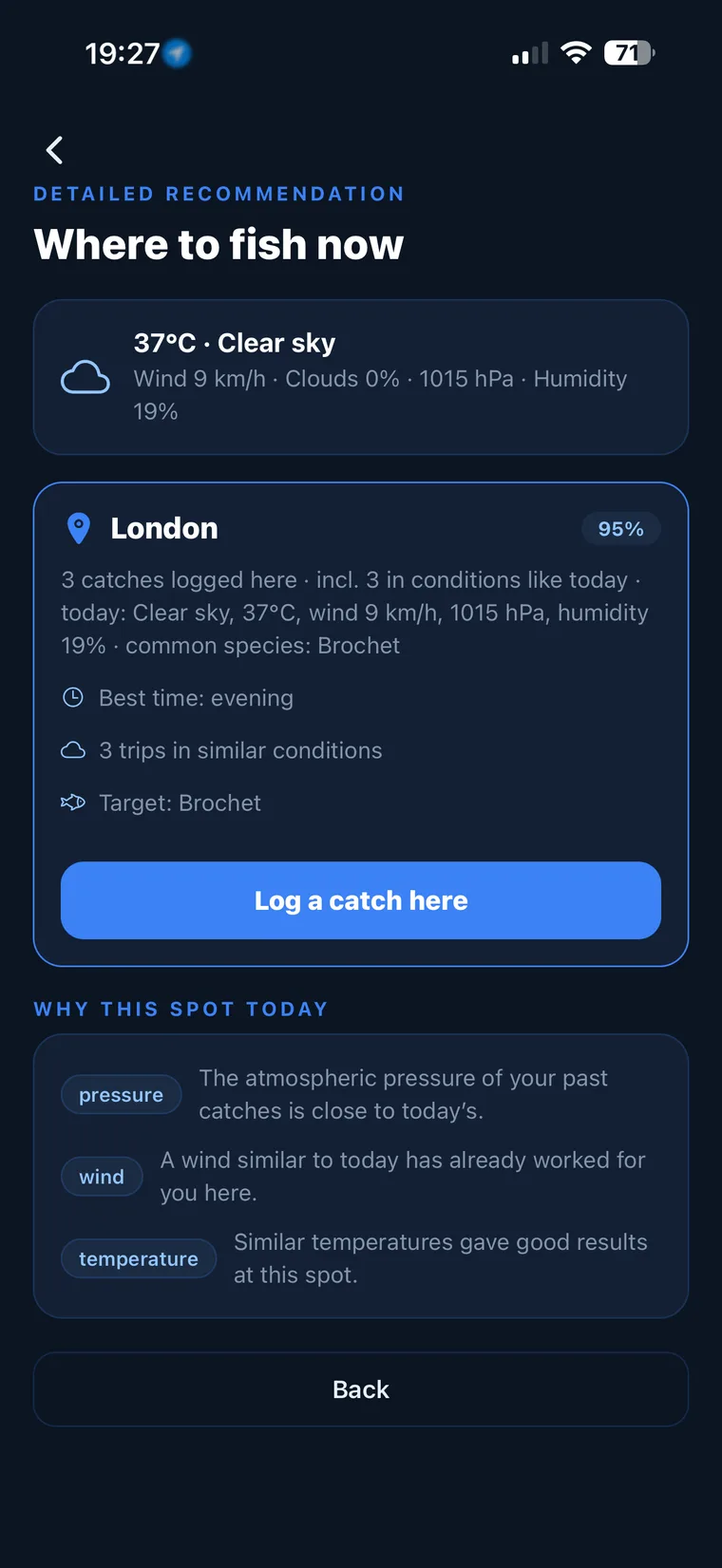
Not sure what to tie on?
Photograph your spot: CarnaFish reads the scene, cross-checks the conditions and gives you the zone, the lure and the retrieve. Free on iOS and Android.
Where you should not count on it
Three cases where another lure will do better. In very deep, cold water, obviously: the surface is out of the game and the fish will not come up. Over a large windy expanse, where the prop's fine signal is lost in the chop and a noisier rotating-tail lure carries far further. And in dense vegetation, where the exposed hooks and the prop pick up everything: in closed lily pads, a frog is the only sensible option.
One last honest limit: this is a lure that hooks badly if you strike too early. The attack is visible, spectacular, and the reflex is to pull immediately. Wait until you feel the weight. A simple trick to manage it: keep the rod low and pointed at the lure through the whole retrieve, and count "one" mentally before winding. The available slack gives the fish time to close its mouth, and the hookset happens in line with the leader rather than at right angles to it.
Maintenance matters more than on an ordinary lure too. The prop shaft is working constantly and eventually picks up deposits, especially in coloured water or late summer. A rinse in fresh water and a drop of lubricant on the shaft are enough to preserve the low-speed start-up, which is precisely the lure's selling point. A prop that binds slightly does not show in the box, but it costs you the first metre of every retrieve.
Riser Bait or rotating-tail plopper
The River2Sea Whopper Plopper 130 and the Berkley Choppo both rely on a soft rotating tail: a lot of noise, a lot of water displaced, a call that carries a very long way. They are searching lures: they bring a fish in from twenty metres.
The Riser Bait plays one level below. It calls from less far, but it is acceptable to a fish that has already refused a plopper, it fishes more slowly, and above all it tolerates the pause. In practice, plenty of anglers use them in tandem: the plopper to locate an active fish, the Riser Bait to go back over the one that followed without biting.
Our guide to choosing a pike lure places topwater within the predator season. And if you are unsure which type of surface lure to tie on given the vegetation in front of you, CarnaFish analyses a photo of the spot and answers.
Key takeaways
- Metal propeller: a continuous fizz and fine bubbles, instead of the deep slap of a rotating tail.
- It spins from very low speeds and keeps going for a fraction of a second after the stop.
- The pause is a retrieve in its own right, unlike a plopper that switches off the moment you stop.
- The blades are tuned with your fingers to match the resistance to conditions.
- Poorly suited to big windy expanses and closed vegetation.
FAQ
What is the difference between a prop bait and a Whopper Plopper?
The plopper relies on a soft rotating tail that slaps and displaces a lot of water: it calls from a long way off. The prop bait uses a fine metal propeller producing a continuous fizz of bubbles, more discreet, usable at very low speed and on the pause.
How fast should you retrieve the Riser Bait?
Slowly enough for the V wake to stay visible and the prop to spin without throwing spray. In practice, one turn of the handle per second is enough in most cases. Going faster does not add attraction, it mainly cuts your presentation time.
Can you fish it with stops?
Yes, and that is its main advantage over a rotating-tail lure. The prop keeps turning on its own momentum just after the stop, and that is very often the precise moment the fish decides to attack.
Do you need a wire leader for pike?
Yes, or 0.60 to 0.80 mm fluorocarbon. Surface attacks are violent and the lure frequently ends up deep in the mouth, which exposes the main line directly to the teeth.
Can the propeller be modified?
Yes, by closing or opening the blade angle very slightly with your fingers. Closing increases resistance and thickens the fizz; opening allows a lower start-up speed. Work in tiny adjustments and test by eye before fishing.
When should you set the hook on a surface attack?
When you feel the weight, not when you see the spray. Striking on the visual rips the lure away before the fish really has it: that is the commonest cause of missed fish on topwater.
The full bass lure guideSeason-by-season strategy: which family of lure, when, and why.Go from theory to fish
CarnaFish reads your spot from a photo and gives you the game plan: zone, lure, retrieve. Free on iOS and Android.