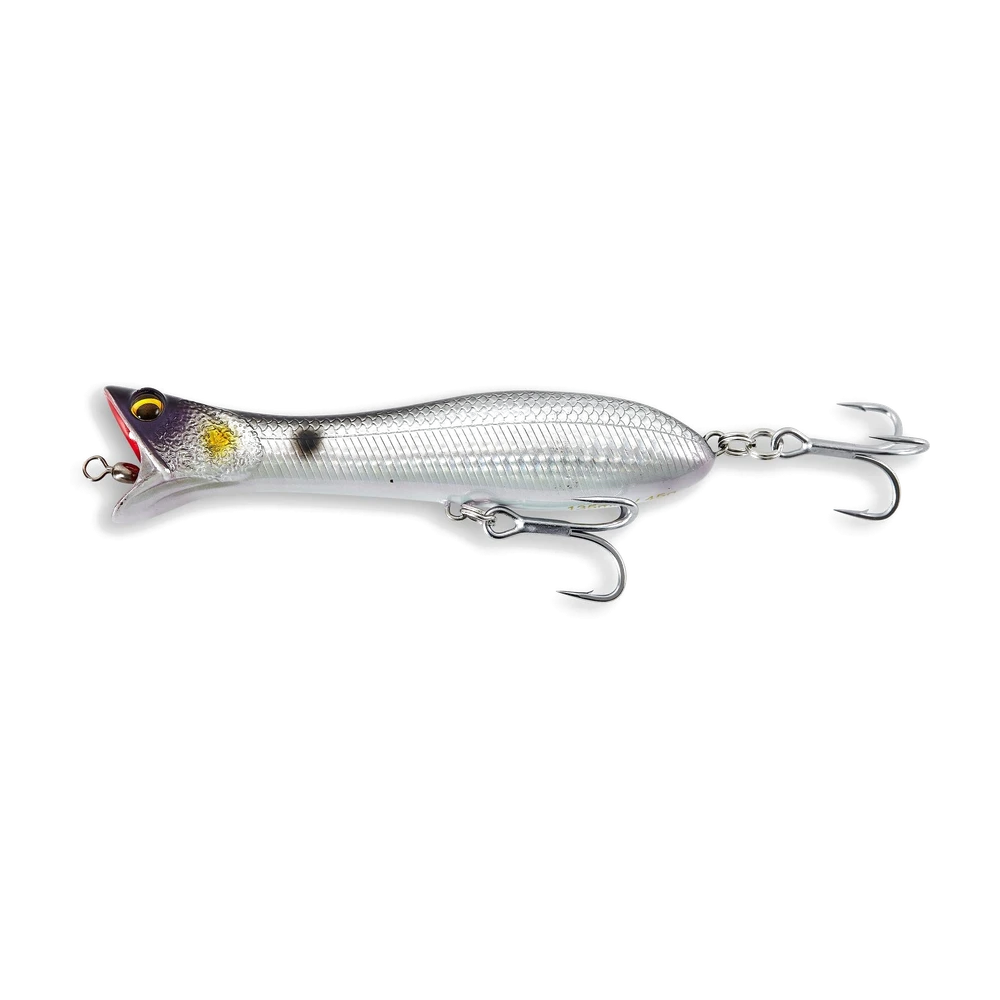
Savage Gear Panic Popper: 3 checks before you cast off a jetty
One lure, endless conditions. CarnaFish reads your spot from a photo so you are not just guessing.
A jetty or breakwater for sea bass is unforgiving ground: frequent snags, occasionally big fish on the other end, and a lure that needs to survive dozens of casts against concrete or rock without deforming. The Panic Popper was built for exactly this kind of ground, with a metal wire running through the entire body — the guarantee that a solid bass isn't going to bend the lure on the first violent headshake.
1. Check your knot before the first cast, not after a strike
A popper's weak point is almost never the lure itself — it's the knot connecting it to the leader. On 40-50 lb fluorocarbon sized for jetty-class bass, use a knot that leaves a little play at the eye — one tied too tight restricts the roll of the concave nose and cuts down the water spray that's the whole point of the lure.
Field rule: a popper that won't pop properly has a knot problem nine times out of ten, not a lure problem.
2. Pick your casting angle based on the structure
On a jetty or breakwater, casting straight out from the structure is almost always a mistake — it only presents the lure for a few seconds in the zone where bass are actually holding. Cast parallel instead, tight along the rocks, to maximise time spent in the gaps and pockets where big bass wait for prey to pass.
3. Set your retrieve rhythm before writing the lure off
The Panic Popper does its best work with a jerky rhythm: one sharp rod snap that spits water violently, a firm one-to-two-second pause, repeat. Plenty of anglers write a popper off as "not working" after a few casts on a continuous straight retrieve — never having given the lure time for its pause, which is exactly when the strike most often comes.
Why the through-wire construction matters on this ground
On a jetty, big bass off rocky ground hit hard, often with a fully closed mouth on the lure — an impact plenty of budget poppers don't survive after a few sessions. The Panic Popper's through-wire construction connects the line tie and hook hangers directly: even if the plastic body were to crack against concrete, the whole rig stays connected and the fish doesn't come off mid-fight.
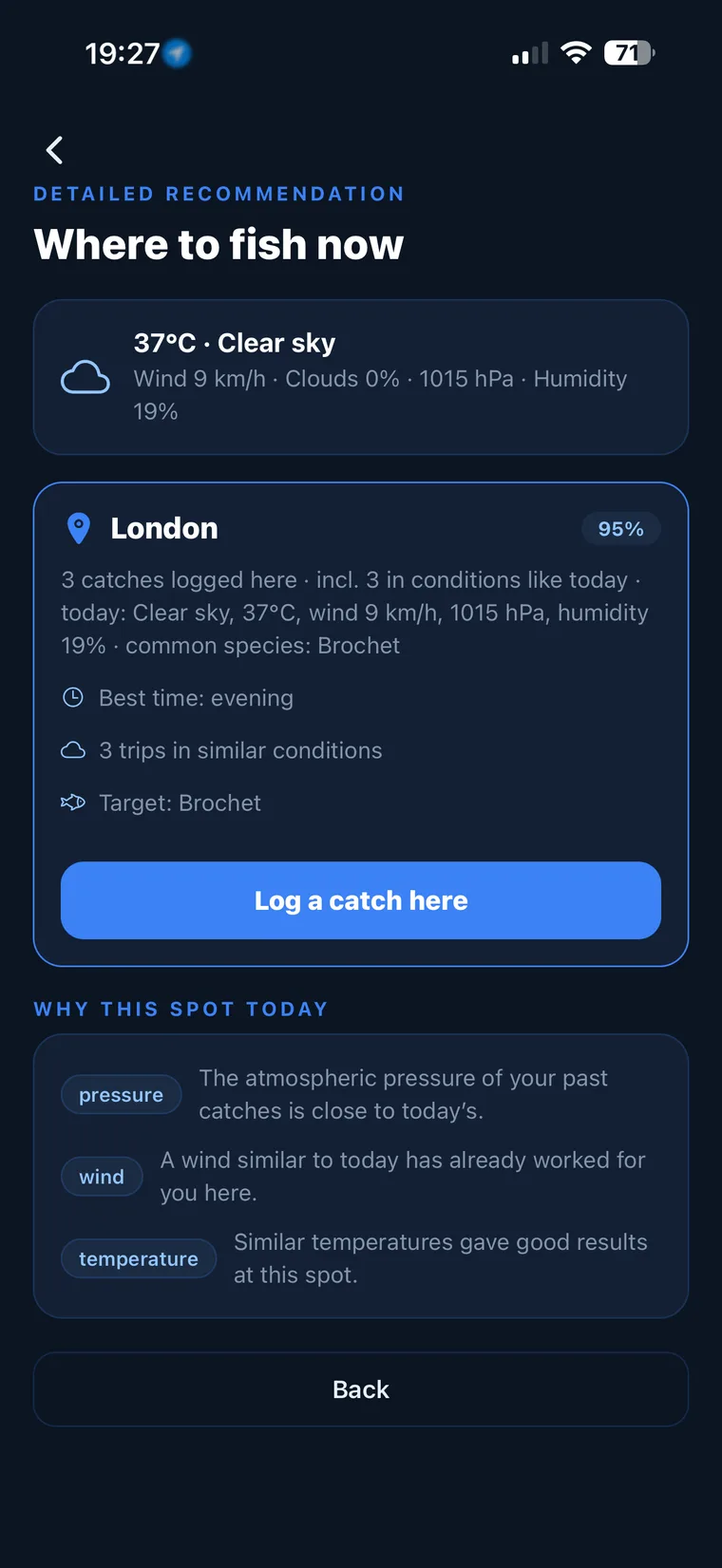
Not sure what to tie on?
Photograph your spot: CarnaFish reads the scene, cross-checks the conditions and gives you the zone, the lure and the retrieve. Free on iOS and Android.
When to fish a popper off a jetty
- Dusk: bass move up under harbour or jetty lights to feed on small prey drawn in by the glow — one of the best windows, year-round.
- Flood and ebb: skip slack water, which is less productive, and concentrate sessions around the phases when current runs along the jetty.
- A light chop: some surface movement hides the lure and covers small retrieve mistakes, unlike a flat sea that exposes every flaw in the presentation.
Colour by water clarity
- Clear water, normal daylight: Chrome Sardine, a tone that catches light well without being overly flashy.
- Night or backlight: Black Flash, whose high-contrast silhouette stays identifiable even without direct light.
- Slightly stained water after a blow: Red Head, for strong visual contrast that carries further.
Safety matters double on this kind of ground: never fish a wet jetty or breakwater alone, always wear non-slip footwear, and check the tide times before committing — our full guide to fishing sea bass on lures breaks these precautions down mark by mark. To find out whether today's window is actually worth the trip to your local jetty, CarnaFish cross-references tide, marine forecast and time of day from a simple photo of the spot.
Key takeaways
- Check the knot before the first cast: one tied too tight kills the popper's roll.
- Cast parallel to the structure, never straight out, to maximise time in the strike zone.
- Jerky rhythm with firm pauses: the strike almost always comes on the pause.
- The through-wire construction handles big bass without the lure coming apart mid-fight.
FAQ
Does the Panic Popper hold up against big rock-mark bass?
Yes, that's its specialty: the through-wire construction survives a violent strike and the fight that follows, where a lighter-built popper can deform or come apart.
What casting angle works best off a jetty?
A cast parallel to the structure, to stay in the gaps and pockets as long as possible, rather than a cast straight out that only presents the lure for a few seconds in the useful zone.
Why isn't my popper spraying enough water?
Check the knot first: too tight, and it restricts the movement of the concave nose. Then check your rod snap, which needs to be sharp and crisp to properly load the cup.
Which tide phase is best for popping off a jetty?
The flood and the ebb, when current runs along the structure. Slack water at high and low tide is generally calmer and less productive, regardless of time of day.
Do I need a heavy leader for this popper?
40-50 lb fluorocarbon is enough for most jetty-class bass, with no need for wire trace. The key is leaving a little play in the knot so it doesn't restrict the swim.
What colour should I use fishing at night under harbour lights?
Black Flash remains the most reliable choice: its high-contrast silhouette stands out clearly even under weak or indirect light, unlike a pale tone that washes out in low light.
The full sea bass lure guideSeason-by-season strategy: which family of lure, when, and why.Go from theory to fish
CarnaFish reads your spot from a photo and gives you the game plan: zone, lure, retrieve. Free on iOS and Android.