Savage Gear Gravity Stick: twenty extra metres when the wind pins you to the shore
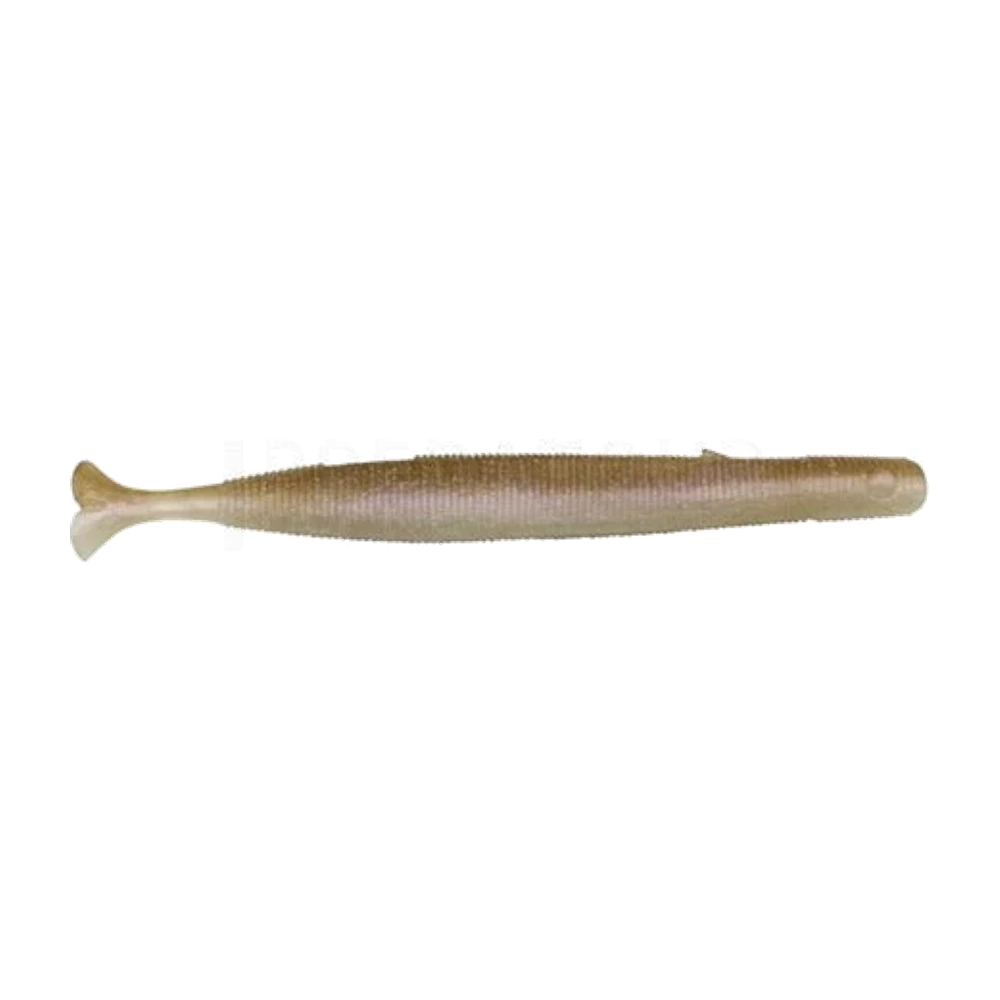
This lure shines under specific conditions. CarnaFish tells you in 10 seconds if today is one of them.
There is an invisible geography on shore bass marks: a line at forty metres that most anglers cannot cross, especially into the wind. Everything happening beyond it — the edge of a sandbar, a current seam, the lip of a drop-off — stays out of play.
The problem is almost never casting technique. It is the lure: a light stickbait spins in flight, takes the wind broadside, and loses ten metres before it even hits the water.
The Gravity Stick belongs to a very specific family, the stickbaits designed first and foremost to fly. Dense body, mass concentrated towards the rear on the cast, narrow profile that cuts the wind. Distance is not a marketing bonus here: it is the main function, and it opens up spots you were not fishing.
What the moving weight actually changes
On a classic stickbait the lead is fixed. The lure starts tumbling as soon as there is a crosswind, and you have to hold back on the cast to keep a clean trajectory.
On a weight transfer lure, the ball runs back as you load the rod and locks the tail rearwards. The lure then flies like a fletched arrow, nose first, without rotating. Three practical consequences:
- You can cast at full power without fearing a tumble, even into a three-quarter headwind.
- The trajectory stays flat, so the lure catches less crosswind at the end of its run.
- On landing, the weight returns forward and the lure recovers its swimming balance — but not instantly. That is precisely the detail most anglers miss.
The retrieve: give the lure time to reset
- Cast, then leave the lure alone for a full second after impact, bail open or hand on the spool. The ball has to travel back to the front.
- Take up the slack until you feel the weight of the lure, without pulling on it.
- Start the walk: sharp wrist twitches, rod tip pointed at the water, one twitch per half turn of the handle. The lure should zigzag about 50 cm each side.
- Break the rhythm every five or six sequences: two twitches very close together, then a dead second. That is when the follower makes up its mind.
- On the sinking version or in a big sea, replace the walk with a brisk continuous retrieve, with short flicks of the rod tip every three metres.
The rhythm is faster than freshwater anglers are used to giving. A feeding bass follows fast, and a lure that is too slow gives it time to inspect the thing.
On the water: start the retrieve immediately after impact and you are working an unbalanced lure, which will run on its side instead of zigzagging. Count a full second before the first twitch — that is the difference between a stickbait that walks and a stickbait that ploughs.
Choosing the size and the rig
| Conditions | Size | Leader | Retrieve |
|---|---|---|---|
| Flat sea, wary fish | 13 cm | 0.40 mm fluoro | Slow walk, marked pauses |
| Chop, crosswind | 15-16 cm | 0.45 mm fluoro | Brisk walk, no pauses |
| Big sea, long swell | 18 cm | 0.50 mm fluoro | Fast continuous retrieve |
| Feeding fish visible offshore | The heaviest | 0.45 mm fluoro | Cast beyond, bring it back through |
Do not undersize the tackle either. You need a rod of 2.70 to 3.10 m rated 15-60 g to load properly with a lure of this mass, and 0.16 to 0.20 mm braid: finer and you risk a crack-off on the cast, heavier and you lose the very distance you came for.
Check the stock hooks too before the first session in saltwater. On a searching lure cast a long way, a treble opened by a decent bass is the most ordinary failure there is — plenty of anglers go straight to heavy-wire trebles or single assist hooks, safer to unhook and less damaging to the fish.
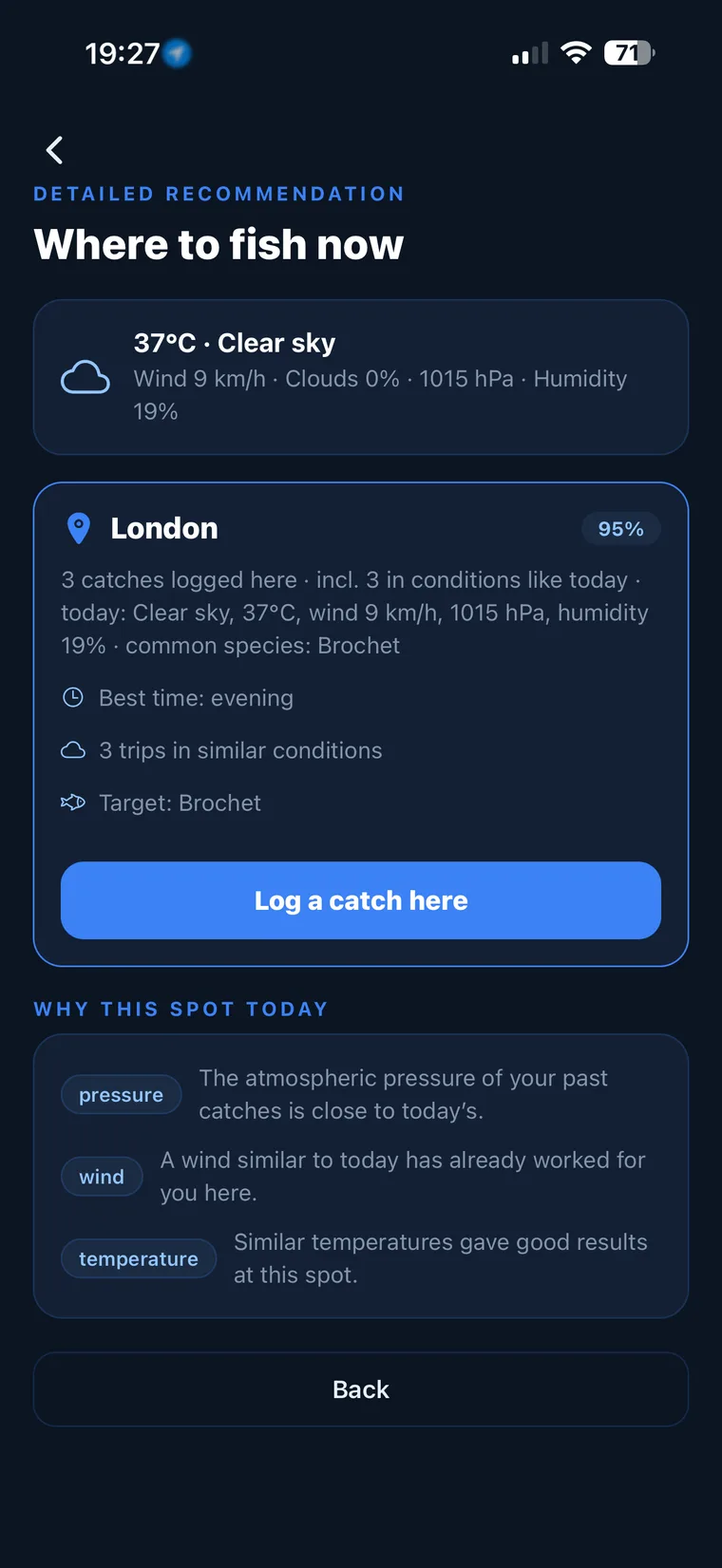
Not sure what to tie on?
Photograph your spot: CarnaFish reads the scene, cross-checks the conditions and gives you the zone, the lure and the retrieve. Free on iOS and Android.
Where it takes the lead
- Beaches and shallow plateaus where the active zone is far from the bank and nobody reaches the right line of water.
- Windy headlands, when a headwind takes every light lure out of the game.
- Scattered feeding fish offshore, where you need to land the lure beyond the shoal and bring it back through.
- Big sand beaches on the flood tide, where covering ground matters more than finesse of presentation.
It is a poor fit, on the other hand:
- On short, cluttered spots, among rocks ten metres off the bank, where a lure this size and weight has no room to express itself.
- In very shallow, calm water, where its mass makes it dive and scrape as soon as you slow down.
- On small bass, which follow the lure without being able to get it in their mouths.
Gravity Stick or light stickbait
A slim, light stickbait such as the Xorus Patchinko 140 is still more precise in the walk, slower, better suited to oily-calm seas and wary fish tight to the bank. Its limit is mechanical: as soon as the wind gets up, it no longer reaches the zone.
The DUO Realis Pencil 130SW occupies the middle ground, a good distance-to-finesse compromise for fishing along rocky edges. And when the bass refuses the surface because the water is too cold or the light too strong, a sinking line-thru lure such as the Line Thru Seeker lets you fish the same distance a metre lower.
Our guide to lure fishing for sea bass covers how to read a mark before choosing between surface and subsurface. And if you are unsure which size of stickbait to tie on when you reach the beach, CarnaFish analyses a photo of the spot and answers.
Key takeaways
- A distance lure above all: it opens up spots light stickbaits never reach.
- Wait a full second after impact for the moving weight to return to position.
- Fast walk, rod tip down, with rhythm breaks every five or six sequences.
- Rod of 2.70 to 3.10 m minimum and 0.16-0.20 mm braid: this is a set-up, not a standalone lure.
- Too bulky for short spots, too heavy for calm, very shallow water.
FAQ
How far can you cast a Gravity Stick?
With the right rod and fine braid, most anglers gain fifteen to twenty metres over an equivalent light stickbait, especially into a headwind. The exact distance depends as much on your rod and your casting stroke as on the lure itself.
Why won't my stickbait zigzag?
In nearly every case, because you start the retrieve too soon after impact or because you are working it with the rod tip high. Give the lure a second to rebalance, point the tip at the water, and use short wrist twitches rather than arm pulls.
Should I change the stock hooks?
It is a common precaution in saltwater, especially if you fish rocky marks or decent-sized fish. Heavy-wire trebles or single assist hooks limit opened hooks and make unhooking easier without damaging the fish.
What rod suits this kind of lure?
A saltwater rod of 2.70 to 3.10 m rated around 15-60 g. Shorter and you lose distance and lure control beyond the surf line; too soft and you cannot load properly with a 40 to 60 g lure.
Does it work when the sea is completely flat?
Yes, but slow the walk and lengthen the pauses. On an oily-calm sea with wary bass close in, a lighter, slimmer stickbait will often be more productive — keep the Gravity Stick for the situations where distance is what counts.
What colour should I choose for sea bass?
Sardine and sandeel imitations cover most of it in clear water. At dawn and dusk, a dark silhouette cut out against the sky works better than a realistic finish, and in churned water after a blow, a bright white stays the most readable choice.
The full sea bass lure guideSeason-by-season strategy: which family of lure, when, and why.Go from theory to fish
CarnaFish reads your spot from a photo and gives you the game plan: zone, lure, retrieve. Free on iOS and Android.