Savage Gear Gravity Runner: sawtooth fishing along a breakwater
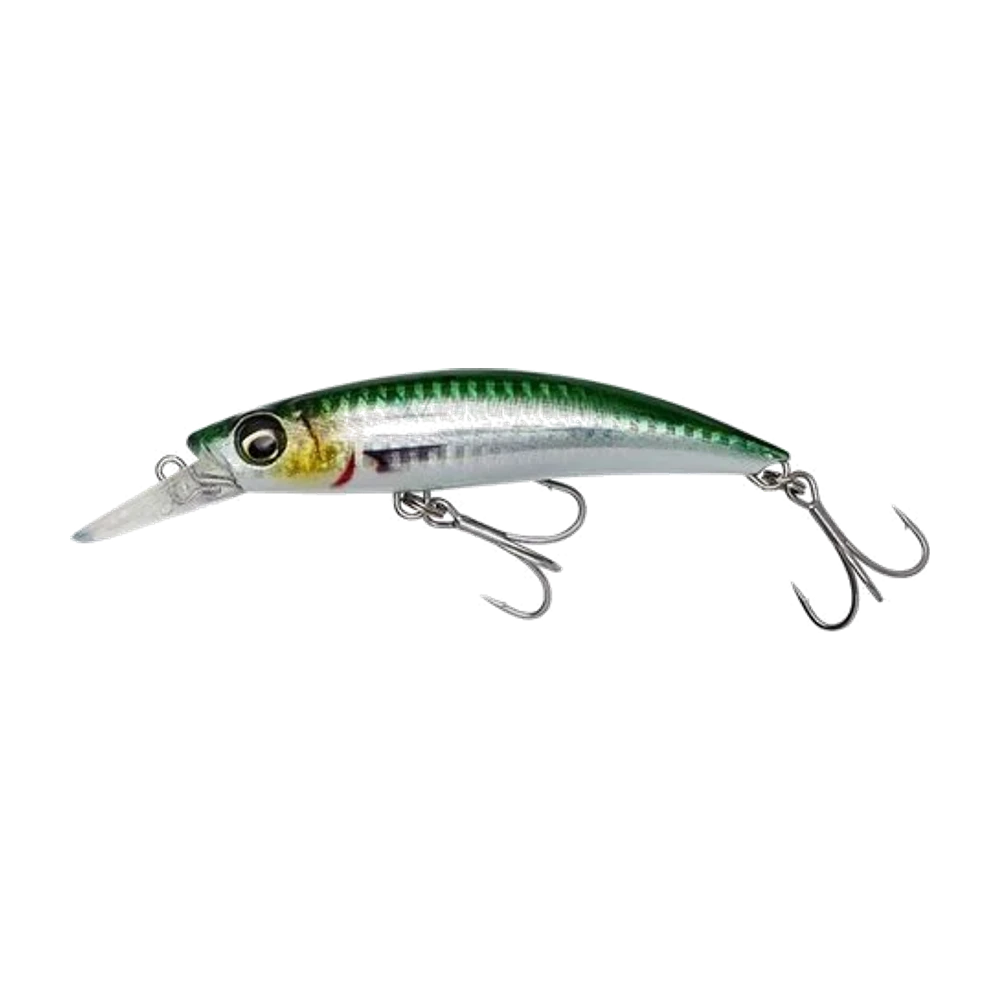
One lure, endless conditions. CarnaFish reads your spot from a photo so you are not just guessing.
A breakwater, a pier, a harbour rock armour: you have twenty metres of water in front of you over three or four metres of depth, current running along the structure, and baitfish holding at mid-depth. Most anglers sweep that with a minnow on the surface, touch nothing, and leave concluding the fish are not there.
They are there. They are simply two metres lower, tight to the foot of the structure, with no reason at all to come up in broad daylight.
The Gravity Runner is a tool for that middle layer. Its moving weight gives it distance, and its controlled descent lets you fish a sawtooth path along a vertical structure — a technique used routinely when jigging vertically from a boat, but hardly ever from the bank, even though the spots are made for it.
A descent that fishes as much as the pull
On most sinking minnows, the drop is dead time you put up with: the lure falls flat, it drifts, you wait for it to reach the right layer. On the Gravity Runner, the mass distribution does something else.
- It goes down nose-first, at an angle, on a slanting path rather than straight down. From the fish's point of view that is a prey item losing its footing and fleeing towards the bottom, not an object sinking.
- The flank works during the fall. The body tips slightly one way then the other, throwing short flashes in mid-drop.
- Pick-up is immediate. One flick of the rod tip puts it back into its swim, with no metres wasted restarting it.
Second feature, the one that gets it out of the box: the weight transfer system. A moving ball runs back into the body on the cast, which stretches the trajectory, then returns to the swimming position on impact. On a wind-exposed structure, that is clearly worth ten to fifteen metres.
The sawtooth retrieve, step by step
This is the main mode, the one that makes this lure interesting.
- Cast parallel to the structure, a metre or two off its foot, not perpendicular. You want the lure running along the wall for the whole retrieve.
- Let it sink on a count. Three to five seconds over three metres of water, more if you want to touch bottom on the first cast to calibrate.
- Three or four fast turns of the handle, rod tip low. The lure climbs on the diagonal, swimming.
- Stop dead and let it drop back for two or three seconds, line semi-tight — tight enough to feel the bite, loose enough not to choke the fall.
- Repeat with exactly the same number of turns and the same count. That regularity is what feeds information back: if the bite comes on the third drop, you know where the fish are holding.
- Slow down over the last five metres, right below your feet. On rock armour, bass often hunt directly beneath you.
On the water: keep the line semi-tight through the fall, never completely slack. On this kind of lure, almost every bite comes on the drop and shows up as the line simply stopping, not as a knock in the rod. Fish with a loose bow and you will feel nothing and believe there are no fish.
Second retrieve, when the current is strong: the up-current cast with a controlled drift. You cast up-current, let the lure sink as it drifts, and just take up the slack. The lure then sweeps a long diagonal without ever being dragged against the flow.
Setting the count by spot
| Spot | Depth | Count before the pull | Turns per phase |
|---|---|---|---|
| Harbour rock armour | 2 to 3 m | 2 to 3 s | 3 |
| Outer breakwater | 3 to 5 m | 4 to 6 s | 4 |
| Pier, pilings | 4 to 6 m | 6 to 8 s | 4 to 5 |
| Channel on the ebb tide | 3 to 6 m | 3 to 5 s while drifting | 3 |
Calibration method: on the first cast, count until the lure touches bottom. If you get twelve, you know six puts you at mid-depth and nine puts you in the lower third. You then fish those two numbers and keep the one that produces.
Not sure what to tie on?
Photograph your spot: CarnaFish reads the scene, cross-checks the conditions and gives you the zone, the lure and the retrieve. Free on iOS and Android.
When to use it: tide first
The window that works best on this kind of spot is the established ebb tide, when the current runs along the structure and pins the baitfish against it. The bass posts up behind a corner, a piling, a break in the rock armour, and lets the food come to it.
- Ebb tide, two to four hours after slack water: current settled, fish posted, sawtooth retrieve at the foot of the wall.
- End of the flood tide: the fish spread out more, so open up your casting angle and search wider.
- Dawn and dusk: the fish rise in the column, so halve your count.
- At night: slow everything down, two turns instead of four, and switch to plain dark colours.
It is a poor fit in three situations, though: water under a metre and a half, where you have no room for a descent; weed beds, where the trebles collect salad on every drop; and surface feeding frenzies, where a diving lure passes under the fish.
Gravity Runner or Gravity Stick: two lures, two layers
The Savage Gear Gravity Stick is a stickbait: it works the surface and the top twenty centimetres, in lateral glides, on fish feeding high. It is the tool for dawn, for active fish, for calm water.
The Gravity Runner shares the same long-casting logic but fishes the layer the other one never sees. On the same spot the two take turns through the day: the stickbait at dawn when fish are showing, the Runner in the middle of the day once they have dropped back down.
Against the Shimano Exsence Silent Assassin, the distinction is finer. The Exsence is a searching minnow: it fishes fast, wide, at a set depth, over beaches and bays. The Gravity Runner fishes more vertically, more slowly, on a precise spot. You pick one to find the fish, the other to convince them once you know where they are. And if you are unsure how many seconds to count in front of a breakwater you have never fished, CarnaFish analyses a photo of the spot and answers.
Our guide to lure fishing for sea bass explains how to match a stage of the tide to a fishing layer, which is the key to this technique.
Key takeaways
- The angled, nose-down descent is a fishing phase in its own right — not dead time.
- Cast parallel to the structure, never perpendicular.
- Line semi-tight through the fall: without that, you do not feel the bites.
- Calibrate the count on the first cast, then hold a strictly regular rhythm.
- Pointless under a metre and a half, in weed, or over surface feeding frenzies.
FAQ
What does the weight transfer do on this lure?
A moving ball runs back into the body during the cast, which stretches the trajectory and steadies the flight, then returns to the swimming position on impact. On a wind-exposed spot, the distance gained is around ten to fifteen metres compared with an equivalent lure without the system.
How long should I let it sink?
Calibrate first: on the first cast, count until it touches bottom. Then fish at half and two thirds of that number. In practice, three to five seconds over three metres, six to eight seconds over five or six.
How do I detect bites on the drop?
Keep the line semi-tight, never slack. The bite usually shows as the line stopping or as tension that disappears, not as a knock in the rod. As soon as the descent stops earlier than expected, set the hook.
What is the best stage of the tide?
The established ebb, two to four hours after slack water, when the current pins the baitfish against the structure and the bass post up behind the corners. At dawn and dusk the fish rise in the column: halve your count.
What is the difference with the Gravity Stick?
The Gravity Stick is a topwater lure working in lateral glides on active fish. The Gravity Runner fishes the middle layer, between one and four metres, in a sawtooth. On the same spot they take turns depending on the hour and the activity.
Can I fish it over a weed bed?
No, that is its main weakness. The trebles pick up vegetation on every drop and you spend more time cleaning the lure than fishing. Over weed, go for a soft plastic on a Texas rig.
The full sea bass lure guideSeason-by-season strategy: which family of lure, when, and why.Go from theory to fish
CarnaFish reads your spot from a photo and gives you the game plan: zone, lure, retrieve. Free on iOS and Android.