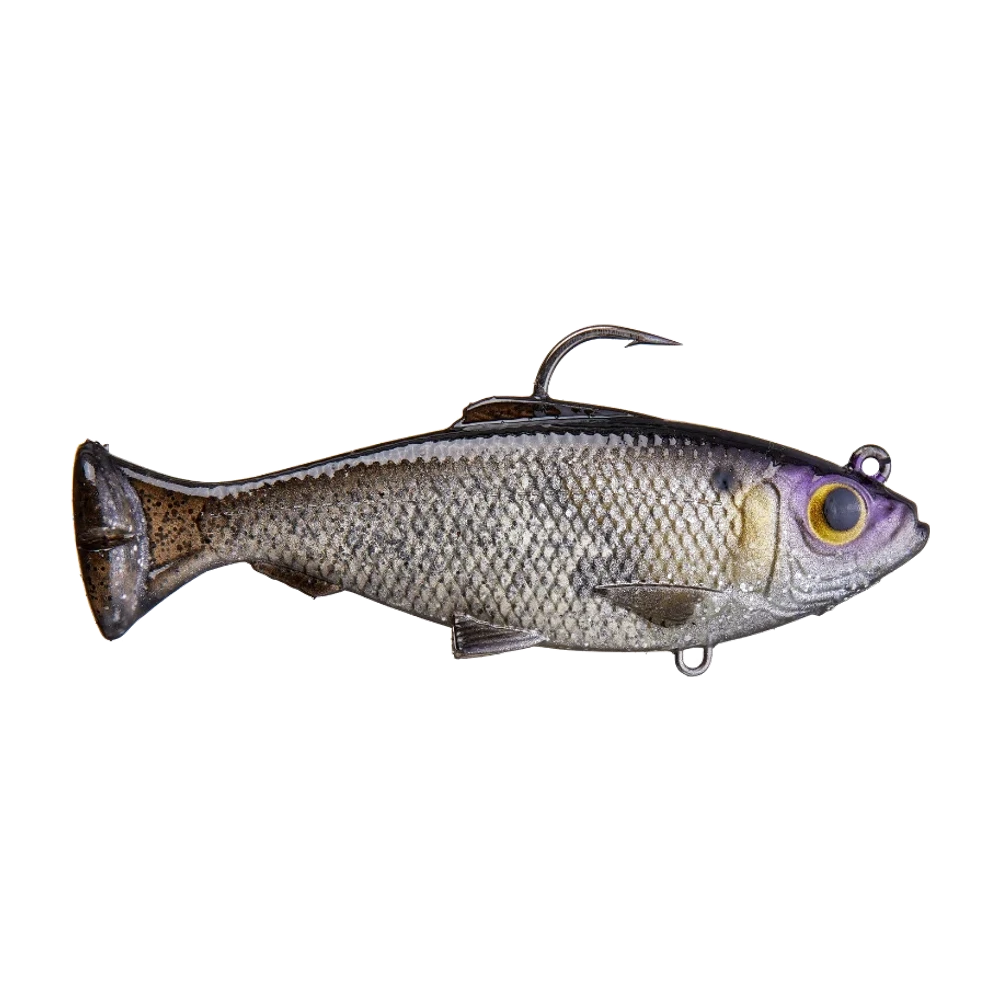
Savage Gear Pulse Tail RTF: a ready-rigged lure, and what that implies
One lure, endless conditions. CarnaFish reads your spot from a photo so you are not just guessing.
Rigging a big soft plastic yourself means three decisions to make before you even cast: what head weight, where to place the main hook, and whether you need a stinger and how long. Each one affects the swim, the attitude and the hook-up rate. Plenty of anglers get one of the three wrong and conclude the lure does not work, when it was the rig that was wrong.
The Pulse Tail RTF removes those decisions. It arrives hooked, weighted and balanced, with trebles positioned where the maker reckons they pin best for that particular body. You take the lure out of the packet, clip it on, and cast.
That convenience has a price, and it is better known in advance: you lose the ability to change the weight in order to change layer, and you depend on the hooks supplied. This page explains how to get the most out of the factory settings, and how to work around its two real limits.
A tail section that beats on its own
The body of the Pulse Tail is built in two zones of softness. The front is dense and barely deformable — it carries the weight and sets the attitude. The rear, much softer, comes alive within the first centimetres of pull.
The point of that separation is concrete: the lure holds a stable path even when its tail is working hard. A one-piece shad ends up spinning out as soon as you speed up, because the beat of the tail throws the whole body off. Here the front section holds the course and the back section makes the signal.
In practice that translates into a usable speed range much wider than a classic shad's: you can slow down to walking pace without losing the action, and speed up decisively without the lure rolling onto its side.
The protocol by target species
The same lure is not fished the same way for pike and for zander. The difference is its relationship with the bottom.
For pike, you fish mid-water.
- Cast and let it sink briefly, two to four seconds depending on the size of the model.
- Slow, continuous straight retrieve, without touching bottom.
- Every ten turns, two fast turns then back to the rhythm. That short burst is the main source of bites.
- Finish every cast with a figure of eight under the rod tip: follows often end there.
For zander, you fish in contact.
- Cast and let it sink until it touches bottom solidly, line tight so you feel it land.
- Two or three turns of the handle to lift the lure clear.
- Full stop, and let it drop back with the line semi-tight. The bite comes almost every time on that drop.
- Repeat all the way in, counting the seconds of each drop to pick up changes in depth.
| Lure size | Priority species | Typical sink time | Rhythm |
|---|---|---|---|
| 10 to 13 cm | Zander, small pike | 3 to 6 s | short steps on the bottom |
| 15 to 18 cm | Pike, big zander | 4 to 8 s | slow and straight, mid-water |
| 20 cm and up | Pike only | 6 to 12 s | very slow, known spots |
On the water: on a ready-rigged lure, do not trust the stated weight to guess the sink rate. A bulky soft body brakes enormously in the water. Actually time the descent on your first cast, then fish to counted times — that is the only reliable reference for staying in the right layer.
The two limits of a ready-rigged lure, and how to fix them
Limit 1: you cannot change layer by changing the weight.
With a shad on a jig head, you go from 10 to 20 g and you sink twice as fast. Here the weight is internal and fixed. The only lever left is how much line you have out and the speed of your retrieve. In concrete terms: to fish deeper without slowing down further, cast shorter and fish below you, so the angle of pull becomes more vertical. To fish higher, cast further.
If you really need to get down, a small sliding bullet weight on the leader, 40 or 50 cm from the lure, does the job without disturbing the beat of the tail section.
Limit 2: the hooks are the factory ones.
The trebles supplied are functional but they blunt, and on a lure of this volume a soft point costs you fish directly. Two habits:
- Run a stone over every point each hour of fishing, and change the treble as soon as it catches your nail without biting.
- If you replace a treble, keep exactly the same weight. A heavier treble makes the lure nose down and destroys the attitude the whole factory rig was built to achieve.
The soft body also tears around the hook attachments after several pike. A drop of superglue on the tear, lure properly dry, extends its life by several sessions.
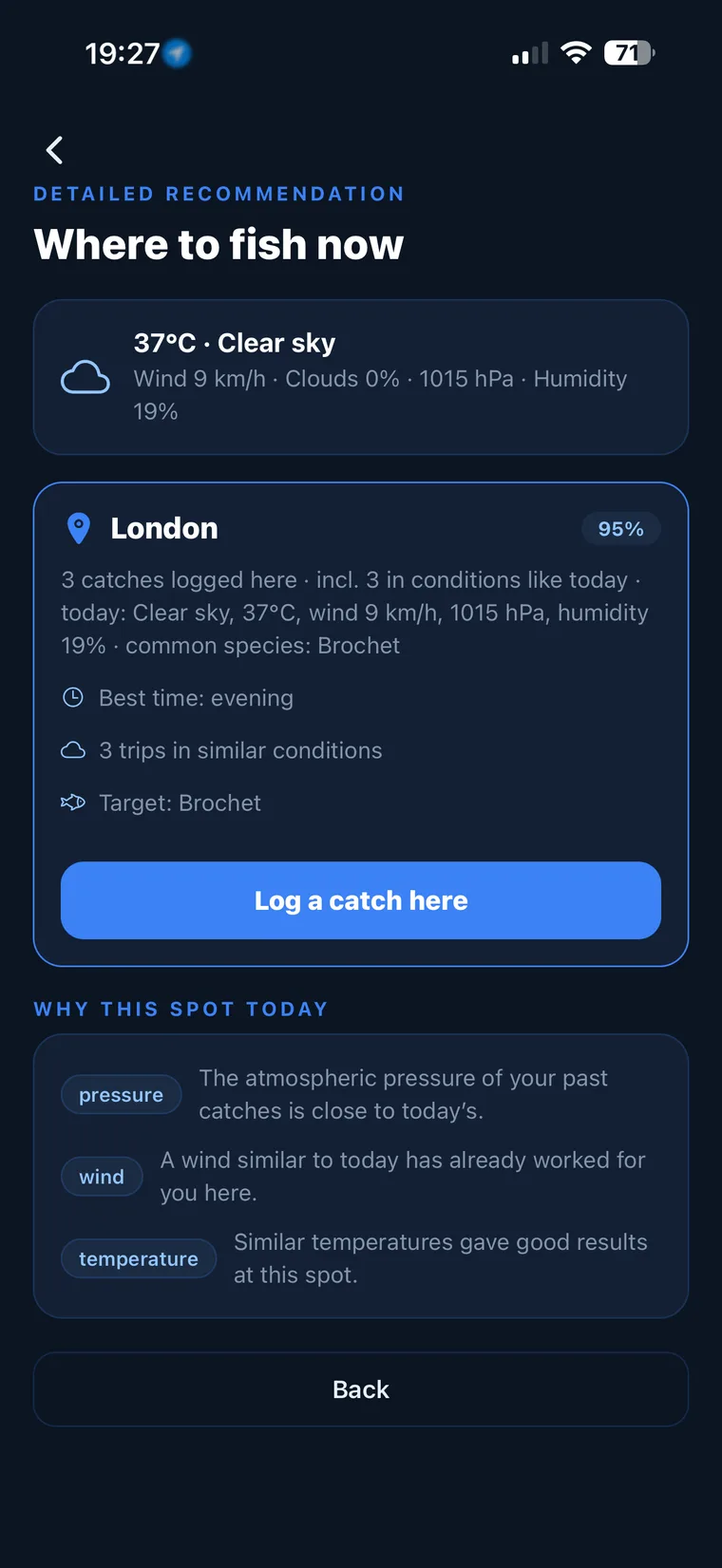
Not sure what to tie on?
Photograph your spot: CarnaFish reads the scene, cross-checks the conditions and gives you the zone, the lure and the retrieve. Free on iOS and Android.
Where it makes sense, and where it does not
It is at its best on big waters and gravel pits, where you are after volume and a stable swim over long retrieves. It also works very well on a slow troll behind a float tube, where its ability to hold a course becomes a real asset.
Rule it out in three situations:
- Rivers with marked current: the bulky body gets pushed aside and rides up, and you lose control of the depth.
- Finesse fishing for difficult zander: on inactive fish in cold water, a small discreet shad on a light jig head will be more convincing.
- Spots with dense dead wood: exposed trebles catch everything. There, a Texas-rigged unarmed shad is the only viable solution.
Pulse Tail RTF or a shad you rig yourself
Against a shad you rig yourself such as the Fox Rage Zander Pro Shad, the maths is simple: the classic shad gives you total control of the head weight and therefore of the sink rate, and costs far less to replace when you snag. In exchange, it demands that you know how to choose a jig head and manage a stinger, two points where plenty of anglers come unstuck.
The Pulse Tail RTF removes that margin for error. If you are starting out on big soft plastics, or if you want a lure you know is correctly set up straight away, it is a solid starting point. If you already know how to adapt your rig to the spot, you will go further with a shad on a plain jig head.
Our guides to choosing a pike lure and to lure fishing for zander as a beginner cover these rigging choices. And if you are torn between ready-rigged and home-rigged when you get to a spot, CarnaFish analyses a photo and answers.
Key takeaways
- Rigid front body, soft tail section: the swim stays stable even at speed.
- Pike mid-water on a slow straight retrieve, zander in contact with the bottom in steps.
- Time the actual descent; the stated weight tells you nothing about the sink rate.
- The weight is fixed: to go deeper, cast shorter or add a bullet weight 50 cm from the lure.
- Keep the original weight if you change a treble, or you will ruin the attitude.
FAQ
Should I add a stinger to the Pulse Tail RTF?
No, the factory hooks are already positioned to cover the back of the lure. Adding another hook weighs down the soft section and disturbs the tail beat, for no gain in hook-ups at all.
How do I make the lure go deeper?
Shorten your cast so you fish more vertically, or add a sliding bullet weight on the leader 40 or 50 cm from the lure. Since the internal weight is fixed, those are the only two real levers.
Is the Pulse Tail RTF suitable for zander?
Yes, in its smaller sizes and fished in contact with the bottom in short steps. In the big sizes, the volume becomes more relevant to pike than to zander.
How many pike does a ready-rigged soft body last?
It depends mostly on tearing around the hook attachments. A drop of superglue on a tear that is starting, lure properly dry, extends its life considerably. A body that is too torn loses its attitude and has to be replaced.
Can it be fished in a river?
In light current, yes. As soon as the flow gets up, the volume of the body makes the lure ride up and you lose control of the depth. A denser, more compact lure will suit better.
What leader should I use?
Wire or 0.50 to 0.80 mm fluorocarbon depending on the size of the lure and the target species, with a strong clip. The weight of the lure in flight quickly tires fine clips, which end up opening on the cast.
The full pike lure guideSeason-by-season strategy: which family of lure, when, and why.Go from theory to fish
CarnaFish reads your spot from a photo and gives you the game plan: zone, lure, retrieve. Free on iOS and Android.