Smith Niakis: the minnow for cluttered streams
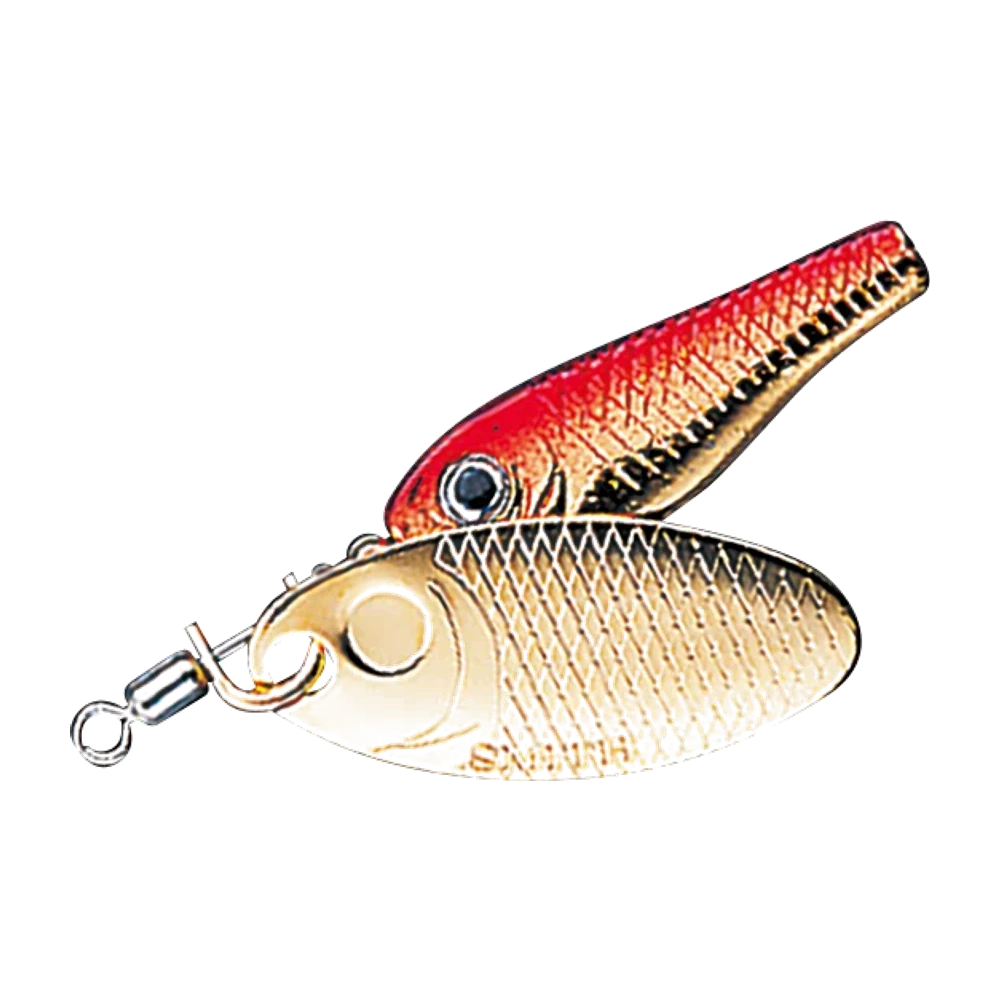
This lure shines under specific conditions. CarnaFish tells you in 10 seconds if today is one of them.
A mountain stream or a wooded plateau brook is three metres wide, with branches a metre above the water and a succession of pools the size of a bathtub. You never have more than six metres of casting room, often less, and the lure has to swim the moment it lands because the pool is two metres long. In that context, all the qualities normally praised in a minnow — distance, wind resistance, casting range — are worth precisely nothing.
What matters is something else: starting instantly, working in 30 cm of water, and landing accurately in a one-metre corridor. The Niakis was cut for that and for nothing else.
Three qualities for a six-metre cast
Instant start-up. A minnow for a wide river is allowed a metre to get into its action. Here that metre is half the pool. The Niakis swims from the first quarter turn of the handle, with a very short body and a responsive lip.
Lively buoyancy. At rest it rises sharply. That is essential when fishing upstream: in a stream, the current brings the lure back faster than your handle does, and a neutral or sinking model plants itself in the stones at every stop. The Niakis lifts off and passes back over.
Small volume. Four to five centimetres, two to four grams. To a wild stream trout living in 40 cm of clear water, a 7 cm lure is a threat, not a meal.
Work upstream, never down
In a small watercourse, the direction you travel is a technical choice, not a preference.
The trout holds facing the current. It is looking upstream. If you walk down the stream, you enter its field of view, you throw your shadow ahead of you and you dirty the water it is about to drink. If you walk up, you arrive from behind: you can get within three metres of a fish that will never see you.
The trade-off is that you are fishing while retrieving faster than the current. The lure has to stay in its action while coming back to you at the speed of the water plus your own. That is why a lure with a sharp start-up and clear buoyancy is essential.
Covering a pool in three casts
- Approach crouched, three or four metres downstream of the pool, staying in the shade of the vegetation.
- First cast: the tail of the pool. Drop the lure in the outflowing current, right on the edge. An active trout will be sitting there. Retrieve fast, two seconds.
- Second cast: the middle, in the main current line. Retrieve at medium speed and add a single twitch as you pass the biggest boulder.
- Third cast: the head of the pool, into the foam where the white water lands. That is the biggest fish's spot. Let the lure rise for half a second after the splashdown, then retrieve.
- Move on to the next pool. Three casts, no more. If nothing comes out, either the spot is empty or you have been seen.
On the water: the cast that catches the most stream trout is the backhand cast, under branches, arm tucked in against your body. People avoid it because it is uncomfortable and inaccurate at first — but the pools sheltered by low vegetation are exactly the ones nobody fishes, so they are the ones still holding fish. Practise for twenty minutes on a meadow: it is the best return on investment in all small-water fishing.
What changes with the season
| Period | State of the stream | Adjustment |
|---|---|---|
| Opening, cold high water | Deep pools, sluggish fish | Slower retrieve, gold colours |
| Spring, water settling | Trout spread across every spot | Three casts per pool, normal rhythm |
| Summer, low very clear water | Fish concentrated in shaded pools | Crawling approach, long casts, natural colours |
| Autumn, first floods | Stained water, hard current | Work the margins, contrasting colours |
In low summer water, stealth overrides everything else. One shadow cast across the pool cancels three quarters of an hour of walking.
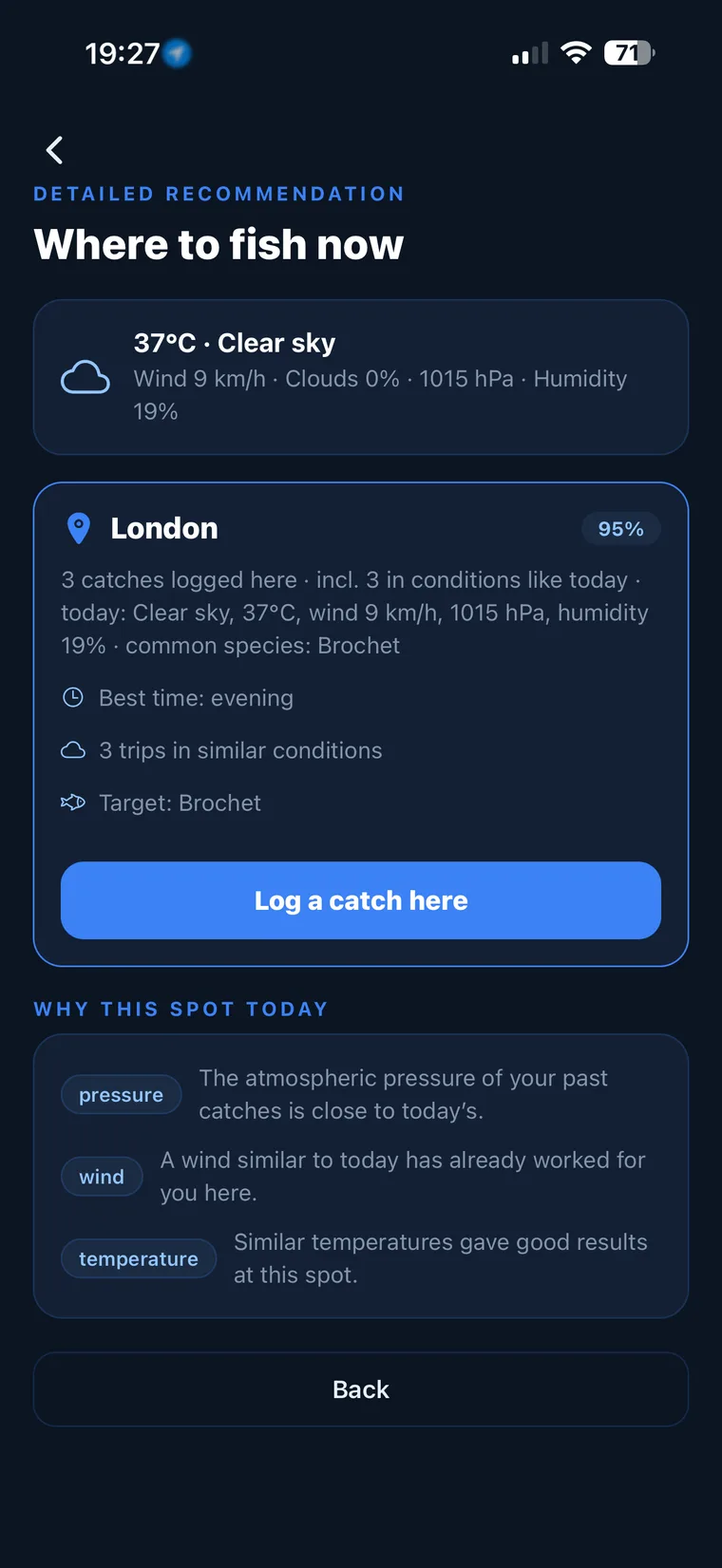
Not sure what to tie on?
Photograph your spot: CarnaFish reads the scene, cross-checks the conditions and gives you the zone, the lure and the retrieve. Free on iOS and Android.
Hooks: singles rather than trebles
On a four-centimetre lure aimed at wild trout that are often released, swapping the two trebles for single hooks of equivalent size changes three things: fewer snags in roots and moss, a much faster unhooking, and clearly less damage to fish of 20 to 25 cm.
The loss in hook-ups is real but small on a stream, because the strikes there are decisive and at close range. Crush the barb while you are at it: on a fish you intend to release, that one action is the difference between a clean release and a damaged fish.
Its limits
- Wide rivers and lakes: two to four grams goes nowhere, and the wind settles the question.
- Deep fishing: it does not go below 60 cm, and it is not built to.
- Big fish in open water: the fine hooks and split rings of an ultralight lure will not hold a 50 cm lake trout through a long fight.
- Heavily coloured water after a flood: its signal is essentially visual, and it loses a lot in water with 20 cm of visibility.
Niakis, Rigge or Aile Magnet: three answers to three problems
The Zipbaits Rigge 56 is longer and slimmer, with a very refined action at slow speed. It shines on a medium-sized river where you can fish slowly and present the lure for a long time. On a stream, its length and its more gradual start-up work against it.
The Duel Aile Magnet answers the exact opposite problem to the Niakis: reaching a bank thirty metres away, punching through a headwind, covering a wide bed. Its weight transfer system is useless — even a nuisance — on six-metre casts.
The Niakis is chasing neither distance nor subtlety of action. It is chasing accuracy at short range in shallow water, and on that ground it is very hard to fault.
If you want to complement it with a lure that searches the same pools differently, a small inline spinner such as the Illex Cherry 44 works on the drop and on deeper spots. Our guide to river trout fishing covers the order in which to attack the spots along a beat. And if you are unsure which pool to fish first when you reach the stream, CarnaFish analyses a photo of the spot and answers.
Key takeaways
- A very short body and a responsive lip: it swims from the first quarter turn of the handle.
- Lively buoyancy is essential to fish upstream without planting the lure in the stones.
- You work up a stream, never down: the trout is looking upstream.
- Three casts per pool — tail, middle, head — then move on.
- Of no interest on a wide river, beyond 60 cm of depth, or in heavily coloured water.
FAQ
Should I work up or down a trout stream?
Up. The trout holds facing the current and looks upstream: moving upstream, you arrive behind it, you do not throw your shadow ahead of it and you do not dirty the water it is watching.
Does the Smith Niakis float?
Yes, with lively buoyancy. That is what lets it lift off at every stop instead of planting itself between the stones when you fish upstream in shallow water.
How many casts per pool?
Three are enough: the tail of the pool, the central current line, and the head under the white water. If nothing reacts, either the spot is empty or you have been spotted, and persisting only burns the zone.
What line for a stream?
Fluorocarbon of 0.14 to 0.18 mm straight through works well, since casts are short and transmission is not an issue. Prioritise stealth and abrasion resistance on the rocks.
Can it be used in a lake for perch?
On a margin you can reach at short range, yes, especially on perch active near the surface. But at two to four grams it becomes unusable as soon as you have to cast far or there is wind.
What lure size for a stream trout?
Four to five centimetres is consistent with the size of the prey present. In 40 cm of clear water, a seven-centimetre lure reads as a threat rather than as prey and sends fish fleeing.
The full trout lure guideSeason-by-season strategy: which family of lure, when, and why.Go from theory to fish
CarnaFish reads your spot from a photo and gives you the game plan: zone, lure, retrieve. Free on iOS and Android.