6th Sense Unit 24: the jointed crankbait that reaches 8 metres
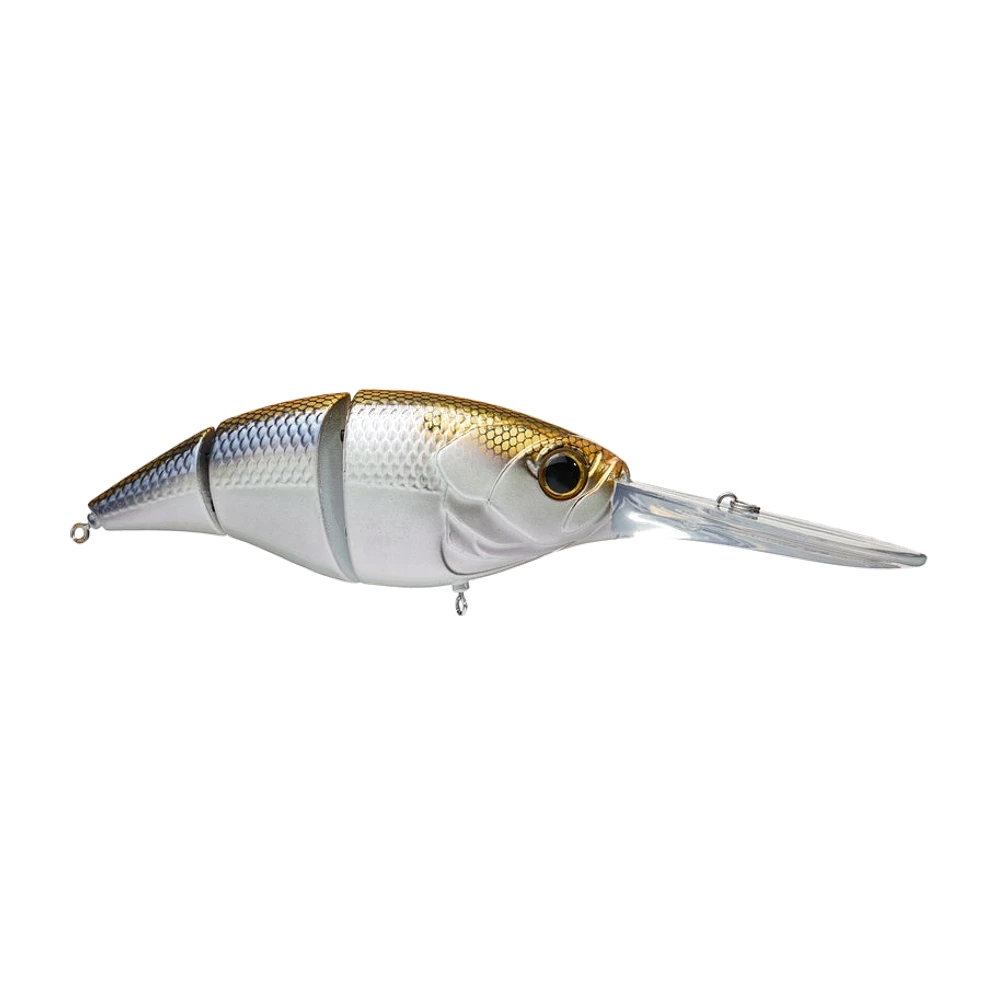
This lure shines under specific conditions. CarnaFish tells you in 10 seconds if today is one of them.
In eight metres of water, on a reservoir break in midsummer, you have two ways to fish: a weighted soft bait worked slowly, near vertical — or dragging something that hits the bottom and provokes a reaction. The Unit 24 is built for the second. It is a 20 cm, 94 g crankbait with a bill running almost a third of its total length, and it has nothing in common with the all-purpose crankbait you throw all day.
A jointed body on a deep diver, which is rare
Deep-diving crankbaits are nearly all one-piece. The reason is simple: at those depths the bait has to hold a stable path despite the enormous pull of the bill, and a joint is one more source of instability. 6th Sense went the other way and segmented the Unit 24's body, which produces a noticeably wider swim than a conventional deep diver, with a visible tail kick on top of the roll.
In practice that changes what the bait tells the fish. A one-piece deep crank sends a tight, regular vibration, readable from a distance but very mechanical. The Unit 24 adds a lateral movement from the rear that breaks that regularity, and that is what separates it from the 6th Sense Cloud 9 Series C6 and the other deep divers in the same catalogue.
On a pass that draws nothing, stop reeling for two seconds right after the bill knocks the bottom. The bait then rises slowly, swinging its tail, and that rise is often when a fish sitting against the break commits. A continuous retrieve at this depth only gives you part of the available bites.
The stated depth and what to do with it
6th Sense quotes a running range of 22 to 26 ft, that is 6.7 to 7.9 m. Two things qualify that figure. First, those depths assume a long cast: the first three or four metres of the retrieve only serve to take the bait down, and a short cast halves the useful zone. Second, leader diameter changes the result appreciably — heavy fluorocarbon drags more than a thinner leader and costs you half a metre.
In practice that means the Unit 24 is only worth using on spots whose depth you already know. Thrown blind along a three-metre bank, it ploughs the bottom without ever working properly. On a seven-metre break, a flat with sunken timber or a river hole, it is one of the few baits that genuinely reaches the zone without resorting to a weighted rig.
The tackle is not optional
A 94 g bait with a bill this size generates continuous pull that a medium rod will not take. You want a heavy casting rod, preferably with a parabolic action to absorb the shock of the cast and cushion the head-shakes of a fish hooked at eight metres, and a low-ratio reel around 5.4:1 so you can wind without wrecking your wrist. It is the same principle as on the big American deep divers built for dam ledges: the bait tires the angler long before the fish.
Clip it to a snap on the line tie set in the bill, as you can see in the product photo. A tight knot straight onto that tie restricts the attack angle and cuts the depth the bait reaches.
Where to use it, and what it does not do
The spots the manufacturer has in mind are ledges, brush piles and offshore structure — in other words what you fish from a boat or a float tube, rarely from the bank. In Europe this presentation applies just as well to zander on big reservoirs as to bass: a zander sitting on a seven-metre hump reacts very well to a bait that knocks the substrate and then pauses.
What the Unit 24 does not do: cover water fast, fish shallow, or come through vegetation. For the first three metres and cluttered margins a 6th Sense Crush Squarebill 100X is the right tool, and a 6th Sense PD10 Pressure Series covers the intermediate depths in a far more castable size.
In the official photo the bait is shown without its trebles: only the two hook hangers, belly and tail, are visible. The manufacturer states tournament-grade trebles as standard, without specifying the size on its spec sheet.
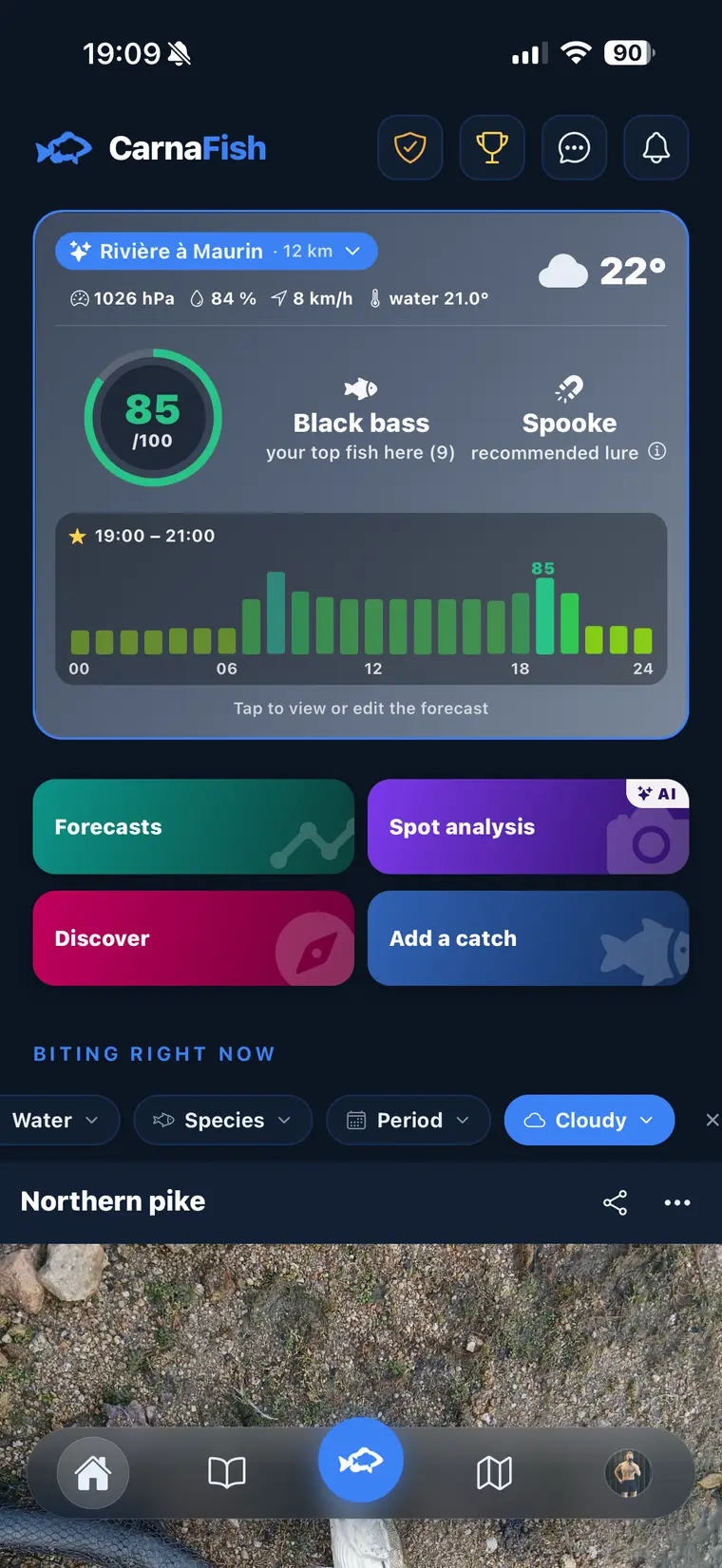
Not sure what to tie on?
Photograph your spot: CarnaFish reads the scene, cross-checks the conditions and gives you the zone, the lure and the retrieve. Free on iOS and Android.
Colours by clarity and depth
- Clear, deep water: a Gizzard Shad type finish, gold back and silver flanks as in the photo, which plays on reflection in light that is already weak at 7 m.
- Break in stained water: Chartreuse Shad, where the bright belly and flank compensate for the loss of light.
- Moderately clear water: Sexy Shad, the compromise that works when you are not sure what to expect on new water.
A bait that only works in one narrow slice of water assumes you know where that slice is. That is exactly what CarnaFish does: one photo of the spot, and the AI suggests the zone, the depth and the lure type suited to the moment, which saves you an hour fishing eight metres down over a three-metre spot. To learn to spot these breaks and flats by eye, our guide to reading a fishing spot covers the clues visible from the bank and from the boat.
What to remember
- A jointed deep diver, which is unusual: the segmented body adds a tail kick to the usual crankbait vibration.
- Stated depth 6.7 to 7.9 m, provided you cast long and do not use an overly thick leader.
- 20 cm and 94 g: heavy casting rod, low-ratio reel, snap on the bill tie. This is not a bait you throw a thousand times a day.
- Useless shallow and in vegetation: it is a tool for breaks and offshore structure.
FAQ
How deep does the Unit 24 actually run?
6th Sense quotes 22 to 26 ft, that is 6.7 to 7.9 m. That range assumes a long cast, because the first few metres of the retrieve only serve to take the bait down, and it shrinks if you use a thick leader.
How much does this crankbait weigh?
3.3 oz, roughly 94 g, for 20 cm of length. That weight calls for a heavy casting rod: a usual medium rod handles neither the cast nor the continuous pull of the bill.
What retrieve speed should I use?
A medium, constant speed with no snaps, fast enough for the bait to reach its depth and hold its swim. The addition that changes everything is a two-second pause right after contact with the bottom or a branch.
Does the Unit 24 suit zander?
In Europe, yes, on big reservoirs and river holes where zander sit on humps and breaks at six to eight metres. Bottom contact followed by a short pause is exactly what triggers them.
Why a jointed body on a deep crankbait?
Because it adds a lateral tail movement to the tight vibration of a conventional deep diver. It is a less mechanical signal, which stands out when fish watch the same one-piece crankbaits go by all season.
Can it be fished from the bank?
Possible but rarely relevant. You need seven to eight metres of depth within casting range, which is rare from a bank. This bait is designed for a boat or float-tube approach on structure located with sonar.
The full bass lure guideSeason-by-season strategy: which family of lure, when, and why.Go from theory to fish
CarnaFish reads your spot from a photo and gives you the game plan: zone, lure, retrieve. Free on iOS and Android.