Strike King 3XD: the crankbait for the depth band everyone skips
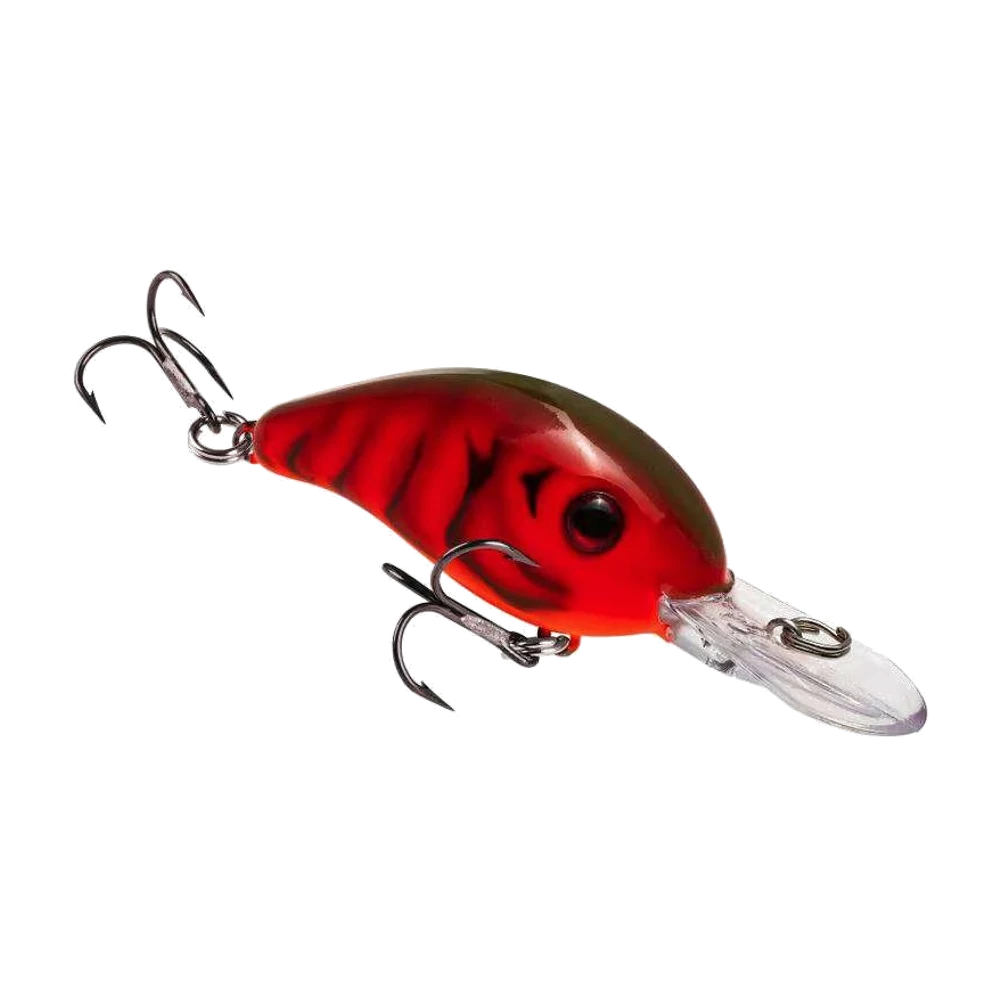
Not sure this lure fits YOUR spot today? CarnaFish tells you in 10 seconds, from a photo.
There is a band of water most anglers pass through without ever really fishing it: between two and two and a half metres. Too deep for a squarebill that tops out at a metre, too shallow for a diving crankbait that runs to four.
The result is that on many waters this layer sees far less pressure than the rest. The 3XD is built exactly for it.
Why that band matters
Two to two and a half metres is the depth of a lot of productive structure: the foot of a sloping bank, the first drop-offs, gravel-pit flats, the top of deep weed beds.
It is also the zone fish pull back to as soon as pressure builds along the margins — after a boat goes through, in full sun, or simply because three anglers have already walked the bank that morning.
A lure that grinds precisely through that band reaches fish that have not seen much yet that day.
Choose on the bottom, not on the fish
As across the whole XD range, the model is picked purely on the depth you want to grind.
| Model | Depth | Suitable bottom |
|---|---|---|
| Squarebill 1.5 | 0.6 to 1.2 m | Margins, stumps, under 1.5 m |
| 3XD | 2 to 2.5 m | Foot of the bank, first drop-off |
| 5XD | 3.5 to 4.5 m | Flats, medium drop-offs |
| 6XD | 5 to 5.5 m | Holes, deep drop-offs |
| 10XD | 7 m and beyond | Real depth |
The rule stays the same: the crankbait has to touch. A 3XD over 5 m of water swims in mid-water and does nothing. Over 2 m it grinds constantly and works.
On the water: in this band, the best trajectory is not parallel to the bank but at an angle. Cast towards the bank from open water and retrieve down the slope: the lure follows the gradient and stays in contact for the whole retrieve, instead of touching over only part of it.
The retrieve: straight, with incidents
- Cast long — the crankbait reaches its depth halfway through its run, and a short cast never gives it the time.
- Rod tip pointed at the water through the whole retrieve.
- Steady medium retrieve, with no rod work at all.
- When you feel contact, change nothing. Let the lure deflect and right itself.
- Optional: pause for a second just after a solid knock. The lure rises slightly — a lot of takes come right there.
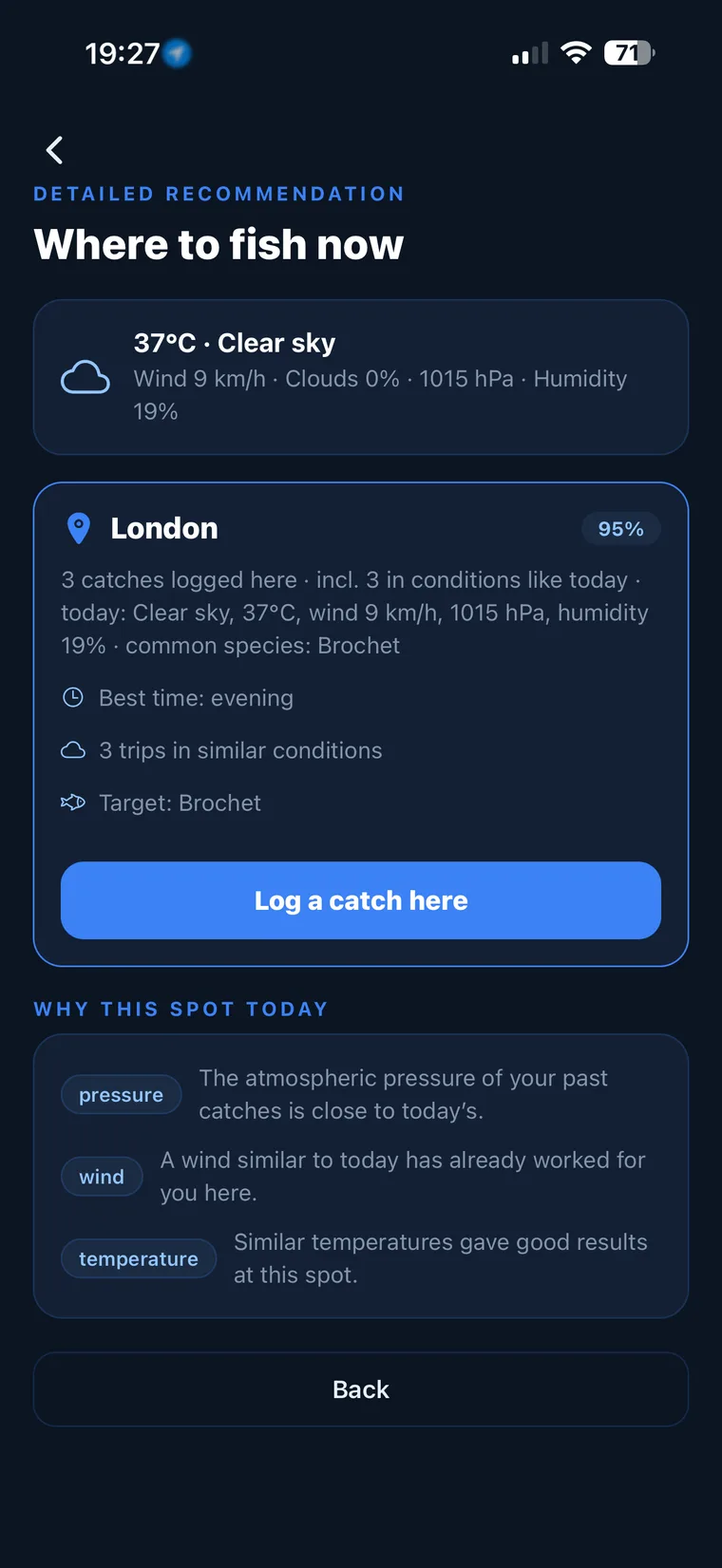
Not sure what to tie on?
Photograph your spot: CarnaFish reads the scene, cross-checks the conditions and gives you the zone, the lure and the retrieve. Free on iOS and Android.
Tackle, the same as the rest of the range
- A parabolic rod, 2.10 m minimum, slow action. A fast rod tears the trebles out of the mouth of a fish that attacks on the move.
- A low-ratio reel, 5.4:1 or less, so you do not retrieve too fast.
- Fluorocarbon 0.25 to 0.30 mm — it sinks, helps the dive, resists abrasion.
No braid straight through: there is no cushioning at all on a lure carrying two trebles, so you shed fish one after another.
3XD or squarebill
The squarebill is built to bang into stumps and rock in under a metre and a half, with a square lip that bounces the lure off obstacles. It is the lure of the cluttered margin.
The 3XD runs one band lower, with a round lip that deflects instead of bouncing. It gets through wood less well but covers a zone the squarebill never reaches.
In practice the two follow each other along the same stretch: squarebill over the first couple of metres of bank, 3XD as soon as the bottom drops away.
Our beginner's guide to bass fishing covers how to read drop-offs. And if you are unsure what depth to target on a spot, CarnaFish analyses a photo and gives you a lead.
Key takeaways
- It covers the 2 to 2.5 m band, structurally under-fished on most waters.
- Pick the model on the depth of the bottom, never on the size of the fish.
- Cast at an angle from open water to follow the slope and stay in contact.
- Correct nothing after a knock: let the lure deflect on its own, that is what triggers.
- Parabolic rod essential, never braid straight through.
FAQ
How deep does the 3XD run?
Between 2 and 2.5 m, provided you cast long and use thin fluorocarbon in 0.25 to 0.30 mm. A short cast or thick line easily costs it 50 cm.
Why is this band of water interesting?
Because it is lightly fished: too deep for a squarebill, too shallow for a deep-diving crankbait. It is also the zone fish pull back to as soon as pressure builds along the margins.
How do I choose between 3XD, 5XD and 6XD?
Purely on the depth of bottom you want to grind: 2 to 2.5 m for the 3XD, 3.5 to 4.5 m for the 5XD, 5 to 5.5 m for the 6XD. A crankbait that never touches catches almost nothing.
What casting angle works best?
At an angle from open water towards the bank, retrieving down the slope. The lure then follows the gradient and stays in contact throughout, unlike a parallel cast that only touches intermittently.
Should I work the crankbait with the rod?
No. A steady retrieve is enough, rod tip pointed at the water. After a solid knock against an obstacle you can pause for a second: the lure rises slightly and a lot of attacks happen at that moment.
What is the difference with a squarebill?
The squarebill has a square lip that bounces the lure off obstacles in under 1.5 m: it is the lure of the cluttered margin. The 3XD runs deeper with a round lip that deflects, and covers a band the squarebill never reaches.
The full bass lure guideSeason-by-season strategy: which family of lure, when, and why.Go from theory to fish
CarnaFish reads your spot from a photo and gives you the game plan: zone, lure, retrieve. Free on iOS and Android.