Westin Swim Lipless: the glidebait whose path you write yourself
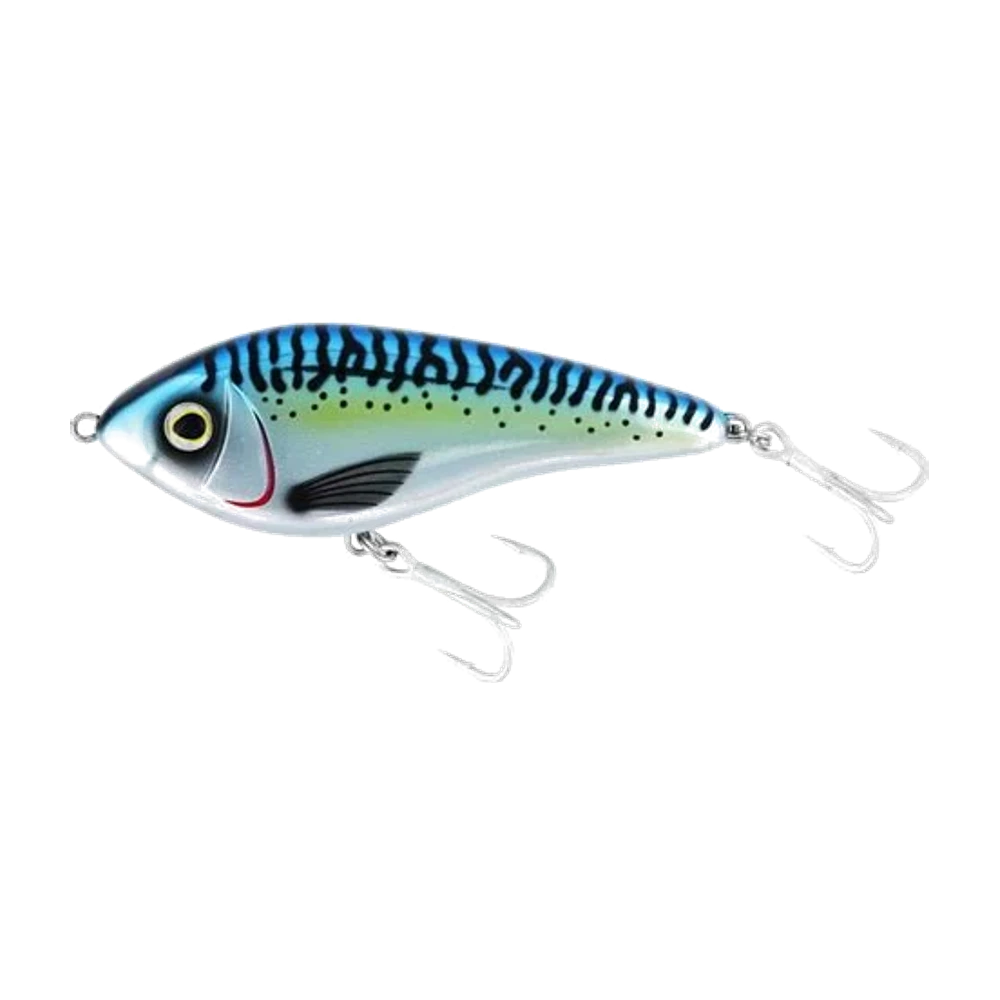
The right lure in the wrong spot still catches nothing. CarnaFish spots the zone that works, from a single photo.
A jointed lure with a lip is comfortable: you cast, you turn the handle, it undulates by itself, and it always undulates the same way. Which is precisely the problem when you're coming back over the same weed bed for the fourth time with a pike that has already followed twice without opening its mouth. The lure only knows one thing, and that thing has been refused.
Take the lip off and everything changes. With no flat surface at the front to catch the flow, nothing forces the lure to undulate any more: your wrist becomes the lip. The Swim Lipless doesn't offer an action, it offers a corridor of possibilities — from a wide, lazy glide to a sharp skid on the spot — and it's up to you to choose, cast after cast, the one the fish hasn't seen yet.
First thing to check before you fish: the density of your version. Depending on size and series, these lures are either slow floating or slow sinking. Their behaviour on the pause has nothing in common, and the whole retrieve follows from it.
What the lip used to do, and what you now do instead
On a jointed lure with a lip, water flow hits the blade, is deflected, and the rear section follows by pivoting. Frequency and amplitude are dictated by retrieve speed. You have one dial, and only one.
With no lip, all the energy comes from the impulse you give through the line. The front body kicks sideways through inertia, the rear segments follow with a delay, and the lure traces an S whose amplitude depends on three things:
- How hard you flick. A short sharp snap gives a narrow, lively skid. A soft, long pull gives a wide, slow S.
- How much slack is in the line at the moment of the impulse. Tight line, the lure pivots little and moves forward. Slightly slack line, it kicks right across before straightening up.
- How long you leave between flicks. That's what decides whether the lure links one S into the next or stops broadside, flank exposed.
That last point is the model's real asset for pike: the broadside stop. A lipped lure straightens up when you stop reeling. A glidebait stops at an angle, showing its whole flank to the follower. It's on that still, offered image that most of the pike that have tracked the lure for ten metres make up their minds.
The retrieve: three rhythms worth knowing
- The steady S. One wrist flick every two turns of the handle, moderate amplitude, constant rhythm. This is your searching rhythm, the one you open an unknown spot with.
- The wide glide. Long rod pulls, semi-tight line, a second of pause between each. The lure sweeps twice as wide and covers a corridor two to three metres across. Bring it out in clear water on a visible fish.
- The stop and turn. Two sharp flicks close together, then a complete stop of three seconds. The lure turns broadside and stays there — if it floats, it rises slowly while turning; if it sinks, it drops flat. This is the trigger on a follower.
A fourth situation to keep in mind: when a pike is visible behind the lure five metres from the bank, do not give it one more turn of the handle. Go straight to the stop and turn, then, if nothing happens, run into a wide figure-of-eight with the rod.
On the water: attach the nose ring with a wide round snap, never a direct knot or a narrow spring clip. On a lipless lure, all the rotation of the front body passes through that pivot point. A tight knot on the ring restricts the pivot and turns the glide into a plain back-and-forth — it's the number one cause of disappointment with this kind of lure.
Matching the size to the situation
| Context | Size | Version to favour | Rhythm |
|---|---|---|---|
| Cluttered margin, under 1.5 m | 10 cm | Slow floating | Steady S, short flicks |
| Medium weed, 1.5-3 m | 12 cm | Either | Wide glide with pauses |
| Big lake, big fish targeted | 15 cm | Slow sinking | Stop and turn, 3-5 s pauses |
| Cold water, late autumn | 12-15 cm | Slow sinking | Long pulls, extended pauses |
The gear matters as much as the lure. Too stiff a rod passes on a brutal flick and the lure goes anywhere; too soft a rod imprints nothing. Aim for an outfit whose tip bends over the first twenty centimetres, with braid that has no stretch so the impulse arrives intact.
Where it excels, and where you shouldn't use it
It takes the lead on educated fish in clear water, where the lure has to offer something different on each pass; on chronic followers, thanks to the broadside stop; and over mid-depth weed, where a lip would snag.
It's unsuited in three cases. In very coloured water: it produces almost no vibration, its whole signal is visual and the fish has to see the lure. Searching a large area fast: every cast demands active work and you cover very little ground per hour. In a strong headwind: the deep, lipless profile catches the wind on the cast and you lose both distance and control of the slack.
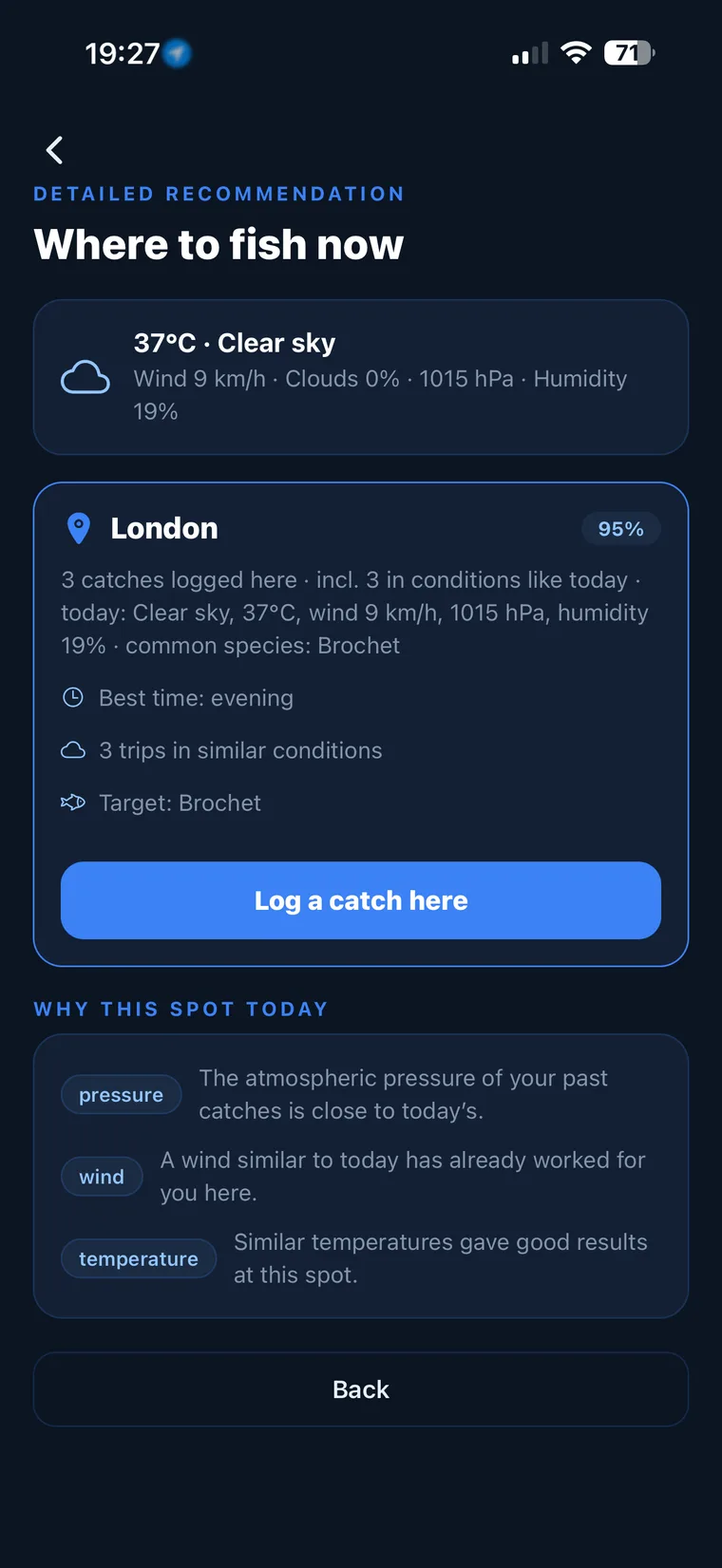
Not sure what to tie on?
Photograph your spot: CarnaFish reads the scene, cross-checks the conditions and gives you the zone, the lure and the retrieve. Free on iOS and Android.
Colours
- Clear water: a perch or roach finish with a pale belly. The fish sees the profile silhouette throughout the glide, so the detail counts more than on a fast lure.
- Stained water: solid white or an all-black back. Maximum contrast, since there's no vibration to compensate.
- Low cloud and dark water: a full, dark silhouette — seen from below it stands out better than a bright colour.
Swim Lipless, Swim Glidebait or Platypus
This is the question that matters, because all three come from the same brand and look alike on the shelf.
The Westin Swim Glidebait is the family's benchmark for a wide, slow S fished high in the water column. It gives you a generous glide for very little effort, and it's the easiest of the three to get working properly from the first casts.
The Westin Platypus plays a completely different game: a bulkier body, far more volume, very pronounced amplitude. It's a calling lure, one to bring out on big water when you want to make a big fish react from a distance, and it demands power both to cast and to work.
The Swim Lipless sits between the two, and its reason to exist is control. It doesn't offer the widest glide or the strongest signal: it offers the widest range of rhythms available from a single lure, from a nervous skid to a lazy glide, with a clean broadside stop. If you fish the same spot a lot and have to vary every pass, this is the one. If you're searching new ground, take the Glidebait or the Platypus.
Our guide to choosing a pike lure places these three approaches within a typical day. And if you're torn between a calling lure and a finishing lure on a given spot, CarnaFish reads a photo of it and answers.
Key takeaways
- With no lip, the amplitude of the S depends on your wrist, the slack in the line and the time between flicks.
- The broadside stop, flank exposed, is the real trigger on a following pike.
- Check whether your version is slow floating or slow sinking: everything you do on the pause depends on it.
- A wide round snap is mandatory; a direct knot on the ring kills the glide.
- Avoid it in coloured water, for fast searching, and in a strong headwind.
FAQ
What's the difference between the Swim Lipless and the lipped Swim?
The lip imposes a self-generated, regular action as soon as you turn the handle. With no lip, the lure only does what you ask of it: you gain a range of rhythms and the broadside stop, you lose the ease of a straight retrieve.
How do you make a lipless glidebait glide?
Give short wrist flicks while leaving a little slack in the line, rather than a continuous retrieve. The amplitude of the S is set by how hard you flick and by how long you leave between flicks.
Do you need a snap on this lure?
Yes, a wide round one. The front body has to pivot freely on its attachment point; a tight knot or a narrow snap restricts that rotation and kills the glide.
Does this lure float or sink?
Depending on size and series, both exist. A slow floating version rises while turning on the pause, a slow sinking one drops flat. Check before you set your pause times.
What rod for a jointed glidebait?
An outfit whose tip bends over the first twenty centimetres with reserve in the butt, paired with braid that has no stretch. Too stiff a rod makes the flicks brutal and knocks the lure off line.
Does it work in coloured water?
Badly. It generates almost no vibration and its signal is essentially visual. In murky water, a lure with a strong pressure wave or a spinnerbait will be far more effective.
The full pike lure guideSeason-by-season strategy: which family of lure, when, and why.Go from theory to fish
CarnaFish reads your spot from a photo and gives you the game plan: zone, lure, retrieve. Free on iOS and Android.