Westin Platypus: the multi-jointed swimbait for wary pike
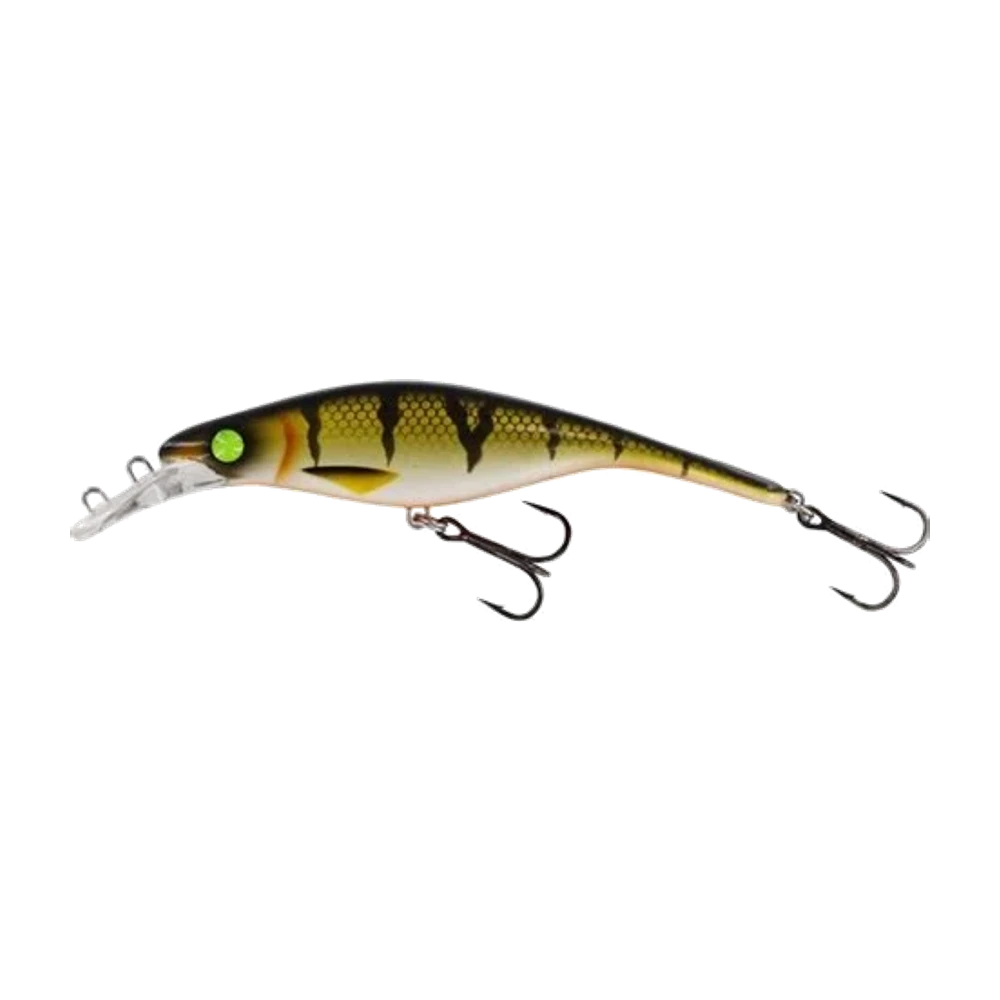
This lure shines under specific conditions. CarnaFish tells you in 10 seconds if today is one of them.
Fishing big pike on swimbaits has a reputation for failure: a lot of casts, few bites, and above all a lot of fish that follow to the bank and turn away. The problem is rarely the size of the lure. It's the movement.
A two-section swimbait produces a jerky swim: every joint creates a sharp break. A pike that follows for ten metres has time to analyse that break and work out that something is wrong. The Platypus attacks that problem by multiplying the segments.
Why more segments changes everything
With four to six jointed sections, the movement spreads out: instead of one pronounced kink in the middle of the body, you get a wave travelling through the lure from head to tail.
The result is a continuous S-swim with no hard point, very close to that of a real fish. Three practical consequences:
- The lure swims from the minimum speed. You can retrieve very slowly without the action dying, which is decisive in cold water.
- It stays credible through a long chase. That's exactly the moment when rigid swimbaits get refused.
- It needs no rod work at all. A straight retrieve, nothing else. The movement is built into the lure.
The retrieve: do nothing
This is the hardest thing to accept for an angler used to working a lure.
- Cast and let the lure reach its depth — a few seconds depending on the version.
- Retrieve at a constant, slow speed. Around one turn of the handle per second.
- Don't work the rod. No twitches, no pulls.
- Finish with a figure-of-eight: when the lure comes within a few metres, trace a slow eight with the rod tip under water without lifting the lure out.
On the water: with a big swimbait, one pike in three attacks in the last five metres. If you lift your lure out as soon as you can see it, you lose those fish. The figure-of-eight at the end of the retrieve isn't a gimmick — it's where the biggest fish are won.
The useful variations are few but effective: a clear slowdown for two seconds, or a brief acceleration, is enough to trigger an undecided follower.
The gear is a real constraint
A lure weighing 45 to 200 g doesn't cast on a standard pike outfit.
- A swimbait rod, 2.10-2.40 m, rated 100-200 g depending on the model you're using. An underpowered rod either breaks or never loads.
- A heavy-duty casting reel, size 300 minimum, with a drag that can absorb a violent strike at close range.
- 0.40-0.60 mm braid, no less. Not for the fish's sake but to take the repeated casting load.
- Titanium or 0.70 mm fluorocarbon leader. Non-negotiable for pike with a lure this size.
This is physical fishing. Two hours of casting a 150 g lure takes genuine preparation.
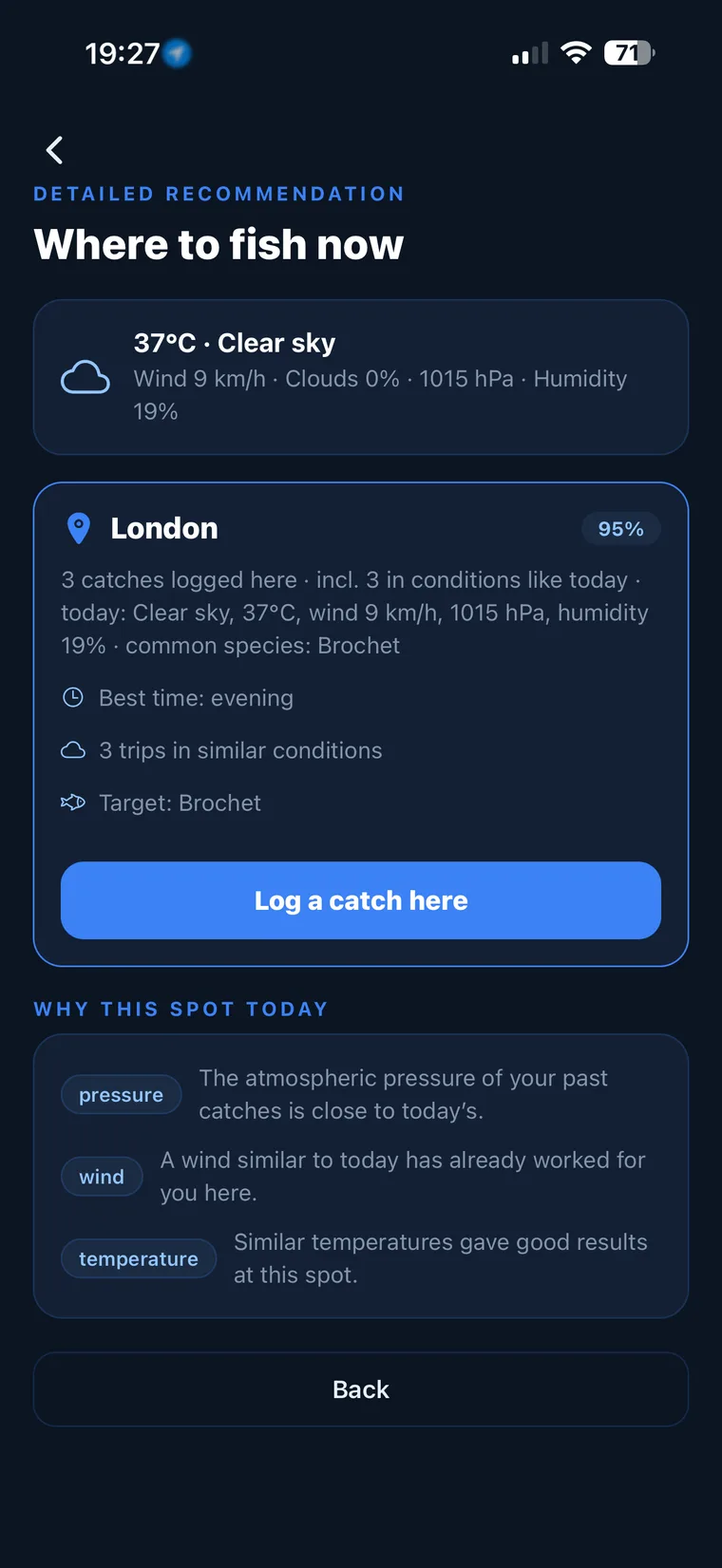
Not sure what to tie on?
Photograph your spot: CarnaFish reads the scene, cross-checks the conditions and gives you the zone, the lure and the retrieve. Free on iOS and Android.
Where and when
The Platypus is a lure for finding a big fish, not for numbers.
- Big lakes and gravel pits with a population of sizeable pike, mainly in autumn.
- Clear water, where the realism of the swim earns its keep.
- Fish you've already located that have refused smaller lures: a radical change of scale often works.
- Deep weed edges and drop-offs, retrieved parallel to the structure.
It's unsuited to small waters, cluttered spots, and any situation where you want numbers rather than size.
Platypus or a classic glidebait
A two-section glidebait like the Swim Glidebait produces a pronounced side-to-side zigzag that needs active rod work and triggers through the aggression of the movement. The Platypus does the opposite: it reassures through realism and converts over the length of the chase.
The two complement each other within a single session. Start with the glidebait to provoke and locate, switch to the Platypus for the fish that followed without biting.
Our guide to choosing a pike lure places swimbaits among the other families. And if you're wondering whether a spot justifies a lure this big, CarnaFish reads a photo and answers.
Key takeaways
- Four to six segments: a continuous wave instead of a kink, credible through a long chase.
- Slow straight retrieve, no rod work at all.
- The figure-of-eight at the end of the retrieve converts a large share of followers.
- A dedicated swimbait rod and a titanium leader are mandatory.
- A big-fish lure for clear water, not for searching or for numbers.
FAQ
Do you need to work the Platypus?
No. A slow, constant straight retrieve is all it takes: the S-movement is produced by the joints. Adding twitches breaks the wave and removes the realism that makes the lure worth fishing.
Why do a figure-of-eight at the end of the retrieve?
Because a significant share of pike attack in the last few metres, after following the lure. Tracing a slow eight with the rod tip under water keeps the lure moving and converts those followers instead of letting them turn away.
What gear do you need?
A 2.10-2.40 m swimbait rod matched to the weight of the model, a casting reel of size 300 minimum, 0.40-0.60 mm braid and a titanium or 0.70 mm fluorocarbon leader. A standard pike outfit won't do.
What size should you choose?
The 16-20 cm models cover most situations in Europe. The bigger sizes make sense on large lakes with a population of very big fish and clear water.
When should you tie it on instead of something smaller?
In autumn on big waters, in clear conditions, and above all on fish that have already refused conventional lures. A radical change of scale often unlocks educated pike.
How does it differ from a two-section glidebait?
The glidebait zigzags hard and needs active rod work: it provokes. The Platypus swims a continuous S and reassures: it converts over the length of the chase. The two complement each other.
The full pike lure guideSeason-by-season strategy: which family of lure, when, and why.Go from theory to fish
CarnaFish reads your spot from a photo and gives you the game plan: zone, lure, retrieve. Free on iOS and Android.