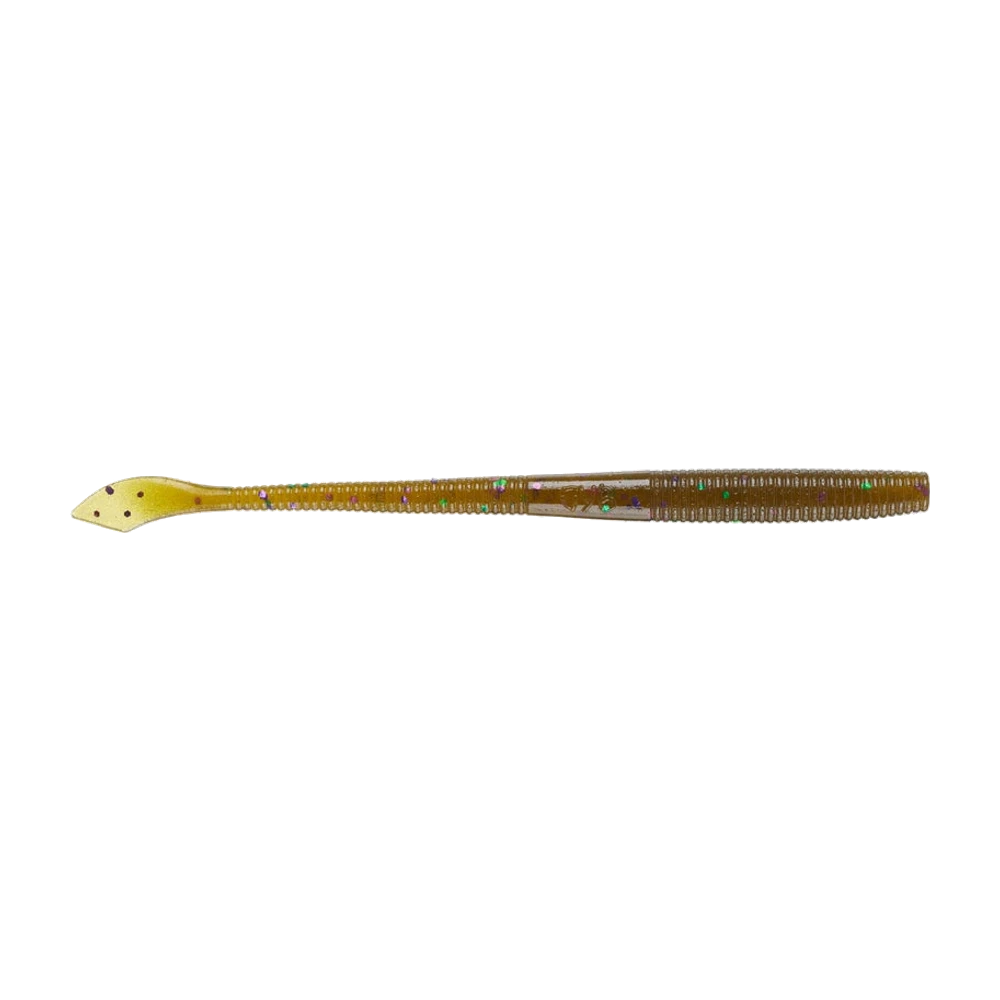
Yamamoto Kut Tail Worm: the finesse worm for bass that have seen it all
This lure shines under specific conditions. CarnaFish tells you in 10 seconds if today is one of them.
A heavily fished lake always ends up producing the same symptoms: bass follow standard baits without eating them, a Senko that worked perfectly a month ago suddenly does nothing, and switching colours changes nothing. The problem usually isn't the bait itself, but its size and profile, grown too familiar. The Kut Tail Worm was built for exactly this moment: going smaller and more subtle without giving up on effectiveness.
A cut that changes the whole vibration
Unlike a stick bait with a rounded tail, the Kut Tail is sliced flat at the back, as the name suggests. That flat cut creates different drag through the water: instead of a continuous, even shimmy, the body vibrates in sharper, more spaced-out pulses — more like a discontinuous signal than a steady wave. That subtle but very real difference in vibration is often enough to renew interest from a fish that's already seen dozens of standard worms go by.
Three finesse rigs, from simple to technical
Ned rig
The most forgiving rig to start finessing with. A light 2-5 g round jighead, the Kut Tail nose-hooked about a third of the way down. Almost static retrieve: small rod-tip lifts followed by dead time where the bait sits on bottom, standing upright thanks to its salt-impregnated density. Ideal in summer over hard bottom (gravel, sand) when fish are inactive.
A rule worth its weight in gold on ned rig: the most effective movement is often no movement at all. Let the bait sit on bottom a good ten seconds before lifting it again.
Shaky head
A 3-7 g jighead with a sturdier hook pushed through the body. The shake technique — trembling the rod tip without moving the bait forward — makes the Kut Tail vibrate in place, a deadly presentation sitting near vertical structure (a dock, a stump) rather than for covering water.
Drop shot
Hook tied 20-40 cm above a weight, the Kut Tail nose-hooked to hang horizontally in the water column. The rig stays still while the line transmits the slightest twitch — perfect for holding a bait exactly at the depth where fish show up on the sonar.
The mistake that defeats the whole point of finesse
Working it too aggressively, the way you'd handle a bulkier bait. The whole logic behind these three rigs relies on subtlety and slowness: the smaller the movement, the more credible the presentation stays to a wary fish.

Not sure what to tie on?
Photograph your spot: CarnaFish reads the scene, cross-checks the conditions and gives you the zone, the lure and the retrieve. Free on iOS and Android.
Colour by fishing pressure
- Clear water, normal pressure: Green Pumpkin, always the most versatile shade.
- Heavily fished water: Motor Oil, a subtle colour, less associated with the best-selling commercial baits.
- Dark water: Black/Blue, a high-contrast silhouette that stays detectable even at finesse sizes.
Kut Tail or Senko: which one to pick?
The Senko remains the better option for a dramatic vertical fall near an identified piece of structure. The Kut Tail Worm takes over when that presentation stops working, or for horizontal ned-rig coverage across large stretches of hard bottom. Both worms share the same salt-impregnated plastic formula, but their different profiles make them complementary tools rather than competitors.
Downsizing to finesse never replaces reading the bottom and the areas where fish actually hold. CarnaFish helps with that step: a photo of the spot, and the app identifies a zone and a presentation suited to the day's conditions. For tackle basics and typical spots, our beginner's guide to bass fishing remains a useful reference.
Key takeaways
- Flat-cut tail that produces a different vibration than a classic stick bait.
- Three complementary rigs: ned rig to cover water, shaky head for a precise target, drop shot for exact depth control.
- Less action, more results: finesse fishing relies on slowness.
- Motor Oil as a backup colour on heavily pressured water.
FAQ
What jighead weight for a ned rig with the Kut Tail Worm?
Between 2 and 5 g depending on depth and wind. Lighter for a slow, subtle fall in shallow water, heavier to keep bottom contact in deeper water or strong wind.
Does the Kut Tail Worm replace the Senko?
Not entirely. The Senko excels at a dramatic vertical fall near specific structure, while the Kut Tail is built for more horizontal, more subtle coverage, especially on a ned rig.
Why does this worm work better on pressured water?
Its flat-cut tail produces a different vibration than the classic worms fish have already seen hundreds of times, which can renew interest even when the usual baits stop working.
What hook for a shaky head with this worm?
A sturdy hook, matched to the jighead weight used (3-7 g), pushed straight through the body so the bait stands upright once it settles on bottom.
Does drop shot work with the Kut Tail Worm?
Very well, nose-hooked so it hangs horizontally above the weight. It's a precise presentation for holding a bait exactly at the depth where fish are marked on the sonar.
Does this worm need a lot of rod action?
No, that's actually the mistake to avoid. The whole logic of finesse fishing relies on minimal movement and long pauses, far more effective than an aggressive retrieve.
The full bass lure guideSeason-by-season strategy: which family of lure, when, and why.Go from theory to fish
CarnaFish reads your spot from a photo and gives you the game plan: zone, lure, retrieve. Free on iOS and Android.