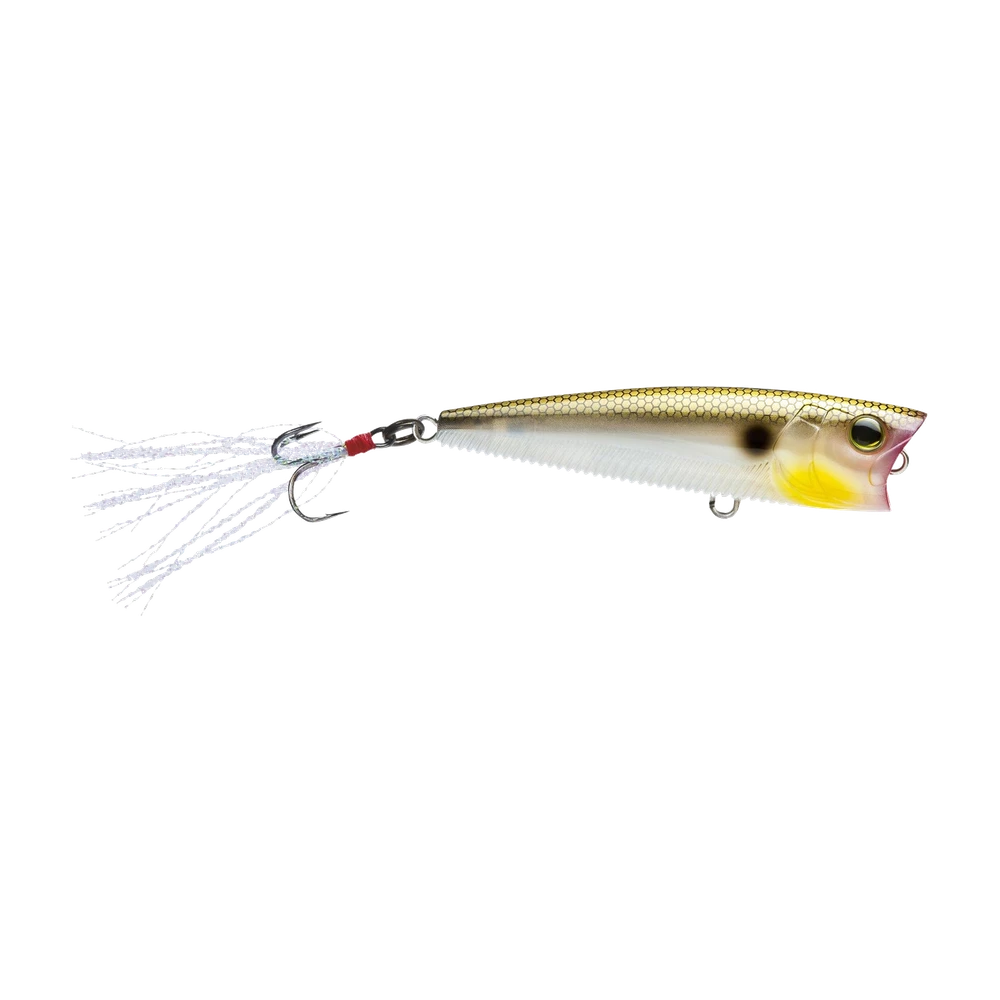
Yo-Zuri 3DB Popper: one popper, sea bass on the coast and bass on the lake
Before tying this one on, it helps to know if the spot actually calls for it. CarnaFish reads the scene from a photo.
Few lures cross over as easily from a largemouth bass lake to a rocky sea bass point as the 3DB Popper. The body stays the same, so does the swim — what changes are the fine details: retrieve rhythm, casting distance and, above all, how you look after the lure once it's tasted salt water.
One popper, two techniques, one swim
The 3DB Popper's flat bottom and cupped nose allow two techniques from the same lure: walking the dog, where sharp rod-tip snaps send it gliding side to side, and pop and stop, where each snap spits water before a firm pause. On a largemouth lake, walking the dog usually carries the session; at sea targeting bass, pop and stop tends to be what triggers strikes, the water spray reading more convincingly as a baitfish in a panic.
Adjusting for largemouth bass on the lake
Lake bass respond well to a deliberate, almost hesitant presentation:
- Target spots: weed edges, docks, submerged timber — cast tight to the structure and let the popper sit dead still for several seconds before the first twitch.
- Rhythm: slow walking the dog with long pauses, especially early morning while the water is still calm.
- A common mistake: moving the lure too soon after the cast. Let the rings settle before the first rod snap — a bass that tracked the splash on landing is often holding right underneath, waiting.
Adjusting for sea bass in saltwater
Sea bass need more energy and noise to be found in water that's rarely as calm:
- Target spots: rocky points, breakwaters, gutter edges — cast parallel to the structure to maximise time spent in the ambush zone.
- Rhythm: sharper pop and stop, with one-second pauses, especially at dawn and dusk when bass are actively feeding.
- The internal rattle earns double at sea: in a chop or slightly stained water, noise carries further than sight and becomes the factor that pulls a strike from distance.
Field rule: in calm freshwater, lean on silence and the pause; at sea in a chop, lean on noise and rhythm. Same lure, two opposite philosophies.
Casting distance and wind: where the 3DB Popper earns its keep
The internal weight-transfer system, built for long casts, makes a real difference at sea against the wind, where an extra ten metres of range can be the difference between reaching a frenzy and not. On the lake this advantage matters less, since largemouth spots are usually fished at short to medium range, but it's still handy for covering a big lake or casting downwind.
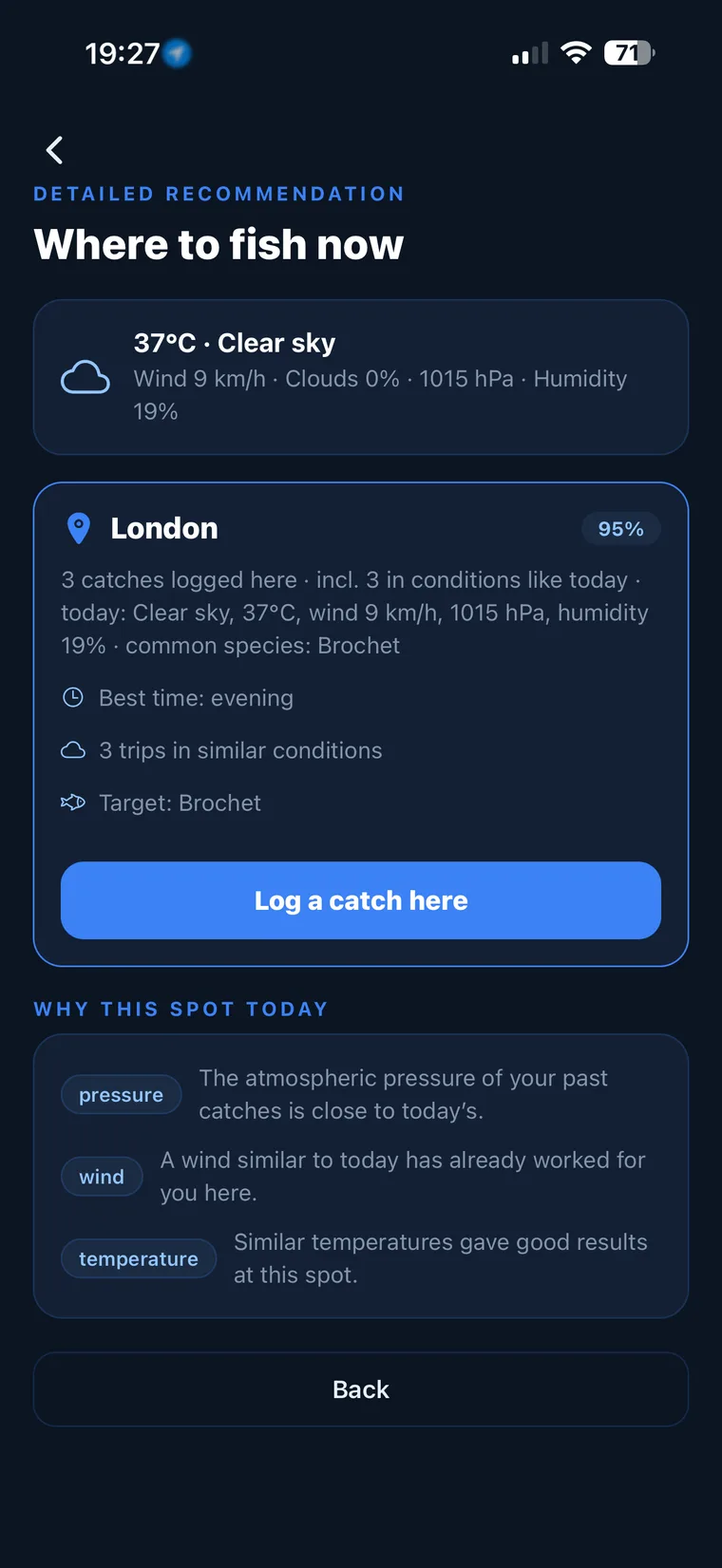
Not sure what to tie on?
Photograph your spot: CarnaFish reads the scene, cross-checks the conditions and gives you the zone, the lure and the retrieve. Free on iOS and Android.
Rigging: one detail that matters a lot after a saltwater trip
Rigging stays simple either way — straight onto fluorocarbon, no weight or spreader, so the roll of the lure isn't restricted. The real difference is maintenance: the stock treble hooks, fine for freshwater, rust quickly at sea if the lure isn't rinsed in fresh water after every trip. Anyone splitting time between the two should keep a spare set of corrosion-treated hooks for saltwater sessions.
Colour by environment
- Lake, clear water: Gizzard Shad, a natural tone that matches freshwater baitfish well.
- Sea, normal daylight: Bone or Chrome, tones that catch surface light well.
- Backlight or night fishing, either environment: Black, whose dark silhouette shows up clearly against any bright background.
Sea bass answer to a factor lake largemouth never have to deal with: the tide. Our guide to fishing sea bass on lures breaks down which current windows to prioritise when fishing a popper at sea. And to avoid picking the wrong window on a coastal mark you don't know yet, CarnaFish cross-references tide, weather and time of day and tells you when it's worth trying, backed by a photo of the spot.
Key takeaways
- Same lure, two techniques: deliberate walking the dog for largemouth, sharper pop and stop for sea bass.
- The internal rattle matters more at sea, where noise carries beyond what fish can see.
- Weight transfer gives a real distance advantage against coastal wind.
- Rinse and replace hooks after saltwater trips to avoid corrosion.
FAQ
Is the 3DB Popper genuinely good for both sea bass and largemouth bass?
Yes, the body and swim stay identical — only the retrieve rhythm changes with species and environment. That makes it a solid pick for anyone who fishes both.
Should I replace the hooks after using it at sea?
Strongly recommended if you're heading back to freshwater afterward: stock hooks aren't always treated against salt corrosion and can lose their edge after a few unrinsed saltwater trips.
What retrieve rhythm should I start with on this popper?
Start with a slow walking the dog and long pauses, regardless of environment. It's the most universal presentation, to speed up afterward based on how the fish react.
Does the 3DB Popper cast far?
Yes, the internal weight-transfer system supports an accurate, long cast, a clear advantage at sea against the wind, where extra distance reaches fish out of range of a standard popper.
What colour should I pick in backlit conditions?
Black is the most reliable choice in either environment: its dark silhouette shows up sharply against a bright sky or water surface, which a pale tone can't match.
Can you fish for sea bass at night with this popper?
Yes, especially under harbour or jetty lighting. Switch to a dark colour and slow the rhythm slightly, since bass tend to feed more deliberately once it's dark.
The full sea bass lure guideSeason-by-season strategy: which family of lure, when, and why.Go from theory to fish
CarnaFish reads your spot from a photo and gives you the game plan: zone, lure, retrieve. Free on iOS and Android.