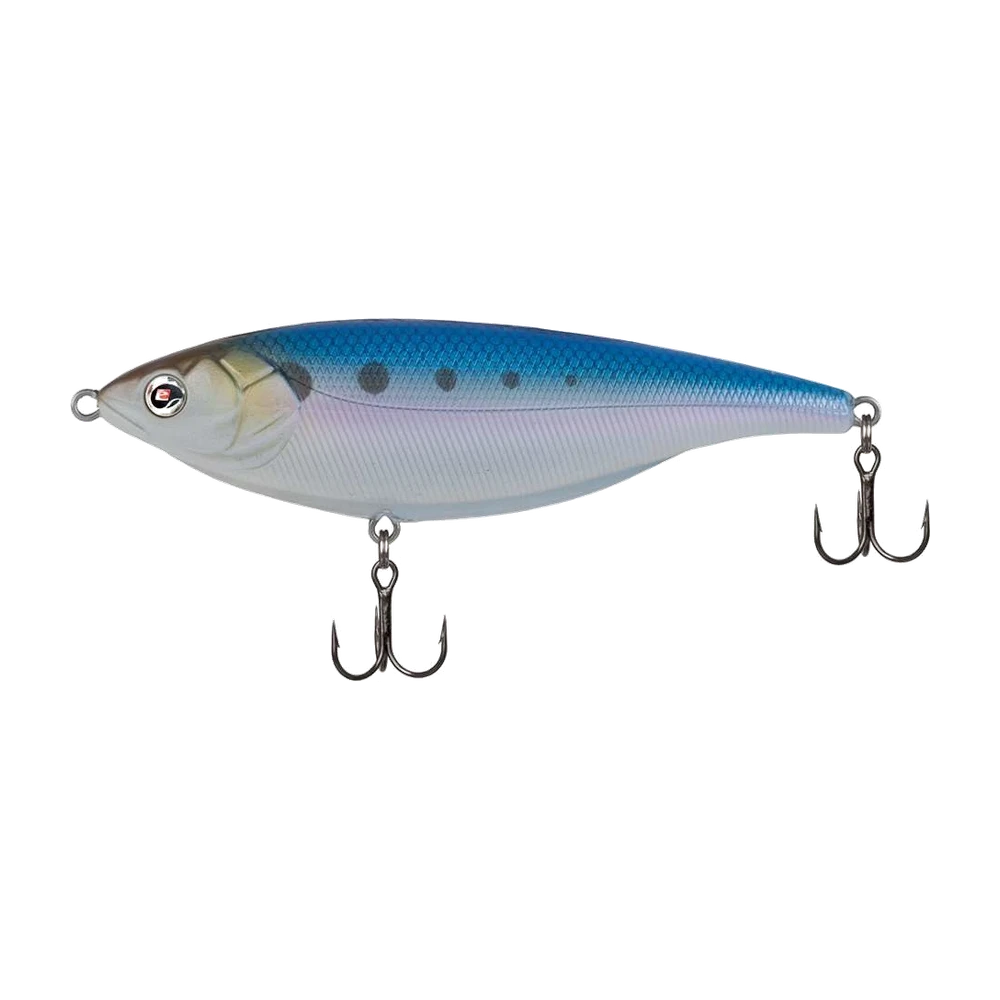
Sebile Stick Shadd: three ways to fish it, from the lake to the coast
The right lure in the wrong spot still catches nothing. CarnaFish spots the zone that works, from a single photo.
Three techniques, one lure, and no need to choose: the Sebile Stick Shadd was built to glide between two layers of water with a roll that doesn't resemble any other topwater-adjacent stickbait. Here's how to get the most out of it, whether you're fishing a largemouth lake or a rocky sea bass point.
Three uses, three situations
- The slow glide in open water, for a holding largemouth — a short sweep followed by a two-to-three-second pause during which the lure stays almost in place while still rolling slightly on its axis. Ideal for a bass that's been following without committing.
- The fast sweep-and-pause, for actively feeding sea bass — a string of short, sharp sweeps with almost no pause, mimicking a panicked baitfish. Effective at sea when bass are hunting at or just below the surface.
- The static drop along structure — cast tight to a dock, rock, or drop-off, let it sink a few seconds, then start a very slow glide. This patient approach works as well on a wary largemouth as it does on a bass holding near bottom.
Field rule: if a fish is following without striking, always slow down before switching lures. The Stick Shadd is specifically built to hold a very slow pace without losing its roll.
Understanding the swim before working it
The Stick Shadd is neither a true jerkbait nor a true popper: its elongated shape and slightly asymmetric swim plane give it a pronounced side-to-side glide, almost an underwater version of walking the dog. That motion, produced by short rod sweeps followed by taking up slack, works as well in open water as it does drifting just under the surface, making it a solid pick when neither a standard jerkbait nor a topwater popper quite matches the fish's mood.
From lake to sea: what actually changes
The body and the retrieve stay the same across both settings, but two details deserve real attention at sea:
- The stock split rings, sized perfectly for largemouth bass, can prove slightly undersized against a solid sea bass in structure-heavy water — a check after any hard strike avoids an unpleasant surprise.
- Corrosion sets in faster than in freshwater: a systematic fresh-water rinse after every saltwater trip, hooks included, noticeably extends the lure's life.
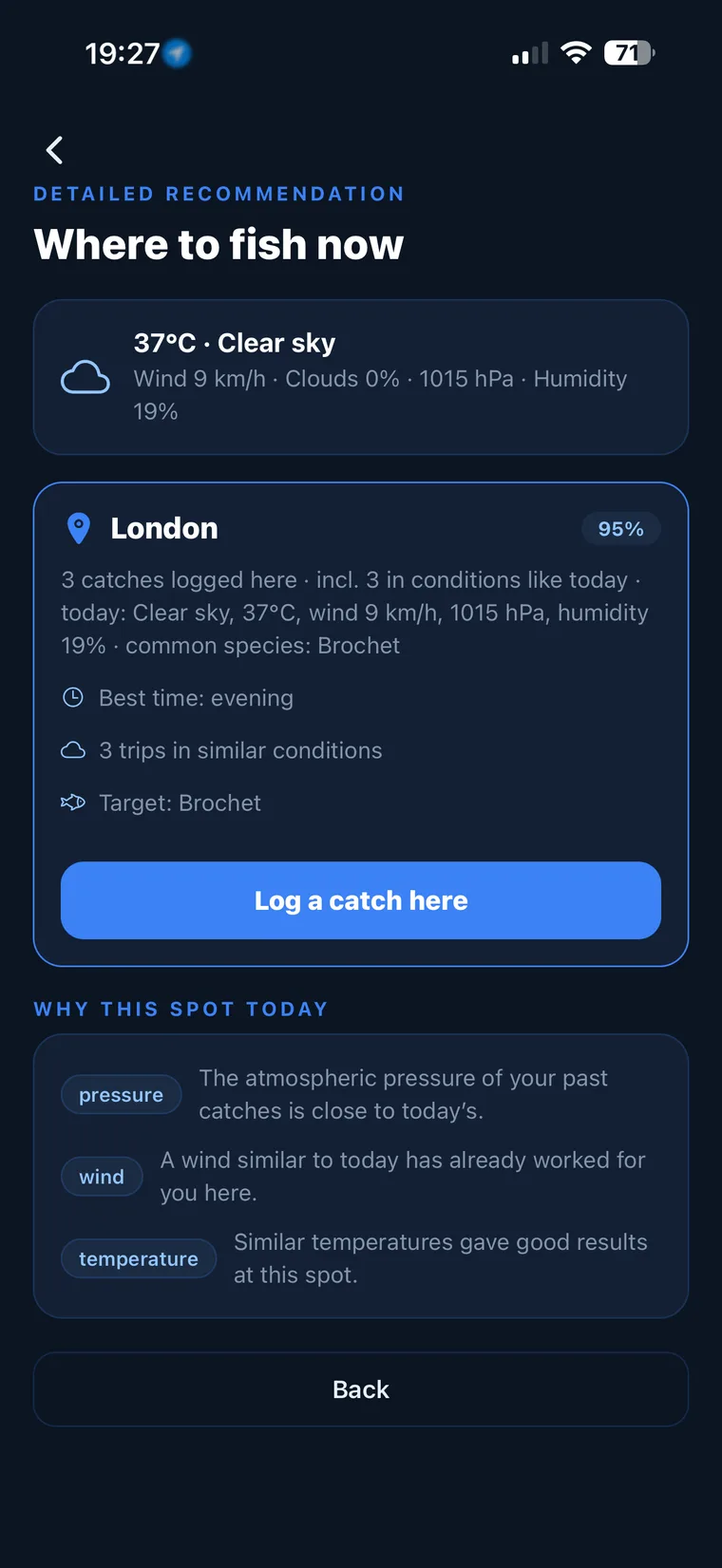
Not sure what to tie on?
Photograph your spot: CarnaFish reads the scene, cross-checks the conditions and gives you the zone, the lure and the retrieve. Free on iOS and Android.
Controlling depth without swapping lures
The Stick Shadd has no lip to fix its running depth — retrieve speed and number of sweeps together determine which layer of water it fishes. A slow retrieve with long pauses keeps it near the surface, while a string of fast sweeps before each pause pulls it down more decisively — useful for reaching a sea bass holding a bit deeper in the water column without switching to a heavier lure.
Colour by environment and water clarity
- Lake, clear water: Ghost Minnow, a natural tone that matches freshwater baitfish well.
- Stained water, either environment: Chartreuse, for contrast that carries better when visibility drops.
- Open-water sea bass, normal daylight: Chrome/Black, a combination that catches light while keeping a sharp silhouette in backlight.
Sea bass answer to a factor lake largemouth never face: the tide, which dictates the windows when fish actually feed. Our guide to fishing sea bass on lures breaks down those windows and the shore marks worth prioritising. If you're new to a coastal spot, CarnaFish cross-references the tide and current conditions from a photo to tell you where and when to try the Stick Shadd instead of guessing.
Key takeaways
- Three retrieves for three situations: slow glide for a holding fish, fast sweep-and-pause on active feeders, static drop along structure.
- Retrieve speed and sweep count control depth — there's no lip to do it for you.
- Check split rings and rinse the lure after every saltwater trip.
- Slow down before switching lures if a fish is following without striking.
FAQ
Is the Stick Shadd a jerkbait or a stickbait?
It's a true stickbait, though its pronounced side-to-side glide shares some traits with a jerkbait. The main difference is the lack of a lip — depth is controlled purely through the retrieve.
How do I control running depth without a lip?
By adjusting retrieve speed and the number of sweeps before each pause: the faster and more frequent the sweeps, the deeper the lure runs in the water column.
Do I need a different rig for the lake versus the sea?
The rig stays the same — straight onto fluorocarbon, no weight — but check the split rings after a hard saltwater strike, where a solid sea bass can stress them more than a largemouth would.
What retrieve should I try first on a wary sea bass?
The static drop along structure: cast tight to the rock or drop-off, let it sink a few seconds, then start a very slow glide. It's the most patient approach and often the most productive on a cautious fish.
Does the Stick Shadd rust quickly at sea?
Faster than in freshwater if it isn't rinsed after every trip. A systematic fresh-water rinse, hooks and rings included, significantly reduces that risk.
What colour should I use if the water is murky after a blow?
Chartreuse, regardless of environment: in stained water, contrast carries further than colour realism.
The full bass lure guideSeason-by-season strategy: which family of lure, when, and why.Go from theory to fish
CarnaFish reads your spot from a photo and gives you the game plan: zone, lure, retrieve. Free on iOS and Android.