Z-Man TRD Bugz: the creature bait that stands up on the bottom
Before tying this one on, it helps to know if the spot actually calls for it. CarnaFish reads the scene from a photo.
A rocky bottom, clear water, bass that have watched five boats go by since morning: the 4-inch craw becomes a deterrent, and the bare Ned rig has stopped triggering anything either. Between the two, something is often missing: a creature bait small enough to slip under the radar, but talkative enough to be noticed from half a metre away. That's exactly the slot Z-Man's TRD Bugz aims at, and its distinguishing feature comes down to one word: it stands up.
A creature bait stripped back to essentials
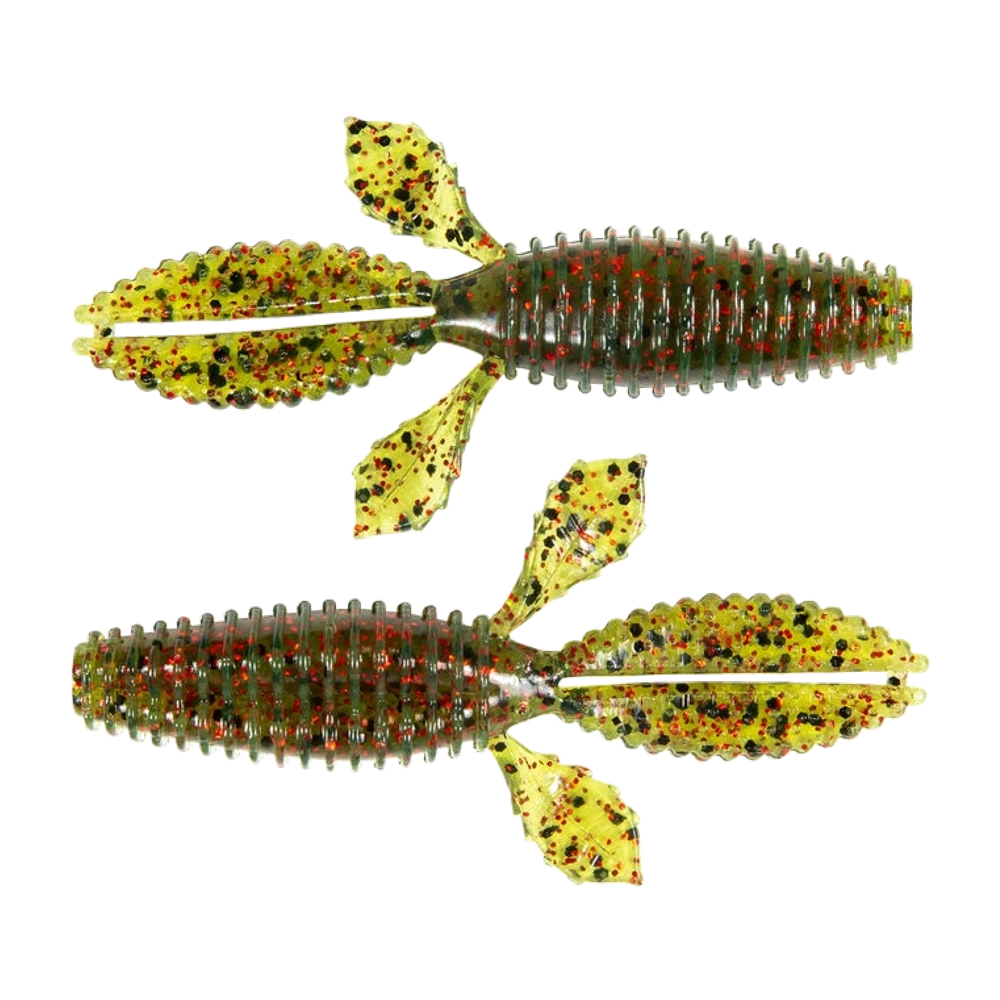
A classic creature bait is a central body and a forest of appendages meant to imitate everything and nothing at once. The TRD Bugz keeps the principle but shrinks it. On the bait in the photo, the body is heavily ribbed along its entire length — a tight succession of rings that multiplies the surface in contact with the water — and it carries four appendages: two long flat ribbed arms pointing forward, and two shorter paddles set underneath.
That geometry explains the manufacturer's argument: the lure displaces a lot of water for its size. The rings produce micro-turbulence with every movement, the flat arms flap at the slightest motion of the line, and the whole thing builds a signal the lateral line picks up well beyond the fish's field of vision, without ever having the bulk of a power-fishing craw.
Z-Man also advertises a soft glide on the fall. That's a direct consequence of the flat appendages: on the way down they work like little wings and push the path away from vertical. The lure doesn't drop straight, it slides — and it's during that slide that a lot of bites come.
The defensive posture, the central argument
The real subject is elsewhere. The copy advertises a buoyant plastic that lets the bait stand up at rest, claws raised, in the defensive posture of a cornered crawfish. On a mushroom head, that changes everything: instead of a piece of plastic lying limp in the silt, you have an upright silhouette that stays readable through the fifteen seconds when you move nothing at all.
That's precisely what anglers chasing educated fish are after. A motionless bait that's standing up still exists for the fish; a motionless bait lying flat disappears. On heavily fished water, that difference is often worth more than any colour.
Buoyancy versus salt: a claim to check for yourself
There is, however, a tension in the copy worth flagging. On the same page Z-Man advertises a buoyant plastic that stands the bait up, and a heavy dose of salt infused so the fish holds on after the bite. But salt makes a soft plastic heavier: that's exactly why it's used in stickbaits you want to sink. The two claims pull in opposite directions.
That doesn't mean one of them is false — a very light elastomer can stay buoyant despite a moderate salt load, and the manufacturer is the only one who knows the dosage. But don't build your fishing on the promise. Run the bucket test before you leave: a TRD Bugz set in ten centimetres of water should rise on its own. If it stays down, you'll know the standing-up effect will depend entirely on the head you use, and you'll adapt.
The bucket test takes thirty seconds and is worth doing on every soft plastic advertised as buoyant. Do it with the body alone, then with the body on the head you intend to use: it's the second measurement that decides your fishing, not the first.
Four rigs, one tempo
Z-Man designed the TRD Bugz for its Finesse ShroomZ mushroom heads, and that is indeed the most direct rig: the body threaded on from the front, arms free, hook point exiting on top. A Z-Man ShroomZ Micro Finesse Jig adds a skirt to that rig and turns the Bugz into a trailer, which slows the fall further still.
The shaky head changes the logic: the more elongated head makes the body vibrate under the slightest pull on the spot, without moving the lure. That's the rig for working one precise rock for a full minute.
On a drop shot, nose-hook the Bugz or hook it wacky through the middle of the body, and let the weight do the work on the bottom. The flat arms quiver under line tension alone, and the lure stays at the exact depth of the fish you've marked on the sonar.
Finally, as a trailer on a small finesse jig, it brings volume and appendages without adding length — the opposite of a big-clawed trailer that chokes the skirt.
The classic mistake
Working it too much. The TRD Bugz is not a search lure: its appendages work on micro-movements, not on long pulls. Reel it in a sawtooth like a Texas-rigged craw and you lose the glide on the fall and the posture at rest, which are the only two things it does better than anything else. A fifteen-centimetre pull, then nothing for five to ten seconds.
Where and when
The situations where it takes over are always the same: hard bottom, clear to lightly stained water, fish seen on the sonar or located but inactive. In spring on spawning spots, in high summer when the bass hold on the breaks, and in autumn on rocky flats. For perch it's an excellent riprap and bridge-pillar bait, provided you drop the head weight further still.
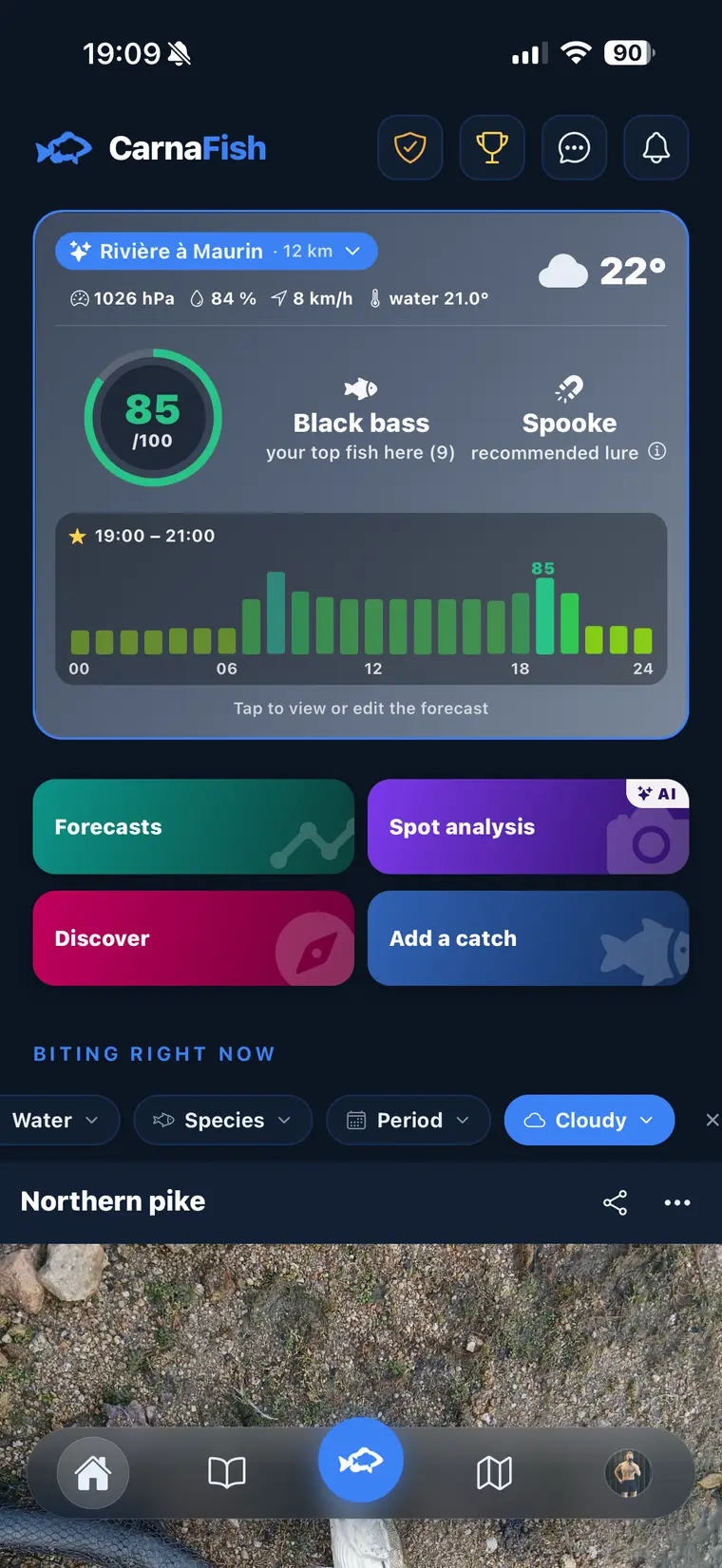
Not sure what to tie on?
Photograph your spot: CarnaFish reads the scene, cross-checks the conditions and gives you the zone, the lure and the retrieve. Free on iOS and Android.
Colours by water clarity
The copy names no colour at all. The baits in the photo are a translucent green loaded with red and black flake, the watermelon family. The grid runs to three lines:
- Clear water over rock: the green with red and black flake from the photo, which plays the crawfish without overplaying it.
- Lightly stained water: the orange-browns, which stay credible and gain readability in poor clarity.
- Dark water or low light: plain black, where only the silhouette counts.
What to know before you put it away
Two practical pieces of information are missing or buried. First, no length is published: for a bait whose whole point is the compact format, that's awkward, and you'll have to read the packet. Second, like every soft plastic from the brand, it needs to be stored separately: Z-Man elastomers react with ordinary plastisols and melt them on prolonged contact. Same original bag, same dedicated compartment as for a Z-Man TRD or a Z-Man TRD CrawZ — otherwise you'll find a welded-together box next spring.
Knowing whether the bottom in front of you is hard or silty governs everything else, and that's exactly what CarnaFish does from a photo of the spot: a zone, a depth and a type of presentation consistent with the day's conditions. For the basics of sight fishing and reading spots, our guide to getting started on bass pairs well with this page.
What to remember
- Ribbed body and four flat appendages: a lot of water displaced for a very small volume.
- Soft glide on the fall, then an upright posture at rest: that combination is what makes it worth having.
- The copy advertises both a buoyant plastic and a heavy dose of salt: check the flotation in a bucket.
- Separate storage is mandatory, as with every elastomer from the brand.
FAQ
How big is the TRD Bugz?
The manufacturer publishes no length in its description, which is a shame for a bait sold on its compact format. You'll have to read the markings on the packet. In practice it clearly sits in the Ned rig body category, not among power-fishing creature baits.
Does the TRD Bugz really float?
Z-Man advertises it as buoyant, and that's what would let it stand up at rest. But the same copy advertises a heavy dose of salt, which adds weight. Run the bucket test before you build your fishing on it: body alone first, then body on the head you normally use.
What head weight should I use on a Ned rig?
Between 1.5 and 5 g in the great majority of cases, starting with the lightest one that reaches the bottom in a tolerable time. A head that's too heavy flattens the glide on the fall and cancels the standing-up effect at rest.
Can it be fished on a drop shot?
Yes, and it's one of its best uses. Nose-hooked or hooked wacky, it stays at the exact depth of the fish, and its flat arms quiver under line tension alone, with no need to work the rod.
Is it a good lure for perch?
Yes, by dropping the head weight further. Riprap, bridge pillars and rocky margins are its ground, and the compact format suits a perch that's refusing a classic shad.
Can I store it with my other soft plastics?
No. Z-Man elastomers attack ordinary plastisols on prolonged contact and melt them. Keep it in its original bag or in a compartment reserved for the brand, as with the rest of the range.
The full bass lure guideSeason-by-season strategy: which family of lure, when, and why.Go from theory to fish
CarnaFish reads your spot from a photo and gives you the game plan: zone, lure, retrieve. Free on iOS and Android.