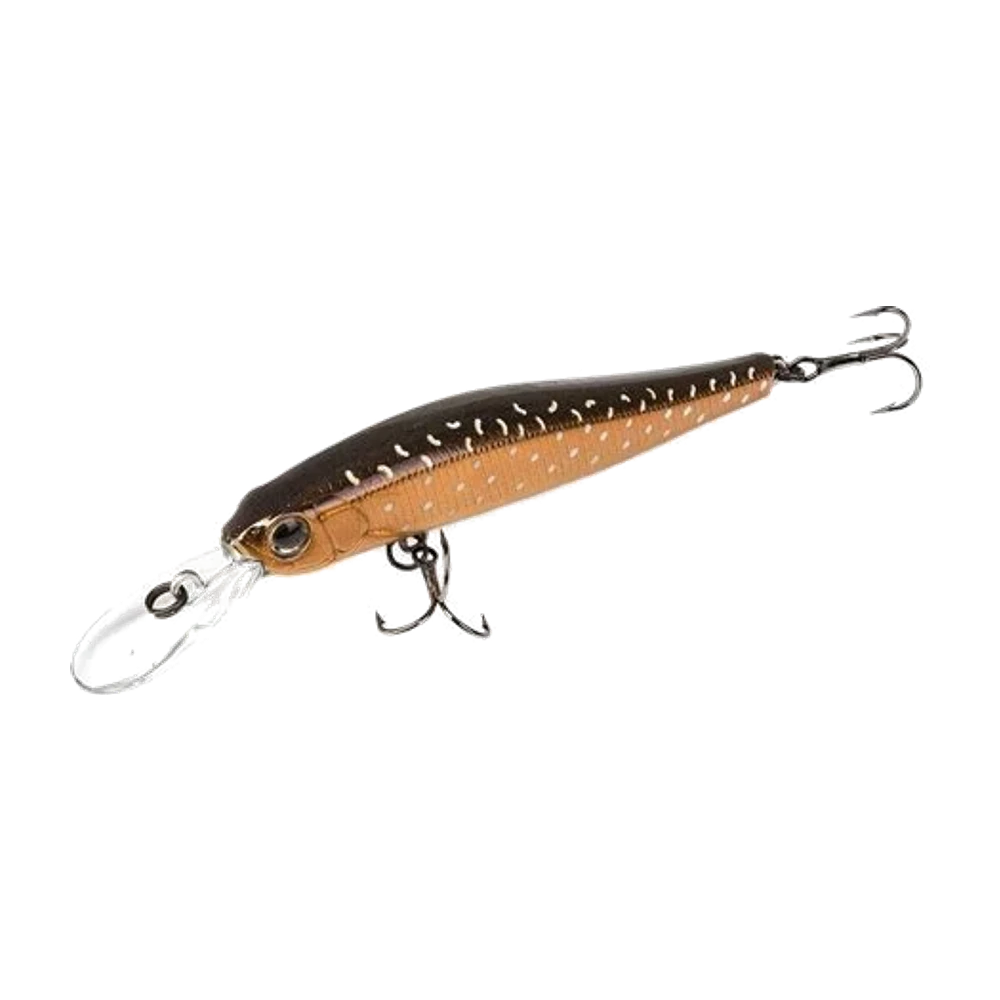
ZipBaits Rigge 70: the size that opens up zander without losing the perch
One lure, endless conditions. CarnaFish reads your spot from a photo so you are not just guessing.
The Rigge 56 is an excellent perch lure with one clear limit: 4.4 g does not go far. As soon as there is wind, the spot is twenty metres out, or you want to fish a little deeper, you are stuck.
The 70 lifts that limit without changing the lure's philosophy. Fourteen millimetres and six tenths of a gram more, and the working range widens noticeably.
What the extra size actually changes
Three concrete differences, all connected.
Casting distance. At 5 g you easily gain five to eight metres on the 56, and above all you stay usable in a light wind. On a gravel-pit margin or a quay, that decides whether you reach the spot or not.
Depth. The 70 runs between 0.8 and 1.3 m against 0.5 to 1 m for the 56. The difference looks small but it takes the lure under the top layer, where the fish hold when the sun is high.
The range of species. At 5.6 cm you are fishing for perch and trout. At 7 cm, zander becomes a realistic target and big perch respond better. You lose a little selectivity on very wary fish, you gain on average size.
The retrieve, adapted to the size
The movement is still fine twitching, but with a little more travel than on the 56.
- Cast and retrieve two or three turns to bring the lure to its depth.
- Three to five short twitches, rod tip low, wrist only — a few centimetres of travel.
- Pause of one to three seconds depending on temperature and target species.
- Repeat, or slot in a slow straight phase to change the signal.
On the water: for perch, keep short one-second pauses and a nervous cadence. For zander, do the opposite — two to three seconds of stillness minimum. The same lure changes its return completely according to pause length, far more than according to colour.
The tackle, one step up
- An L rod rather than UL, 1.90 to 2.20 m, progressive action. The 56 demanded ultra-light; the 70 accepts a slightly more substantial outfit.
- Fluorocarbon 0.14 to 0.18 mm. A little thicker than on the 56 without restricting the roll, and more reassuring if a decent zander decides to take.
- A 2000 reel. The imbalance that penalised the 56 does not exist at this size.
That is a practical point that matters: the 70 is fished with a standard perch outfit, where the 56 demands a dedicated one.
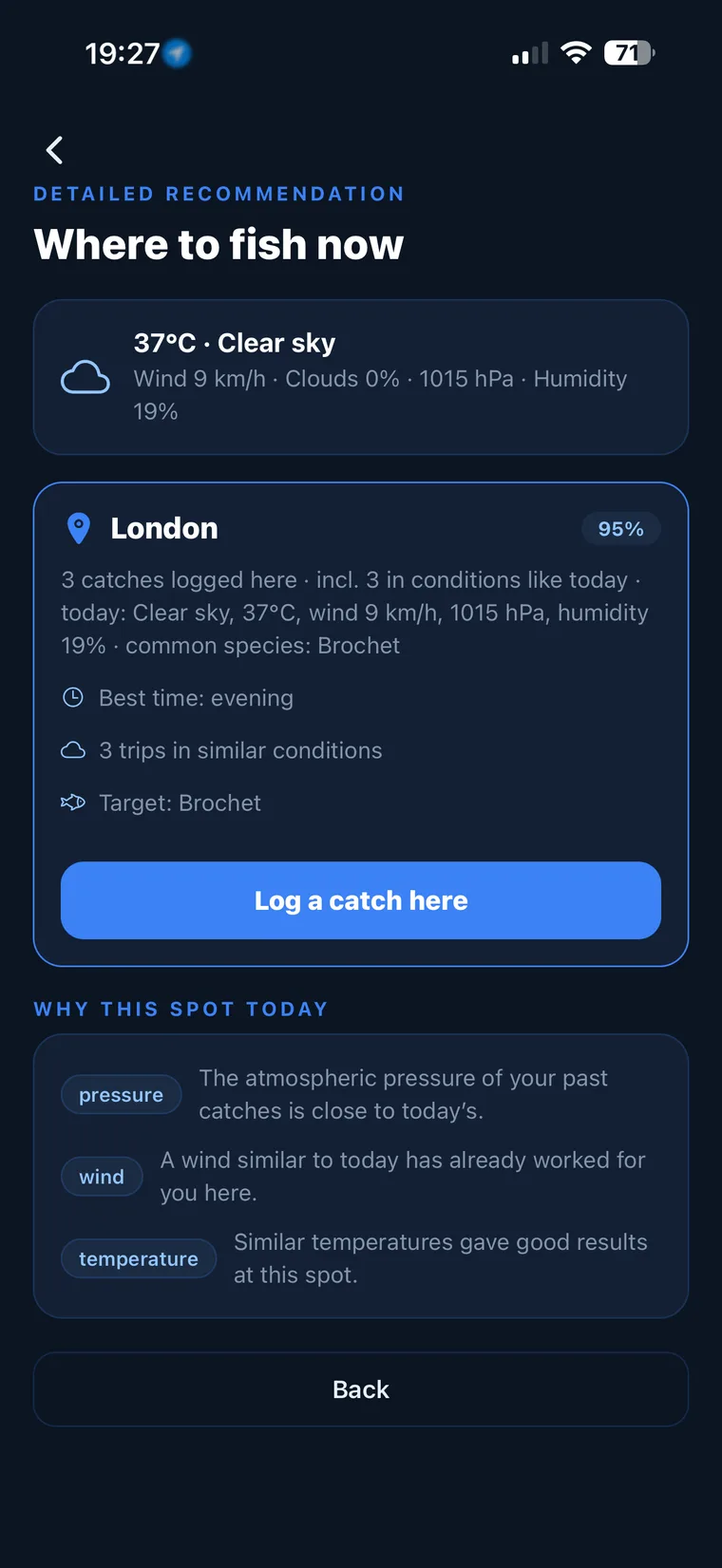
Not sure what to tie on?
Photograph your spot: CarnaFish reads the scene, cross-checks the conditions and gives you the zone, the lure and the retrieve. Free on iOS and Android.
When to choose one or the other
| Situation | Model |
|---|---|
| Very clear water, pressured fish | 56 |
| Visible perch refusing everything | 56 |
| Wind, distance, far-off spot | 70 |
| Zander targeted or hoped for | 70 |
| Fish feeding on 3-4 cm fry | 56 |
| General searching along a margin | 70 |
In practice, plenty of anglers start searching with the 70 and switch to the 56 when they spot fish following without committing.
Where it shines
- Gravel-pit margins and quays, over 1 to 2 m of water.
- End of the day, when zander move up to the margin to feed.
- Slow rivers, on calm spots and back eddies.
- Fast searching along a bank, where its casting distance lets you cover ground.
It remains wrong for depth beyond 1.5 m and for strong wind — for that, move up to a heavier jerkbait.
Our guide to lure fishing for perch places the minnow among the other approaches. And if you do not know which size to tie on in front of a given spot, CarnaFish analyses a photo and answers.
Key takeaways
- Five to eight metres more casting distance than the 56, and usable in a light wind.
- Runs 30 cm deeper: it gets under the top layer in bright sun.
- It opens up zander as a realistic target, at the cost of a little selectivity.
- Short pauses for perch, two to three seconds for zander — that is the real adjustment.
- Fished with a standard perch outfit, unlike the 56.
FAQ
What is the difference between the Rigge 56 and the Rigge 70?
The 70 is 7 cm for around 5 g against 5.6 cm and 4.4 g. It casts five to eight metres further, runs 30 cm deeper, and brings zander within reach. The 56 stays superior in very clear water and on difficult fish.
What depth does it run at?
Between 0.8 and 1.3 m with standard fluorocarbon. That is enough to get under the top layer of water when the sun is high, which the 56 does not do.
How should you work it for zander?
Three to five short twitches followed by a pause of two to three seconds minimum. Zander attack a motionless lure: lengthening the pause is almost always the right correction.
And for perch?
The opposite: a nervous cadence and short one-second pauses. The same lure changes its return completely according to pause length, far more than according to colour.
Do you need an ultra-light outfit?
No, unlike the 56. An L rod of 1.90 to 2.20 m with a 2000 reel and 0.14 to 0.18 mm fluorocarbon is enough: that is a standard perch outfit.
When should you prefer the 56?
In very clear water, on pressured fish, during feeding spells on small fry, and every time you see perch follow without committing. Dropping down in size is then the right correction.
The full perch lure guideSeason-by-season strategy: which family of lure, when, and why.Go from theory to fish
CarnaFish reads your spot from a photo and gives you the game plan: zone, lure, retrieve. Free on iOS and Android.