6th Sense Quake Lipless: the dual flat back that changes the vibration
The right lure in the wrong spot still catches nothing. CarnaFish spots the zone that works, from a single photo.
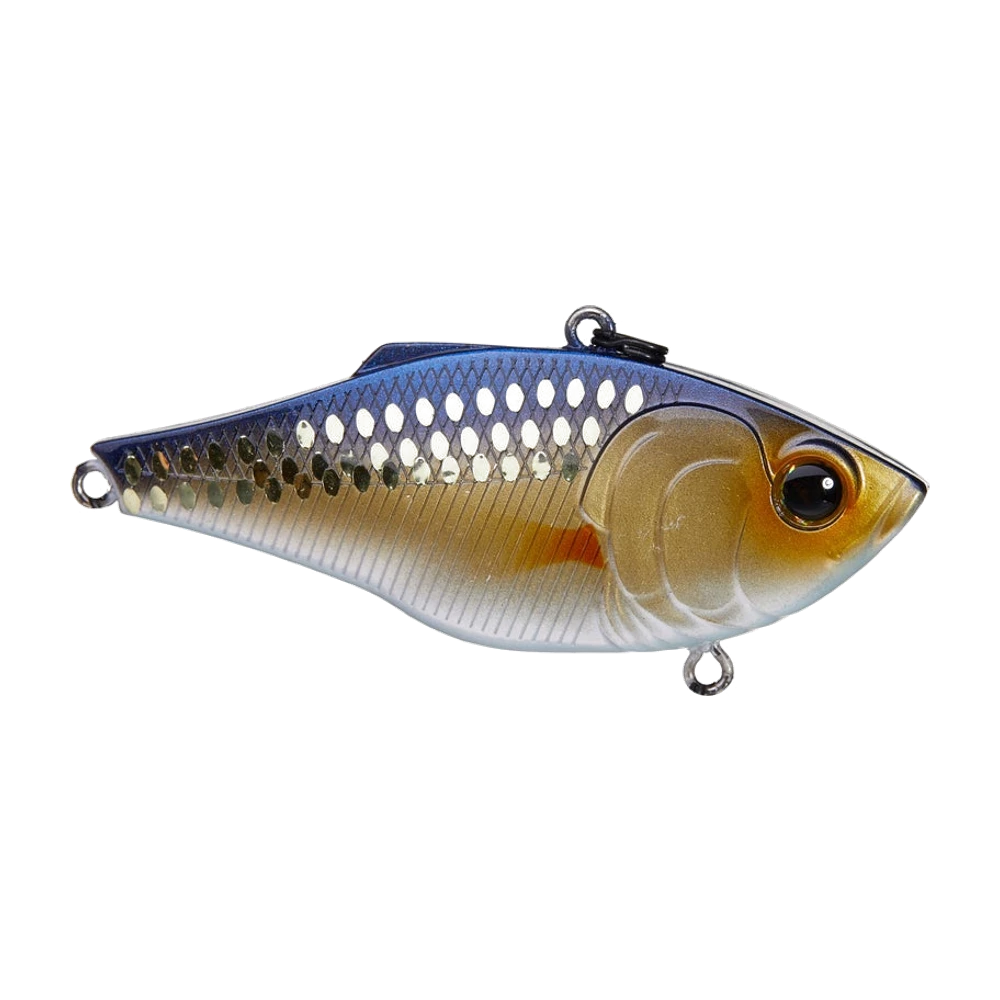
Everyone thinks they know what a lipless looks like: a diamond-shaped body, a rounded back, a pair of rattling balls, and that high, tight buzz you feel in your wrist. The 6th Sense Quake breaks the last part. Its back isn't rounded — it carries two flat surfaces, a dual flat back — and from the first cast the vibration coming up the rod is different: lower, wider, duller.
What two flats on the back actually change
On a standard lipless, the body's overall shape and the position of the tow eye create the oscillation. A rounded back lets water slip past, and the action stays tight and fast. The Quake's two flats do the opposite: they grab water on every sweep of the oscillation, which brakes the return stroke and forces the body to roll over harder to one side, then the other.
You measure the result with your hand as much as your ear. The thump is heavier, less frantic, and above all more spaced out. That's precisely the point on a lake where the lipless is everyone's lure: at comparable speed, the Quake pushes a different pressure wave than a Strike King Red Eyed Shad or a Rapala Rippin' Rap. Fish can't tell two colors apart at fifteen feet in stained water, but they can absolutely tell two vibration frequencies apart.
Two sizes, two jobs, and a real difference in density
The Quake 70 measures 2.75 in for 5/8 oz, the Quake 80 runs 3.15 in for 7/8 oz. That's less than half an inch of length but a quarter-ounce more weight — meaning the 80 isn't simply a scaled-up 70, it's a markedly denser lure. Three practical consequences: it casts far further, it sinks faster, and it holds its line in a crosswind or in river current.
Both models sink, which means choosing a size is also choosing a working depth. On a thirteen-foot reservoir flat, the 80 reaches bottom and works the lower layer on the way back. In a five-foot backwater, the 70 lets you slow down without digging in.
The sequence that makes a dense lipless like this one pay is the yo-yo. Let it touch bottom, make a firm three-foot sweep upward, then release completely and let the lure drop on a tight braid. The bite almost always comes on the fall, and if you miss it, it's because you went slack during the descent.
The EWG trebles, a choice worth understanding
The Quake is armed with EWG-style trebles with a wide gap. That's unusual on a lipless and it cuts two ways. On the plus side, the wider gap pins fish that hit at an angle, which happens constantly on a quickly retrieved lipless. On the minus side, those trebles grab more grass and brush.
In practice that defines the use: the Quake is a hard-bottom, clean-flat, riprap and grass-edge lure — not a bait to drag through thick vegetation. If your spot is carpeted in weed, a lipless with standard trebles will come through better, or you accept fishing just above the canopy and never touching it.
The mistake that sinks a lipless day
Reeling at one constant speed from start to finish. A wide-vibration lipless punishes that habit even harder than a conventional model, because the whole point of its signature is contrast. Mix it up: ten fast turns, a hard stop, the lure drops, you pick it up again. Or in a straight retrieve, change speed every five seconds. Rhythm breaks trigger strikes, not speed itself.
In Europe, for zander and pike
A lipless of 2.75 to 3.15 in at 5/8 to 7/8 oz is a format that speaks directly to autumn and winter zander on big waters. Yo-yoing along a break or over a flat works very well, because the vertical fall of a dense lure matches the zander's strike window exactly. And the Quake 80, at 7/8 oz, genuinely interests pike along the banks late in the season — provided you add a steel or titanium leader, since EWG trebles won't survive a big pike's jaws with the knot exposed.
For perch, both sizes are too large. Stay with a compact lipless like the Lucky Craft Bevy Vibration.
Not sure what to tie on?
Photograph your spot: CarnaFish reads the scene, cross-checks the conditions and gives you the zone, the lure and the retrieve. Free on iOS and Android.
Colors by water and season
- Clear water: silver with a blue or green back, letting the flash of the textured scales do the work.
- Spring, hard bottom: a red craw. Over riprap and gravel as the water warms, that's the pattern that repeats.
- Stained water: firetiger or chartreuse-dominant, because below three feet of visibility the vibration leads but colored mass helps with the final pinpoint.
One more lipless, but not for nothing
Nobody needs ten lipless baits in a box. You need two or three different vibration signatures, and that's where the Quake earns its slot: it owns the low, wide vibration while classic models own the high, tight one. Its sibling, the 6th Sense Quake Thud, pushes the logic further on the sound side with a single weight chamber instead of rattling balls. Three lures, three messages — more useful than three colors of the same lure.
Knowing which break to cast at still matters more than which lipless you pick. That's exactly what CarnaFish does: a photo of the spot, and the AI suggests the zone, the depth and the kind of presentation that fit the day's conditions. For pike spots and the tackle that goes with them, our guide to choosing a pike lure is a useful companion to this page.
Key takeaways
- Two flats on the back instead of a rounded one: a lower, wider, duller vibration than a classic lipless.
- The 80 isn't a bigger 70: 7/8 oz against 5/8 oz, so a very different cast, fall rate and wind behaviour.
- EWG trebles pin fish better but also catch vegetation. A hard-bottom and edge lure, not a grass lure.
- Yo-yo with the fall on a tight braid beats a constant retrieve in most situations.
FAQ
What's the difference between the 6th Sense Quake and a classic lipless?
The back. The Quake's two flats grab more water than a rounded back, giving a wider, lower-pitched vibration. At the same speed the fish receives a different frequency from the usual lipless.
Quake 70 or Quake 80?
The 70, 2.75 in for 5/8 oz, for shallower spots and slower retrieves. The 80, 3.15 in for 7/8 oz, to cast far, sink fast, fish in wind or target bigger fish late in the season.
How should this lipless be worked?
Yo-yo for preference: bottom contact, a firm three-foot sweep, then free fall on a tight braid. The bite usually comes on the way down. On a straight retrieve, vary the speed rather than holding one cadence.
Will the Quake come through grass?
Poorly. The EWG-style trebles that improve the hookup rate also grab more vegetation. Favour hard bottom, clean flats and grass edges, staying above the canopy.
Do I need a wire leader with this lure?
Yes if pike are present on the spot, especially with the Quake 80. On a pure bass or zander spot in clear water, a 0.30 mm fluorocarbon leader is more discreet and enough.
Quake or Quake Thud?
Each aims at a different signature. The Quake plays on vibration amplitude; the 6th Sense Quake Thud plays on a single knocking sound instead of rattles. On a heavily worked spot, having both lets you change the message without changing lure family.
The full bass lure guideSeason-by-season strategy: which family of lure, when, and why.Go from theory to fish
CarnaFish reads your spot from a photo and gives you the game plan: zone, lure, retrieve. Free on iOS and Android.