Molix Lover Vibration: the lipless you yo-yo, not wind straight back
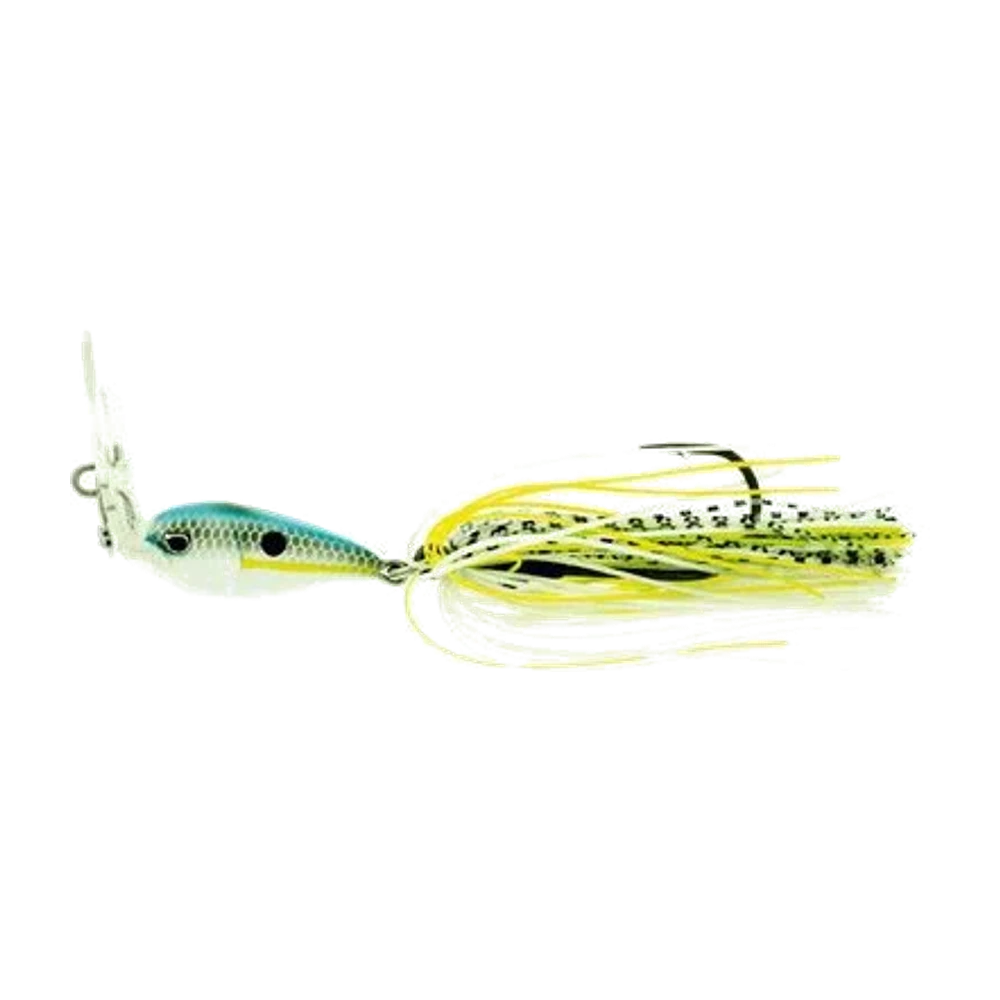
This lure shines under specific conditions. CarnaFish tells you in 10 seconds if today is one of them.
The lipless is the lure almost everybody fishes badly, for one simple reason: it is too satisfying to wind. You cast a long way, you reel, it buzzes hard in the rod, and it feels like you are fishing. On active hunting fish, that is enough. The rest of the time — which is to say most of the time — you pass a metre and a half above them without ever crossing their path.
The Lover Vibration is built for the other way of doing it. Its profile is tall and thin, not chunky, and that geometry has a direct consequence: when you stop reeling, it does not drop like a stone. It turns side-on and glides as it sinks, flat, on an oblique path several tens of centimetres long.
That controlled fall is the whole game. Everything else is just a way of triggering it at the right depth.
Tall and thin: what that changes
Put two lipless baits side by side and look at them head on, not in profile. The first has a thick, almost round section. The second is a blade: deep-backed, very thin. The Lover Vibration belongs to the second family, and that dictates three behaviours.
- The vibration frequency is high. A thin body meets little resistance and beats fast. The signal is sharp and tight, close to that of a shoal of fry, rather than the low-frequency rumble of a thick body.
- The fall glides. The large flank area and the slim thickness mean the bait leans on the water as it sinks instead of cutting through it. It drifts obliquely and shows its flank, which creates a long flash through the whole descent.
- It starts instantly. A thin lipless comes alive within the first few centimetres of a pull, with no need to accelerate. On a short 40 cm lift, it works over the whole distance.
The downside of that slimness is wind resistance and the trebles' tendency to tangle on very long casts. On an overhead cast with a crosswind, thumb the spool at the end of the flight: the bait lands flat and the hooks stay clear.
The retrieve: the yo-yo, and nothing else
- Cast and let it sink on a half-tight line, counting the seconds. That count is your only depth instrument.
- Two fast handle turns or a firm rod-tip pull of 50 to 80 cm. The bait lifts off and buzzes clearly in the rod.
- Release immediately by dropping the rod tip to give slack. The bait tips over and sets off on its oblique glide for 2 to 4 seconds.
- Pick contact back up gently. If the line is slack when it should not be, or you feel a weight, set the hook.
- Repeat the cycle while working gradually up the slope to the bank.
On the water: on a drop-off, don't try to hold the same depth. Cut your sink count by one second on each cycle as you climb the slope. A yo-yo with a fixed count always ends up planting the bait in the bottom at the base of the slope, or running it too high as you reach the plateau — and the upper lip of the drop-off is exactly where the zander sit.
For bass, one variant produces a lot in late spring: ripping through low vegetation. You wind straight until you feel the bait catch a strand of weed, then rip it free with a sharp flick of the wrist. The bait tears loose, shoots off sideways, and the take comes within the second.
Setting depth with the sink count
| Size | Approximate sink rate | Count for 4 m |
|---|---|---|
| 5.5 cm, 11 g | around 25 to 30 cm per second | 13 to 16 seconds |
| 6.5 cm, 15 g | around 30 to 35 cm per second | 11 to 13 seconds |
| 7.5 cm, 21 g | around 35 to 45 cm per second | 9 to 11 seconds |
These figures are orders of magnitude: line diameter, wind and current all shift them. What matters is building your own reference from the first cast, counting down to bottom contact, then working relative to that number.
Fluorocarbon of 0.25 to 0.30 mm is the right compromise. Finer and the bait sinks faster but you lose abrasion resistance on rocky drop-offs; heavier and the gliding fall flattens out and you lose the essential.
In snaggy areas, replacing the belly treble with a single hook rigged point up cuts losses sharply without costing many bites — a lipless usually hooks on the rear treble anyway.
Where it excels, and where it has no business
- Drop-offs and slopes on gravel pits, dams or lakes, between 2 and 6 m. That is its domain.
- Sandy flats for zander at first and last light, on a low yo-yo with bottom contact on every cycle.
- Low vegetation in late spring, for bass, on a ripping retrieve.
- Clear to lightly stained water, where the high frequency and flank flash carry well.
It is badly placed in very dirty water, where a sharp vibration gets through less well than a low rumble. It is unusable in flooded timber and thick vegetation: two exposed trebles and a gliding fall guarantee snags. And it is worth nothing in deep winter on fish glued to the bottom, a situation where a clean vertical drop beats an oblique glide.
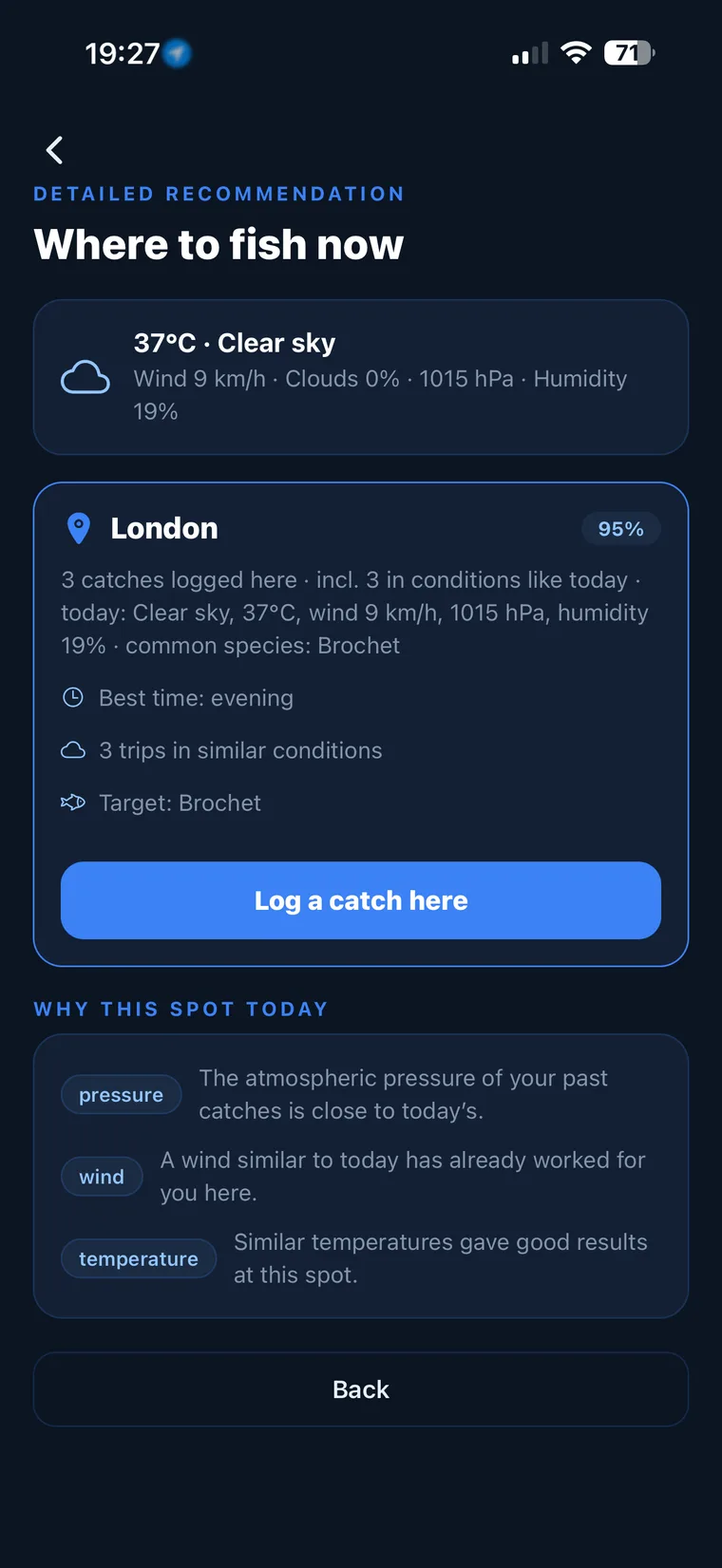
Not sure what to tie on?
Photograph your spot: CarnaFish reads the scene, cross-checks the conditions and gives you the zone, the lure and the retrieve. Free on iOS and Android.
Lover Vibration, Fat Vibes or TN 70
These three lipless baits cover clearly different slots.
The Savage Gear Fat Vibes is the geometric opposite: thick body, low frequency, big water displacement. It is the stained-water searching bait, the one that calls a fish that cannot see from a distance. Its fall is more vertical and less usable.
The Jackall TN 70 is compact and dense, with a concentrated mass that gives it remarkable casting distance for its size. It is the specialist for ripping through weed and for long-range searching, with a very tight vibration but a fast fall.
The Lover Vibration fills the slot of the slow yo-yo over structure: thin enough to glide on the way down, heavy enough to hold depth. If your fishing consists of working an identified drop-off rather than raking a bank, this is the one to pull out. Our beginner's guide to lure fishing for zander covers how to read a drop-off before you cast at it. And if you are unsure what sink count to use in front of an unfamiliar spot, CarnaFish analyses a photo of the spot and answers.
Colours
- Clear water: roach, small perch, reflective flank finishes. The gliding fall shows the flank for a long time, so it may as well throw light back.
- Spring, gravel bottom: craw red and brown, the historic lipless colour for that season.
- Lightly stained water or low cloud: a dark back with a pale or chartreuse belly, for contrast seen from below.
Key takeaways
- Tall, thin profile: high-frequency vibration on the pull, gliding oblique fall on the release.
- Fished as a yo-yo, depth set by the sink count, not on a continuous straight retrieve.
- On a drop-off, cut the count by one second each cycle as you climb the slope.
- For bass, ripping it out of low vegetation triggers within the second.
- Leave it at home in very dirty water, in timber and in deep winter.
FAQ
How do you fish the Molix Lover Vibration on a yo-yo?
Let it sink while counting, give two fast handle turns or a 50 to 80 cm pull, then release to let the bait glide obliquely for two to four seconds. The bite almost always comes during that falling phase.
How deep does it go?
As deep as you decide: depth is set by sink time. Count on roughly 30 cm per second for the middle size, and work from the count you got on the first bottom contact.
What is the difference with a thick lipless like the Fat Vibes?
A thick body produces a low vibration that carries in dirty water and suits a straight searching retrieve. The Lover Vibration, being thin, vibrates higher and above all glides on the fall, which makes it far better on a yo-yo over structure.
Should I replace the trebles?
In rocky or cluttered areas, swapping the belly treble for a single hook rigged point up cuts snags a lot. You lose few bites: most fish hook on the rear treble.
Does it work for bass?
Yes, particularly in late spring over low vegetation. Wind straight until the bait catches a strand, then rip it free with a flick of the wrist: the take follows the release immediately.
Can you fish it in winter?
Less well. On a fish glued to the bottom in cold water, a clean vertical drop is more effective than this bait's oblique glide. Keep it for periods when the fish will lift off the bottom.
The full zander lure guideSeason-by-season strategy: which family of lure, when, and why.Go from theory to fish
CarnaFish reads your spot from a photo and gives you the game plan: zone, lure, retrieve. Free on iOS and Android.